Why Your Espresso Machine’s Pressure Gauge Is Fluctuating Wildly
Your espresso machine’s pressure gauge fluctuates wildly because of common issues like a clogged group head, air trapped in the system, a failing pump, or a faulty gauge. Coffee oils and old grounds restrict water flow, while air pockets from refilling or inactivity cause sudden spikes. A worn pump may run longer or make noise, and loose wiring can make the gauge act up. Try a blind filter test to check if it’s the machine or the gauge-there’s more to know about pinpointing the exact cause.
Notable Insights
- Normal pressure fluctuations occur during pump activation, pre-infusion, or in dual-boiler machines like the Rocket R58.
- A clogged group head restricts water flow, causing erratic pressure and uneven extraction due to coffee grounds or oil buildup.
- Trapped air or vapor lock after refilling or inactivity leads to sudden pressure spikes and unstable gauge readings.
- A failing pump with worn seals or weak motor performance causes inconsistent pressure and abnormal gauge movement.
- A faulty pressure gauge with loose wiring or sensor drift can give false readings, requiring calibration or replacement.
What Causes Espresso Machine Pressure Gauge Fluctuations?
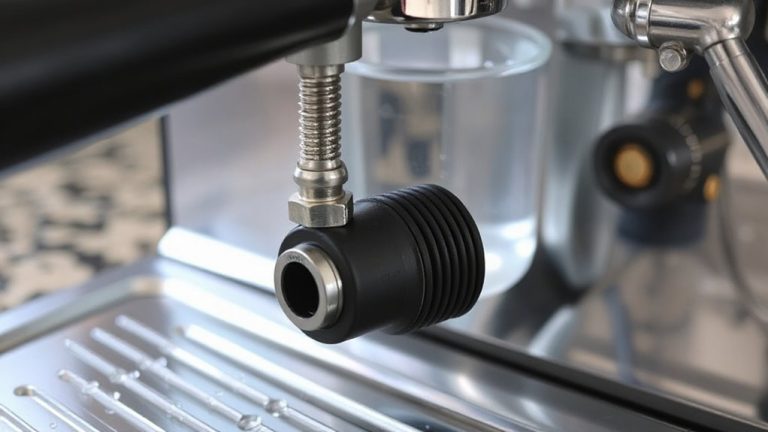
Pressure spikes or dips on your espresso machine’s gauge aren’t always a sign of trouble-they’re often part of the normal brewing process. You’ll see brief jumps when the pump kicks in or during pre-infusion, especially on dual-boiler machines like the Rocket R58. Fluctuations can also stem from water hardness, which leads to mineral buildup in internal sensors, distorting readings over time. If scale affects your pressurestat or boiler, it might misread actual pressure. Steam wand leaks are another culprit-if steam escapes during brewing, it can cause inconsistent pressure and gauge instability. Check wand seals and valves regularly; a faulty gasket on a La Marzocco Linea can lead to such issues. While minor swings are normal, consistent wild fluctuations often point to mechanical faults or water quality problems. You should descale regularly and use filtered water to minimize risks. Owners of La Marzocco Linea Mini models may also notice unique pressure behavior due to its vib pump and saturated group design.
Clogged Group Head? How It Disrupts Pressure
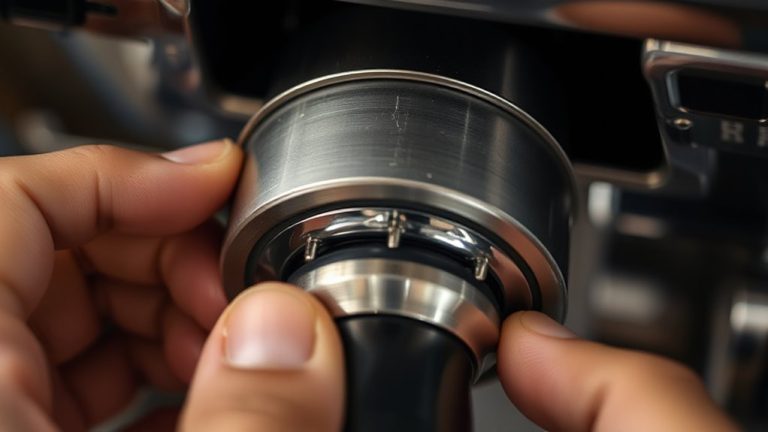
Ever wonder why your espresso shots are pulling too slow or the pressure gauge seems off, even when your machine’s functioning normally? A clogged group head could be the culprit. When coffee grounds or old oils build up in the group head, they restrict water passage, creating a flow restriction that impacts extraction. This blockage forces your machine to work harder, which shows as erratic pressure readings on the gauge. The flow restriction can also disrupt water distribution across the coffee bed, leading to uneven extraction and bitter or sour shots. You might notice gurgling sounds or spotty puck saturation. Cleaning the group head regularly with a brush and backflushing weekly prevents this. For machines like the Rocket R58 or Lelit Anna, neglecting this causes more frequent pressure issues. A clear flow path means stable pressure and better espresso-check and clean your group head often.
Is Air in Your Machine Causing Pressure Spikes?
Could trapped air be behind those sudden pressure spikes on your gauge? Yes, air pockets in your espresso machine’s water pathway can cause erratic pressure readings. When water can’t flow smoothly, pressure builds quickly behind trapped air, leading to spikes before suddenly dropping. These pockets often form after refilling the boiler or leaving the machine off for long periods. A related issue, vapor lock, happens when steam pockets block water flow, usually from overheating or improper cool-down cycles. Both disrupt pump consistency and mislead your pressure gauge. To fix this, purge the system by running water through the group head and steam wand for 10–15 seconds. Machines like the Rancilio Silvia or Breville Dual Boiler respond well to this routine. Regular purging minimizes air pockets and maintains steady pressure. Prevention is simple: always let water run briefly after startup. That small step keeps vapor lock and pressure spikes in check.
Signs Your Espresso Machine Pump Is Failing
If air pockets aren’t the culprit, the next place to check is the pump-especially if your pressure gauge still acts up after purging. You might be dealing with worn seals, which let water slip past instead of building proper pressure. That causes inconsistent extraction and erratic gauge movement. Another red flag is a pump that runs longer than usual or not at all-this often points to pump motor failure. Listen closely; a weak or noisy motor usually means trouble. Machines like the Breville Barista Express or Gaggia Classic rely on strong pump performance, so any drop in force shows fast in your shot quality. If the pump struggles to hit 9 bars or surges randomly, don’t ignore it. Worn seals are sometimes repairable, but pump motor failure typically means replacement. Acting early can save your machine-and your morning espresso.
Faulty Gauge Causing False Readings?
How can you tell if the problem lies with the machine or the gauge itself? Start by checking for loose wiring behind the gauge-if connections are shaky, the readings can jump even when pressure is stable. A flickering display or inconsistent needle movement often points to electrical issues rather than pump failure. Over time, sensor drift can also skew results, especially in older machines, making pressure appear higher or lower than it actually is. To test, use a blind filter and compare the gauge’s behavior to known standards; if the machine pulls shots fine but the needle dances, the gauge is likely faulty. Unlike mechanical issues, a bad gauge won’t affect extraction-but it hurts accuracy. Replacing the gauge or upgrading to a digital pressure reader can fix false readings fast, restoring confidence in every shot.
On a final note
Your espresso machine’s pressure gauge might fluctuate due to a clogged group head, air pockets, a failing pump, or a faulty gauge. Check for coffee residue buildup and backflush your machine. Bleed any trapped air by running water through the group. If pressure still jumps, inspect the pump-especially on older Vibieffe or Viby models. If other fixes fail, replace the gauge; a bad one gives false readings and hurts shot consistency.