How to Evaluate the Quality of an Espresso Machine’s Portafilter Fit
Check your portafilter by inserting it into the group head and gently twisting-any wobble means poor alignment, which can cause uneven extraction. A tight, smooth fit like on machines such as the Lelit Bianca or Rocket R58 suggests precision engineering. Inspect the group gasket for wear and guarantee the basket sits securely without movement. Pressurized portafilters are more forgiving on entry-level machines, while non-pressurized ones demand finer grinds but offer better flavor. You’ll want to know how build quality affects long-term performance.
Notable Insights
- Test for wobble by inserting and gently twisting the portafilter to check for side-to-side movement.
- Inspect the group gasket for cracks or wear to ensure a consistent, leak-free seal during extraction.
- Verify the basket fits snugly in the portafilter with no lateral movement under pressure.
- Assess build quality by checking for precise alignment, durable materials, and smooth locking action.
- Determine if the machine uses pressurized or non-pressurized baskets based on grind flexibility and desired shot control.
Check for Wobble: Test Your Portafilter Alignment
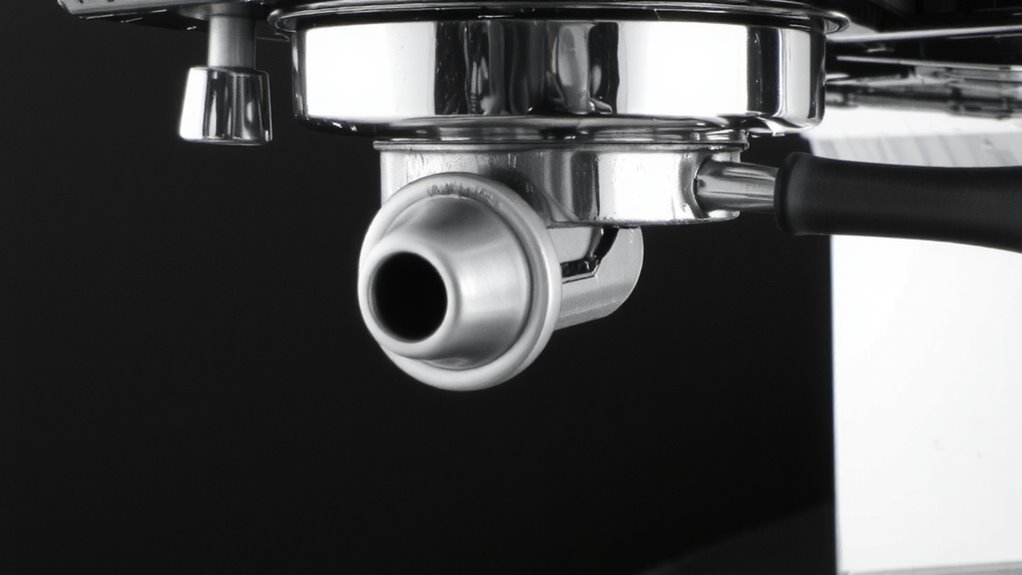
Even if you’re using high-quality beans and a precise grinder, a wobbly portafilter can undermine your espresso by causing uneven water distribution and pressure loss during extraction. To test alignment, insert the portafilter into the group head and gently twist it back and forth. Any noticeable side-to-side movement means poor fit. A tight, secure fit guarantees consistent pressure. Check the portafilter finish-scratches or warping may indicate poor manufacturing or wear. A smooth, polished finish often signals better durability and easier cleaning. Also, assess handle stability; if the handle shifts or feels loose, it could affect your grip and portafilter placement. Machines like the Lelit Bianca or Rocket R58 show minimal wobble thanks to precision engineering. Avoid models with stamped steel group heads, which increase misalignment risk. A stable portafilter makes extraction more reliable, shot after shot. For those seeking optimal performance, consider upgrading to a third-party portafilter with improved heat retention and build quality.
Inspect the Group Gasket and Basket Fit
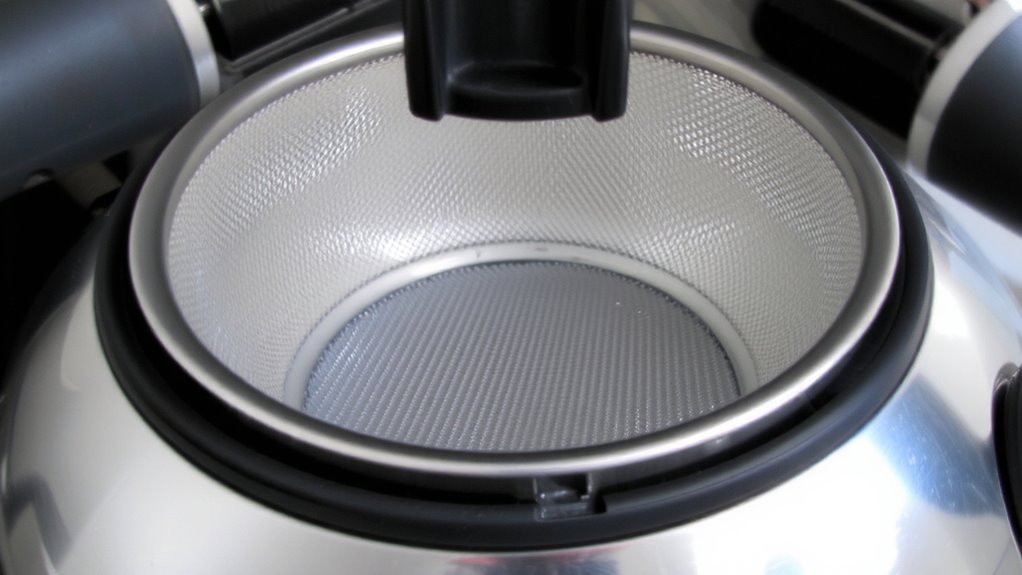
A well-seated group gasket is key to a leak-free, consistent shot. When you lock in your portafilter, the gasket should compress evenly to create a tight seal. If it’s worn or improperly installed, you’ll get gaps that cause pressure loss and channeling. Check the gasket regularly-look for cracks, flattening, or brittleness-and replace it if needed. A quality gasket maintains proper compression without over-tightening the portafilter. At the same time, inspect how the basket fits inside the portafilter. It should slip in smoothly but stay put under pressure-this is basket retention. Loose baskets shift during brewing, disrupting extraction. Metal baskets with snug, precise edges usually perform better than flimsy ones. Make sure there’s no sideways movement when seated. Together, proper gasket compression and solid basket retention help deliver balanced, repeatable shots-no guesswork required. Upgrading to a third-party best portafilters can further improve extraction consistency and durability.
Evaluate How Machine Build Affects Portafilter Fit
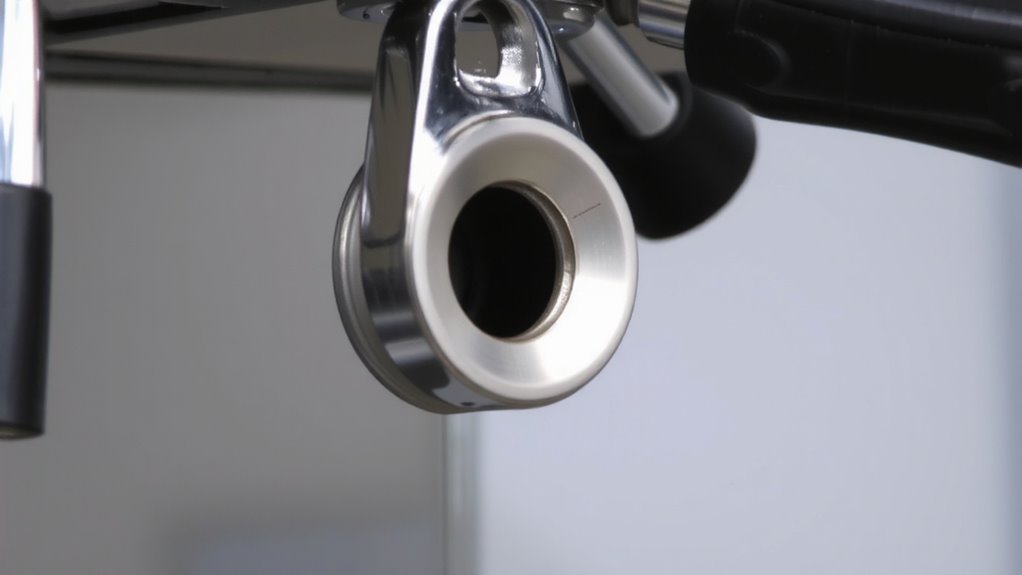
With a properly built espresso machine, the portafilter should lock in smoothly and align perfectly with the group head every time. Poor construction leads to wobbling or binding, harming extraction and portafilter durability. Machine ergonomics matter-cheaper models may use thin chrome plating over soft metal, which wears fast. Commercial-grade machines like the Nuova Simonelli Appia use reinforced group heads and solid steel, ensuring long-term fit and ease of use. Upgrading to a high-performance espresso portafilter can significantly improve extraction consistency and overall shot quality.
| Build Quality | Portafilter Durability | Machine Ergonomics |
|---|---|---|
| Low | Wears quickly, misaligns | Stiff or loose fit |
| Medium | Lasts 2–3 years | Consistent but heavy |
| High | Long-lasting, precise | Smooth, balanced handling |
Well-built machines reduce stress on the portafilter, improving function and longevity. Always test the fit before buying.
Know the Fit Differences: Pressurized vs. Non-Pressurized
You’ve seen how machine build affects portafilter fit, but the type of portafilter-pressurized or non-pressurized-also changes how it sits and functions in the group head. Pressurized portafilters use a built-in restrictor to manage brew pressure, making them more forgiving with inconsistent grind size. They’re common on entry-level machines and help reduce grind retention since you don’t need a super-fine, even tamp. Non-pressurized baskets rely entirely on proper grind size and tamp pressure to regulate brew pressure, demanding more precision but offering better flavor control and crema. They’re standard on prosumer and commercial machines. Non-pressurized types usually have higher grind retention due to tighter basket design. If you’re new or using a blade grinder, pressurized might work fine. But if you want full control and use a quality burr grinder, go non-pressurized.
Diagnose Common Portafilter Fit Problems
What happens when your portafilter doesn’t seat smoothly or feels loose after installation? You’re likely facing alignment or threading issues that can hurt espresso extraction and threaten portafilter longevity. If it wobbles, the group head seal breaks, causing leaks and uneven pressure. That means weak, inconsistent shots. A tight fit shouldn’t require force-if it’s too snug, stripping threads is a real risk, especially with frequent use. Check for visible wear, warped baskets, or misaligned spouts. Stainless steel models like those from Rancilio or Rocket resist wear better than cheaper aluminum ones. A portafilter that doesn’t lock cleanly usually means part incompatibility or damage. Even small gaps disrupt water distribution during extraction. Over time, poor fit accelerates wear on both portafilter and group head. Regular inspection helps catch issues early, preserving performance and portafilter longevity.
Fix Leaks, Wobble, and Poor Seal: Practical Solutions
A wobbly portafilter or one that leaks during extraction isn’t just annoying-it’s a sign that pressure and seal integrity are compromised, leading to subpar shots. Start by checking the group head and portafilter for warping or debris; a quick clean and inspection can resolve minor leaks. If wobble persists, verify alignment-some machines let you adjust the basket or spout position. Consider the portafilter weight: heavier models often provide better stability, reducing vibration and improving heat retention. A solid handle finish not only feels better but can signal higher-quality materials less prone to cracking or stripping. For persistent leaks, replace worn gaskets or upgrade to a commercial-grade portafilter with tighter tolerances. Avoid overtightening, as it damages threads and worsens sealing. Regular maintenance and mindful handling keep fit consistent.
On a final note
You can spot a solid portafilter fit by checking for wobble-minimal movement means better alignment. Inspect the group gasket and basket: they should seal tightly. Machines like the Breville Bambino have tighter builds than budget models, reducing leaks. Pressurized portafilters hide poor fit; non-pressurized expose it. If you see leaks or inconsistent shots, reseat the portafilter firmly and check for worn parts.