The Science of Solubles: Understanding What Dissolves During Coffee Extraction
You’re extracting solubles every time you brew-these dissolved compounds give coffee its flavor, aroma, and body. Light roasts keep delicate acids and sugars intact, while dark roasts break down more compounds, increasing bitterness. Water between 195°F and 205°F pulls the best balance, but cheap brewers often run too hot. A gooseneck kettle with temp control helps. Grind size and brew time matter just as much-finer grinds extract faster, risking bitterness, while coarse grinds can leave coffee sour. You’ll see how small tweaks change your cup in real time.
Notable Insights
- Coffee solubles are flavor, aroma, and body compounds that dissolve in water during brewing.
- Bean origin affects solubles, with Ethiopian beans offering floral notes and Brazilian beans yielding nutty, chocolatey flavors.
- Lighter roasts preserve delicate acids and sugars, enhancing solubility of nuanced flavor compounds.
- Water temperature between 195°F and 205°F optimally extracts desirable solubles without causing bitterness.
- Grind size and brew time control extraction rate, influencing which solubles dissolve and their flavor balance.
The Science of Coffee Solubles
Solubles are the compounds in coffee grounds that dissolve in water during brewing, and they’re what give your cup its flavor, aroma, and body. You’ll find different solubles depending on the coffee origins-Ethiopian beans often carry bright, floral compounds, while Brazilian beans lean toward nutty or chocolatey ones. Roast profiles also play a key role: lighter roasts preserve more delicate acids and sugars, giving you higher solubility of nuanced flavors, while dark roasts break down more cell structure, increasing bitterness but reducing overall complexity. Lighter roasts may require finer grinds and precise water control to extract well without under-expressing. Dark roasts tend to extract faster, so a coarser grind can prevent over-extraction. Knowing your bean’s origin and roast helps you adjust grind size, brew time, and water temperature for better balance. Not all solubles are good-one-size-fits-all approaches rarely work across origins and roast profiles.
How Heat Changes Coffee Extraction
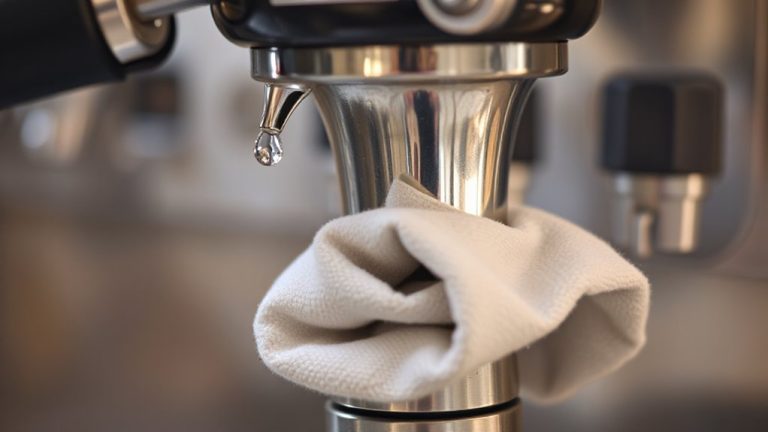
While you might be tempted to crank the heat for a faster brew, water that’s too hot can pull out harsh, bitter compounds-especially in lighter roasts where delicate acids and sugars are already more soluble. Ideal water temperature sits between 195°F and 205°F; this range dissolves desirable solubles without pushing into thermal degradation. If the water goes above 205°F, you risk scorching coffee particles, which distorts flavor and creates astringency. Cheaper brewers often fail here, lacking precise temperature control. Gooseneck kettles with built-in thermometers or variable temp settings help maintain consistency. For espresso, machines should stabilize near 200°F to avoid over-extraction. Lower temps may under-extract, yielding sour notes, while overheated water leads to flat, burnt profiles. Managing heat isn’t just about speed-it’s about balance. Thermal degradation impacts aroma and clarity, so staying in the sweet spot matters most for clean, nuanced coffee. Best gooseneck kettles offer precise heat and pour control for optimal extraction.
Why Grind Size Matters for Taste
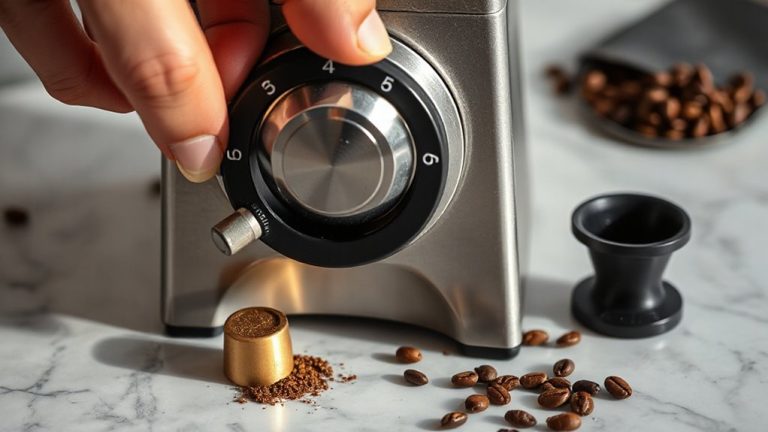
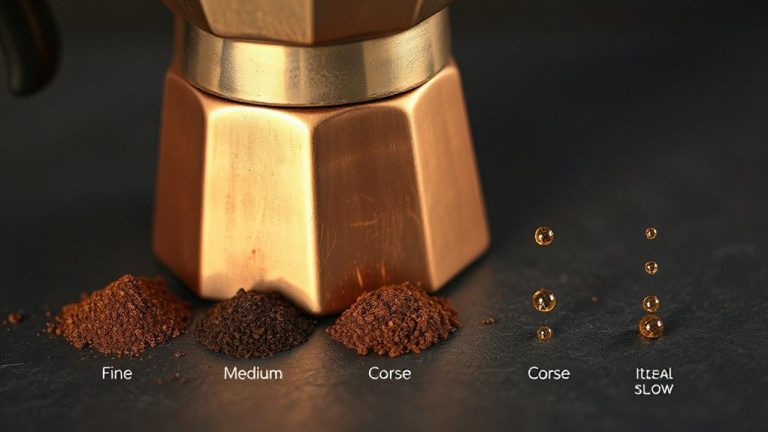
You’ve got your water temperature dialed in between 195°F and 205°F, but if your grind size is off, even perfect heat won’t save the cup. That’s because grind size directly controls surface area, which determines how quickly compounds dissolve. Finer grinds increase surface area, speeding up extraction-great for espresso, risky for bitterness if uneven. Coarser grinds slow it down, suited for French press or cold brew, reducing harshness but risking weakness if too coarse. What matters just as much is grind consistency. Uneven particles mean some over-extract while others under-extract, muddying flavor. A burr grinder delivers more uniform particles than a blade grinder, improving balance. For pour-over, aim for medium-fine, like table salt; for immersion methods, go coarse, like sea salt. Match the grind to your method, and you’ll pull out the right solubles-clean, flavorful, and in control. Choosing the right best coffee grinder can make a significant difference in achieving optimal extraction for both espresso and pour-over.
How Brew Time Affects Flavor Balance
What if time was the most overlooked variable in your brew? It’s not just grind or dose-brew duration plays a vital role in hitting flavor equilibrium. Too short, and you’ll miss sweet, balanced notes; too long, and you risk tipping into over-extraction, even with ideal water or grind. For pour-overs like a V60, 2:30–3:30 minutes usually works. Espresso clocks in much shorter-25–30 seconds. Immersion methods like the French press need 4 minutes to reach balance. Adjusting brew duration lets you fine-tune extraction without changing equipment. If your coffee tastes flat or hollow, consider extending time. If it’s sharp or astringent, shorten it. You don’t need high-end gear-just a timer and consistency. Small time tweaks can shift extraction meaningfully, helping you achieve cleaner, more balanced cups with what you already own. For precise control, consider using one of the best coffee brewing timers to maintain consistency across sessions.
Sour vs. Bitter: Diagnosing Extraction Problems
Sour or bitter flavors in your coffee usually point to an extraction issue, not a bad bean or flawed roast. If your brew tastes sharp or acidic, you’re likely dealing with an under extraction diagnosis-shorter brew times or too-coarse a grind leave sugars and body behind. This is common with fast pour-overs or low-pressure machines like AeroPress at quick settings. On the flip side, over extraction causes bitterness by pulling too many late-release compounds, especially with overly fine grinds, high water temperature, or extended contact time. French press left steeping too long or espresso pulled past 30 seconds often fall into this trap. You’re not stuck: adjusting grind size or brew time usually corrects it. No need to switch beans-just tweak. Diagnose your taste, then target the variable. It’s practical, precise, and within your control.
Balancing the Extraction Variables
While extraction depends on several factors, getting the right balance starts with understanding how grind size, water temperature, brew time, and coffee-to-water ratio interact. Your brew method shapes how these variables come together, so adjusting one often means tweaking another. Water quality also plays a key role-minerals in water affect extraction efficiency, and poor quality can mute flavors no matter your setup. Below is a quick guide for common methods:
| Brew Method | Grind Size | Water Temp (°F) |
|---|---|---|
| Pour-over | Medium-fine | 195–205 |
| French Press | Coarse | 195–205 |
| Espresso | Fine | 190–200 |
| AeroPress | Fine to medium | 175–205 |
Adjust variables based on taste-brightness or bitterness tells you where to fine-tune.
On a final note
You now control extraction by adjusting grind size, water temperature, and brew time. A finer grind or longer steep increases strength but risks bitterness; too coarse or too short leads to sourness. Use a burr grinder for consistency and a scale for accuracy. Try starting with 20g coffee to 360g water at 200°F. Adjust one variable at a time, tasting as you go-small changes make big differences in your cup.