Best Coffee Distribution Tools Baristas Reach For Daily
You’ll get consistent results with tools like the Normcore 58.5mm or Nessus WDT, both favorites for their stainless steel construction and even distribution. The Normcore’s five-blade base fits all 58mm baskets, while the Nessus lets you customize needle count. For Breville users, the MATOW 53mm tool guarantees precise dose alignment. These tools reduce channeling and improve shot quality, especially with fine grinds. Just match your portafilter size and consider ease of cleaning-many baristas keep a few on hand for different setups.
We are supported by our audience. When you purchase through links on our site, we may earn an affiliate commission, at no extra cost for you. Learn more. Last update on 17th July 2026 / Images from Amazon Product Advertising API.
Notable Insights
- Baristas favor WDT tools with stainless steel needles for durability and effective clump disruption during daily use.
- Adjustable needle counts, like those on the Nessus or Matow tools, allow customization for different grinds and portafilters.
- Tools made with 304 stainless steel and food-grade aluminum ensure rust resistance and longevity in high-moisture environments.
- Compact, ergonomic designs with stands-such as Subminimal WDT-36 or Normcore V2.1-enhance workflow efficiency and storage.
- Models with magnetic tops or retractable mechanisms, like Subminimal Flick, offer convenience and space-saving integration on espresso setups.
WDT Espresso Distribution Tool with 7 Needles

If you’re a barista who values consistency in every shot, the WDT Espresso Distribution Tool with 7 Needles is built for you-it tackles uneven coffee beds head-on. I use the 7 food-grade stainless steel needles (0.35mm thick) to break up clumps and boost extraction. You can swap between 3 and 7 needles, depending on your portafilter size. The aluminum handle and stand resist moisture, and the non-slip grip keeps control tight. Stainless parts clean easily, and the included storage tube holds spare needles. It’s lightweight, ranked #3 in espresso accessories, and made by MEION. This tool isn’t flashy-it just works.
Best For: Professional and home baristas seeking consistent espresso extraction through precise coffee distribution and clump breaking.
Pros:
- Features adjustable needle count (3 to 7) for customized distribution based on portafilter size
- Constructed with food-grade stainless steel and aluminum alloy for durability, rust resistance, and easy cleaning
- Includes storage tube for spare needles and a non-slip handle for improved control and hygiene
Cons:
- Limited compatibility with very large or commercial portafilters due to fixed tool size
- Replacement needles may be required over time, adding to long-term maintenance
- Minimal design offers no integrated depth adjustment for varied puck heights
Zolunu Espresso Stirrer 5 Needles (Walnut)

The Zolunu Espresso Stirrer 5 Needles (Walnut) is built for baristas and espresso enthusiasts who demand consistency and precision in every shot. Its five 0.4mm stainless steel needles break up clumps evenly, promoting balanced extraction. I find the natural walnut handle comfortable and slip-resistant, even during quick tamping routines. It includes a matching stand for tidy storage-great for tight espresso bars or home setups. At just under 4 inches and less than an ounce, it’s light and easy to carry. A quick rinse keeps it clean. Compared to plastic alternatives, this one feels sturdier and more refined. It’s a smart pick if you value durability and simplicity. First available October 7, 2022. Model: Zolunu 002 (ASIN: B0BHKGMR83).
Best For: Espresso enthusiasts and baristas seeking a durable, precision-engineered tool for consistent coffee distribution and extraction.
Pros:
- Features five stainless steel needles for even coffee distribution and reduced clumping
- Ergonomic walnut wood handle offers a secure, comfortable grip and premium aesthetic
- Includes a matching stand for organized storage and is lightweight for portability
Cons:
- Higher price point compared to basic plastic stirrers
- Wooden handle requires occasional care to maintain finish and prevent drying
- Limited functionality beyond espresso distribution, not multifunctional
Normcore 58.5mm Espresso Distributor Tool

I rely on the Normcore 58.5mm Espresso Distributor Tool when I need consistent, hassle-free distribution without fiddling with adjustments-this tool’s gravity-based leveling is a game-changer for baristas who value precision and speed. It automatically levels grounds to the right depth, no matter the coffee or grind. Its five-blade stainless steel base spreads evenly with little resistance, reducing channeling and improving extraction. Made from durable 304 steel, it’s built to last. It fits all standard 58mm baskets, working seamlessly with Rancilio, La Marzocco, Breville, Rocket, and other E61 machines. No setup or calibration is needed-just insert, rotate, and tamp. It’s simple, repeatable, and effective.
Best For: Baristas and home espresso enthusiasts seeking consistent, no-fuss puck preparation with minimal effort and maximum repeatability.
Pros:
- Gravity-based design ensures automatic, consistent leveling without manual adjustments
- Five-blade stainless steel base promotes even distribution with low friction and high durability
- Universal compatibility with all standard 58mm portafilter baskets, including E61 and popular machine brands
Cons:
- Fixed 58.5mm size limits use to 58mm baskets only, not suitable for smaller portafilters
- Requires precise centering during insertion for optimal performance
- Higher price point compared to basic distribution tools or DIY methods
Nessus WDT Espresso Distribution Tool

You’ll want the Nessus WDT Espresso Distribution Tool if you’re a home barista or coffee professional focused on precision and consistency, especially during daily espresso prep. I use it to evenly distribute grounds with its 10 sharp, 0.35mm stainless steel needles, reducing clumping and channeling. You can remove needles to use just 5–9, depending on your puck size. The aluminum handle feels solid, and the silicone base stays quiet and doubles as a stand. It comes with 20 needles total and a built-in brush for quick cleaning-just pull and insert. I’ve found it reliable, and it ranks high among users, with a 4.6-star rating from hundreds of reviews.
Best For: Home baristas and coffee professionals seeking precise, consistent espresso extraction with customizable ground distribution and durable, easy-to-clean tool design.
Pros:
- Evenly distributes coffee grounds with 10 precision stainless steel needles to reduce clumping and channeling
- Customizable needle count (5–9 needles) for different puck sizes and user preferences
- Durable aluminum handle, integrated cleaning brush, and silicone stand enhance usability and maintenance
Cons:
- Limited compatibility with non-standard portafilter sizes despite customization
- Small accessory storage tube may be easy to misplace
- Premium build may be over-engineered for casual espresso makers
Aieve Espresso Distribution Tool with 10-Needle Stirrer

Want consistent, high-quality espresso shots with minimal channeling? I use the Aieve Espresso Distribution Tool with its 10-needle stirrer daily. The 0.4mm stainless steel needles break up clumps and prep the puck evenly, which cuts down on channeling and boosts extraction. It’s made from food-grade, BPA-free plastic with a matte finish that feels secure in hand. I’ve mounted mine with the included adhesive base near my Breville machine for quick access. You can use it handheld or fixed-both work if you move slowly and carefully. Just don’t rush the stir; wrong technique hurts your shot. It’s a simple, durable tool that delivers results.
Best For: Baristas and espresso enthusiasts seeking consistent extraction and reduced channeling in their shots with a durable, well-designed WDT tool.
Pros:
- Features 10 ultra-fine 0.4mm stainless steel needles that effectively eliminate clumps and promote even distribution
- Constructed from food-grade, BPA-free materials with an ergonomic matte finish for secure, comfortable handling
- Offers dual usage options-handheld or fixed mounting with included adhesive base-for convenient integration into any workflow
Cons:
- Requires careful, deliberate technique; rushing the stir can damage the puck and degrade shot quality
- Limited compatibility feedback beyond Breville machines, potentially affecting fit with other models
- Adhesive mounting may not suit users who prefer removable or non-permanent accessory setups
Normcore WDT Tool V2.1 with Stand
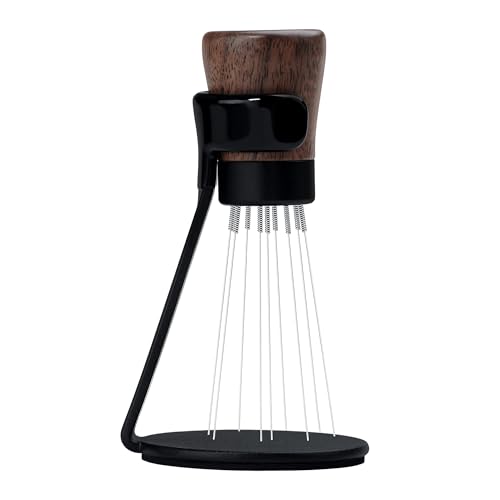
The Normcore WDT Tool V2.1 with Stand is built for baristas who treat espresso preparation like precision work, not guesswork. I use it daily to break up clumps and spread grounds evenly before tamping. Its 9 stainless steel needles are thin enough (0.23mm) to stir finely without bending. The anodized aluminum body feels solid, and the included stand keeps it clean and ready. A magnetic top lets me stick it to my machine, which saves space. It fits all portafilters and works fast. I’ve noticed fewer channels and more consistent shots since switching. The walnut handle version looks nice, but the standard one works just as well.
Best For: Home baristas and café professionals seeking precise, consistent espresso preparation with reliable ground distribution and minimal channeling.
Pros:
- Durable construction with anodized aluminum body and rust-resistant 304 stainless steel needles ensures long-term use
- Magnetic top and included stand offer convenient storage and workspace efficiency
- Enhances extraction consistency by effectively breaking up clumps and distributing grounds evenly across all portafilter sizes
Cons:
- Replacement needles, while included, may require careful handling due to their thin 0.23mm diameter
- No significant functional difference between standard and walnut handle versions, limiting value perception for upgraded model
- Limited portability due to stand and magnetic attachment design intended for permanent countertop setup
Subminimal Flick WDT Espresso Tool

A precision tool like the Subminimal Flick WDT Espresso Tool is ideal for baristas who value consistency and safety in espresso prep. Its retractable needles deploy with one click, reducing hazards from exposed tips. I like how the magnetic release makes extending or stowing the needles smooth and reliable. The flick mechanism feels intuitive, almost like a ritual, which keeps me engaged during busy shifts. It comes with extra needles and an Allen key, so maintenance is easy. I can place it on my counter or mount it magnetically on my machine-either way, it stays clean and close. Built from durable aluminum, it’s a long-term upgrade over basic WDT tools.
Best For: Baristas and coffee enthusiasts who prioritize precision, safety, and interactive design in their espresso preparation routine.
Pros:
- Retractable needles with one-click deployment enhance safety and convenience
- Magnetic mounting and durable aluminum build allow for flexible, hygienic placement
- Flick mechanism and smooth operation elevate the espresso ritual with engaging usability
Cons:
- Higher price point compared to basic WDT tools may deter casual users
- Requires occasional maintenance with included Allen key for needle replacement
- Magnetic base may not adhere securely to all machine surfaces depending on material
MATOW 53mm Coffee Distributor for Breville
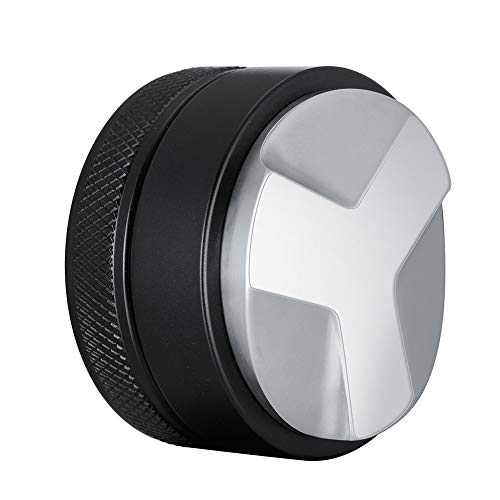
I rely on the MATOW 53mm Coffee Distributor when I need consistent, even distribution with my Breville machine-especially if I’m using a Barista Express, Pro, or Bambino Plus. It fits perfectly in 54mm baskets, gliding smoothly without snagging. The three angled slopes help spread grounds in a circle, which improves puck prep and shot consistency. I adjust the height in seconds with the built-in screw-no tools needed-so it works whether I’m running low doses or full 20g shots. The stainless steel base feels solid, and the anodized aluminum handle won’t slip, even with damp hands. It’s simple, durable, and works right out of the box.
Best For: Home baristas using Breville machines like the Barista Express, Pro, or Bambino Plus who want consistent, tool-free coffee distribution.
Pros:
- Ensures even coffee distribution with three angled slopes for improved puck formation and shot consistency
- Tool-free height adjustment via built-in screw accommodates various dose amounts and basket types
- Durable construction with food-grade stainless steel base and anti-slip anodized aluminum handle
Cons:
- Designed specifically for Breville 54mm baskets, limiting compatibility with other brands or portafilter sizes
- Slight learning curve to optimize height setting for different roast profiles and doses
- Higher price point compared to basic distribution tools without adjustable features
Apexstone 58mm Coffee Distributor Tool

You’ll want this distributor if you’re using a 58mm portafilter on machines like the Breville Barista Pro, Rancilio Silvia, or any E61 group head-its stainless steel base fits snugly into those baskets without wobbling. I use it daily because the height adjusts with a simple screw, no tools needed, so I can fine-tune for any dose or basket depth. The flat top gives me even palm tamping with better pressure control, which improves shot consistency. Made from rust-resistant 304 stainless steel and aluminum, it’s durable and easy to clean-just disassemble, rinse, and brush. It’s sleek, functional, and backed by a 1-year warranty if anything goes wrong.
Best For: Espresso enthusiasts using 58mm portafilters on machines like the Breville Barista Pro, Rancilio Silvia, or E61 group heads who want precise, consistent coffee distribution and tamping.
Pros:
- Height adjustable via tool-free screw mechanism for customized fit with different doses and basket depths
- Constructed from durable, rust-resistant 304 stainless steel and aluminum with a sleek, easy-to-clean design
- Enables even coffee distribution and consistent palm tamping for improved shot reproducibility
Cons:
- Limited to 58mm portafilters, incompatible with smaller or larger sizes
- Palm tamping design may require practice for users accustomed to traditional tampers
- Higher price point compared to basic distribution tools or DIY solutions
WDT Tool with Stainless Steel Needles (Matte Black)

This WDT tool with stainless steel needles suits baristas who value precision and durability in their coffee prep. I use it daily to break up clumps and evenly distribute grounds before tamping. Its 10 included 0.35mm stainless steel needles-plus 10 spares-resist corrosion and last longer than plastic alternatives. The matte black aluminum handle feels sturdy, and the cone shape fits neatly into 58mm portafilters. I can remove needles to customize stiffness, using 4 to 10 based on grind size. It works with any espresso machine and cleans easily. A stand keeps my counter tidy. Just watch the sharp tips. At 5.3 ounces, it’s lightweight but solid.
Best For: Baristas and coffee enthusiasts seeking precise, durable tools to improve espresso shot consistency through even coffee ground distribution.
Pros:
- Features 10 durable 0.35mm stainless steel needles (plus 10 spares) that resist corrosion and outlast plastic alternatives
- Customizable needle count (4 to 10) and cone-shaped design allow precision fitting into 58mm portafilters and tailored stiffness
- Includes a stand for organized storage and clean workspace, with a lightweight yet sturdy matte black aluminum handle
Cons:
- Sharp needle tips require careful handling to avoid injury
- Limited to espresso preparation use, offering no functionality beyond coffee distribution
- May be overbuilt for casual users who don’t prioritize precision grinding and tamping
Factors to Consider When Choosing Coffee Distribution Tools
You’ll want to take into account needle count first-tools like the WDT 36 come with more prongs for deeper bed disruption, while simpler 3- or 5-needle models work fine for lighter doses. Check the material quality, too, since stainless steel holds up better than plated or plastic parts over time. Make sure the tool fits your portafilter, is easy to clean, and feels comfortable in your hand during busy shifts.
Needle Count Options
Most coffee distribution tools come with between 5 and 10 needles, and the number you choose can have a real impact on how evenly your coffee grounds settle in the portafilter. If you’re using a finer grind, higher needle counts (8–10) break up clumps more effectively, promoting uniform extraction. But with coarser grinds or lighter doses, fewer needles (5–6) reduce the risk of over-mixing or bumping the basket walls. Some tools let you adjust between 4 and 10 needles, giving you flexibility based on your dose, grind size, and technique. Thinner needles-around 0.35mm-slice through compacted grounds without moving too much coffee around. Stainless steel is standard: it’s durable, rust-resistant, and safe for daily use. More needles boost efficiency, but demand a steadier hand. Pick based on your typical setup and how much control you want during distribution.
Material Quality Check
When choosing a coffee distribution tool, the materials used directly affect durability, hygiene, and daily performance. You’ll want 304-grade stainless steel for the distribution head-it resists rust and holds up in wet environments. Food-grade aluminum works well for handles or stands since it’s light, strong, and won’t corrode with regular cleaning. If the tool has a grip, make sure it’s made from BPA-free plastic combined with quality metal parts to avoid warping, staining, or heat damage. Avoid walnut wood unless you’re prepared for extra upkeep; it looks nice but can absorb moisture and odors over time. Look for non-slip textures or coatings on handles-they keep your grip steady when working with fine, dry grounds. These details matter daily. Choose materials that support consistent performance, not just looks. Durable, cleanable components save time and improve reliability in a busy routine.
Compatibility With Portafilter
A well-matched coffee distribution tool guarantees even ground distribution by aligning precisely with your portafilter basket’s diameter, typically either 53mm or 58mm. If you use a standard 58mm portafilter-common in commercial and high-end home machines-choose a tool with a 58.5mm base for full coverage. For compact or entry-level machines, like those from Gaggia or Rancilio Silvia, a 53mm-compatible tool fits better. Using the wrong size leaves gaps, causing uneven distribution, channeling, and weak espresso. Some tools, like the Pullman Chisel or the Espro Presso, offer adjustable mechanisms that adapt to different basket depths and doses, adding flexibility across setups. Always check your portafilter size before buying-most are stamped on the basket or group head. Matching size secures consistency shot after shot, making compatibility a non-negotiable part of your tool choice.
Ease Of Cleaning
After ensuring your distribution tool fits your portafilter properly, the next practical factor to examine is how easy it is to keep clean. Choose tools made from non-porous materials like stainless steel or anodized aluminum-they resist coffee oil buildup better than wood, which can absorb oils and degrade. Look for smooth finishes and minimal crevices, since those spots trap grime and make cleaning harder. Tools with removable parts let you clean thoroughly and reduce leftover grounds that could spoil your next shot. Some models include built-in brushes for quick cleanup right after use, which helps maintain hygiene. If dishwasher-safe, parts can be sanitized consistently with minimal effort-just make sure to check manufacturer guidelines. These features save time and improve maintenance, especially during busy shifts. Prioritize designs that support fast, complete cleaning so you keep your tool performing well day after day.
Ergonomic Design Features
You’ll want a distribution tool that feels natural in your hand, especially when prepping shot after shot. A non-slip handle with a durable, moisture-resistant grip keeps your hold steady, even with damp palms or busy hands. Look for ergonomically shaped handles that nestle comfortably in your palm, enabling smooth, low-effort motion when leveling grounds. Tools with balanced weight-centered near the handle-cut down on wrist strain during back-to-back shots. Rounded edges and slick surface finishes prevent chafing, so you can work without irritation. Most top picks weigh under 6 ounces, making them light enough for all-day use. Compact sizing helps, too, fitting snugly in your grip without crowding the portafilter. You’re not just saving time-you’re reducing fatigue with every twist. A well-designed tool won’t slip, dig in, or tire you out. It just works.
Adjustability And Customization
Most high-performing distribution tools now include features that let you fine-tune performance to match your workflow and equipment. You can adjust needle counts-typically from 4 to 10-to control distribution intensity based on your grind size and dose. Adjustable height mechanisms let you align the tool with different portafilter basket depths without shims or extra tools. Modular designs allow disassembly, so you can reconfigure parts for various machines or brewing styles. Some models support dual usage: use them handheld for speed or mount them magnetically or with adhesive bases for repeatable positioning. Interchangeable needle systems often come with spare sets, so you can swap diameters or replace worn parts over time. This flexibility means you’re not locked into one setup-you adapt as your needs change, maintain consistency, and extend the tool’s life without buying a new one.
Build Durability
A well-built distribution tool stands up to daily use behind the espresso bar, and that starts with smart material choices. You want 304 stainless steel needles-they resist rust even with constant moisture exposure during cleaning. An anodized aluminum alloy handle adds strength and wears well over time, maintaining shape and function. Look for a solid, non-hollow base design; it prevents bending or cracking when you apply pressure during distribution. Hollow parts dent easier and weaken the tool. Replacement needles matter too-some models include up to 20 extras, letting you swap them as needed and extend the tool’s life. Components that resist corrosion, avoid moisture absorption, and feature nonstick surfaces keep your tool hygienic and durable. These features guarantee your tool performs consistently, shift after shift, without degrading in demanding café environments.
Storage And Portability
Smart storage and portability keep your distribution tool ready and damage-free between uses. Tools with integrated stands let you store them upright, protecting the needle and reducing surface contact for better hygiene. If space is tight, pick compact models under 4 inches tall and weighing less than 2 ounces-they fit neatly in crowded stations or travel kits. Magnetic bases help, too, letting you stick the tool to a rail or machine, saving drawer space and keeping it within reach. Some designs include storage tubes or small compartments for spare needles, so you won’t lose or contaminate them on the go. For maximum flexibility, go for disassemblable tools with removable parts; they pack flat and integrate easily into organized kits. These features matter most if you compete, travel with gear, or run a high-volume shop where every inch and second count.
Frequently Asked Questions
Can I Use WDT Tools for Cold Brew?
You can use WDT tools for cold brew, but it’s usually unnecessary. Cold brew relies on long steeping, so uneven distribution matters less than in espresso. If you’re making cold brew with a fine grind or want consistent extraction, a quick stir with a WDT needle helps. But most people use coarse grinds and stirring by hand, so dedicated tools won’t improve results much. Save WDT for espresso unless you’re troubleshooting.
Do Distribution Tools Affect Coffee Flavor Directly?
Yes, distribution tools affect coffee flavor directly by ensuring even coffee grounds in the portafilter. You’ll get a more consistent extraction when the coffee is level and free of clumps. Uneven distribution causes channeling, leading to sour or bitter shots. A simple tool like a WDT pick or a calibrated distributor helps you achieve balance. It’s not just about looks-it’s about precision, repeatability, and better espresso daily.
Are Wooden-Handled Tools Dishwasher Safe?
You shouldn’t put wooden-handled tools in the dishwasher. The hot water and detergent weaken the wood over time, causing cracks or warping. Instead, rinse them by hand and dry immediately. Some baristas use mineral oil to condition the wood monthly. Stainless steel parts are usually dishwasher safe, but the handle isn’t. Protect your tool-hand washing keeps it functional and durable longer.
How Often Should I Replace WDT Needles?
you should replace wdt needles every 3–6 months with regular daily use. they bend or dull over time, especially stainless steel ones like the ones used in the udds or nanopresso kits. once they start misaligning or won’t insert smoothly into your portafilter, it’s time to swap them out. nylon-coated needles last longer and resist corrosion. always check them weekly for wear. cheap to replace, so keep a spare set on hand. don’t wait for breakage-performance drops before failure.
Can I Make a DIY Coffee Distributor at Home?
You can make a DIY coffee distributor at home, and it’ll work okay for basic use. Grab a sturdy hex key or a bent paperclip, then file the end flat-just enough to stir the grounds evenly. It won’t match a precision tool like the WDT comb or Stockfisch distributor, but it helps reduce clumping. Just remember: homemade tools lack consistency, so tamp carefully. Clean it after every use to avoid static and old coffee buildup.