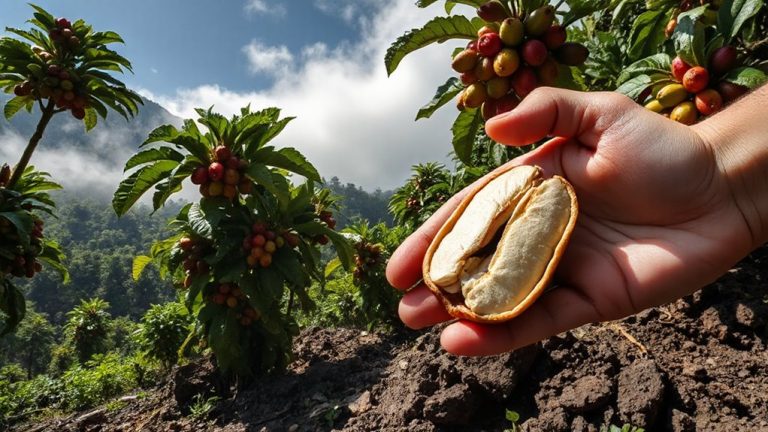
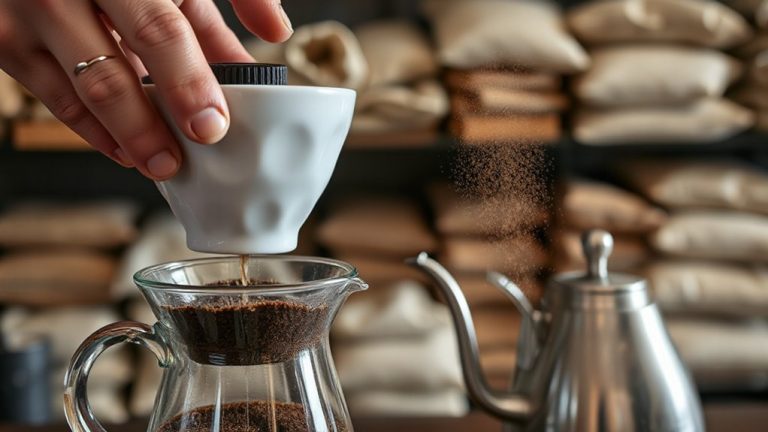
What Makes Gitega Coffee a Hidden Contender for Specialty Buyers
You’re getting exceptional value with Gitega coffee-its high-altitude volcanic terroir gives bright acidity and layered notes of citrus, red fruit, and chocolate. Smallholder farmers use careful, organic methods that boost quality and consistency. Fair trade cooperatives guarantee ethical sourcing and community benefits. It shines in medium roasts and pour-over brews. If you’re exploring standout African coffees, this region’s approach explains why it’s gaining serious attention.
Notable Insights
- Gitega’s high-altitude, volcanic terroir imparts complex citrus, red fruit, and chocolate notes with bright, clean acidity.
- Smallholder farms use meticulous, shade-grown practices that enhance bean quality and cup consistency.
- Ethical production through fair trade cooperatives ensures traceability, fair wages, and community development.
- Direct sourcing from farmer-owned cooperatives increases transparency and supports sustainable income.
- Responds exceptionally to medium roast and pour-over brewing, highlighting its nuanced, balanced flavor profile.
Why Gitega Coffee Is Winning Over Specialty Roasters
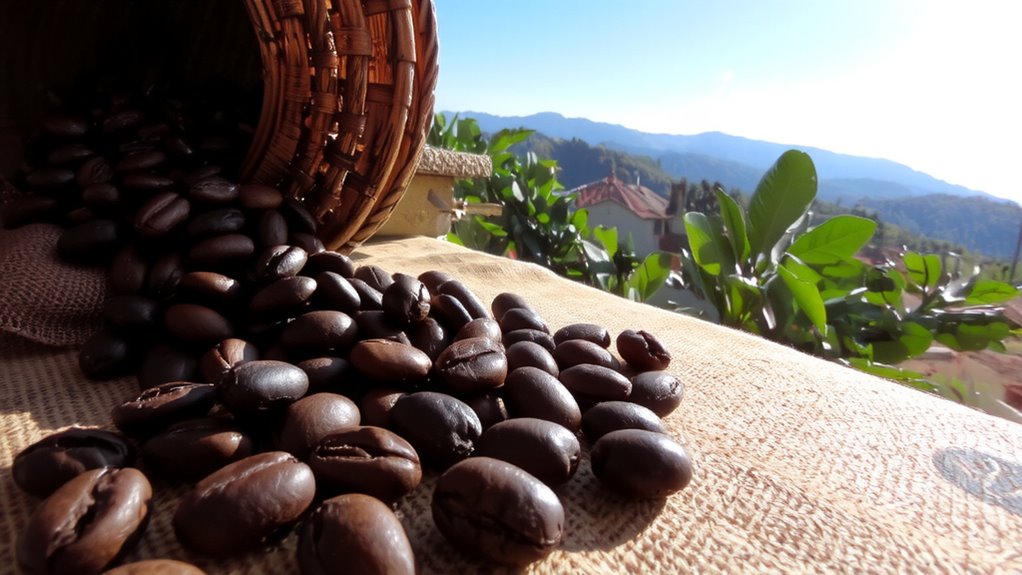
While you might expect a coffee’s origin to be just a label, in the case of Gitega, it speaks directly to quality that specialty roasters can’t ignore. You’ll find Gitega beans consistently deliver flavor complexity-think bright citrus, red fruit, and subtle chocolate-backed by clean acidity and balanced body. That’s no accident; it’s the result of terroir uniqueness, shaped by high altitudes, volcanic soil, and steady rainfall in Burundi’s Gitega province. These conditions slow bean development, boosting sugar density and acidity, which translates to a more layered cup. For roasters aiming to highlight traceability and nuanced profiles, Gitega offers a reliable benchmark. Its profile responds well to medium roasting, preserving delicate notes without tipping into sourness. Compared to coffees from more commercial regions, Gitega stands out for distinctiveness and consistency, making it a practical choice for sourcing standout single origins without guesswork.
How Tiny Farms Make Better Gitega Coffee
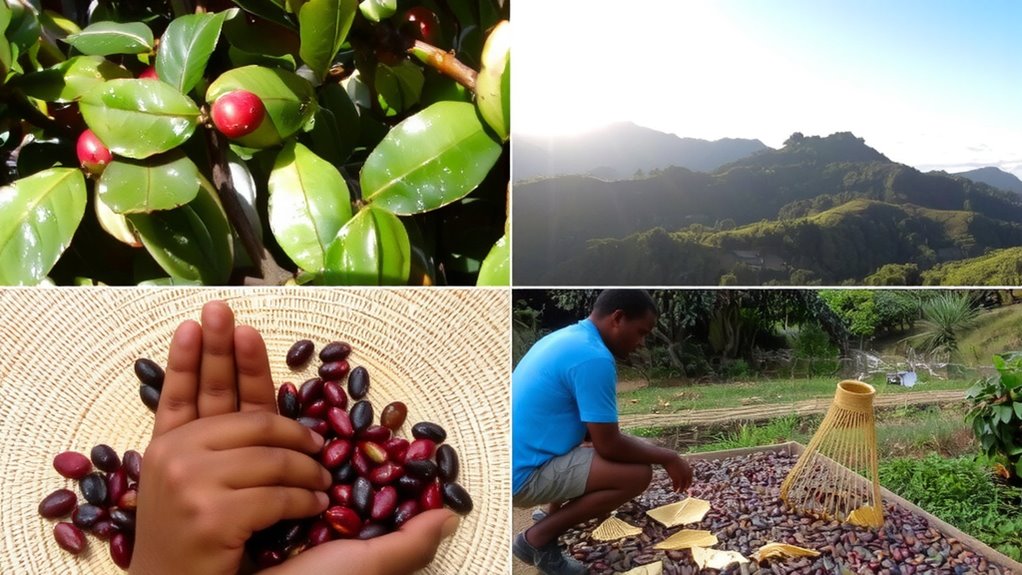
Smallholder farms are the backbone of Gitega’s coffee quality, and here’s why it matters for your brew. The small farm size allows farmers to apply precise cultivation techniques that larger operations can’t match. With only 0.5 to 2 hectares per grower, each plant gets attention that boosts bean consistency and flavor clarity. Farmers use shade-grown methods, hand-weeding, and organic composting-techniques that enhance soil health and bean quality.
| Farm Size (hectares) | Key Cultivation Techniques |
|---|---|
| 0.5–1.0 | Shade-growing, hand harvest |
| 1.0–2.0 | Intercropping, compost use |
| Average 1.2 | Manual pest control |
These methods increase labor needs but also improve cup score and batch control. When you roast or brew Gitega coffee, you’re working with beans shaped by deliberate, hands-on farming-giving you more predictable, nuanced results in the cup.
How Gitega Proves Its Coffee Is Ethical
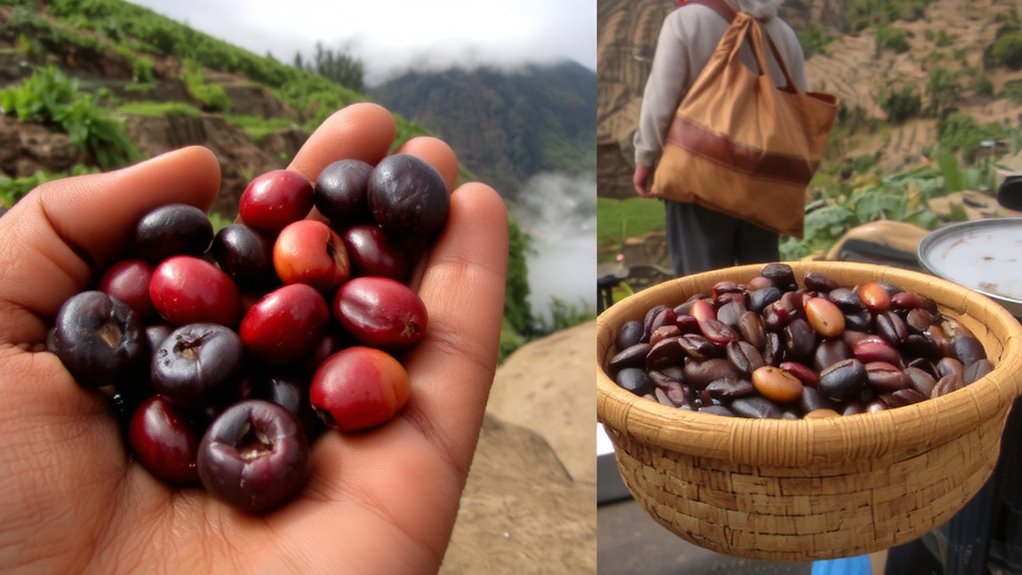
You can taste the care in every sip of Gitega coffee, and that starts with how farmers grow their crops-not just for quality, but for fairness. Gitega cooperatives follow strict fair trade standards, ensuring you’re not just buying beans but supporting real wages and safe working conditions. These certifications aren’t just labels-they’re verified through annual audits that track wages, labor hours, and environmental practices. The fair trade premium also funds community impact projects like clean water systems and local schools. When you choose certified Gitega coffee, you back a system where farmers retain ownership and profits stay local. Unlike some direct-trade models that skip oversight, fair trade offers transparency you can check, not just trust. That accountability makes a measurable difference. Ethical proof here isn’t marketing-it’s in traceable supply chains, farmer-led cooperatives, and consistent third-party reviews. You get quality with accountability.
How to Source Gitega Coffee Directly and Responsibly
To source Gitega coffee directly and responsibly, start by connecting with farmer-owned cooperatives like COOPAC or Abahuzamugambi Ba Kawa, which handle export logistics and maintain transparent records. Direct sourcing cuts out middlemen and supports fair partnerships that benefit smallholder farmers. Build lasting relationships by visiting farms or calling regularly to check growing practices and pricing fairness. Always request crop samples before committing to bulk orders.
| Approach | Benefit |
|---|---|
| Direct sourcing | Higher farmer income, traceability |
| Fair partnerships | Long-term quality, community stability |
| Sample first | Guarantees quality, reduces risk |
| Visit farms | Builds trust, verifies ethics |
| Clear contracts | Prevents disputes, sets expectations |
This method guarantees ethical, consistent supply.
Best Ways to Experience Gitega Coffee, From Roast to Cup
A medium roast brings out the best in Gitega coffee, preserving its bright acidity and nuanced notes of citrus and red fruit while avoiding the bitterness that darker roasts can introduce. For peak flavor notes, use freshly ground beans and a consistent brew method. Pour-over, like the Hario V60 or Chemex, highlights clarity and acidity, making it ideal for tasting Giteba’s delicate profile. French press works well too, offering a fuller body but slightly less nuance. Cold brew softens acidity, emphasizing sweetness, though some subtle flavor notes may fade. Use clean, filtered water at 195–205°F and a 1:16 coffee-to-water ratio as a starting point. Adjust grind size and brew time based on your method-finer for pour-over, coarser for French press. Each adjustment affects flavor notes and balance. Repeatable brew methods guarantee consistency, helping you pinpoint what works best for your palate. For those exploring this method, reviewing a guide on best pour-over coffee makers can enhance both setup and results.
On a final note
You’ll find Gitea coffee delivers consistent, clean flavors thanks to small farms and strict quality control. If you’re sourcing, go direct through cooperatives like COOPAC for traceability and fair pay. For brewing, use a medium roast and a burr grinder-try a pour-over or Chemex to highlight its citrus and tea-like notes. It’s not always cheaper than Ethiopian or Kenyan beans, but the ethical proof and flavor clarity make it a smart pick for discerning roasters.