Recognizing Hollow Mouthfeel Caused by Too-Low Coffee Concentration
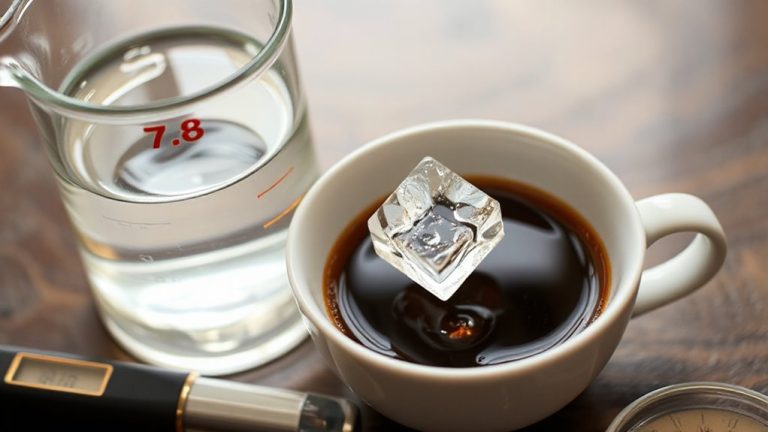
You’re likely dealing with hollow mouthfeel if your coffee tastes sour, feels thin, and lacks sweetness. That’s usually from under-extraction or too-low concentration-caused by water that’s too cool, a coarse grind, stale beans, or using too little coffee. Aim for a 1:15 to 1:17 brew ratio and water between 195°F and 205°F. A consistent burr grinder and fresh beans make a real difference. Fixing these factors boosts body and balance in every cup.
Notable Insights
- A hollow mouthfeel often results from under-extraction due to low coffee concentration.
- Weak coffee lacks dissolved solids, leading to a thin, watery texture in the cup.
- Sour or flat flavors with missing sweetness signal underdeveloped extraction and low strength.
- Using too little coffee or too much water dilutes the brew, reducing body and depth.
- Adjust the coffee-to-water ratio to 1:15 or 1:14 to increase concentration and improve mouthfeel.
What Causes Hollow Mouthfeel in Coffee?
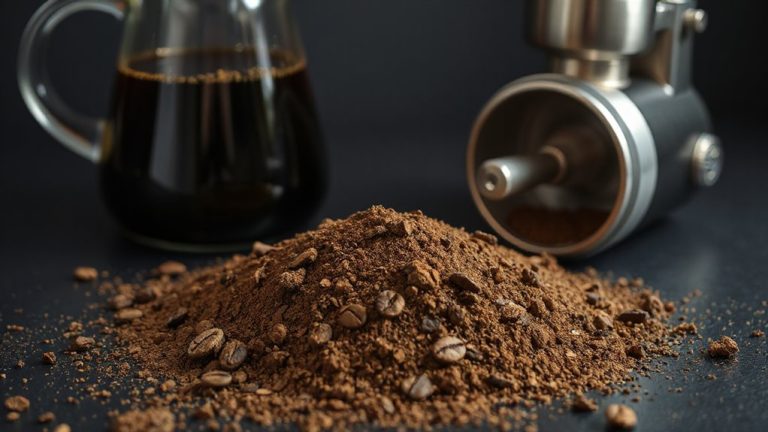
A thin, unsatisfying sensation on your palate-often called hollow mouthfeel-typically stems from under-extraction, where too little coffee mass dissolves into your brew. You’re likely using water that’s too cool or brewing too quickly, preventing proper dissolution of flavors. Poor water quality worsens this-overly soft or filtered water lacks minerals needed to pull out compounds effectively. If your beans aren’t fresh, say older than three weeks post-roast, they release CO₂ slowly and extract unevenly, increasing hollowness. Always use clean, balanced water (like third-wave water tablets offer) and grind just before brewing to maximize solubility. Freshness matters: newly roasted beans, properly stored, yield more consistent extraction. While a blade grinder is cheaper, a burr grinder gives you the uniform particle size needed to avoid weak, hollow results. Adjust your grind finer or extend brew time slightly to increase extraction.
Why Weak Coffee Lacks Body and Flavor
Weak coffee tastes flat and feels thin because it simply doesn’t have enough dissolved coffee solids in the cup-what you’re sipping is more water than extract. This creates a mouthfeel imbalance, leaving your coffee lacking the rich, rounded texture you’d get from a properly brewed cup. Without enough coffee material, you also face flavor dilution, where even the brightest notes become faint and underwhelming. You’re not just losing body-you’re losing clarity and depth. Using a standard ratio like 1:16 (coffee to water) helps avoid this, but tweaking to 1:15 or even 1:14 can boost concentration. Grinders matter too; a consistent grind from a burr grinder improves extraction. Don’t assume more water is better-too much just washes out what you want. Fixing weak coffee starts with measuring accurately and respecting the balance between strength and flavor.
Signs of Under-Extraction and Weak Coffee
That thin, watery sip you get mid-cup? It’s a clear sign of under-extraction and weak coffee. When your brew lacks concentration, you’re left with a thin texture and underdeveloped flavors. You might also notice a sour aftertaste-acidity without balance-because not enough soluble compounds were extracted. Proper brewing needs the right ratio, grind size, and water temperature to pull out the good stuff.
Here’s how to spot the signs:
| Symptom | What It Means |
|---|---|
| Sour aftertaste | Under-extracted acids dominate |
| Thin texture | Low dissolved solids, weak body |
| Hollow mid-palate | Missing sweetness and depth |
Adjust your grind finer or increase coffee dose to fix it. Use a scale and timer for consistency. A $20 French press or pour-over can outperform pricier gear if used correctly.
Common Mistakes That Dilute Your Brew
If you’re ending up with weak, lifeless coffee despite using fresh beans and clean equipment, it’s likely because common missteps are secretly diluting your brew. Overheating water breaks down delicate flavor compounds, leading to flat, thin results-especially in lighter roasts. Aim for 195°F to 205°F; most kettles don’t regulate this well, so consider a temperature-controlled electric one. Ignoring grind age is another silent culprit: coffee ground too far in advance loses volatile aromatics fast, leaving you with hollow, muted flavor even if your dose seems right. Grind just before brewing for best results. Using too much water or too little coffee also skews strength, but those are easy to fix compared to overlooked factors like water heat and stale grounds. Pay attention to timing and storage-use an airtight container and brew within minutes of grinding.
Ideal Brew Ratios for a Full-Bodied Cup
While you might think strength comes just from dark roasting or long brew time, the real foundation of a full-bodied cup lies in hitting the right coffee-to-water ratio. Aim for 1:15 to 1:17-like 20g coffee to 300g water-for balanced richness without over-extraction. Too high a ratio (too much water) leads to hollow flavor, especially if your beans are stale; older beans lose solubles, so even proper ratios may taste thin. Water hardness matters too: soft water can under-extract, making coffee taste weak, while very hard water exaggerates bitterness. Use filtered water for consistency. Freshly ground beans under two weeks post-roast respond best to standard ratios. If your brew lacks body despite correct measurements, check bean age and water hardness before changing your method. These factors directly impact extraction and mouthfeel-adjust them first.
How to Adjust Your Brew Method for Strength
Since brewing strength depends on how much coffee you extract, tweaking your method isn’t just about using more beans-it’s about controlling variables that affect extraction. Start by adjusting your grind size: finer particles increase surface area, boosting extraction, while too fine can over-extract or clog filters. If your coffee tastes weak or hollow, try a slightly finer grind, especially for pour-over or espresso. Brew temperature also matters-aim for 195°F to 205°F. Water that’s too cool under-extracts, leaving sour, thin flavors; too hot can scorch, creating bitterness. For immersion methods like French press, steep time and grind size are key. A coarser grind with longer steep may help if you’re lacking strength. With pour-over, guarantee even saturation and consider a slightly slower pour. Small, deliberate changes to grind size and brew temperature let you target strength without altering your coffee-to-water ratio, helping avoid dilution and improve body. For pour-over specifically, using the best coffee grinds for pour-over can make a significant difference in flavor clarity and body.
Equipment Upgrades That Increase Concentration
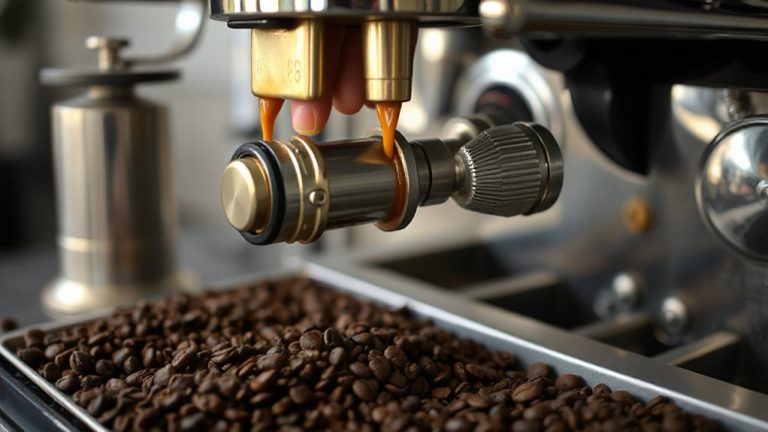
Though your grind and brew settings play a major role, upgrading your equipment can make a noticeable difference in coffee concentration when you’ve hit the limits of adjustment. Better machines and grinders enhance extraction through improved brew pressure and grind consistency, both critical for strength and body. For example, a dual boiler espresso machine maintains stable temperature and pressure, while a high-quality burr grinder reduces boulders and fines. A reliable precision burr grinder is essential for achieving the consistent particle size needed to prevent under-extraction and hollow mouthfeel. Below are common upgrades and their effects:
| Upgrade | Key Benefit | Consideration |
|---|---|---|
| Dual Boiler Espresso Machine | Consistent brew pressure (9+ bar) | Higher cost, larger footprint |
| Precision Burr Grinder | Improved grind consistency | Requires regular calibration |
| Scales with Timer | Accurate dose and yield tracking | Needed for repeatability |
| Temperature-Controlled Kettle | Ideal water temp stability | Essential for pour-over strength |
These tools help you push beyond weak, hollow coffee with precise control.
On a final note
You’ll fix hollow mouthfeel by increasing coffee concentration. Use a 1:16 brew ratio (like 20g coffee to 320g water) as a baseline. Grind finer or extend brew time if your coffee tastes weak. A gooseneck kettle improves pour control; a better grinder enhances extraction. Cold brew needs more coffee-try 1:8. Avoid over-diluting with ice. These tweaks boost body and flavor reliably.