Troubleshooting Bitter Espresso: Identifying Causes From Over-Extraction to Machine Pressure
Your bitter espresso likely stems from over-extraction, often caused by a grind that’s too fine or uneven tamping-stick to about 30 pounds of pressure for a level puck. Old beans, dirty portafilters, or scale buildup can also add harshness. Low-quality grinders create inconsistent particles, worsening bitterness. Machines without pressure gauges make it hard to spot pump issues, which affect extraction. For cleaner shots, start fresh and check your gear-you’ll find better balance with a few precise tweaks.
Notable Insights
- Over-extraction from overly fine grind size or excessive tamping pressure can lead to bitter espresso.
- Uneven tamping causes channeling, resulting in inconsistent extraction and localized over-extraction.
- Stale or poorly roasted beans lose nuanced flavors and develop harsh, bitter notes over time.
- Coffee residue and mineral buildup in the machine contribute to off-flavors and extraction issues.
- Inconsistent brew pressure, often below or above 9 bars, disrupts extraction and causes bitterness.
What Causes Bitter Espresso? Start With Over-Extraction
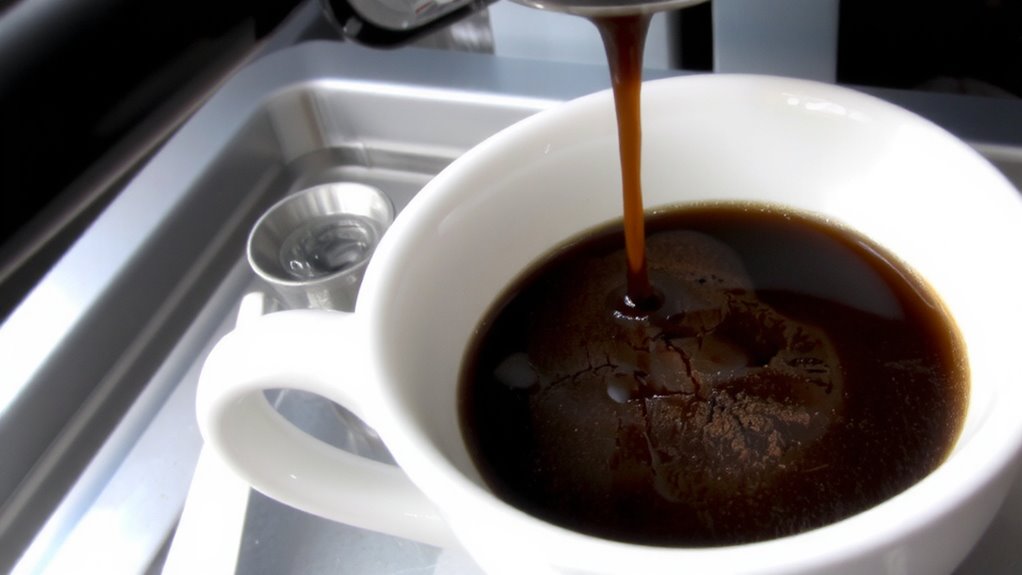
While you might blame the beans or your espresso machine, over-extraction is often the real reason your shot tastes bitter. When water pulls too many compounds from finely ground coffee, you get harsh, astringent flavors. Your tamping technique plays a big role-uneven or excessive pressure creates channels, forcing water through certain spots too fast and over-extracting others. Aim for consistent, level tamping with about 30 pounds of pressure. Water temperature matters just as much; if it’s above 205°F, it can scorch the puck, extracting unwanted bitterness. Most machines allow some temperature adjustment-dial it down if your shots taste burnt. You don’t need high-end gear to fix this: a reliable tamper and checking your machine’s thermostat can make a real difference. Start with these controllable factors before assuming it’s the beans.
Wrong Grind? That’s Bitter Espresso
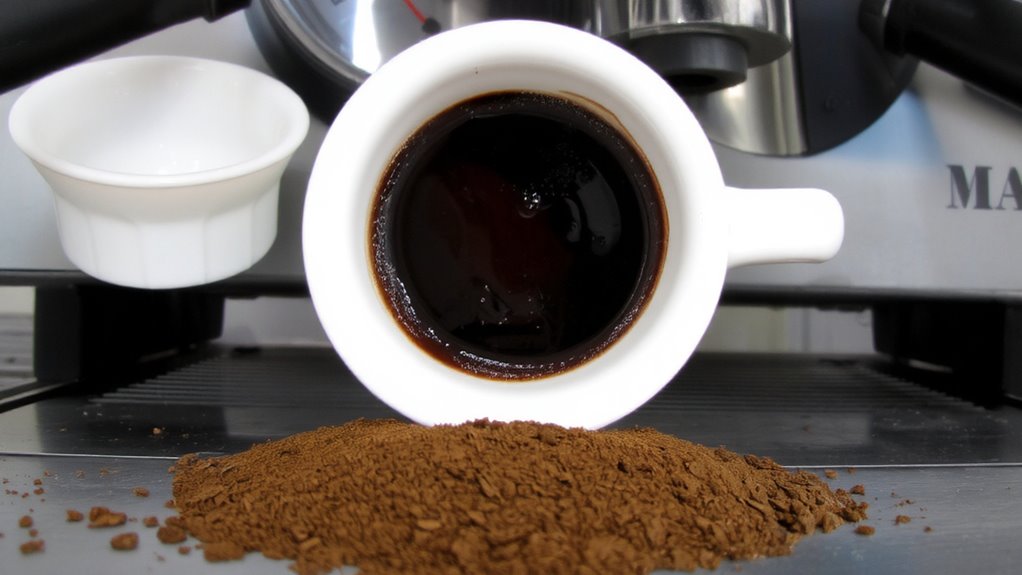
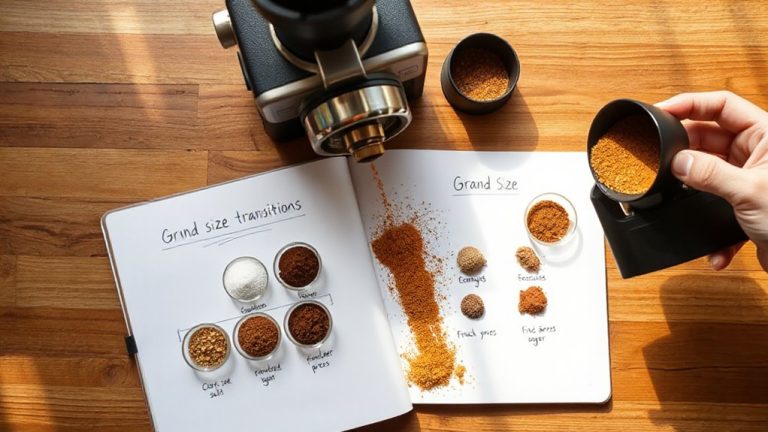
You’ve checked your tamping and adjusted the temperature, but if your espresso still tastes bitter, the problem might be sitting right in your grinder. The wrong grind size is a common culprit-too fine, and water struggles to pass, over-extracting bitter compounds. Even with the right dose, poor grind size consistency from a low-quality burr grinder leads to uneven extraction. Flat or conical steel burrs in mid-range grinders like the Baratza Encore improve dose consistency and particle uniformity, reducing bitterness. Blade grinders, however, create erratic particles, making balanced shots nearly impossible. You need stable grind size adjustments: small tweaks change extraction fast. If your grinder only has broad settings, flavor control suffers. For predictable results, upgrade to a grinder with micro-adjustments. It’s not just about freshness-consistent grind size and reliable dose consistency are essential to dialing in smooth, clean espresso. Don’t overlook the machine’s partner: your grinder matters just as much. For help choosing the right tool, check expert reviews of the best coffee grinders to match your brewing needs.
Stale or Low-Quality Beans Cause Bitter Shots
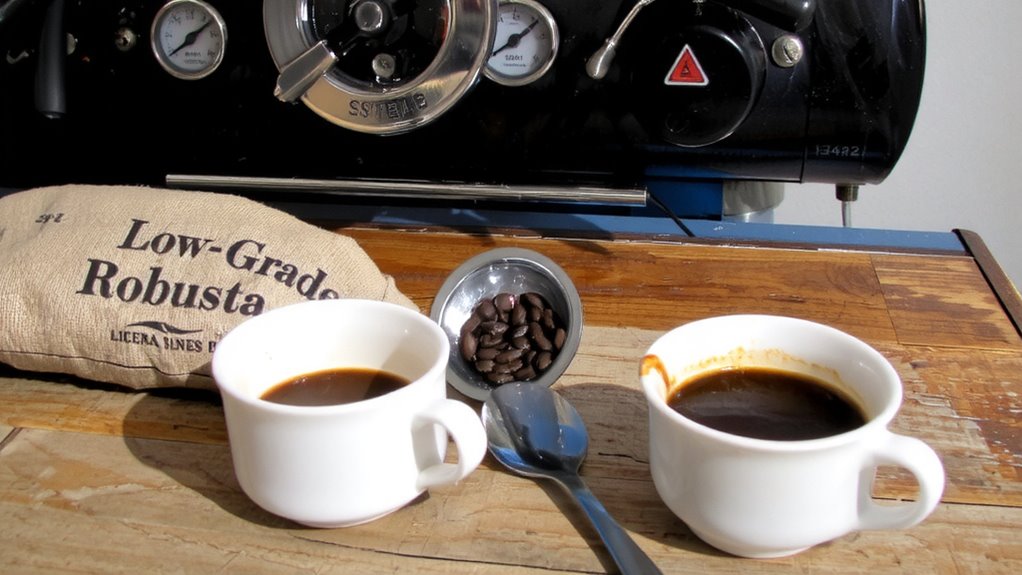
Bad beans make bitter espresso-no matter how good your machine or grinder. If your beans lack freshness, they’ve lost volatile compounds that balance flavor, leaving flat, sharp notes. Bean freshness matters most: use beans within 2–4 weeks of roast for peak clarity. Stale beans extract unevenly, often amplifying bitterness even with perfect technique. Roast quality also plays a key role. Poorly roasted beans-underdeveloped or scorching-introduce harsh, ashy flavors. Look for roasters who publish roast dates and source consistently. Avoid supermarket beans with no roast info; they’re often old or poorly stored. Light to medium roasts from specialty roasters typically offer cleaner profiles than dark, oily beans prone to bitterness. Even a high-end grinder like a Niche Zero or EK43 can’t fix bad input. Check your beans first-great espresso starts long before brewing. Exploring best coffee beans from around the world can help you discover origin-specific flavors that enhance your espresso experience.
Dirty Machines Make Espresso Bitter
Grime buildup in your espresso machine silently sabotages flavor. Old coffee oils and residue in the portafilter, basket, or group head create off-tastes that make espresso taste bitter. You might not see it, but daily cleaning prevents this. Water hardness plays a bigger role than you think-hard water leaves mineral buildup in the boiler and pipes, affecting water quality and temperature stability. Over time, that scale reduces machine efficiency and impacts extraction, leading to harsh, unbalanced shots. Descaling regularly with a proper solution removes this mineral buildup and keeps internals functioning correctly. You don’t need expensive additives-just a routine. Backflush with detergent weekly if you use a machine with a three-way valve. Wipe the group head before and after each shot. These steps take seconds but save your coffee from hidden bitterness. Clean gear means clean taste. For Nespresso machines, using the official Nespresso descaler ensures optimal performance and longevity.
Pressure Problems Create Bitter Espresso
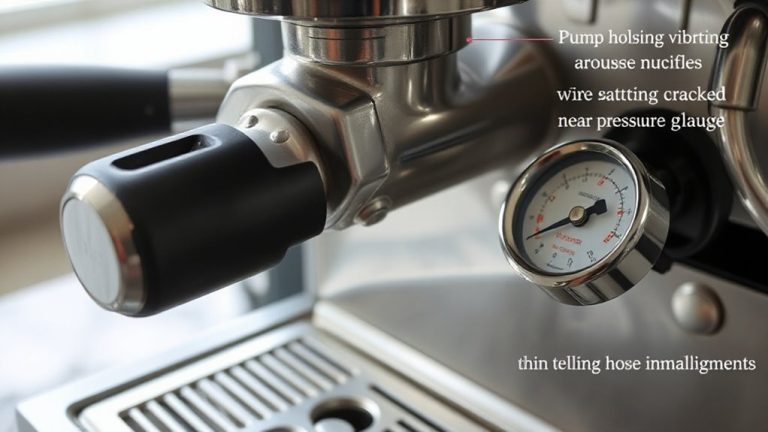
When your espresso tastes unexpectedly bitter, the issue might not be the beans or your grind-it could be the pressure. Ideal extraction needs around 9 bars of pressure; too much or too little causes bitterness. If your machine lacks a pressure gauge, you’re guessing-many budget models skip this feature, making troubleshooting harder. A faulty pump can drop pressure mid-shot, leading to uneven extraction and sour-bitter mixes. Pump failure isn’t always total; sometimes it delivers inconsistent flow, which harms flavor just as much. Machines with built-in gauges, like some Rancilio or Gaggia models, let you monitor real-time pressure and catch issues early. If pressure swings or doesn’t reach 9 bars, the pump may need service or replacement. Don’t ignore strange pump noises or long extraction times-they’re early signs. Consistent pressure matters more than power, so check your machine’s performance regularly, especially in older units.
Dialing In: Fix Bitterness Step by Step
If you’re pulling shots that taste harsh or overly sharp, it’s time to systematically adjust your variables to pinpoint the cause. Start by checking your tamping technique-uneven pressure leads to unbalanced extraction. Make sure you’re using consistent, level pressure. Then, evaluate your water temperature; too high can scorch the grounds, bringing out bitterness. Most machines allow minor tweaks-try lowering it by 5–10°F. Dial in your grind size next: finer grinds lengthen extraction, increasing bitterness risk. Use the table below to guide adjustments:
| Variable | Action to Reduce Bitterness |
|---|---|
| Tamping technique | Apply even, level pressure |
| Grind size | Go coarser in small increments |
| Water temperature | Lower by 5–10°F if above 200°F |
| Brew time | Aim for 25–30 seconds for 1 oz |
Adjust one at a time, then taste.
On a final note
You can fix bitter espresso by checking a few key factors. Start with your grind-too fine causes over-extraction. Use fresh, quality beans, and clean your machine regularly. Check that your machine delivers stable pressure, ideally 8–9 bars. Dial in your shot step by step: adjust grind size, dose, and tamp evenly. These practical steps lead to balanced, flavorful espresso.