Best Arabica Bean Coffee That Riches Can’t Resist
You’ll find the best Arabica bean coffee worth every dollar in options like Lavazza’s smooth, crema-rich blends or Kauai Coffee’s bright, floral Hawaiian beans. These balance origin, roast, and freshness without overpromising. Choose Lavazza for espresso depth or Kauai for light-roast clarity. If you value consistency and origin character, these stand out. Store them properly, grind fresh, and you’ll taste why some coffees command attention-and keep it. There’s more to discover about what makes each one distinct.
We are supported by our audience. When you purchase through links on our site, we may earn an affiliate commission, at no extra cost for you. Learn more. Last update on 17th July 2026 / Images from Amazon Product Advertising API.
Notable Insights
- Kauai Coffee’s estate-grown Arabica beans from volcanic Hawaiian soil offer a rare, bright mellow profile coveted by discerning palates.
- Lavazza Qualità Oro blends 100% Arabica beans from African highlands and Central America for a rich crema and refined fruity notes.
- Don Francisco’s Colombia Supremo delivers winey depth and floral sweetness, enhanced by nitrogen-flushed, recyclable packaging for freshness.
- High-altitude Arabica beans develop dense, complex flavors with bright acidity, making them a luxury favorite among coffee connoisseurs.
- Lavazza’s additive-free, medium-roast Arabica blends provide consistent, aromatic quality ideal for espresso and specialty brewing methods.
Amazon Fresh, Colombia Whole Bean Coffee Medium Roast, 32 Oz
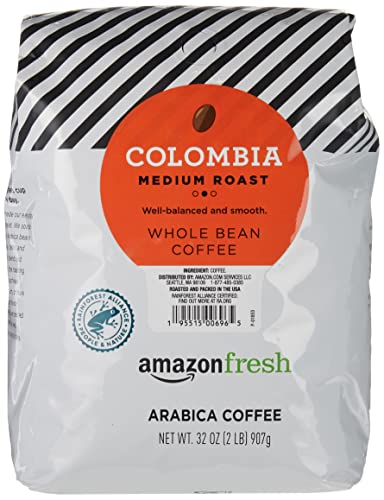
If you’re looking for a straightforward, reliable option that delivers consistent quality without a premium price, Amazon Fresh Colombia Whole Bean Coffee fits the bill. I use 100% Arabica beans from Colombia, which means you get a clean, balanced flavor profile every time. My 32-ounce whole bean package maintains freshness when stored properly and works well with most grinders. Roasted in the U.S., I offer a medium roast-smooth, full-bodied, with a finish that doesn’t linger too long. Compared to single-origin specialty brands, I’m less complex but more practical for daily use. If you want solid taste and value, I’m a no-frills choice that delivers.
Best For: Budget-conscious coffee drinkers seeking a reliable, everyday medium roast with consistent quality and ease of use.
Pros:
- Made from 100% Arabica beans sourced from Colombia for a clean, balanced flavor
- Large 32-ounce package offers good value and fewer grocery trips
- Medium roast profile is smooth and versatile, suitable for various brewing methods
Cons:
- Less complex and nuanced compared to premium single-origin specialty coffees
- Whole beans require a grinder, which may be inconvenient for some users
- Limited roast customization since only one roast level is available
Lavazza Espresso Whole Bean Coffee (2.2 lb)
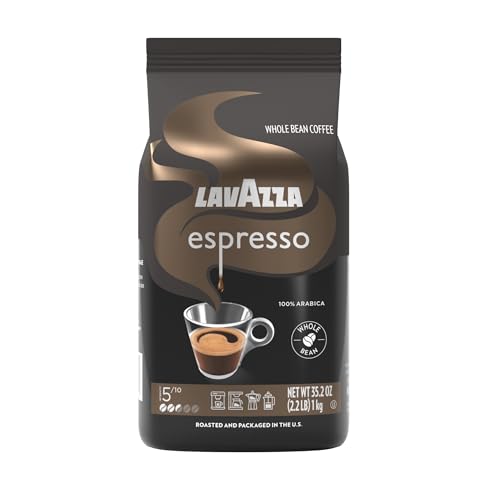
I choose Lavazza Espresso Whole Bean Coffee when I need a reliable, versatile 100% Arabica blend that performs well across multiple brewing methods, especially espresso and moka pot. It’s a medium roast with a 5/10 intensity, so it’s not too bold but still rich, offering a sweet, aromatic finish with subtle floral and fruit notes. Since it’s 100% Arabica from South America and Africa, the flavor stays clean and balanced. I’ve used it in drip machines and French presses too, and it works fine, though it shines best under pressure. The 2.2 lb bag lasts a while, and because Lavazza’s been sourcing sustainably since 1895, I trust the quality stays consistent.
Best For: Coffee lovers seeking a smooth, aromatic 100% Arabica blend ideal for espresso and moka pot brewing, with consistent quality from a trusted, sustainable brand.
Pros:
- Versatile medium roast suitable for espresso, moka pot, drip, and French press
- 100% Arabica beans with a balanced, sweet profile and delicate floral and fruit notes
- Sustainably sourced and produced by a brand with over a century of coffee expertise
Cons:
- Larger 2.2 lb bag may not be ideal for those who prefer buying smaller quantities for freshness
- Flavor profile, while smooth, may be too mild for fans of bold, intense roasts
- Limited origin specificity, making it harder to trace exact bean sources
Lavazza Qualità Oro Whole Bean Blend

Lavazza Qualità Oro stands out as a top pick for coffee lovers who want a smooth, aromatic 100% Arabica blend without the sharp bite of dark roasts. I use it mostly for espresso, and it delivers a clean shot with a rich crema and subtle fruity notes. Sourced from Central America and African highlands, it balances aroma and flavor well. Medium roasted, it works in drip machines or French press too-just adjust your grind size. I prefer a fine grind for my portafilter, but go coarser if you’re using a pour-over or press. With over 125 years of blending know-how, Lavazza gets the consistency right batch after batch.
Best For: Coffee enthusiasts seeking a smooth, medium-roast 100% Arabica blend with nuanced fruity notes and versatility across brewing methods.
Pros:
- Rich, balanced flavor with aromatic and fruity notes ideal for espresso and other brews
- Sourced from high-quality Arabica beans from Central America and African highlands
- Consistently crafted with over 125 years of Lavazza blending expertise
Cons:
- May lack the bold intensity preferred by dark roast lovers
- Requires precise grind size adjustment for optimal results across different brewers
- Larger 2.2-pound package may not suit those who prefer smaller, fresher batches
Lavazza Espresso Whole Bean Coffee, Medium Roast, 100% Arabica, 2.2 lb Bag
A solid go-to for coffee lovers who want versatility without sacrificing quality, this 100% Arabica blend works well across multiple brewing methods-from espresso machines to French press. I find it roasts at a balanced 5/10, offering a sweet, aromatic finish with subtle floral and fruit notes you don’t always get in medium blends. Sourced from South America and Africa, the beans are fresh, consistent, and never over-roasted. The 2.2 lb whole bean bag keeps flavor locked in, and since it’s pure coffee with no additives-processed in dedicated facilities-it’s reliable for clean taste. It’s not the cheapest, but you’re paying for uniformity and performance, especially if you switch brew styles daily.
Best For: Coffee lovers who prioritize versatility across brewing methods and a balanced, aromatic medium roast with subtle floral and fruity notes.
Pros:
- Works well with various brewing methods including espresso, moka pot, drip, and French press
- Made from 100% Arabica beans with a clean, sweet profile and distinct floral and fruit notes
- Large 2.2 lb whole bean bag maintains freshness and is produced without additives or cross-contamination
Cons:
- Priced higher than many standard coffee blends, which may not suit budget-focused buyers
- Flavor profile may be too mild for those who prefer bold, intense roasts
- Large bag size may not be ideal for those who consume coffee slowly or prefer frequent rotation of beans
Lavazza House Blend Whole Bean Coffee (12oz)

If you’re after a smooth, approachable medium-roast coffee with a touch of sweetness, Lavazza House Blend Perfetto Whole Bean Coffee fits the bill. I use it in my drip brewer most mornings, and it delivers a consistent, full-bodied cup with a velvety texture and a noticeable caramel sweetness that lingers. It’s a 100% Arabica blend from Central and South America, roasted to a 3/5 intensity, so it’s not too light or harsh. The 12oz bag keeps the beans fresh, and since it’s whole bean, I grind it just before brewing for better flavor. It’s not for espresso lovers needing high boldness, but if you want a balanced, everyday coffee rooted in Italian tradition, this blend works well. Lavazza’s focus on quality and sustainability adds to its reliability, making it a practical go-to for regular drinkers.
Best For: Daily coffee drinkers seeking a smooth, medium-roast 100% Arabica blend with subtle sweetness and a balanced profile ideal for drip brewing.
Pros:
- Delivers a full-bodied, velvety cup with pleasant caramel notes and consistent flavor
- Sourced from 100% Arabica beans with a medium roast (intensity 3/5) for a smooth, approachable taste
- Whole bean format preserves freshness and allows for grinding just before brewing
Cons:
- Not bold enough for espresso enthusiasts or those preferring strong, dark roasts
- Limited packaging details and potential variability in bag design
- May lack complexity for specialty coffee aficionados seeking bright or fruity notes
Farmer Brothers Premium Blend 100% Arabica Whole Bean Coffee – 5 lb. Bag

Though I might not be running a café, I can still appreciate why the Farmer Brothers Premium Blend 100% Arabica Whole Bean Coffee-sold in a 5 lb. bag-fits best for commercial settings like restaurants, hotels, and coffee shops. I use it at home because it’s cost-effective and consistently smooth, with a medium roast that brings out nutty, chocolatey notes without bitterness. It’s 100% Arabica, medium-bodied, and well-balanced-great for daily grinding and brewing in drip machines or batch brewers. The large bag means I need proper storage, but the bulk savings make it worth it for high-volume use. Unlike smaller retail bags, this one’s built for constant service, not occasional sipping.
Best For: Commercial settings like restaurants, hotels, and coffee shops, as well as high-volume home users seeking cost-effective, consistently smooth 100% Arabica coffee.
Pros:
- 100% Arabica beans with a smooth, balanced, medium-bodied flavor featuring nutty and chocolatey notes
- Cost-effective bulk packaging ideal for daily grinding and high-volume brewing
- Versatile medium roast suitable for drip machines, batch brewers, and various brewing methods
Cons:
- Large 5 lb. bag requires proper storage to maintain freshness
- May be excessive for light or infrequent coffee drinkers
- Bulk size is less convenient compared to smaller retail packages for occasional use
Amazon Fresh Colombia Whole Bean Coffee, Medium Roast, 12 Ounce
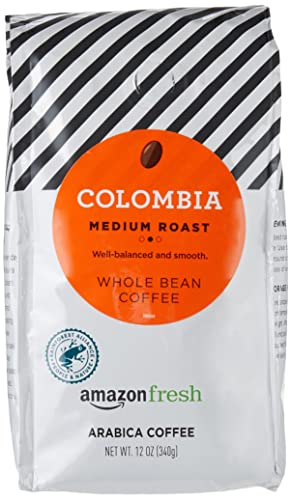
You’ll want this Amazon Fresh Colombia Medium Roast if you’re after a straightforward, quality Arabica coffee without the premium price tag. I find it smooth and balanced, with a medium body, hints of cocoa and brown sugar, and a faint citrus note that keeps it bright. The 12-ounce whole bean bag locks in freshness since it’s roasted and packed in the U.S. right after roasting. Being 100% Colombian Arabica, it’s reliable for daily brewing-great for drip machines or pour-over. It won’t wow espresso lovers needing intensity, but for everyday clarity and consistency, it delivers.
Best For: Coffee drinkers seeking a reliable, everyday medium roast with balanced flavor and smooth finish at an affordable price.
Pros:
- Smooth, well-balanced profile with notes of cocoa, brown sugar, and a hint of citrus
- 100% Colombian Arabica beans, freshly roasted and packed in the U.S. to preserve quality
- Versatile for drip machines, pour-over, and other standard brewing methods
Cons:
- Lacks the intensity preferred by espresso enthusiasts
- Flavor profile is mild and may not stand out to those seeking bolder tastes
- Whole bean format requires a grinder, which may be inconvenient for some users
Amazon Fresh, Just Bright Whole Bean Coffee Light Roast, 32 Oz

Amazon Fresh’s Just Bright Whole Bean Coffee stands out as a reliable everyday choice for those who prioritize freshness and consistency in their light roast Arabica beans. I find it delivers a crisp, clean flavor with nutty caramel notes and a smooth finish-nothing overpowering, just balanced. Sourced from Central and South America, it’s 100% Arabica, roasted and packed in the U.S. to lock in freshness. The 32-ounce bag offers great value, ideal for daily drinkers using grinders at home. Just store it in an airtight container away from light. Compared to smaller or medium roasts, this light roast highlights clarity over boldness-perfect if you prefer bright, mellow mornings without bitterness.
Best For: Daily coffee drinkers who prefer a smooth, bright light roast with consistent quality and value in a large 32-ounce whole bean format.
Pros:
- Crisp, clean flavor with pleasant nutty caramel notes and a smooth, non-bitter finish
- 100% Arabica beans sourced from Central and South America for quality and clarity
- Roasted and packed in the U.S. in a large 32-ounce bag, offering freshness and value for home grinders
Cons:
- Light roast may lack depth for those preferring bold or rich coffee profiles
- Large 32-ounce bag can compromise freshness if not consumed promptly or stored properly
- Limited origin specificity, making it less appealing to specialty coffee enthusiasts seeking single-origin details
Kauai Coffee Whole Bean Arabica (10oz)

If you’re looking for a smooth, high-quality Arabica bean with a distinct island character, Kauai Coffee Whole Bean Arabica (10oz) delivers a consistently fresh and aromatic experience rooted in its Hawaiian estate origin. Grown on Kauai’s Koloa Estate, these 100% Arabica beans benefit from volcanic soil and tropical climate, yielding a medium roast with light floral notes and a bright, mellow profile. I find it works well for pour-over or French press, offering reliable flavor without bitterness. Each batch is roasted for freshness, so you get a premium cup every time-ideal if you want estate-grown quality without guesswork.
Best For: Coffee lovers seeking a premium, estate-grown Arabica experience with a smooth, floral, and tropical profile.
Pros:
- Grown in nutrient-rich volcanic soil on Hawaii’s Kauai Island for distinctive terroir-driven flavor
- Medium roast enhances brightness and complexity while avoiding bitterness
- Versatile whole beans ideal for pour-over, French press, drip, and espresso brewing methods
Cons:
- Limited origin may not appeal to those preferring globally blended coffee profiles
- Smaller 10oz size may require frequent reordering for heavy coffee drinkers
- Premium pricing compared to generic grocery-store coffee brands
Don Francisco’s Colombia Supremo Coffee (20 oz)

Don Francisco’s Colombia Supremo Coffee stands out for coffee lovers who prioritize origin integrity and consistent quality in their daily brew. I choose this 100% Arabica, medium roast because it delivers a smooth, balanced cup with subtle floral sweetness and a hint of winey depth. The 20 oz bag uses nitrogen flushing and a one-way valve to lock in freshness, which means each brew tastes as intended. It works well in drip machines, French press, pour over, or moka pots. Roasted by a family with four generations of craft since 1870, the quality shows. Plus, I recycle the bag through TerraCycle-no waste.
Best For: Coffee enthusiasts who value a smooth, well-balanced medium roast with origin authenticity and sustainable packaging practices.
Pros:
- 100% Arabica Colombian beans with a medium roast for a smooth, balanced cup featuring floral sweetness and winey notes
- Nitrogen-flushed packaging with a one-way valve to preserve freshness from roaster to brew
- Family-owned heritage since 1870 with full oversight of bean selection and roasting quality, plus recyclable packaging via TerraCycle
Cons:
- Larger 20 oz bag may not be ideal for those who prefer smaller, more frequent purchases to ensure peak freshness
- Whole bean only, which may be inconvenient for users without a grinder
- Subtle flavor profile may not appeal to those who prefer bold or dark roast intensity
Factors to Consider When Choosing Arabica Bean Coffee
You’ll want to match the roast level to your taste-light roasts highlight brightness, while dark roasts bring out boldness. Consider the bean’s origin, like Colombian or Ethiopian, since it shapes the flavor, and always check the roast date and packaging to guarantee freshness. Your brewing method matters too: pour-over suits delicate profiles, but espresso needs beans that can stand up to high pressure.
Roast Level Preferences
Roast level plays a key role in shaping the final taste of your Arabica coffee, so choosing the right one depends on what flavors you want to highlight. If you prefer bright, lively notes like fruit or florals, go with a light roast-they preserve the bean’s original traits and have a crisp acidity. You’ll also get slightly more caffeine per scoop since the beans are denser. For a balanced cup with a fuller body and hints of sweetness, pick a medium roast; it keeps some origin character while adding warmth and depth. A roast level around 5/10 is ideal here. Dark roasts bring bold, smoky, or chocolatey flavors, but they often mask the bean’s natural complexity. They’re smoother but less nuanced. Your pick should match your taste: lighter for clarity and vibrancy, darker for richness and roast-driven notes.
Bean Origin Importance
Where your Arabica beans come from directly shapes how they taste, going beyond roast level to the core of flavor development. You’re affected by altitude-beans grown above 4,000 feet develop denser beans and brighter acidity thanks to cooler temps and slower growth. If you’re choosing beans, consider volcanic soil regions like Guatemala or Sumatra; they often deliver richer, more complex flavors due to higher mineral content. Microclimates matter, too-dry areas might give you floral, citrusy notes, while wetter zones lean fruity or winey, even within the same country. You’ll also want to factor in rainfall and harvest season, since they influence bean density and moisture, which affect how evenly the beans roast and brew. Picking beans from stable, high-altitude farms with consistent processing gives you a better shot at balanced, nuanced cups. Know the origin, and you’re making smarter choices.
Flavor Profile Variety
Flavor starts in the field. You’ll taste the elevation, soil, and rainfall in every sip-higher altitudes often bring brighter acidity and floral or citrus notes, while lower regions lean toward nutty or chocolatey tones. Arabica beans thrive on variation, giving you flavor profiles from winey and fruity to caramel-sweet, depending on origin and processing. Roast level changes everything: light roasts keep the bean’s delicate, complex character, highlighting subtle nuances like bergamot or berry; medium roasts smooth out sharp edges, balancing body and sweetness. The aroma-from floral and tea-like to deep and earthy-shapes how you experience flavor, so trust your nose. Natural factors guarantee no two beans taste exactly alike, even from the same farm. When choosing, match the profile to your preference: go light and high-grown for complexity, medium for balance.
Freshness And Packaging
You’ve already considered the flavor profile, but once those nuanced notes are locked into the bean, how they’re kept fresh matters just as much. Look for roast date labeling-it’s your best clue to freshness, with peak quality lasting about 30 days post-roast. Coffee packaged right after roasting locks in volatile aromas you’d otherwise lose. Choose bags with one-way valves; they let carbon dioxide escape without letting oxygen in, slowing oxidation. Even better, nitrogen flushing displaces oxygen entirely, preserving oils and preventing staleness. Always go for whole bean over pre-ground-less surface area means slower degradation from air, light, and moisture. That extra grind step at home pays off in flavor. Don’t guess when freshness ends-check the roast date and use the beans within four weeks for best results. Smart packaging isn’t a luxury-it’s essential for quality you can actually taste.
Brew Method Compatibility
When picking Arabica beans, matching the roast to your brewing method matters just as much as freshness. You need the right grind size to get the most from your gear. For espresso machines, use a fine grind-without it, you’ll get weak shots and no crema. If you use a French press, go coarse; it prevents over-extraction and keeps sludge out of your cup. Drip coffee makers? Stick with medium grind for balanced, clean results. Pour-over setups like Chemex or V60 shine with a medium-fine grind, helping control flow and highlight bright, detailed flavors. Moka pots work best with medium-fine to medium-too fine and it clogs, too coarse and it’s weak. Always adjust grind based on your method. Using the wrong size throws off extraction and ruins good beans. Your brewer’s design depends on precise contact time. Match it right, and you’ll pull out the best in every batch.
Caffeine Content Considerations
While Arabica beans are known for their smooth, nuanced profiles, they also deliver less caffeine than other coffee types, typically ranging from 1.2% to 1.5% by weight. You’ll get less punch per bean compared to Robusta, which runs 1.7% to 2.2%. Your final cup’s caffeine depends on more than just the bean-altitude matters, with high-grown beans often carrying slightly less. Opt for a lighter roast if you want to preserve more caffeine, since longer roasting burns off small amounts. When brewing, choose methods like espresso or French press; their longer extraction pulls more caffeine than quick drip brewing. An 8-ounce cup usually lands between 70 and 140 mg, varying by origin and method. If you need a stronger kick, increase dose or choose a concentrated brew style-don’t rely solely on bean type.
Frequently Asked Questions
What Makes Arabica Beans Smoother Than Robusta?
You’ll find Arabica beans smoother than Robusta because they’ve got less caffeine and more lipids and sugars, which mellow the taste. That means you get softer acidity and subtle flavors-think fruit or chocolate-instead of harsh bitterness. Robusta’s punchy and earthy, sure, but it’s rougher on the palate. If you want a drinkable, balanced cup daily, Arabica’s your go-to. Grind fresh, brew clean, and taste the difference.
Does Altitude Affect Arabica Coffee Flavor?
Yes, altitude affects Arabica coffee flavor. You’ll find beans grown above 3,000 feet develop slower, boosting sugar and acid development. That means brighter, more complex cups-think Ethiopian Yirgacheffe’s citrus or Kenyan AA’s berry notes. Lower elevations give milder, simpler profiles. Higher isn’t always better if growing conditions aren’t ideal, though. Watch for underdeveloped beans if temps dip too low. For best results, pair high-altitude beans with precise brewing-pour-over or Aeropress highlights their clarity.
Is Light Roast Less Caffeinated Than Dark Roast?
No, light roast isn’t less caffeinated than dark roast-at least not by much. You lose a tiny bit of caffeine during longer roasting, but the difference is so small it won’t affect your buzz. What really changes is flavor: light roasts taste brighter, more acidic, and complex, while dark roasts are bolder and smokier. If you’re grinding by volume, dark roast might seem weaker since it’s less dense. Grind by weight instead for accuracy.
Are Arabica Beans Naturally Less Bitter?
Yes, arabica beans are naturally less bitter than robusta. You’ll notice their smoother, slightly sweet profile with hints of fruit or berries. That’s because arabica has more lipids and sugars, plus lower chlorogenic acid, which cuts bitterness. If you dislike harsh coffee, arabica’s milder taste likely suits you. But remember, roast level and brew method matter-over-extracting dark-roasted arabica can still turn bitter. Grind fresh, use proper water temp, and aim for balanced extraction.
How Should I Store Whole Bean Arabica Coffee?
You should store whole bean Arabica coffee in an airtight container away from light, heat, and moisture. Keep it at room temperature, not in the fridge or freezer, since condensation degrades flavor. Use a opaque, sturdy container-like a Mason jar or Fellow Atmos-and fill it only with what you’ll use in 1–2 weeks. Exposure to oxygen breaks down freshness quickly, so buy smaller batches and grind just before brewing for best results.