Reconstructing Vintage Melitta Design Intent Through Original Medium Grind Studies
You stick to a medium grind-like sea salt-to match Melitta’s 1930s design, ensuring even extraction without bitterness. Use a 60-degree cone filter and water between 195–205°F for balanced flow and clarity. A burr grinder beats a blade for consistency. Pre-wet the filter and pour steadily with a narrow spout. This setup replicates Düsseldorf brews exactly, and there’s more to fine-tune once you get the basics right.
Notable Insights
- The original Melitta design relied on a medium-fine grind to balance extraction and prevent bitterness.
- Grind uniformity was essential to avoid channeling and ensure consistent flavor in vintage brewing.
- A 60-degree filter cone optimized flow rate, working best with medium grind as intended in the 1930s.
- Historical studies emphasized water temperature between 92–96°C for ideal solubility and extraction balance.
- Original paper filters were designed to trap fines while allowing slight oil passage for fuller flavor.
How Melitta’s Original Grind Balanced Flavor and Clarity
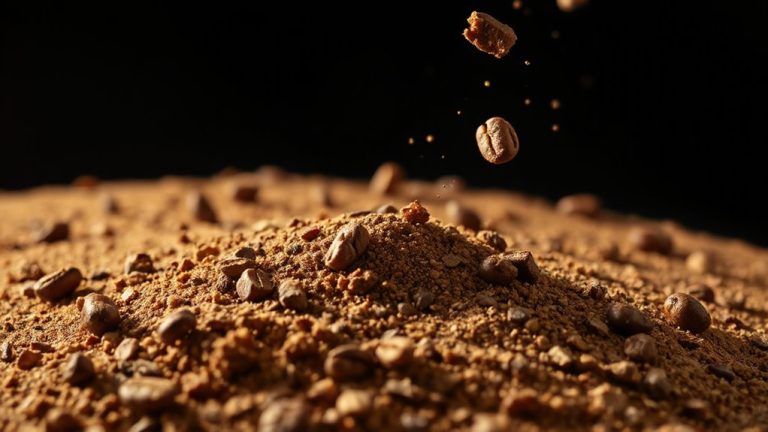
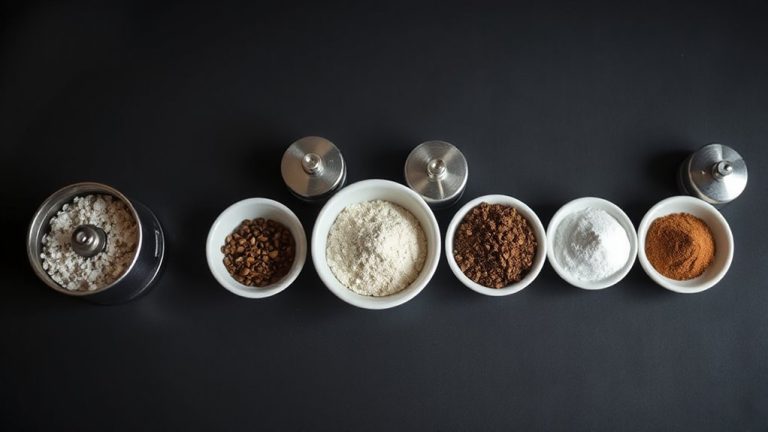
While finer grinds can sometimes lead to over-extraction and bitterness, Melitta’s original paper filter system worked best with a medium-fine grind-think somewhere between table salt and granulated sugar-which helped balance flavor richness and clarity. You’ll notice better flavor balance when using this grind size, as it slows water flow just enough to extract sweet, clean notes without dragging out harshness. Grind uniformity matters too-uneven particles cause some bits to over-extract while others under-extract, muddying the cup. A quality burr grinder helps maintain consistency, unlike blade grinders that create erratic chunks. This setup suits paper filters well, where fines get trapped and oils are filtered, giving you a bright but rounded result. Go too coarse and the brew turns weak; too fine and it clogs, stalling the drip. For vintage-style brewing, stick to medium-fine-it’s what the design was built for. For optimal results, consider using one of the best mill grinders designed specifically for achieving precise, consistent grind sizes.
Why Melitta Insisted on Medium Grind for Control
Control starts with consistency, and that’s why Melitta pushed the medium grind as a sweet spot for their early pour-over cones. You need grind consistency to avoid uneven extraction-fine particles might over-extract while coarse chunks under-extract, muddying your cup. With a medium grind, most particles are uniform, helping water move through at a steady pace. That uniformity improves water dispersion, ensuring even saturation across the bed. Poor dispersion leads to channeling, where water shortcuts through weak spots, but medium grind reduces that risk. It’s not too fine to clog, not too coarse to rush-just balanced. Melitta’s original design didn’t demand precision grinders, but medium gave reliable results with the equipment available then. Today, you still benefit: medium grind offers forgiveness and control, especially with flat-bottom filters. It’s a practical choice, not a compromise. You get cleaner flavor, fewer variables, and repeatable results-just what Melitta intended.
How Melitta’s Vintage Filter Shapes Extraction
The shape of Melitta’s vintage filter cone isn’t just nostalgic-it’s functional, designed to influence how water moves through the coffee and shapes extraction. You’ll notice the gentle 60-degree angle creates ideal filter geometry: it slows flow just enough for even saturation but prevents stalling. This balanced design promotes consistent drawdown, especially when you use the recommended medium grind. The paper porosity of original filters restricts fines without over-resisting water, aiding clarity while preserving body. Unlike modern thick papers, these allow a slight transparency of oils, enhancing flavor nuance. If you’re replicating vintage brewing, choose papers that match this porosity-not too dense, not too open. Even small deviations in filter geometry or paper porosity can skew extraction, leading to underdeveloped or over-extracted cups. Stick close to the original specs, and you’ll get cleaner, more balanced results with less guesswork.
Melitta’s 1930s Factory Notes on Extraction
What did Melitta’s engineers know about extraction that we’ve nearly forgotten? They emphasized grind consistency and precise water temperature long before modern gear made it easy. Their 1930s notes show a clear link between even particle size and balanced flavor-too fine, and bitterness creeps in; too coarse, and the brew’s weak. Water temperature wasn’t just hot-it was controlled, typically between 90–96°C, for ideal solubility without scalding the grounds.
They documented results under real kitchen conditions, not labs. Here’s what their data prioritized:
| Factor | Ideal | Outcome if Off |
|---|---|---|
| Grind Consistency | Uniform medium | Uneven extraction |
| Water Temperature | 92–96°C | Bitter or sour brew |
| Pour Speed | Steady, moderate | Channeling or clogging |
You’ll get closer to their results by respecting these basics-not chasing trends. Use a blade grinder? You’re fighting uneven extraction from the start. A gooseneck kettle helps, but even a careful jug works if temp and grind are right. For optimal results, consider a burr grinder, as the best grinders for filter coffee deliver the uniform particle size essential for balanced extraction.
Re-Creating Melitta’s Düsseldorf Kitchen Brew
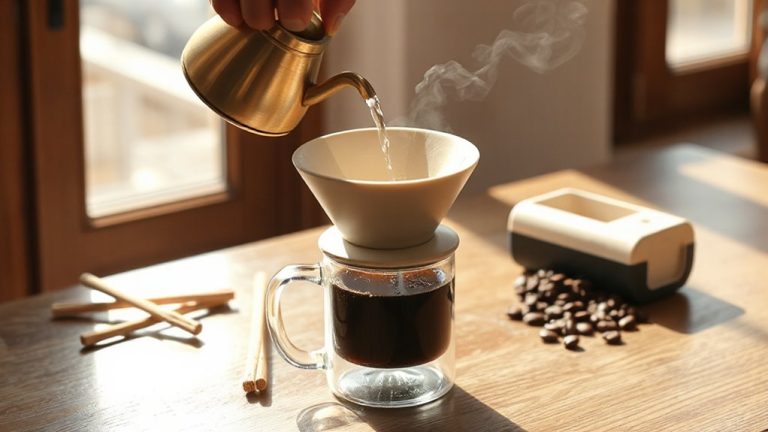
You’re already familiar with Melitta’s original standards-consistent grind, stable water temperature, and a steady pour-principles their engineers tracked in real kitchens, not labs. To re-create the Düsseldorf kitchen brew, you’ll need a medium grind close to sea salt, just like Melitta’s 1930s specs. Use traditional water sourcing-filtered tap or spring water-avoiding distilled or heavily softened types that disrupt extraction. A gooseneck kettle isn’t necessary; instead, rely on vintage kettle design, like the 1930s aluminum models with narrow spouts that offer better pour control despite uneven heat retention. Keep water at 195–205°F, pouring in slow, concentric circles over 2.5 to 3 minutes. Pre-wet the filter to eliminate paper taste and stabilize temperature. This method prioritizes repeatability with period-appropriate tools. While modern gear heats more evenly, these older kettles teach precision through limitation. You’re not restoring nostalgia-you’re testing proven function. For French press brewing, a coarse grind is essential to prevent over-extraction and sediment, aligning with the best coffee grind for French press principle of balancing flavor and clarity.
How Melitta’s Vintage Specs Improve Modern Pour-Overs
Though modern pour-over setups often emphasize precision gadgets, sticking to Melitta’s vintage specs can actually sharpen your brewing control without relying on high-end gear. You don’t need a gooseneck kettle or digital scale-just a medium grind, 1:15 coffee-to-water ratio, and steady pour. These specs promote even saturation, helping achieve brew symmetry, where water moves uniformly through the grounds for consistent extraction. That balance directly supports taste harmony, yielding clean cups without harshness or dullness. Today’s conical filters, like Hario’s, work well, but Melitta’s original pyramid dripper guides flow rate naturally. You’ll notice less channeling and fewer micro-grounds in your cup. While newer designs offer speed, they sometimes sacrifice balance. The vintage approach? It’s slower, sure, but more forgiving with variable pours. Try it with medium-roast Central Americans-you’ll taste the clarity. It’s not nostalgia; it’s functional design that still works.
On a final note
You’ll get the most faithful Melitta brew using a medium grind-think table salt-paired with their original cone design. It balances clarity and body better than finer or coarser settings. Modern pour-overs like the Hario V60 lean brighter, while metal filters run faster but extract unevenly. Stick to 93°C water and a steady pour. These vintage specs aren’t just nostalgia; they’re a practical baseline for cleaner, more controlled coffee.