Best Coffee Brands Coffee Snobs Actually Respect (And Rave About)
You’ll impress coffee snobs with beans like Bulletproof Mentalist, Atlas Coffee Club, and Stumptown Holler Mountain-small-batch roasts from top-tier farms, roasted with precision and traceable sourcing. These brands highlight origin character, use ethical practices, and undergo rigorous quality testing. Medium roasts tend to shine, balancing brightness and body across brewing methods. If you want to know which gear and brewing approaches bring out their best, there’s a clear path forward.
We are supported by our audience. When you purchase through links on our site, we may earn an affiliate commission, at no extra cost for you. Learn more. Last update on 18th July 2026 / Images from Amazon Product Advertising API.
Notable Insights
- Bulletproof Mentalist offers toxin-tested, sustainably sourced beans with nuanced cherry and caramel notes prized by discerning drinkers.
- Atlas Coffee Club features rare single-origin roasts from the world’s top 1% farms, appealing to connoisseurs seeking origin authenticity.
- Stumptown Holler Mountain uses Direct Trade, B Corp-certified practices for a balanced, multi-method brew with bright citrus and caramel tones.
- Lifeboost delivers ultra-clean, low-acid, third-party-tested organic coffee favored by health- and taste-conscious coffee enthusiasts.
- Kicking Horse Three Sisters provides rich, shade-grown Arabica with stone fruit and cocoa notes, roasted for complexity without bitterness.
Bulletproof Mentalist Medium-Dark Roast Coffee (12 oz)

If you’re serious about skipping the jitters and staying sharp through your afternoon, Bulletproof Mentalist Medium-Dark Roast (12 oz) stands out as a solid choice. I’ve tried plenty of coffees, but this one delivers a clean, bold flavor without the crash. It’s a medium-dark roast with noticeable notes of cherry, almond, and caramel-smooth, not bitter. The beans are sourced from Rainforest Alliance Certified farms, so you know they support fair wages and sustainability. Each batch is tested for toxins, which means you’re getting cleaner coffee. It meets Specialty Coffee Association standards, too. If you want quality and consistency, this one’s worth rotating into your routine.
Best For: Professionals and coffee enthusiasts seeking a high-quality, clean-tasting medium-dark roast that supports mental clarity and sustainable sourcing.
Pros:
- Rich, bold flavor with smooth notes of cherry, almond, and caramel-no bitterness
- Sourced from Rainforest Alliance Certified farms, promoting sustainability and fair labor practices
- Each batch tested for toxins and meets Specialty Coffee Association quality standards
Cons:
- Available only as whole beans, requiring a grinder for brewing
- Premium price point may be higher than conventional coffee brands
- Flavor notes may be too subtle for those who prefer intense, smoky dark roasts
Atlas Coffee Club World of Coffee 4-Pack

Atlas Coffee Club’s World of Coffee 4-Pack delivers a streamlined experience for the curious drinker who wants to explore global flavors without committing to full-sized bags. Each 1.8-ounce bag features single-origin coffee from top 1% farms, roasted in Austin to highlight regional nuances. You get four distinct coffees, complete with tasting notes and collectible postcards from each producing country. I appreciate that they’re freshly ground and ethically sourced, supporting sustainable farming. It’s a practical, low-risk way to compare origin flavors side by side. Ideal for gifting or sampling before buying full bags.
Best For: Coffee enthusiasts and curious drinkers looking to explore premium single-origin coffees from around the world in a convenient, low-commitment format.
Pros:
- Features top 1% single-origin coffees with region-specific flavor profiles, freshly ground and roasted in Austin
- Includes collectible postcards and detailed tasting notes that enhance the educational and experiential value
- Ethically sourced with support for sustainable farming through above-market payments to growers
Cons:
- Small bag size (1.8 ounces) may not be sufficient for regular daily drinkers seeking larger quantities
- Limited to four origins per pack, which may not satisfy those seeking broader variety in one purchase
- Subscription-based model may pressure customers into recurring purchases not desired by all
Stumptown Holler Mountain Organic Coffee (12 oz)

Stumptown Holler Mountain Organic Coffee (12 oz) is the best choice for coffee drinkers who want a versatile, high-quality medium roast that performs well across brewing methods-from espresso to drip to cold brew. I’ve tried it as a pour-over and in my espresso machine-it consistently delivers a bright citrus and berry kick, rounded out with caramel and hazelnut. It’s a full-bodied blend of Latin American and East African beans, so it’s forgiving if your grind or water isn’t perfect. Stumptown’s Direct Trade and B Corp status mean quality and ethics go hand in hand. Use a burr grinder and filtered water for best results.
Best For: Coffee lovers seeking a versatile, ethically sourced medium roast that delivers balanced flavor across multiple brewing methods.
Pros:
- Bright citrus and berry notes balanced with creamy caramel and hazelnut for a complex, full-bodied flavor
- Sourced through Stumptown’s Direct Trade program, ensuring fair prices and sustainable relationships with farmers
- B Corp certified, reflecting a strong commitment to environmental and social responsibility
Cons:
- Whole bean only, requiring a grinder for optimal brewing-may be inconvenient for some users
- Premium price point compared to conventional grocery store coffees
- Flavor nuances may be lost with low-quality water or improper brewing techniques
Lifeboost Organic Coffee Beans (12 oz)

I find Lifeboost Organic Coffee Beans (12 oz) especially well-suited for people who want a clean, low-acid coffee without sacrificing flavor or quality. Grown at high elevations in Central America, these beans are shade-grown and bird-friendly, which helps protect the environment. They’re hand-selected, sun-dried, and washed with spring water, giving them a smooth, rich taste. The medium roast is antioxidant-rich and gentle on sensitive stomachs. USDA Organic, Non-GMO, and third-party tested for over 400 contaminants, including pesticides and mycotoxins, they deliver safety and purity. If you’re prone to acid reflux or just want a cleaner cup, this coffee’s low-acid profile makes it a smart, practical choice. A 30-day satisfaction guarantee lets you try it with zero risk-ideal for cautious buyers who value proof over hype.
Best For: People seeking a clean, low-acid coffee that’s gentle on the stomach and free from contaminants without compromising flavor or quality.
Pros:
- USDA Organic and Non-GMO certified, with third-party testing for over 400 contaminants including mycotoxins, pesticides, and heavy metals
- Low-acid formula ideal for those with sensitive stomachs or acid reflux
- Shade-grown, bird-friendly, and sustainably farmed at high elevations for environmental and flavor benefits
Cons:
- Higher price point compared to conventional coffee brands
- Limited roast variety with only medium roast available in this offering
- 12 oz packaging may require frequent reordering for heavy coffee drinkers
Stumptown Holler Mountain Organic Coffee 18oz

If you’re looking for a reliable, high-quality organic coffee that performs well across multiple brewing methods, this 18oz bag of Stumptown Holler Mountain checks the right boxes. I’ve used it for pour over, drip, espresso, and cold brew-each time getting balanced flavor with notes of citrus zest, berry jam, caramel, and hazelnut. It’s a medium roast, 100% Arabica, and part of Stumptown’s Direct Trade program, which means better pay for farmers and consistent bean quality. The blend’s organic and been a hometown favorite for years. Your results will vary based on grind size and water quality, so adjust accordingly.
Best For: Coffee lovers seeking a versatile, organic, medium roast that delivers consistent flavor across various brewing methods.
Pros:
- Balanced flavor profile with bright citrus zest, berry jam, caramel, and hazelnut notes
- Sustainably sourced through Stumptown’s Direct Trade program supporting farmer livelihoods
- Suitable for espresso, drip, pour over, and cold brew with 100% Arabica organic beans
Cons:
- Flavor nuances may be lost with improper grind size or low-quality water
- Medium roast may not satisfy those preferring bold, dark roast intensity
- Price point may be higher than conventional organic coffees due to Direct Trade standards
Kicking Horse Coffee, Three Sisters, Medium Roast, Whole Bean, 10 oz

For those who want a dependable morning brew with depth and character without veering into bold or bitter territory, Kicking Horse Coffee’s Three Sisters Medium Roast is a solid go-to. I find its well-rounded flavor-hinting at stone fruit and cocoa-balances brightness and richness just right. Roasted in the Canadian Rockies, it’s 100% Arabica, sustainably grown, and shade-grown for better bean development. There are no additives, just pure coffee. A medium-fine grind works best for French Press, drip, or pour over. It’s lively but smooth, with notes of toasted coconut and chocolate malt. If you like complexity without intensity, this one delivers consistently across brewing methods.
Best For: Coffee lovers seeking a smooth, flavorful medium roast with nuanced notes of stone fruit and cocoa, ideal for a balanced morning brew.
Pros:
- Well-rounded, complex flavor with bright notes of stone fruit, cocoa, and toasted coconut
- Sustainably sourced, 100% Arabica beans, shade-grown and roasted without additives
- Versatile grind recommendation works excellently across French Press, drip, pour over, and cold brew
Cons:
- Whole bean requires grinding, which may be inconvenient for some users
- Flavor profile, while complex, may be too subtle for those preferring bold or intense roasts
- Limited 10 oz size may not suit high-volume coffee drinkers without frequent repurchasing
KIVY Vacuum Coffee Canister – Stainless Steel

A vacuum-sealed stainless steel build sets the KIVY Vacuum Coffee Canister apart, making it a strong choice for anyone serious about keeping coffee fresh beyond just a few days. I use it daily, and the airtight push lid actually removes excess air, locking in aroma and oils better than regular containers. It’s made from durable, BPA-free stainless steel-sturdy enough for home or café use. The 1-liter size fits about a pound of beans, and the compact shape saves counter space. I just push down the lid to seal-no batteries or parts. It’s dishwasher safe, though not microwaveable. At 15.5 ounces, it’s lightweight but feels solid.
Best For: Coffee enthusiasts who want to preserve the aroma, flavor, and freshness of their beans or ground coffee with a durable, no-fuss vacuum-sealed stainless steel canister.
Pros:
- Vacuum push-down lid removes excess air to keep coffee fresh longer without batteries or complicated mechanisms
- Made from premium, BPA-free stainless steel that’s durable, airtight, and suitable for home or café use
- Dishwasher safe and compact design saves counter space while offering a full 1-liter capacity
Cons:
- Not microwaveable, limiting post-storage heating convenience
- Manual push seal may require some effort over time, especially in humid environments
- Limited color or size options beyond the standard 1-liter model
Portable Manual Coffee Grinder with Ceramic Burr
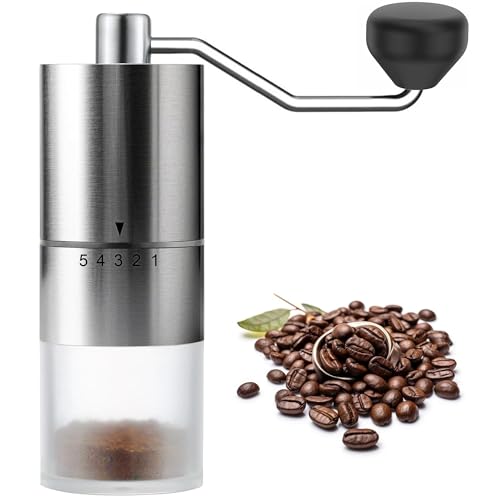
I rely on the EZLucky Portable Manual Coffee Grinder with Ceramic Burr when I need fresh, consistent grinds anywhere-whether I’m brewing espresso at home or pouring over in the backcountry. Its ceramic conical burr delivers precision grinding across 5 settings, so you can match your grind to any method-espresso, pour-over, French Press, or drip. The stainless steel build feels durable, and the 250-gram weight won’t weigh down your pack. I appreciate that the acrylic grounds container is transparent and easy to clean. Ceramic preserves bean flavor better than cheap blade grinders, and unlike electric models, this one works anywhere. It’s no-frills, efficient, and reliable-one of few manual grinders I’d trust on extended trips.
Best For: Coffee enthusiasts who value portability and grind consistency while traveling, camping, or enjoying outdoor adventures.
Pros:
- Precision ceramic conical burr with 5 adjustable settings ensures consistent grinds for espresso, pour-over, French Press, and drip
- Durable stainless steel construction and lightweight 250-gram design make it ideal for travel and outdoor use
- Transparent acrylic grounds container is easy to clean and allows for quick grind level monitoring
Cons:
- Manual operation requires more effort compared to electric grinders, especially for larger quantities
- Limited to 5 grind settings, which may not offer the fine-tuning desired by advanced coffee aficionados
- Small capacity may necessitate multiple grinding sessions for multiple servings
Nuvo Eco Ceramic Handy Coffee Bean Roaster
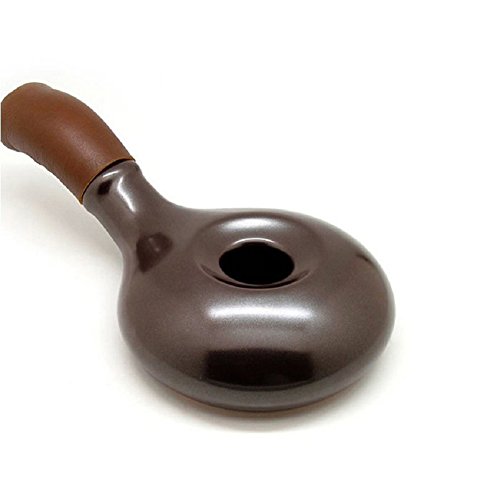
The Nuvo Eco Ceramic Handy Coffee Bean Roaster suits hands-on coffee lovers who want full control over small-batch roasting without electronics. I use it over a stove flame, rotating gently for even heat. Its 100% ceramic build, including the handle, resists heat, while the waffle-shaped interior stirs beans naturally. I roast 30–70 grams per batch, though 30 grams works best. A rear hole releases steam and lets me hear the pops that signal roast stages. It’s dishwasher-safe, but I hand-wash to preserve the glazed finish. Made in Korea, it’s durable, simple, and ideal for home roasting without gadgets.
Best For: Home coffee enthusiasts who prefer hands-on, small-batch roasting with full control and no electronics.
Pros:
- Constructed from 100% heat-resistant ceramic with a durable glazed finish for long-lasting use
- Waffle-shaped interior promotes even roasting and natural bean agitation during rotation
- Dishwasher-safe and features a steam-release hole that audibly signals roast stages
Cons:
- Requires constant manual rotation over a stove flame, demanding attention and effort
- Optimal performance limited to small batches, with best results at only 30 grams
- Ceramic handle, while heat-resistant, may still conduct heat and require careful handling
Coffee Snob T-Shirt

Want to know whose morning routine matches their attitude? Mine does-thanks to the Coffee Snob T-shirt. Bold “COFFEE SNOB” lettering makes the message sharp and easy to read, so the statement lands fast. It’s not just text; the design uses confident, modern typography that stands out without shouting. I wear it to brunch, the café, or weekend markets-anywhere casual meets personality. It’s cotton, breathable, and fits true to size. This shirt isn’t for everyone, but if you take your coffee (and identity) seriously, it’s a practical, wearable nod to what you value. Fashion that says something? Yeah, it’s possible.
Best For: Coffee enthusiasts who value bold self-expression and appreciate fashion as a medium for showcasing their personality and passion for coffee culture.
Pros:
- Striking, bold typography ensures high visibility and immediate impact
- Made from breathable cotton with a true-to-size fit, ideal for everyday wear
- Empowers personal expression through a design that blends style and statement
Cons:
- Bold “Coffee Snob” message may not appeal to those who prefer subtle or neutral apparel
- Limited versatility for formal or professional settings due to casual, statement-driven design
- May attract teasing or comments from those unfamiliar with the wearer’s sense of humor or identity
Factors to Consider When Choosing Coffee for Coffee Snobs
You care about where your beans come from, so check the origin and sourcing-single-origin coffees like Ethiopian Yirgacheffe or Colombian Huila offer distinct regional flavors. A roast profile that’s too dark hides nuance, so go for medium or light roasts that highlight flavor complexity without burning off the subtle notes. Look for certifications like USDA Organic or Fair Trade, but don’t assume they guarantee taste-pair them with brewing versatility so the beans work well in your drip machine, French press, or espresso setup.
Origin And Sourcing
While flavor starts at the bean, where that bean comes from shapes what ends up in your cup-altitude, climate, and soil all leave a mark on taste. You’ll notice brighter, citrusy notes in beans grown above 3,000 feet, where cooler temps slow growth and boost complexity. Lower elevations often yield earthier, smoother profiles. If you care about ethics and flavor, you should check sourcing transparency-brands that list farms or co-ops let you trace your coffee’s journey. Look for direct-trade relationships, which often mean fairer pay and better bean quality. Shade-grown coffee supports birds and ecosystems by keeping forest canopies intact. Certifications like Fair Trade, USDA Organic, or Rainforest Alliance help verify sustainable and ethical practices, though they’re not perfect. Still, they offer a baseline you can trust when choosing beans that align with your values and taste preferences.
Roast Profile Precision
Because roast profile precision directly shapes the flavor in your cup, even small temperature shifts of 5–10°C during roasting can tilt a coffee from vibrant and balanced to flat or harsh. You need consistent control to lock in acidity, sweetness, and bitterness just right. Light roasts preserve floral or fruity notes since beans spend less time under heat, while dark roasts develop smoky, charred tones when temps exceed 220°C. If you pull espresso or brew pour-over, uniform bean color and density matter-uneven roasting leads to messy extraction. Watch the rate of rise (RoR); sharp drops or spikes cause underdevelopment or scorching. Brands like Square Mile and Stumptown track RoR closely, giving you cleaner, more predictable cups. You’re not just buying beans-you’re buying precision. That control means fewer surprises and better results, brew after brew.
Flavor Complexity
Flavor complexity turns a simple cup into an evolving experience, where notes of citrus, berry, caramel, and nuts unfold in sequence, not all at once. You get this layered profile when beans from high-altitude farms-like those in Ethiopia or Colombia-interact with rich soils and slow maturation. These conditions boost the chemical compounds behind nuanced flavors. A medium to medium-dark roast preserves those delicate volatiles while adding depth, so you taste clarity without losing body. Look for blends that pair bright, acidic beans with smoother, chocolatey ones-they create balance, not chaos. Tasters score complexity using standards that weigh aftertaste, harmony, and flavor definition, so check reviews from SCA-certified panels. Single-origin roasts often highlight terroir-driven notes, but quality blends can offer more dynamic shifts from sip to finish. If you want nuance without unpredictability, stick with roasters known for consistency-Counter Culture, Stumptown, and Onyx deliver complexity that’s intentional, not accidental.
Certifications And Purity
You taste the nuance in your cup not just from origin and roast, but from what’s not in the beans at all-contaminants, chemicals, and unethical practices that don’t belong in high-quality coffee. You should look for USDA Certified Organic labels to guarantee no synthetic pesticides were used. Choose Non-GMO Project verified coffee for independent confirmation the beans aren’t genetically modified. For purity, pick brands that conduct third-party testing for mycotoxins, heavy metals, and over 400 contaminants-this reduces health risks and guarantees cleaner flavor. Support ethical practices by selecting coffees certified by Rainforest Alliance or B Corp, which audit for fair wages, worker welfare, and environmental care. These certifications aren’t just marketing-they reflect real standards you can verify. While not every great coffee carries every label, choosing verified options gives you confidence in both quality and ethics. Skip uncertified beans if purity and responsibility matter to you.
Brewing Versatility
While some coffees shine in just one brew method, the most versatile options perform reliably across espresso, pour over, French press, and cold brew without sacrificing character. You want a medium roast-it keeps origin flavors intact while balancing acidity and body so the coffee adapts, not fades. Beans with layered notes and bright yet smooth acidity hold up whether you’re pulling a shot or steeping overnight. Look for full-bodied profiles; they carry weight in a French press and clarity in a pour over. Uniform grind size matters-use a burr grinder to guarantee even extraction across devices. Blends combining Ethiopian, Colombian, and Guatemalan beans often deliver broader flavor range, making them ideal for switching methods. Single-origins can work, but blends usually adapt better. If you switch brew styles daily, versatility means consistency-no guesswork, just good coffee, every time.
Frequently Asked Questions
What’s the Best Coffee for Cold Brew Enthusiasts?
You’ll want a coarse-ground, medium to dark roast with low acidity and rich body for cold brew. Try Stumptown’s Hair Bender or Chicago’s Intelligentsia House Blend-they extract smoothly over 12–16 hours. Use a 1:4 coffee-to-water ratio, cold filtered water, and steep in the fridge or at room temp. Coarsely ground whole beans prevent over-extraction and sludge. A French press or mason jar works fine. Dilute the concentrate with water or milk to taste.
Does Roast Level Affect Antioxidant Levels in Coffee?
Yes, roast level affects antioxidant levels-lighter roasts retain more antioxidants than darker ones because shorter roasting times preserve compounds like chlorogenic acid. If you’re after health benefits, go light; brands like Counter Culture or Stumptown offer bright, nutrient-rich options. Dark roasts still have benefits but lower overall antioxidant content. You’ll trade some nutrients for deeper, smokier flavors. Choose based on your priority: health or taste.
Are Single-Origin Beans Always Better Than Blends?
You’re not always better off with single-origin beans. They showcase distinct regional flavors-like Ethiopian Yirgacheffe’s bright berry notes-but can lack balance. Blends, like those from Counter Culture or Stumptown, mix beans to achieve complexity and consistency. If you prefer bold, even flavor daily, blends often deliver. Choose single-origin for novelty or specific taste experiences, blends for reliability. It depends on your taste goals, not superiority.
How Important Is Bean Freshness After Roasting?
You’re sacrificing flavor if you’re not using freshly roasted beans-peak taste lasts 7 to 21 days post-roast. After that, aromatic compounds fade and acidity dulls. You’ll notice flat, stale results, especially with light roasts. Always check roast dates, not just expiration. Store in an airtight container away from light, but don’t refrigerate. Buy smaller batches more often for best results.
Can Water Quality Impact Coffee Taste Significantly?
You’re right-water quality impacts coffee taste a lot. If your tap water tastes off or smells bad, it’ll ruin even great beans. Chlorine, iron, or excess minerals alter flavor and can damage equipment. For best results, use filtered water like Brita or PUR; they remove impurities while keeping helpful minerals. Avoid distilled-it’s too flat and harms extraction. Aim for balanced, clean water; it’s cheap, simple, and instantly improves your brew.