Best Water for Coffee Machines That Brews the Perfect Cup
You should use water with balanced minerals-50–175 ppm hardness-to extract flavor properly and protect your machine. Skip distilled or reverse osmosis water; it makes flat coffee. Instead, try Third Wave Water or COFFEE WATER Mineral Packs to add magnesium and calcium. Use filtered water like AquaClean or Cuisinart charcoal filters to remove chlorine. Pre-measured additives and filter kits simplify the process, giving consistent, great-tasting coffee with less maintenance. Different setups work better depending on your machine and water source.
We are supported by our audience. When you purchase through links on our site, we may earn an affiliate commission, at no extra cost for you. Learn more. Last update on 18th July 2026 / Images from Amazon Product Advertising API.
Notable Insights
- Use water with 50–175 ppm hardness for optimal extraction and balanced flavor in coffee.
- Choose filtered water to remove chlorine, lead, and impurities that affect taste and machine performance.
- Add mineral supplements like Third Wave Water to distilled or reverse osmosis water for better flavor.
- Prevent limescale and corrosion with balanced mineral content and regular descaling using safe solutions.
- Use drop-in filters or pre-measured mineral packets for easy, consistent water quality across all machines.
Filtered Water Refill Kit for Keurig

If you use a Keurig brewer and hate constantly refilling the water tank, the Filtered Water Refill Kit from PureWater Filters is one of the most practical upgrades you can make. I installed it myself in under 30 minutes-no plumber needed. It connects directly to a cold water line and delivers filtered water on demand, reducing trips to the sink. The filter removes chlorine, lead, and odd tastes, which matters since coffee is 98% water. It also helps prevent scale buildup, prolonging your machine’s life. It fits most Keurig models, comes with clear instructions, and includes a lifetime warranty. A smart, no-frills fix for better coffee and less hassle.
Best For: Keurig users who want convenient, filtered water delivery without frequent tank refills and are looking to improve coffee taste and machine longevity.
Pros:
- Eliminates constant refilling by connecting directly to a cold water line for on-demand filtered water
- Improves coffee flavor by removing chlorine, lead, and impurities, leveraging the fact that coffee is 98% water
- Includes a lifetime warranty and easy DIY installation with no professional plumbing required
Cons:
- Requires access to a cold water line near the Keurig, which may not be feasible in all kitchens
- Made of plastic components, which may raise durability or environmental concerns for some users
- Compatibility limited to non-commercial Keurig models with standard reservoir setups, excluding certain newer or specialized units
COFFEE WATER Mineral Packs for Making Water for Coffee (Makes 25 Gallons)

I rely on COFFEE WATER Mineral Packs when I want to turn pure reverse osmosis or distilled water into a balanced brewing medium that meets Specialty Coffee Association standards. Each pack set-one of 25 included-treats one gallon, adding precise amounts of magnesium sulfate, calcium citrate, sodium bicarbonate, and sodium chloride. These minerals help extract flavor evenly without risking scale buildup in drip machines, pour-over setups, or espresso gear. I use them when tap or filtered water lacks consistency. They’re not needed if you already have decent tap water, but if you’re starting with stripped water, these packs make a measurable difference in taste and performance.
Best For: Coffee enthusiasts who use reverse osmosis or distilled water and seek consistent, mineral-balanced water for optimal flavor extraction in pour-over, drip, or espresso brewing.
Pros:
- Precisely formulated to meet Specialty Coffee Association and Water for Coffee standards
- Prevents scale buildup while enhancing flavor extraction in all coffee brewing methods
- Each pack treats one gallon, with 25 sets included for convenient, long-term use
Cons:
- Not necessary for users with already balanced tap water
- Requires access to pure water (RO or distilled) as a base
- Contains sodium, which may be a concern for those monitoring sodium intake
Coffee Machine Water Tank Funnel for Breville
The Coffee Machine Water Tank Funnel for Breville is a practical fix for espresso lovers who own a Breville ESPRESSO machine or any flat-top coffee maker with a rear water tank. I use it daily to pour water without moving the machine or removing the tank. Made of food-grade black silicone, it resists heat, stains, and warping. Its tilted spout speeds up filling, while four non-slip rubber feet keep it steady. Rolled edges prevent spills and add rigidity. It fits securely, cleans easily, and stays in place during refills. At under 5 ounces, it’s lightweight and durable. I’ve found it cuts mess and refill time-especially useful if you use filtered or custom water.
Best For: Espresso enthusiasts with a Breville or similar flat-top coffee machine who want a mess-free, efficient way to refill the rear water tank without moving or disassembling their machine.
Pros:
- Made of durable, food-grade silicone that resists heat, stains, and deformation
- Tilted spout and non-slip feet enable fast, stable, spill-resistant water filling
- Easy to clean, stays in place, and eliminates the need to lift or remove the water tank
Cons:
- Only compatible with machines that have rear-facing water tanks on flat tops
- Limited aesthetic options (only available in black)
- May not fit non-standard or curved water tank openings despite broad compatibility claims
Third Wave Water – Espresso Machine Profile, Five(5) Gallon Sticks

Third Wave Water’s Espresso Machine Profile hits the sweet spot for espresso enthusiasts who want consistent, high-quality extraction without investing in a full filtration system. I use it in my own setup, and the five sticks cover up to 60 gallons total, so they last. Each stick targets ideal mineral balance for espresso machines, boosting flavor without scale risk. They’re easy-just drop one in every five gallons. I don’t need extra gear or buttons; it’s not automatic or powered at all. The “Modern” style and stainless steel finish don’t matter here, since the stick dissolves. Just know: it’s not dishwasher-safe because it’s not reusable. Practical? Absolutely.
Best For: Espresso enthusiasts seeking consistent, high-quality extraction without the need for a full water filtration system.
Pros:
- Easy to use-just drop one stick into every five gallons of water
- Optimizes mineral balance specifically for espresso machines, enhancing flavor
- Cost-effective and long-lasting, with five sticks making up to 60 gallons total
Cons:
- Single-use product, not reusable or environmentally friendly
- Not suitable for automatic or continuous water filtration systems
- “Stainless steel finish” and “modern style” are misleading, as the stick dissolves and aesthetics are irrelevant
12 Pack Water Filters for Cuisinart
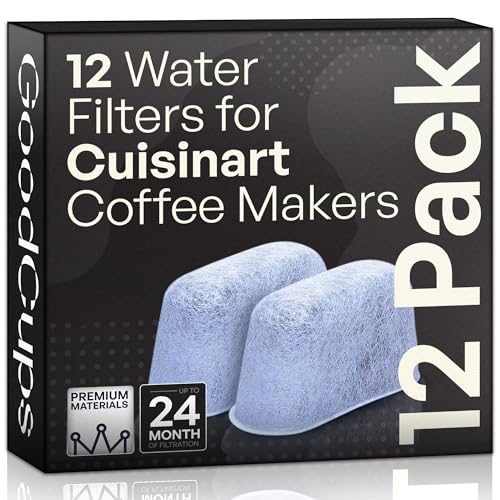
Anyone using a Cuisinart coffee maker-whether it’s a 12-cup model, a Grind and Brew, or one with an integrated grinder-gets the most out of their machine with this 12-pack of water filters from GoodCups. These filters fit all Cuisinart models, old and new, and use premium charcoal to remove chlorine, calcium, and odd tastes. They keep your coffee clean and your machine running smoothly without clogs. I swap them in easily-no tools needed-and each one lasts about two months. They’re made from recyclable materials, so they’re a sensible choice for both performance and planet. At just under three ounces, the pack is compact and ready to go.
Best For: Cuisinart coffee maker owners seeking an easy, eco-friendly way to improve coffee taste and extend appliance life with reliable, universal-fit water filters.
Pros:
- Compatible with all Cuisinart coffee maker models, including 12-cup, Grind and Brew, and grinder-equipped units
- Premium charcoal filtration effectively removes chlorine, calcium, and odors for cleaner, better-tasting coffee
- Tool-free installation and recyclable materials make replacement quick and environmentally responsible
Cons:
- Limited to Cuisinart machines, reducing versatility for users with other brands
- Filter lifespan of approximately two months may require frequent replacements for heavy users
- Slight variation in fit reported by some users with older models, potentially affecting water flow
Coffee Machine Water Tank Funnel for Breville
Looking for a no-fuss way to refill your Breville espresso machine without lifting the tank or spilling a drop? I’ve found the silicone funnel from ZHONGXIA works perfectly. It fits all flat-top Breville ESP-resso models and other rear-tank machines. The angled mouth directs water smoothly, while rolled edges prevent leaks. Four non-slip feet keep it steady, and the base won’t scratch your countertop. Made from food-grade silicone, it’s safe, durable, and resists odors. At just under 6 ounces, it’s lightweight but built to last. I refill faster now, with fewer messes.
Best For: Breville ESP-resso machine owners seeking a quick, spill-free way to refill rear-mounted water tanks without removing them.
Pros:
- Angled silicone funnel design enables precise, mess-free pouring with maximum water flow
- Non-slip feet and non-scratch base ensure stability and protect countertops
- Made from durable, food-grade silicone that’s odorless, tasteless, and safe for daily use
Cons:
- Only compatible with flat-top Breville and select rear-tank coffee machines
- Lightweight design may shift if filled too aggressively
- Limited capacity requires multiple pours for larger water refills
Coffee Machine Water Tank Funnel (Black)
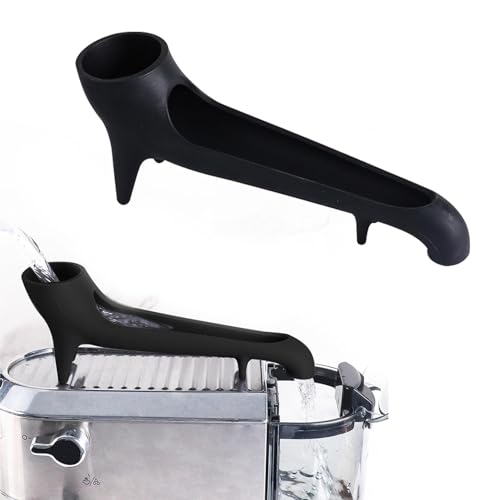
Filling my espresso machine’s rear water tank without moving the unit or spilling a drop is easier with the Trasylph Coffee Machine Water Tank Funnel (Black). Its long spout reaches tight tank openings, while the wide 9.25-inch inlet speeds up pouring. Made from durable, odorless silicone, it won’t crack or warp over time. The tripod base keeps it steady during use. I appreciate the sandblasted surface-it’s smooth, stain-resistant, and easy to clean. At just 2.89 ounces, it’s lightweight but stable. It fits all flat-top machines with rear tanks, including Breville models. No more lifting or spills.
Best For: Home baristas with flat-top espresso machines who want a spill-free, efficient way to refill rear-mounted water tanks without moving their machine.
Pros:
- Long spout and wide 9.25-inch inlet enable fast, precise filling of rear-facing water tanks
- Made from durable, odorless silicone with a non-stick, stain-resistant surface for easy cleaning
- Tripod base provides stability during use, preventing tipping and reducing spills
Cons:
- Only compatible with flat-top machines featuring rear water tanks, limiting versatility
- Silicone material, while durable, may retain odors over time if not cleaned properly
- Design specific to certain machine layouts, may not fit models with unconventional tank placements
12 Pack Charcoal Water Filters for Cuisinart Coffee Makers

If you own a Cuisinart coffee maker and want better-tasting brew without the hassle of hard water buildup, these 12-pack charcoal water filters are a practical choice. They fit all Cuisinart models, from DCC-1100 to DGB-900BC, and reduce chlorine, calcium, and odors that hurt flavor. I change mine every 30 days, especially with hard water, to keep performance consistent. Each filter slips in-no tools needed-and lasts about a month. At $0.30 per filter, they’re cheaper than Cuisinart’s originals but work just as well. They don’t remove all minerals, so scale can still build up over time-I still descale regularly.
Best For: Cuisinart coffee maker owners seeking an affordable, easy-to-use water filter to improve coffee taste and reduce chlorine, odors, and calcium buildup.
Pros:
- Compatible with all Cuisinart coffee maker models, including both older and newer units
- Enhances coffee flavor by reducing chlorine, odors, and impurities without requiring tools for installation
- Cost-effective at $0.30 per filter, meeting or exceeding original manufacturer performance
Cons:
- Requires monthly replacement for optimal performance, which may increase long-term maintenance effort
- Does not remove all minerals, so regular descaling is still necessary
- Limited filtration scope-charcoal-based, so not effective against all water contaminants
AquaClean Water Filters & Descaling Liquid (2-Pack)

This 2-pack of AquaClean-style water filters and descaling liquid works best if you own a Philips coffee machine that uses the AquaClean filter system, since it’s built to match that specific setup. I use these filters to cut chlorine and impurities, which helps coffee taste cleaner. The descaling liquid, two 250ml pre-measured bottles, safely clears limescale without harming internal parts. Each filter clicks right into the tank, and the descaler runs through the machine when prompted. It’s not an official Philips product, but it’s NSF certified and fits models needing AquaClean. Just check your model first-compatibility matters. One pack lasts a while, and there’s no mess.
Best For: Owners of compatible Philips coffee machines using the AquaClean filter system who want improved taste and reduced limescale with easy, pre-measured maintenance.
Pros:
- Reduces chlorine, sediment, and impurities for cleaner-tasting coffee
- Pre-measured descaling liquid simplifies maintenance with no mess or guesswork
- NSF certified and designed to fit seamlessly into compatible AquaClean water tanks
Cons:
- Not an official Philips product, so may concern users seeking brand-original parts
- Compatibility limited to specific models-must verify fit before use
- Only two filters and two descalings per pack, which may require frequent reordering for heavy users
Third Wave Water Medium Roast (12 Sticks)

I get the best results with Third Wave Water Medium Roast when I want consistent, flavor-focused coffee from my machine, especially if I’m using beans that highlight sweetness and body. Each stick treats one gallon, and the 12-pack handles a month’s brewing. The added magnesium boosts sweetness, while calcium balances the mouthfeel-both matter if you’re chasing clean, bright flavors. It’s not just hype: all five Sharks preferred it on Shark Tank. It works with any coffee maker, but skip it if you’re sensitive to magnesium sulfate. If you get stomach aches, stop using it. Tap water varies; this doesn’t.
Best For: Coffee enthusiasts seeking consistent, flavor-enhanced brewing with balanced sweetness and body, especially those using medium roast beans and wanting to eliminate tap water variability.
Pros:
- Enhances coffee sweetness and body with optimized magnesium and calcium levels
- Consistent results across all coffee makers-no fluctuation from tap water minerals
- Trusted by experts and validated on Shark Tank, with all five Sharks preferring the taste
Cons:
- Contains magnesium sulfate, which may cause stomach aches in sensitive individuals
- Requires one gallon of water per stick, limiting flexibility for smaller brews
- Ongoing cost for long-term use compared to untreated tap water
Factors to Consider When Choosing Water for Coffee Machine
You need water that works with your machine, keeps minerals balanced, and won’t cause scale or damage over time. Look for options like Third Wave Water or filtered tap water that let you control mineral content while removing chlorine and impurities. It’s not just about taste-consistent filtration, ease of use, and machine safety matter every time you brew.
Water Type Compatibility
While pure water might seem ideal, using distilled or reverse osmosis water in your coffee machine can actually hurt flavor-without enough minerals like calcium and magnesium, the extraction process falls short, leaving coffee tasting flat and underdeveloped. You’re better off with filtered tap water or specially formulated bottled water that meets Specialty Coffee Association standards-150 ppm TDS is a solid target. Avoid highly chlorinated tap water, as chlorine harms taste; a simple activated carbon filter fixes that. Hard water causes limescale, so if you’re in a hard water area, consider a water softener or a filtration system that balances minerals. Steer clear of overly acidic or alkaline water (stay between pH 6.5 and 7.5) to prevent uneven extraction. Your machine runs better and your coffee tastes sharper when you match water type to both your machine’s needs and the beans you’re brewing.
Mineral Balance Importance
Getting the mineral balance right in your water makes a noticeable difference in how your coffee tastes and how well your machine performs. You need 50–175 ppm total hardness-calcium and magnesium help extract sweetness and body, with magnesium boosting flavor compounds. Too little mineral content, like in distilled or reverse osmosis water, gives flat, under-extracted coffee because it can’t carry flavors well. On the other hand, too much calcium carbonate causes limescale, harming your machine over time. High sodium levels dull brightness and mask acidity. The Specialty Coffee Association recommends 40–75 ppm alkalinity to stabilize pH during brewing. For best results, use filtered tap water or add mineral packets if your water’s too soft. Avoid softened water, which swaps calcium for sodium. Balanced water improves taste and protects equipment-making it a practical must.
Filtration Effectiveness
Since water makes up over 98% of your coffee, filtering it effectively directly shapes both taste and machine longevity. You need a filter that removes chlorine, lead, and other impurities that dull flavor and harm your machine. Look for systems using activated charcoal-it’s great at cutting calcium, magnesium, odors, and chemicals. This helps prevent limescale buildup in boilers and pipes, keeping your machine running efficiently. For real results, choose a filter with NSF certification; it proves the system actually reduces contaminants as claimed. Skipping certified filters might save money now, but risks worse-tasting coffee and costly repairs later. A solid filter doesn’t just clean water-it guarantees every cup pulls evenly and tastes clean. Your machine and your taste buds will notice the difference.
Ease Of Use
A good filtration system or water additive should make your life easier, not add hassle to your coffee routine. Pick options like pre-measured packets or mineral sticks-you just drop one per gallon, no guesswork. These reduce errors and save time. Go for no-install systems like Brita or Tero H2O that skip complex plumbing and work right out of the box. Need to refill fast? Use spill-resistant funnels with non-slip bases and rolled edges-they pour cleanly without disassembly. Look for clear, one-step instructions so you’re never second-guessing amounts. Choose tool-free designs, like drop-in filters or direct reservoir drops, to cut maintenance down to seconds. Avoid anything needing special tools or calibration. The goal is consistency with minimal effort. Simpler setups save time daily and keep your process tight, so you brew better coffee without the fuss.
Machine Safety
If you want your coffee machine to last, you need water that won’t harm its inner workings. Hard water with too many minerals builds up limescale in pipes and boilers, slowing performance and causing long-term damage. On the flip side, overly soft or pure water can corrode metal parts like heating elements, leading to leaks or failure. You need a balanced mineral level-something most tap water doesn’t offer consistently. Using filtered water designed for coffee machines helps prevent both scale and corrosion. Pre-measured water treatment drops or cartridges, like those from Third Wave Water or Watts, give you reliable control. These solutions keep mineral content in a safe range, protecting sensitive components. You should also descale regularly with a manufacturer-approved solution to clear any buildup without harming seals or sensors. Doing this keeps your machine running safely and reliably cup after cup.
Flavor Enhancement
Your coffee’s flavor starts with water-specifically, the minerals dissolved in it. Magnesium and calcium help extract sweetness and body, boosting flavor. But too much hardness leads to over-extraction and bitterness, while overly soft water causes sourness from under-extraction. You need balanced minerals to bring out nuanced notes like fruitiness, acidity, and aroma. Always remove chlorine-its chemical taste masks your coffee’s true profile. Use a carbon filter or bottled water labeled for coffee machines if your tap water smells or tastes off. Consistency matters: varying water from one brew to the next means shifting flavors, even with the same beans. For repeatable results, stick to a trusted water source or try specialty products like Third Wave Water or Peak Performance tablets. They give you control without guesswork. Good water isn’t a luxury-it’s essential for a clean, accurate cup every time.
Frequently Asked Questions
Can I Use Distilled Water in My Coffee Machine?
No, you shouldn’t use distilled water in your coffee machine. It lacks minerals, which can cause over-extraction and a flat-tasting brew. It may also damage machine components over time since manufacturers design them for water with some mineral content. Stick with filtered tap water or use a balanced blend like Third Wave Water instead. These options protect your machine and improve flavor. Always check your machine’s specs-some brands, like Breville, specifically advise against distilled water.
How Often Should I Change My Water Filter?
You should change your water filter every 2 to 6 months, depending on use and water quality. If you brew daily or have hard water, replace it every 2 months. With lighter use or softer water, 6 months may be fine. Brands like Brita or AquaTru suggest specific timelines-stick to them. A clogged or old filter reduces effectiveness, impacts taste, and can harm your machine over time. Check manufacturer guidelines and monitor water clarity and flavor to decide early replacement.
Does Water Temperature Affect Coffee Taste?
Yes, water temperature affects coffee taste. You need water between 195°F and 205°F-too cold and your coffee tastes weak; too hot and it turns bitter. Most home machines don’t let you adjust this, but models like the Fellow Stagg or Breville Precision Brewer do. If your brewer doesn’t hit the right range, your coffee won’t extract properly, no matter how good the beans or water.
Is Bottled Water Better Than Tap for Coffee?
You’re better off skipping most bottled waters-they’re inconsistent and often too flat or mineral-heavy. Tap water works fine if it’s clean and balanced; use a filter like Brita to remove chlorine and impurities. For precise control, try third-wave water products like Third Wave Water or Peak Performance, which let you customize mineral content. Hard water areas may scale machines, while soft water leaves coffee tasting flat-aim for a middle ground.
Can Hard Water Damage My Coffee Machine?
Yes, hard water can damage your coffee machine. It leaves mineral buildup in pipes and heating elements, reducing efficiency and causing malfunctions over time. You’ll see scaling in models like Breville or Delonghi unless you descale regularly. If your water’s above 150 ppm, consider using filtered or softened water. It extends machine life and improves coffee taste. Don’t ignore manufacturer water recommendations-they’re based on real durability testing.