Best Specialty Green Coffee Beans for True Brew Enthusiasts
You’ll get the best results with specialty green beans like Nicaraguan Caturra or Ethiopian Sidamo for their clean, vibrant profiles and high density. Choose washed-process beans for brightness or sun-dried for fruit depth. Opt for 2–5 lb bags if you roast regularly, or smaller 17.6 oz portions to test varieties. Prioritize direct-trade sources like Jasaquntu or Peru Organic for freshness and traceability. Your roast style and equipment will shape the final cup-match beans to your method for best outcomes. More details on ideal pairings follow.
We are supported by our audience. When you purchase through links on our site, we may earn an affiliate commission, at no extra cost for you. Learn more. Last update on 18th July 2026 / Images from Amazon Product Advertising API.
Notable Insights
- Nicaraguan Caturra and Parainema beans offer nuanced, specialty-grade flavors with full traceability from sustainable family farms.
- Ethiopian Sidamo heirloom beans provide vibrant blueberry, peach, and citrus notes, ideal for light to medium roast enthusiasts.
- Colombian Huila’s 100% Castillo varietal delivers bright acidity and roast flexibility, sourced via direct trade for freshness and quality.
- Peru Organic green beans are certified organic, with a smooth profile perfect for custom roast development and daily brewing.
- Costa Rica Tarrazu beans feature caramel and hazelnut notes, grown at high altitude for density and flavor complexity.
3lb Nicaraguan Green Coffee Beans (Caturra)

If you’re looking for green coffee beans that deliver clean, nuanced flavors and consistent quality, these 3lb Nicaraguan Green Coffee Beans (Caturra) are a strong choice, especially if you roast at home in small batches. Grown at high altitude on a single family-run estate, they’re shade-grown, hand-picked, and fully washed for specialty-grade clarity. I recommend a medium roast to bring out their sweet, cacao-rich body and soft citrus spark. Don’t grind them raw-they lose flavor. These beans thrive with direct trade transparency, sustainable practices, and recent harvest freshness, all of which matter if you value consistency and ethics equally.
Best For: Home roasters seeking high-quality, ethically sourced Nicaraguan green coffee beans with nuanced flavor profiles and consistent specialty-grade results.
Pros:
- Grown at high altitude with sustainable, shade-grown practices, ensuring superior bean density and environmental responsibility
- Hand-picked and fully washed for clean, specialty-grade quality with rich sweetness, cacao notes, and balanced citrus acidity
- Sourced via direct trade from a family-run farm, supporting fair farmer conditions and traceability from micro-lot harvests
Cons:
- Must be roasted before use-unsuitable for those without roasting equipment or experience
- Flavor degrades if ground before roasting, requiring strict adherence to proper processing
- Limited to 3lb quantity, which may not suit high-volume or commercial roasting needs
10lb Nicaraguan Green Coffee Beans (Caturra)
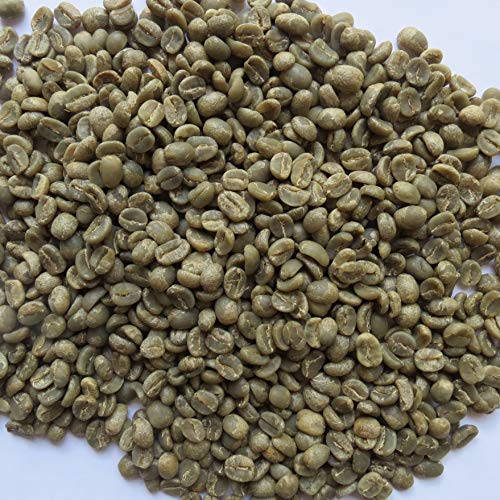
I choose these 10 lb Nicaraguan green coffee beans when I want full control over roast development and a consistent, traceable origin for medium roast profiles. Grown at high altitude on a family farm using shade-grown, sustainable methods, they’re harvested by hand and fully washed for clean, stable flavor. The Caturra varietal delivers balanced smoothness, rich sweetness, light citrus acidity, and cacao notes-best highlighted in a city to regular medium roast. I skip grinding before roasting; whole beans roast evenly. These beans suit home roasters using drum or air machines and prefer direct trade transparency. I avoid dark roasts-they mute the nuance. For repeatable results and origin clarity, this lot beats commercial blends.
Best For: Home and artisanal roasters seeking full control over roast development with traceable, sustainably grown Nicaraguan Caturra beans ideal for medium roast profiles.
Pros:
- Single-origin, specialty-grade beans with transparent sourcing and consistent micro-lot quality
- Grown using sustainable, shade-grown practices and harvested by hand for peak ripeness and flavor integrity
- Clean, complex flavor profile with balanced sweetness, citrus acidity, and cacao notes best expressed in medium roasts
Cons:
- Requires home roasting equipment and expertise-unsuitable for those who prefer pre-roasted coffee
- Limited roast versatility; dark roasting diminishes the nuanced flavor characteristics
- 10 lb size may be excessive for occasional roasters or those testing new origins
4lb Nicaraguan Green Coffee Beans (Variety Pack)

This 4lb Nicaraguan Green Coffee Beans (Variety Pack) is built for hands-on roasters who want control over flavor development and traceability in every batch. I get two pounds each of Caturra and Parainema from a fourth-generation farm, sourced from premium micro-lots. Caturra delivers balanced sweetness with citrus and cacao, while Parainema offers tropical fruit, caramel, and vanilla in a creamy, medium-bodied cup. I recommend roasting both to a medium (city) level to preserve clarity. These specialty-grade Arabica beans have low defects and stable moisture (11–12%), so they roast evenly. I don’t grind before roasting-always roast whole. This pack suits small-batch home roasting, letting me compare varietals side by side with full origin transparency.
Best For: Home roasters seeking full control over flavor development and traceable, single-origin Nicaraguan beans from premium micro-lots.
Pros:
- Contains two distinct, high-quality varietals (Caturra and Parainema) for comparative roasting and diverse cup profiles
- Specialty grade with low defect count and optimal moisture content for consistent, even roasting
- Direct trade, single-origin beans from a fourth-generation family farm, ensuring freshness and ethical sourcing
Cons:
- Requires home roasting equipment and skill, limiting accessibility for casual coffee drinkers
- Larger 4lb volume may be excessive for infrequent roasters or those experimenting with small batches
- No pre-roasted samples provided, so flavor accuracy depends entirely on user roasting technique
Jasaquntu Green Coffee Beans 17.6 oz

Jasaquntu Green Coffee Beans 17.6 oz are ideal for home roasters who value origin-specific quality and hands-on control over flavor development. I’ve found these Colombian-sourced beans deliver a balanced profile with notes of sweet chocolate, citrus, and panela. Each batch is hand-selected and carefully threshed to preserve natural aromas. Roasting them yourself lets you fine-tune brightness and body. At 500g, this size suits small-batch trials without long-term commitment. They’re rich in antioxidants, may support metabolism, and promote alertness. If you want freshness, authenticity, and control, these beans offer a practical, traceable option straight from mountain farms.
Best For: Home roasters seeking fresh, high-quality, unroasted Colombian coffee beans with control over roast profile and flavor development.
Pros:
- Sourced from specialty Colombian mountain farms for origin-specific quality and rich, balanced flavor
- Hand-selected and carefully processed to preserve natural aromas and antioxidants
- Offers flavor notes of sweet chocolate, citrus, and panela, ideal for customizable roasting and sensory exploration
Cons:
- Requires home roasting equipment and knowledge, which may not suit beginners
- Smaller 17.6 oz size may necessitate frequent reordering for regular users
- Unroasted beans have a limited shelf life compared to roasted, requiring proper storage
Ethiopian Sidamo Green Coffee Beans 2lb
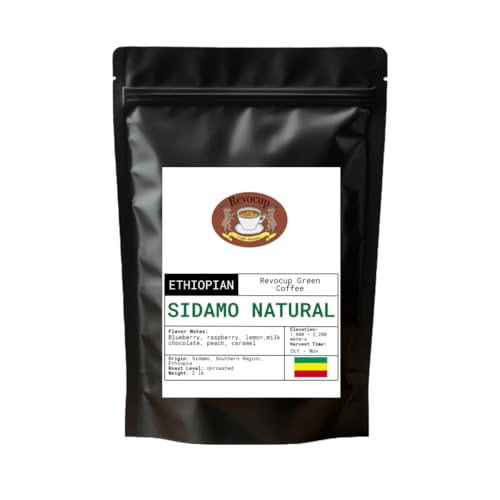
If you’re a home roaster who values origin purity and flavor complexity, Ethiopian Sidamo Green Coffee Beans in a 2lb quantity deliver unmatched authenticity and control. These single-origin heirloom Arabica beans come from Ethiopia’s Sidamo region, grown at 1,800–2,200 meters, making them Strictly High Grown. The high elevation boosts sugar development, giving you dense, flavorful beans. Expect bold fruit tones-blueberry, peach, citrus-and chocolate in the cup. Light roasts highlight brightness; medium roasts bring out smooth depth. Beans are uniform, so they roast evenly, ideal for beginners and pros. Grown organically and sun-dried, they support sustainability without sacrificing quality.
Best For: Home roasters seeking origin-pure, complex beans with vibrant fruit and chocolate notes from high-elevation, ethically sourced Ethiopian heirloom Arabica.
Pros:
- Exceptional flavor complexity with bold blueberry, peach, citrus, and chocolate notes
- Uniform bean size ensures even, consistent roasting for all skill levels
- Ethically sourced from small farms with organic, sun-dried practices at high elevation
Cons:
- Requires roasting expertise to fully unlock optimal flavor profiles
- Limited roast range suitability-best for light to medium roasts only
- May be less accessible to buyers unfamiliar with green bean sourcing and storage
Colombian Green Coffee Beans 2 Lb

You’ll get the most out of Colombian Green Coffee Beans 2 Lb if you want full control over roast freshness and flavor development, since these unroasted beans let you roast to exact taste preferences. I source them from Huila, Colombia’s top specialty region, where volcanic soil and high altitudes boost quality. They’re 100% Castillo varietal, washed-process, giving a clean, bright cup with crisp acidity. Roasting at home means peak freshness and the ability to tweak profiles-light for fruitiness, dark for chocolatey depth. I buy them direct-trade, so I know they’re specialty-grade and traceable. You’ll get consistency, authenticity, and room to experiment-no guesswork, just real control over your brew.
Best For: Home roasters who want full control over freshness and roast profile to craft a clean, bright cup from premium single-origin Colombian green coffee.
Pros:
- Allows precise customization of roast level for tailored flavor, from light and fruity to dark and chocolatey
- Sourced directly from Huila, Colombia’s top specialty region, ensuring high quality and traceability
- Washed-process Castillo varietal beans deliver a clean, bright cup with crisp acidity and nuanced flavors
Cons:
- Requires home roasting equipment and knowledge, which may be a barrier for beginners
- No pre-roasted convenience for those who prefer immediate brewing
- Limited to one varietal and process, offering less variety for adventurous tasters
Unroasted Green Coffee Beans 3 lb

This 3-pound bag of unroasted green coffee beans suits serious home roasters and small-scale producers who want full control over roast profiles without frequent reordering. I get mine from a single estate in Mexico Marachi-100% Arabica, specialty grade, vacuum-sealed for freshness. You’ll appreciate the traceability and consistency, especially if you’re comparing roast batches. These beans work with drum, air, or stovetop roasters, letting you dial in light, medium, or dark roasts cleanly. They’re rich in chlorogenic acids, which some studies link to metabolic support, though that’s a bonus, not the main draw. Just know: green beans take up more space than roasted, so store them in a cool, dark spot.
Best For: Serious home roasters and small-scale producers seeking full control over roast profiles with fresh, traceable, single-origin specialty-grade beans.
Pros:
- Sourced from a single estate in Mexico Marachi for superior traceability and consistent quality
- Vacuum-sealed to preserve freshness and extend shelf life
- High in chlorogenic acids, offering potential metabolic and antioxidant benefits
Cons:
- Requires roasting equipment and knowledge, making it less suitable for casual coffee drinkers
- Green beans take up more storage space compared to roasted beans
- Flavor profile depends on user’s roasting skill, which may lead to inconsistency for beginners
Peru Organic Green Coffee Beans (3 LB)

Peru Organic Green Coffee Beans (3 LB) work best for home roasters who want full control over roast profile and flavor development, since these 100% Arabica beans come unroasted and traceable to a single estate. I trust this batch because it’s specialty grade, consistently clean, and easy to roast to my preferred medium level. The 3-pound quantity keeps me stocked without waste, and the beans hold freshness well when stored right. They’re rich in antioxidants and chlorogenic acids, which may support metabolism. I’ve tried other origins, but this Peruvian estate offers a reliable balance of mild brightness and smooth body-great for filter or espresso once roasted.
Best For: Home roasters seeking full control over roast profile and flavor development with traceable, specialty-grade organic green coffee beans.
Pros:
- 100% Arabica, single-estate beans ensure traceability, consistency, and superior quality
- Unroasted format allows customization for preferred roast levels and brewing methods
- Rich in antioxidants and chlorogenic acids, supporting potential health benefits like improved metabolism
Cons:
- Requires a coffee roaster and technical knowledge, limiting accessibility for casual drinkers
- Larger 3-pound quantity may be excessive for infrequent roasters
- Freshness depends on proper storage, which may be challenging for some users
Fresh Roasted Organic Guatemala Coffee (5lb)

Organic Guatemala delivers a no-nonsense option for home roasters who prioritize certified quality and want bulk flexibility. I’ve used this 5lb bag of unroasted beans, and it’s ideal if you roast often and hate running out. These beans are USDA Organic and Kosher certified, so you know they meet strict standards. They’re not ready to brew-roast them first-and they come from sustainable farms, roasted and packaged here in the U.S. The single-origin profile lets you track flavor changes through roast levels, from cinnamon to dark. While larger than Peru’s 3lb option, it’s cost-effective over time. Just make sure you’ve got storage space.
Best For: Home roasters who prioritize organic certification, bulk value, and single-origin traceability.
Pros:
- USDA Organic and Kosher certified for guaranteed quality and ethical sourcing
- 5-pound bulk package ideal for frequent roasters seeking cost efficiency
- Single-origin beans allow precise roast experimentation and flavor development
Cons:
- Requires home roasting equipment and knowledge-unsuitable for beginners
- Large 5lb size demands significant storage space
- Not ready to brew out of the bag-adds extra step versus pre-roasted coffee
Costa Rica Tarrazu Green Coffee Beans 5lb
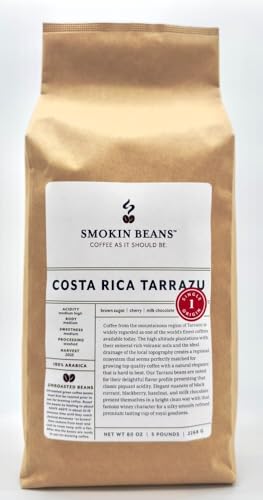
If you’re a home roaster who values control over flavor and quality, Costa Rica Tarrazu Green Coffee Beans in a 5lb bag are a solid choice for dialing in the perfect roast. Grown at 1700–1800 meters in one of Central America’s top regions, these Caturra and Catuai varietals are specialty grade and sourced from high-altitude farms. You’ll notice tasting notes of caramel, milk chocolate, and hazelnut when roasted. They store well for over a year if kept cool and dark. Roast between 400°F and 450°F for 10–15 minutes, then cool fast. I pay fair prices to farmers, so you support equitable trade with every batch.
Best For: Home roasters who prioritize flavor control, quality, and ethical sourcing in their coffee experience.
Pros:
- Specialty grade beans with a refined flavor profile featuring caramel, milk chocolate, and hazelnut notes
- Grown at high altitude (1700–1800 meters) in the renowned Tarrazu region for superior bean density and taste
- Supports fair trade practices with farmers paid fairly, promoting social equity in coffee-producing communities
Cons:
- Requires home roasting equipment and knowledge, which may be a barrier for beginners
- Unroasted beans demand proper storage conditions to maintain freshness over the 12-month shelf life
- Limited to those who prefer a medium roast profile, as flavor notes are optimized for specific roasting parameters
Factors to Consider When Choosing Specialty Green Coffee Beans
You’ll want to take into account origin and traceability since beans from regions like Ethiopia or Colombia offer distinct flavor profiles tied to their environment. Pick bean varieties like Bourbon or Typica based on the balance and acidity you prefer, and pay attention to processing methods-washed beans tend to be cleaner, while natural-processed ones are fruitier. Make sure the roast profile matches your brewing style, and don’t overlook sustainability: look for certifications like Organic or Fair Trade when possible.
Origin And Traceability
While origin alone doesn’t guarantee quality, knowing where your green coffee beans come from gives you a clear picture of what to expect in the cup. When you choose single-origin beans, you’re getting coffee from a specific region, farm, or micro-lot, which means you can trace it back to its source. That boosts transparency, especially with direct trade, where farmers and roasters share harvest dates and farming practices. Look for elevation details-beans grown above 1,500 meters tend to be denser and more flavorful. Traceability improves quality control, too: specialty-grade beans must have fewer than five defects per 300 grams, and origin data helps verify this. Beans from single estates or micro-lots offer more accountability, so you know exactly where your coffee’s been. That clarity helps you make informed choices, especially if consistency and quality matter to your brew.
Bean Variety Selection
Coffee’s character starts with the varietal. You’ll taste the difference when you choose Caturra, with its bright citrus acidity and hints of cacao, or Parainema, offering tropical fruit and vanilla notes. Heirloom types bring complex, floral, and fruity layers due to genetic diversity, but they can be less consistent. Modern cultivars like Parainema often trade some complexity for disease resistance and stable yields. Your pick affects body, sweetness, and acidity-key traits for nailing your desired cup profile. Bean size and density vary by type, too, so adjust your roast settings accordingly for even development. Some varietals also perform better under specific conditions, meaning your roasting approach should match the bean’s natural tendencies. Knowing the varietal helps you anticipate how it will behave during roasting and what flavors will emerge. Choose based on both flavor goals and practical roasting needs.
Processing Method Matters
When selecting specialty green coffee beans, the processing method plays a decisive role in shaping flavor, texture, and roast behavior. If you prefer a clean, bright cup with sharp acidity, choose washed beans-they’re processed quickly to remove fruit, reducing fermentation and boosting clarity. For bolder, fruit-forward profiles with wine-like depth, natural processing delivers intense flavors but demands careful drying to avoid mold or defects. Honey-processed beans strike a middle ground, keeping some mucilage to enhance sweetness while retaining more acidity than naturals. You’ll need to monitor moisture levels closely, especially with natural or honey methods, since extended drying times increase risk. Specialty standards allow no more than five full defects per 300 grams, so consistent, clean processing is non-negotiable. Pick the method that matches your target profile-but always check for even drying and low defect counts to guarantee quality.
Roast Profile Compatibility
Since roast profile compatibility shapes how flavor develops under heat, you’ll want to match your green beans to the roast style you’re aiming for. High-altitude beans (1,800–2,200 meters) handle heat better, thanks to dense sugar development from slow maturation, making them ideal for medium to dark roasts. If you’re roasting light or medium, washed-process beans offer clean, bright cups with balanced body. Watch moisture levels-beans at 11–12% need longer drying phases to avoid scorching. Uneven roasting? Choose specialty-grade lots with five or fewer defects per 300 grams for better consistency in size and density. Natural or honey-processed beans can caramelize dramatically in medium roasts but risk tipping if heat isn’t carefully managed. Always consider varietal traits: Gesha thrives with gentle, extended roasting, while Bourbon responds well to aggressive development. Match bean traits to your roast curve, and you’ll pull out the best flavors without guesswork.
Sustainability Practices
If you’re serious about the quality and impact of your coffee, you’ll want to look beyond flavor and consider how the beans were grown and sourced. Choosing direct trade coffee supports fair wages and long-term farmer partnerships, boosting community stability. Opt for shade-grown beans-they preserve forests, protect wildlife, and reduce the need for chemicals. When possible, pick certified organic or organic-by-default beans to avoid synthetic pesticides that harm soil and water. Be mindful of processing: fully washed coffees use a lot of water, but sustainable farms recycle it, cutting waste. Look for low defect rates-five or fewer per 300 grams-because they mean careful hand-sorting and better post-harvest practices. That’s not just quality assurance-it’s sustainability in action. You’re not just buying beans; you’re supporting systems that protect people and the planet, one green bean at a time.
Freshness And Storage
Though green coffee beans don’t spoil like perishable goods, they slowly lose quality over time, so how you store them makes all the difference. Keep them in airtight containers in a cool, dark place-exposure to light, heat, or moisture degrades them faster. Aim for storage at 10–12% moisture; higher levels invite mold. Oxygen causes oxidation, so choose beans packed with one-way valves or vacuum seals to stay fresh longer. Avoid spots near stoves, sinks, or windows, and never store them near strong-smelling items-they’ll absorb odors. You can preserve quality for up to 12 months, but for peak flavor, use them within 6–9 months post-harvest. Simple, sealed buckets or glass mason jars work fine; fancy gear isn’t needed. Just stay consistent and keep conditions stable. That’s how you protect your beans and your brew.
Frequently Asked Questions
How Long Do Green Coffee Beans Stay Fresh?
You can keep green coffee beans fresh for 6 to 12 months if you store them right. Keep them in an airtight container, away from light, heat, and moisture. Vacuum-sealed bags with one-way valves work best. Avoid freezing unless you’re storing long-term-then use small, sealed portions to prevent condensation. After a year, beans lose aroma and acidity, giving flat, dull brews. For peak flavor, roast and use within 6 months.
Can I Brew Green Coffee Without Roasting?
You can brew green coffee without roasting, but it won’t taste like traditional coffee. The result is more herbal, grassy, and nutty-closer to tea. Use a French press or pour-over with finely ground beans. Steep 5–7 minutes in hot water. It’s less bitter and has less caffeine than roasted coffee. Some people use it for health reasons or to avoid roast-related compounds. But flavor is milder and less complex. Not ideal if you want classic coffee taste.
Are Green Coffee Beans Safe to Eat Raw?
Yes, you can eat green coffee beans raw, but you won’t love the taste or texture. They’re hard, grassy, and bitter. More importantly, raw beans contain chlorogenic acid and other compounds that might upset your stomach or interact with medications. Roasting breaks down some of these elements and develops flavor. If you try eating them, start small. Most people prefer brewed or roasted forms for safety, digestibility, and taste.
Do Green Coffee Beans Contain More Caffeine Than Roasted?
Yes, green coffee beans do contain more caffeine than roasted-you lose a bit during roasting due to heat breakdown. But the difference isn’t huge, usually around 5–10% less after roasting. If you’re brewing, the roast level affects flavor more than caffeine kick. Medium roasts keep a balance, while dark roasts mellow bitterness. For max caffeine, choose light roast or cold brew methods.
What Does “Specialty Grade” Mean for Green Coffee Beans?
“Specialty grade” means you’re getting high-quality green coffee beans that scored 80+ on a 100-point scale. You’ll notice better flavor clarity, fewer defects, and more consistency. These beans are grown at ideal altitudes, often from known farms or co-ops like Yirgacheffe or Geisha varieties. While pricier than commercial grade, they’re worth it if you want vibrant acidity or complex notes. Always check certifications and roast profiles to match your brewing method.