Best Water for Coffee: Third Wave Water Tested & Explained
Use distilled or reverse osmosis water with added minerals for the best coffee every time. Products like Third Wave Water and COFFEE WATER give you precise control, boosting sweetness and body with magnesium and calcium while keeping alkalinity low to highlight natural flavors. They’re ideal for pour-over, drip, or espresso, but require pre-mixing and aren’t suited for tap water. For convenience, Evian or FIJI offer stable mineral content, though they’re less tailored to coffee. Your brew’s consistency improves dramatically when you control the water-there’s more to know about matching water to roast type and equipment.
We are supported by our audience. When you purchase through links on our site, we may earn an affiliate commission, at no extra cost for you. Learn more. Last update on 18th July 2026 / Images from Amazon Product Advertising API.
Notable Insights
- Use purified water with added minerals like Third Wave Water to achieve balanced extraction and enhance coffee flavor.
- Choose water with low alkalinity and proper magnesium-to-calcium ratios to support sweetness, body, and clarity in coffee.
- Avoid tap water with high temporary hardness, as it can cause uneven extraction and dull-tasting coffee.
- For consistent results, use SCA-standard mineral packs that treat distilled or RO water for optimal brewing chemistry.
- Consider low-acid mineral blends if sensitive to acidity, ensuring reduced bitterness without sacrificing flavor clarity.
Third Wave Water Classic Light Roast (12-Pack)

If you’re brewing light roast coffee and want to bring out its bright, nuanced flavors, Third Wave Water Classic Light Roast (12-Pack) is a solid choice. Each stick treats one gallon, so the 12-pack gives you up to 12 gallons of mineral-enhanced water. I use it with my drip brewer and French press-it works with Keurig, Moka Pot, and others. It adds magnesium for sweetness and calcium for body, with low alkalinity to boost natural acidity. The blend is science-backed, not guesswork. Even the Sharks on *Shark Tank* preferred it over tap. It’s not cheap long-term, but for clarity and taste, it’s reliable.
Best For: Coffee enthusiasts brewing light roast beans who want to enhance clarity, acidity, and nuanced flavors through scientifically optimized water.
Pros:
- Enhances coffee’s natural brightness and sweetness with balanced magnesium and calcium levels
- Compatible with all major brewing methods including drip, French press, Keurig, and Moka Pot
- Low alkalinity formula preserves and highlights delicate flavor notes, backed by testing and *Shark Tank* validation
Cons:
- Higher long-term cost compared to using tap or filtered water
- Each stick treats a full gallon, which may be excessive for low-volume brewers
- Requires consistent use to maintain flavor benefits, demanding ongoing investment
Third Wave Water Medium Roast (12 Sticks)

Third Wave Water Medium Roast (12 Sticks) is the go-to solution for coffee lovers who want barista-level results at home without overhauling their entire brewing setup. I’ve used it, and it’s made a clear difference. Each stick treats one gallon of water, so 12 sticks mean 12 gallons of optimized brew-ready water. It’s made in the USA and stood out on Shark Tank-yes, all five Sharks preferred coffee made with it. The blend uses magnesium for sweetness and calcium for body, balancing flavor perfectly for medium roasts. It works with any coffee maker. Just don’t use it if you’re sensitive to magnesium sulfate-some may get stomach aches. If that happens, stop right away. Otherwise, it’s a simple, effective upgrade. You won’t need fancy gear or soft water to brew better coffee. This is a no-nonsense fix anyone can use. Just dissolve a stick, brew, and taste the difference. It’s that straightforward.
Best For: Home coffee enthusiasts seeking barista-quality results with medium roast coffee using simple, optimized water enhancement.
Pros:
- Enhances flavor extraction with balanced magnesium and calcium for sweeter, fuller-bodied coffee
- Compatible with all coffee makers and brewing methods-easy to use with no special equipment needed
- Trusted and featured on Shark Tank with all five Sharks preferring coffee made with it
Cons:
- Contains magnesium sulfate, which may cause stomach aches in sensitive individuals
- Not suitable for those with hypersensitivities to its mineral components
- Limited to gallon-sized batches, which may not suit smaller or more precise brewing needs
COFFEE WATER Mineral Packs for Making Water for Coffee (Makes 25 Gallons)

I use COFFEE WATER Mineral Packs when I want full control over my brewing water without the guesswork, making them ideal for home baristas who rely on reverse osmosis or distilled water but need to reintroduce essential minerals for balanced extraction. Each pack set-one of each mineral-goes into a gallon of water, and the 25 sets cover 25 gallons total. They meet SCA standards and contain magnesium sulfate, calcium citrate, sodium bicarbonate, and sodium chloride, all safe for equipment and health. I’ve used them across pour-over, drip, and espresso setups, and seen consistent extraction and clearer, more vibrant flavors. They’re pricier than bulk powders, but the convenience and precision keep my coffee repeatable and reliable every time.
Best For: Home baristas using reverse osmosis or distilled water who want precise, SCA-compliant mineral enhancement for consistently excellent coffee extraction.
Pros:
- Ensures water meets Specialty Coffee Association (SCA) standards for optimal coffee flavor
- Simple, pre-measured packets enable hassle-free, repeatable results
- Compatible with all brewing methods including pour-over, drip, and espresso
Cons:
- More expensive than DIY mineral blending with bulk powders
- Limited to use with RO or distilled water, not tap water
- Individual packaging per gallon may create more waste compared to bulk options
Mineral Packs for Making Water for Coffee (Makes 125 Gallons)

Who wouldn’t want café-quality coffee at home with water that’s consistently balanced and optimized for extraction? I use these mineral packs to turn my reverse osmosis or distilled water into SCA-compliant brewing water. Each set-one of each packet-treats five gallons, and the full kit handles 125 gallons. They contain magnesium sulfate, calcium citrate, sodium bicarbonate, and sodium chloride, all safe for equipment. The mix boosts clarity, sweetness, and body across pour-over, drip, and espresso. Compared to smaller 25-gallon packs, this bundle saves money over time if you brew daily or for multiple people. Just shake well after adding. No guesswork, no scale needed.
Best For: Home coffee enthusiasts who want consistent, SCA-compliant water for optimal flavor extraction across pour-over, drip, and espresso brewing methods.
Pros:
- Turns RO or distilled water into balanced, café-quality brewing water that enhances clarity, sweetness, and body
- Contains precise mineral ratios meeting Specialty Coffee Association standards-no scale or guesswork needed
- Cost-effective 125-gallon supply ideal for daily brewers or households with multiple coffee drinkers
Cons:
- Requires five-gallon water containers for proper mixing, which may be inconvenient for small kitchens
- Limited to use with already purified water-won’t work with tap water
- Some users may prefer customizable water profiles over fixed mineral content
Third Wave Water Dark Roast (12-Pack)

If you brew dark roast coffee and want a cleaner, smoother cup without sharp acidity, this water additive is built for your grind. Third Wave Water’s Dark Roast (12-Pack) uses a patented mineral blend to reduce acidity while enhancing your coffee’s natural flavors. It prevents scale buildup-no temporary hardness means your gear stays protected. I’ve found it brings out deeper, bolder notes in Sumatra and French roasts without bitterness. Each gallon-sized pack treats one gallon of distilled or RO water, making it ideal for home setups. It’s pricier than DIY mixes, but the consistency and gear protection make it worth it for daily dark roast drinkers.
Best For: Daily dark roast coffee drinkers seeking smoother, low-acidity brews with enhanced flavor and equipment protection.
Pros:
- Lowers acidity for a cleaner, smoother cup ideal for bold dark roasts
- Prevents scale buildup with no temporary hardness, extending equipment life
- Patented mineral blend consistently enhances natural flavor notes in dark roast coffee
Cons:
- Higher cost compared to DIY water modification methods
- Requires use with distilled or RO water, adding to prep time and expense
- Limited application for those who don’t brew dark roast or use standard tap water
Perfect Coffee Water Minerals (10-Pack)

When chasing the best water for brewing coffee, specialty-grade mineral packs like Perfect Coffee Water Minerals (10-Pack) deliver consistent results for manual and filter brewers who want full control over extraction. Each of the 10 single-use sticks makes one gallon (4 liters) of optimized water, enhancing balance, clarity, and smooth body while reducing bitterness. Developed by coffee experts and scientists, this formula helped win the 2022 and 2023 World AeroPress Championships. Made with high-quality minerals in the USA, it’s ideal for pour-over, Chemex, and drip brewers. Check with your espresso machine’s manual first-some manufacturers caution against added minerals. I use it weekly.
Best For: Home and specialty coffee brewers seeking precise, competition-winning water chemistry for manual and filter brewing methods.
Pros:
- Enhances coffee clarity, balance, and body while reducing bitterness
- Developed by coffee professionals and used in World AeroPress Championship-winning recipes
- Single-use sticks ensure consistent, easy-to-measure mineral dosing for 1 gallon each
Cons:
- Not universally compatible with all espresso machines-requires checking manufacturer guidelines
- Designed for manual brewing, limiting utility for automatic machine users
- Higher cost per gallon compared to generic mineral additives or tap water filters
Third Wave Water Low Acid Coffee Sticks

Third Wave Water Low Acid Coffee Sticks are my go-to choice when brewing coffee for anyone sensitive to acid reflux or digestive discomfort from high-acid brews. Each stick is pre-measured for one gallon of water, so you just drop it in before brewing-no guesswork. They work with any coffee type or method, whether it’s drip, pour-over, French press, cold brew, or K-Cups. I’ve found they reduce acidity without dulling flavor, delivering a smoother cup. Unlike some low-acid coffees that taste flat, these sticks maintain balance. Third Wave Water designs them to preserve taste while easing stomach issues. It’s a practical fix for sensitive drinkers.
Best For: People who experience acid reflux or digestive discomfort from high-acid coffee but still want a flavorful, smooth brew.
Pros:
- Reduces coffee acidity without compromising taste, resulting in a smoother flavor profile
- Universally compatible with all coffee types, beans, grounds, K-Cups, and brewing methods
- Pre-measured sticks simplify use-just add to one gallon of water before brewing
Cons:
- Designed for larger batches (one gallon), making it less convenient for single servings
- Additional step required in brewing process compared to using low-acid coffee beans alone
- Ongoing cost over time compared to using tap water with pH-altering additives
Evian Natural Spring Water, 1 L bottles, 6 pack

I reach for Evian Natural Spring Water when I want a consistently clean, balanced base that won’t interfere with the nuanced flavors of specialty coffee. Sourced from the French Alps and filtered through glacial rocks over 15 years, it has a neutral pH of 7.2 and a stable mineral profile that brews predictably. Its natural electrolytes add subtle structure without overpowering delicate notes. I’ve found it performs well in pour-over and espresso, though it’s not tailored specifically for coffee like mineral additive blends. The 1L bottles are portable, made with up to 35% recycled plastic, and easy to store-ideal for quick brewing or travel.
Best For: Coffee enthusiasts seeking a clean, neutral-tasting water with a balanced mineral profile for brewing specialty coffee without altering delicate flavor notes.
Pros:
- Sourced from the French Alps with natural filtration through glacial rocks, delivering consistent purity and a smooth taste
- Neutral pH of 7.2 and stable mineral composition ideal for predictable, high-quality coffee extraction
- Bottles made with up to 35% recycled plastic, supporting environmental sustainability while remaining portable and easy to store
Cons:
- Not specifically formulated for coffee brewing, so may lack optimized mineral levels for maximum flavor enhancement
- Higher price point compared to standard bottled or filtered tap water
- 1L size may require frequent restocking for high-volume or commercial brewing use
Third Wave Water Coffee Brewing Sticks
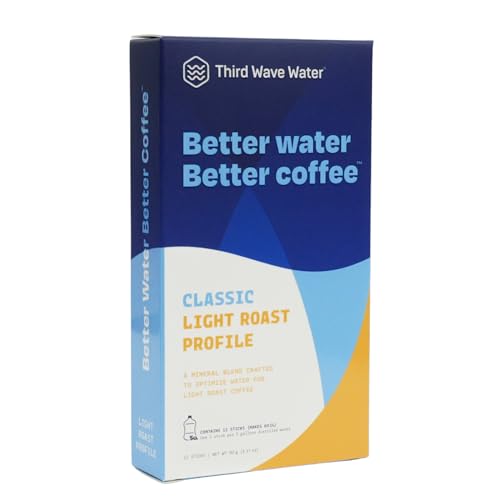
Ever wonder why your coffee still falls flat even with top-tier beans and equipment? I’ve been there. The issue might be your water. Third Wave Water Coffee Brewing Sticks fix that. Each stick makes up to 60 gallons of mineral-enhanced water-just drop one in five gallons of filtered water. It adds magnesium for sweetness and calcium to balance body, keeping alkalinity low so your coffee’s natural acidity shines. I’ve tried it with drip, French press, even Keurig-with consistent results. The formula, validated on *Shark Tank* (all five sharks preferred it), works across all brewing methods. No guesswork, just better extraction. If you’re serious about flavor, this is a low-cost upgrade worth trying.
Best For: Coffee enthusiasts who want to optimize their brew’s flavor with precise mineral-enhanced water, regardless of brewing method.
Pros:
- Enhances coffee sweetness and body with targeted magnesium and calcium mineral blend
- Validated by blind taste test on *Shark Tank* with all five Sharks preferring the results
- Cost-effective and long-lasting, with each stick making up to 60 gallons of optimized water
Cons:
- Requires access to a 5-gallon water container and filtered water for activation
- Limited benefit if tap water is already well-balanced for coffee brewing
- Not ideal for small, on-demand brewing setups without pre-mixing preparation
FIJI Natural Artesian Water (24-Pack)

Why does the water you use matter when brewing coffee? Because it makes up over 98% of your cup, and FIJI Natural Artesian Water (24-Pack) delivers consistent, clean flavor. Sourced from a remote aquifer in the Fiji Islands, it’s naturally filtered through volcanic rock, untouched by pollution. That process adds electrolytes-more than double leading brands-without artificial additives. With a balanced pH of 7.7, it won’t skew your brew’s taste. I’ve found its smooth, neutral profile works well with light and dark roasts. While pricier than tap, it’s convenient for travel or offices where water quality varies.
Best For: Coffee enthusiasts and professionals seeking pure, consistent water to enhance the flavor of their brew, especially in environments with variable tap water quality.
Pros:
- Sourced from a protected artesian aquifer, ensuring purity and freedom from pollutants
- Naturally rich in electrolytes with a balanced pH of 7.7, ideal for neutral, smooth-tasting coffee
- Convenient 24-pack format perfect for travel, offices, or homes with inconsistent water quality
Cons:
- Higher cost compared to tap or standard bottled water, making it less economical for daily high-volume use
- Environmental impact due to plastic packaging and long-distance transportation from Fiji
- Overkill for brewing with already high-quality local water sources
Factors to Consider When Choosing Water for Coffee
You need the right mineral balance to extract flavor without bitterness, since too much or too little can throw off your brew. Check the alkalinity and acidity-water that’s too soft or too hard affects how your coffee tastes and can even damage equipment over time. Make sure your water meets purity standards, works with your brewing method, and actually enhances the flavor instead of masking it.
Mineral Balance Importance
The right balance of minerals in your water makes a noticeable difference in how fully and evenly your coffee extracts. You need magnesium and calcium in a balanced ratio-they pull out sweetness, body, and complex flavors during brewing. If your water lacks these, your coffee will taste sour or thin, a sign of under-extraction. Aim for 75–250 ppm total dissolved solids (TDS); this range supports balanced extraction without tipping into bitterness or weakness. Water with too many minerals, especially bicarbonates, buffers acidity and dulls vibrant notes, leading to flat results. Soft or distilled water often strips away essential ions, weakening flavor development. You’re better off avoiding tap water high in temporary hardness or using a filtered blend designed for coffee. Third Wave Water and similar mineral packs offer a reliable fix. Your brew’s clarity and brightness depend on it.
Alkalinity And Acidity
Water with balanced alkalinity shapes how bright or flat your coffee tastes, building directly on the role minerals play in extraction. If your water has low alkalinity, it enhances the coffee’s natural acidity, letting fruity or citrus notes shine-great for light roasts. But too little alkalinity (below 40 ppm as CaCO₃) means weak buffering, often leading to sour, under-extracted coffee. On the flip side, high alkalinity neutralizes acids in the brew, muting brightness and making your cup taste dull or flat. That’s especially noticeable with medium to dark roasts, where balance gets lost. Bicarbonates are the main players here, controlling how acids behave during extraction. For best results, aim for moderate alkalinity-enough to stabilize pH but not so much that it masks flavor. You don’t need lab gear; just use filtered water with known mineral content or a balanced blend like Third Wave Water.
Water Purity Standards
Although purity often goes unnoticed, it plays a decisive role in how your coffee tastes, as even trace contaminants like chlorine or organic matter can disrupt extraction and introduce off-flavors. You need clean, neutral water-reverse osmosis (RO) or distilled water works well since it removes impurities and gives you a consistent base. From there, you can add precise minerals if needed. Look for water with 50–175 ppm total hardness (as calcium carbonate) to support extraction without scaling your gear. Keep alkalinity moderate-40–75 ppm as calcium carbonate-so it buffers pH just enough without muting acidity. Too much alkalinity flattens flavor; too little makes coffee sour. Avoid tap water if it smells or tastes off. When in doubt, test your water’s TDS and adjust. Pure, balanced water isn’t just clean-it’s the backbone of great coffee.
Brewing Method Compatibility
When matching water to your brewing method, keep in mind that each technique pulls flavor differently, so the right mineral balance can make or break your cup. For espresso, use water with controlled calcium to prevent scale in high-pressure machines while keeping flavors sharp. If you’re using a pour-over or drip brewer, go for balanced magnesium and calcium-this boosts sweetness and body without pulling out too much bitterness. French press lovers need consistent mineral levels to guarantee even extraction and a smooth, full mouthfeel. Cold brew works best with low temporary hardness; it stops off-flavors and gives you a clean, mellow result after long steeping. Light roast fans should choose low-alkalinity water to brighten acidity. Tap water varies, so consider a specialty coffee water product or filtered water blended to target specs-it’s a small step that makes a real difference in every brew.
Flavor Enhancement Potential
You’ll get the most out of your coffee’s flavor when you pay attention to the minerals in your water, not just the bean or brew method. Water with balanced magnesium boosts sweetness and clarity, pulling out nuanced notes you might otherwise miss. Calcium adds body, giving your cup a richer, more satisfying mouthfeel. If your water has low alkalinity, it won’t neutralize coffee’s natural acids, so bright, lively flavors stay intact. Proper mineral levels-especially magnesium and calcium-also help extract flavors evenly, avoiding weak or bitter results. Using water that follows standardized guidelines, like the SCA’s, guarantees consistent, stronger-tasting coffee every time. Tap water varies, and distilled lacks minerals, so consider a filtered or specialty coffee water product. You don’t need lab-grade precision, but choosing water with the right balance gives you better control, more flavor, and a noticeably improved cup-without changing your gear or routine.
Equipment Safety Considerations
Choosing the right water doesn’t just shape your coffee’s taste-it also affects your equipment’s long-term performance. Hard water with high calcium and magnesium carbonates builds scale inside machines, clogging heating elements and shortening their lifespan. You’ll want to avoid that. Water with balanced minerals prevents scale and corrosion, keeping espresso machines and brewers running smoothly. Low alkalinity reduces scaling risks but still offers enough buffering to prevent acidic damage to metal parts. Watch out for excess magnesium sulfate-even if it’s safe to drink, it can wear down sensitive components over time. Using water that meets accepted mineral standards protects your gear without sacrificing extraction quality. You’re not just brewing better coffee; you’re also cutting long-term maintenance costs. Stick to filtered or specially formulated brewing water to keep your machine in top shape for years.
Source Water Requirements
Tap water might seem like a convenient choice, but not all sources deliver the mineral balance needed for great coffee. You need water with 75–250 mg/L total dissolved solids (TDS) to extract flavors properly. Aim for at least 50 mg/L of calcium and magnesium-too little, and your coffee tastes flat; too much, and scaling builds up in your gear. Keep alkalinity moderate (40–70 mg/L as calcium carbonate) to preserve the coffee’s acidity without causing pH swings. Avoid distilled or softened water-they strip flavor or add unwanted sodium. And never use water with chlorine or off-smells, since they ruin the taste. If your tap water’s off, try filtered or bottled spring water instead. You can even mix distilled with tap to hit the right mineral levels. The right water isn’t just clean-it’s key to a balanced, bright, and flavorful cup every time.
Frequently Asked Questions
Can I Use Distilled Water With Third Wave Water Packs?
No, you shouldn’t use distilled water with Third Wave Water packs. The packets are designed to add specific minerals to soft or purified water, not to re-mineralize completely flat water like distilled. Using distilled water throws off the mineral balance, leading to flat or sour-tasting coffee. Instead, use filtered or reverse osmosis water-it’s more stable and gives better extraction. Third Wave Water works best when there’s a consistent base to build from.
Are These Mineral Packs Safe for Cold Brew?
Yes, you can safely use third-wave water mineral packs for cold brew. They dissolve easily in cold water and won’t encourage bacterial growth. These packs give consistent mineral content, improving flavor without risking safety. Just follow the dose instructions-overdoing it won’t speed things up. Unlike tap water, which varies by location, these packs offer control. If you’re using distilled or reverse osmosis water, they’re necessary to add back essential minerals for proper extraction.
How Long Do the Minerals Last Once Mixed?
The minerals last indefinitely once mixed, as long as you store the water properly. You’re not dealing with anything that degrades quickly-minerals stay stable in solution. Just keep your container sealed and away from light. Shake before use to guarantee even distribution. If the water tastes off or grows bacteria-unlikely with clean containers-it’s time to remake it. For cold brew, that long steep time doesn’t affect mineral stability, so your mix stays effective.
Can I Use These With Espresso Machines?
Yes, you can use these mineral mixes with espresso machines, but you must monitor total dissolved solids (TDS) and avoid scaling. Most espresso machines, like the Gaggia Classic or Lelit Anna, perform best with water around 75–125 ppm. Homemade mixes using magnesium and calcium carbonate work if properly diluted. Avoid using hard tap water or distilled alone. Regular descaling and backflushing are necessary to maintain machine health and consistent extraction.
Do the Sticks Dissolve in Hot Water Only?
No, the sticks don’t dissolve in hot water only-they start breaking down in warm or room-temperature water, but heat speeds up the process. You’ll see them fizz and dissolve completely within minutes in hot water, which guarantees even mineral distribution. In cold water, dissolution takes longer, sometimes over an hour. For espresso machines, use them in cold water first, then heat the water separately to avoid clogging or uneven mixing.