Best Coffee Beans for Espresso: Lavazza & Top Picks Ranked
Use medium to medium-dark roasts like Lavazza Super Crema or Gaviña Old Havana for rich espresso with balanced body and crema. These blends enhance sweetness and depth without excessive bitterness. Avoid very light or dark roasts-they hinder extraction or dull flavor. Freshness matters: aim for beans 2–4 weeks post-roast. Whole beans preserve quality, but grind just before brewing. Blends with Robusta boost crema, while 100% Arabica offers cleaner notes. Your machine and grinder make a difference. There’s more to get right.
We are supported by our audience. When you purchase through links on our site, we may earn an affiliate commission, at no extra cost for you. Learn more. Last update on 10th July 2026 / Images from Amazon Product Advertising API.
Notable Insights
- Choose medium to medium-dark roasts for balanced body, sweetness, and crema in espresso.
- Opt for blends with Arabica and Robusta beans to enhance richness and crema stability.
- Prioritize fresh, whole beans from transparent sources for peak flavor and aroma.
- Look for notes of chocolate, nuts, or caramel, indicating depth and complexity in espresso.
- Use high-pressure espresso machines (9-bar) to fully extract rich flavors from espresso beans.
Lavazza Espresso Barista Gran Crema (35.2 oz)

If you’re looking for a reliable, no-fuss espresso bean that delivers a smooth and balanced shot without needing a high-end machine, Lavazza Espresso Barista Gran Crema (35.2 oz) is one of the best choices for home baristas who want consistency and ease. I’ve found it works well even with mid-range espresso makers, pulling a rich shot with a medium roast that’s not too bitter. The dark intensity (7/10) gives depth without burning your palate, and the blend of Arabica and Robusta adds body and crema. You’ll taste hints of honey and roasted coffee-nothing flashy, but clean and satisfying. It’s pre-optimized for espresso, so don’t expect magic from pour-over. The 2.2-pound resealable bag keeps beans fresh, though storage away from light helps. Compared to lighter single-origins, it’s better for milk drinks like lattes. If you want a no-drama bean that just works, this is a smart go-to.
Best For: Home baristas seeking a consistent, easy-to-use espresso bean that performs well with mid-range machines and excels in milk-based drinks.
Pros:
- Delivers a smooth, full-bodied espresso with a balanced flavor profile and pleasant notes of honey and roasted coffee
- Optimized for espresso machines, producing a rich crema and good extraction even on non-professional equipment
- Comes in a large 2.2-pound resealable bag that helps preserve freshness for frequent users
Cons:
- Not ideal for pour-over or filter brewing methods due to its espresso-specific roast and blend
- Contains Robusta beans, which may introduce a slightly harsh or bitter note for sensitive palates
- Dark intensity of 7/10 may still be too bold for those preferring lighter, more nuanced coffee profiles
Lavazza Super Crema Whole Bean Coffee (2.2 lb)
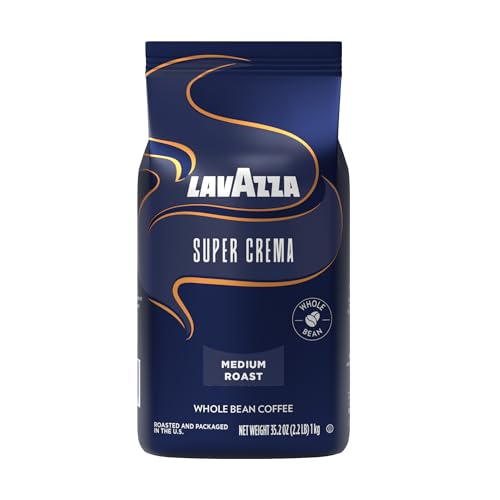
Lavazza Super Crema Whole Bean Coffee (2.2 lb) stands out for espresso lovers who want a smooth, balanced shot with a rich crema and gentle sweetness. I use it for daily espresso, and it delivers a full-bodied cup with bold flavor and a creamy finish. The medium roast blend combines Arabica and Robusta beans from 15 countries, giving it consistent quality and notes of hazelnut and brown sugar. Since it’s naturally caffeinated and made in coffee-only facilities, purity isn’t an issue. I recommend grinding 0.28 oz per 1 oz shot. It works best with commercial or home espresso machines calibrated for medium roast. While it’s less intense than dark roasts, its sweetness suits those avoiding bitterness.
Best For: Espresso enthusiasts seeking a smooth, balanced shot with a rich crema and hints of sweetness without bitterness.
Pros:
- Delivers a full-bodied, bold flavor with a creamy finish and aromatic notes of hazelnut and brown sugar
- Consistent quality from a globally sourced blend of Arabica and Robusta beans from 15 countries
- Naturally caffeinated and produced in dedicated coffee-only facilities for purity
Cons:
- Less intense than dark roasts, which may disappoint those seeking strong, smoky flavors
- Optimized for espresso machines, limiting versatility for other brewing methods
- Packaging may vary, which could affect storage consistency
Lavazza Espresso Whole Bean Coffee (2.2 lb)
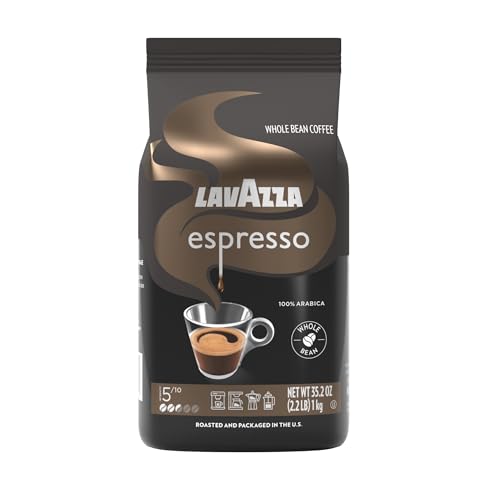
For those who want a versatile, no-fuss bean that delivers solid espresso performance without leaning too dark or bitter, this 2.2-pound bag of Lavazza’s medium roast is a reliable workhorse. I use it in my espresso machine, but it works just as well in a moka pot or French press. Made from 100% Arabica beans sourced from South America and Africa, it’s naturally caffeinated and roasted to an intensity of 5/10. I notice distinct floral and fruity aromas, with a balanced, sweet finish. Lavazza’s been roasting since 1895, and their sustainable sourcing and dedicated facilities help guarantee consistent quality batch after batch.
Best For: Coffee lovers seeking a versatile, medium-roast 100% Arabica bean that performs well across espresso, moka pot, drip, and French press brewing methods.
Pros:
- Balanced, aromatic flavor profile with notes of flowers and fruit and a sweet finish
- Versatile preparation suitable for espresso machines, moka pots, drip, and French press
- Sustainably sourced 100% Arabica beans from South America and Africa, roasted in dedicated facilities
Cons:
- Larger 2.2 lb bag may not be ideal for those who prefer buying smaller quantities for peak freshness
- Medium roast may lack the bold intensity preferred by dark roast enthusiasts
- Natural caffeine content might not suit those seeking decaffeinated options
Lavazza Super Crema Whole Bean Coffee
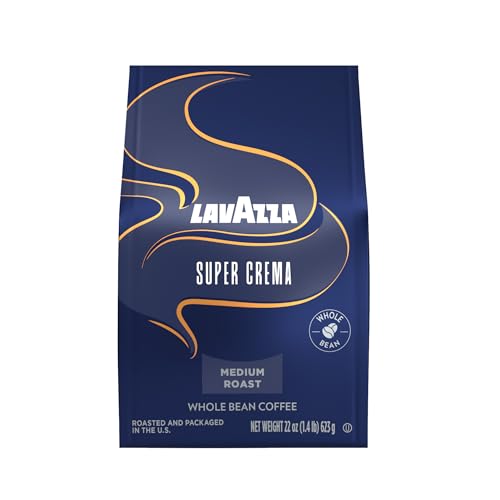
One of the most balanced espresso blends on the market, Lavazza Super Crema delivers a smooth, creamy shot that stands out for its consistent flavor and rich texture-making it a top choice for home baristas who want a reliable, no-fuss option without splurging on specialty beans. I use 0.28 oz of freshly ground beans for a 1 oz shot, and it pulls evenly every time. The medium roast blends Arabica and Robusta from 15 countries, giving me notes of hazelnut and brown sugar with a bold, rounded finish. It works best in espresso machines, especially super-automatics. The 22 oz bag stays fresh, and since it’s pure coffee, I don’t worry about additives.
Best For: Home baristas seeking a smooth, consistent espresso blend at an affordable price without the need for high-end specialty beans.
Pros:
- Balanced medium roast with creamy texture and pleasant notes of hazelnut and brown sugar
- Consistent extraction, especially in super-automatic espresso machines
- Generous 22 oz bag of pure coffee with no additives, sourced from a globally curated blend
Cons:
- Contains Robusta beans, which may appeal less to purists seeking 100% Arabica
- Flavor profile, while smooth, lacks the complexity of premium single-origin or specialty blends
- Whole beans require a quality grinder for optimal results, adding to equipment needs
Starbucks Dark Roast Espresso Coffee Beans
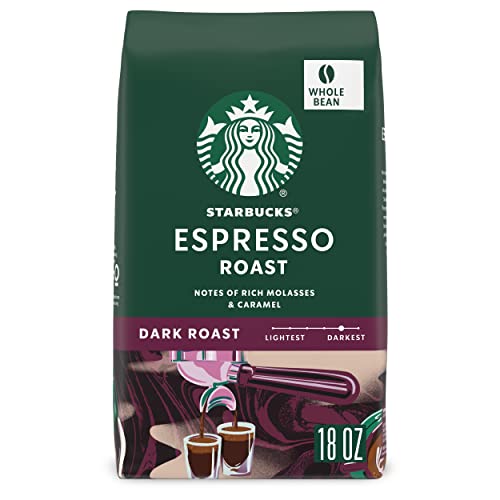
If you want the exact same dark roast fuel that powers espresso drinks at Starbucks locations worldwide, this 18 oz bag of whole bean Espresso Roast is your direct line to it. I use 100% Arabica beans, dark roasted for a bold, caramelly sweetness balanced with molasses notes-no bitterness if brewed right. It’s a multi-region blend perfected since 1975, consistent and reliable for espressos, lattes, or drip. I skip flavored oils and additives, so it works across methods: moka pot, French press, or espresso machine. Ethically sourced with Conservation International, it’s a practical, no-nonsense choice. Nestlé distributes it under license, but the quality stays true.
Best For: Coffee lovers who want the authentic, bold dark roast used in Starbucks espresso drinks worldwide, ideal for those who value ethical sourcing and versatility across brewing methods.
Pros:
- Made with 100% Arabica beans for a smooth, rich flavor without bitterness
- Ethically sourced through Starbucks’ partnership with Conservation International
- Versatile whole bean format suitable for espresso, drip, French press, moka pot, and pour-over
Cons:
- Dark roast may be too intense for those who prefer mild or medium profiles
- Whole beans require grinding at home, adding an extra step for convenience-focused users
- Availability and pricing may vary due to Nestlé’s licensed distribution model
Lavazza Espresso Whole Bean Coffee, Medium Roast, 100% Arabica, 2.2 lb Bag
Lavazza Espresso Whole Bean Coffee stands out when you want a balanced, aromatic espresso without the bitterness of dark roasts. I prefer it because its medium roast (intensity 5/10) brings out sweet, floral, and fruity notes without overpowering the cup. Since it’s 100% Arabica, from South America and Africa, it’s naturally caffeinated and smooth. I’ve used it in espresso machines, moka pots, drip, and even French press-each method works well, though fine grinding is key for true espresso. The 2.2 lb bag stays fresh thanks to reliable packaging, and it contains only pure coffee, made in dedicated facilities.
Best For: Coffee lovers seeking a smooth, aromatic medium roast with versatile brewing options and a naturally caffeinated 100% Arabica blend.
Pros:
- Balanced flavor profile with sweet, fruity, and floral notes thanks to 100% Arabica beans
- Versatile grind compatibility-works well in espresso machines, moka pots, drip, and French press
- Sourced and produced in dedicated coffee facilities, ensuring purity and freshness in a 2.2 lb resealable bag
Cons:
- Medium roast may lack the bold intensity preferred by dark roast enthusiasts
- Whole beans require grinding separately, which may be inconvenient for some users
- Larger 2.2 lb bag may not be ideal for those who prefer smaller, more frequent purchases to ensure peak freshness
Blue Bottle Organic Dark Roast Coffee (12 oz)

You’ll want Blue Bottle Organic Dark Roast Coffee if you’re after a rich, full-bodied espresso with deep chocolate notes and a smooth finish-this is the choice for espresso lovers who prioritize both ethical sourcing and consistent quality. I use it for daily espresso shots and milk-based drinks because the dark roast brings out a sweet, intense flavor that holds up well under pressure. The beans are certified organic, sourced from Latin America and Central Africa, and roasted in small batches for peak freshness. While it’s pricier than standard supermarket options, the traceable supply chain and specialty-grade quality justify the cost. It works best with a good grinder and espresso machine to extract its full character. Blue Bottle also offers lighter roasts if you prefer more nuanced tones, but for bold, reliable espresso, this dark roast delivers every time.
Best For: Espresso lovers who value rich, chocolatey flavor, ethical sourcing, and premium quality in their daily dark roast.
Pros:
- Bold, full-bodied taste with smooth sweetness and pronounced chocolate notes ideal for espresso
- Certified organic, sustainably sourced, and traceable beans from Latin America and Central Africa
- Roasted in small batches for maximum freshness and consistent specialty-grade quality
Cons:
- Higher price point compared to mass-market coffee brands
- Requires a quality grinder and espresso machine to fully unlock its potential
- May be too intense for those who prefer lighter, more acidic coffee profiles
Gaviña Old Havana Espresso 32 oz

For anyone seeking a medium-dark roast with a smooth, balanced finish and a hint of citrus brightness, Gaviña Old Havana Espresso delivers a reliable choice tailored to espresso lovers who value both tradition and sustainability. I use it in my espresso machine and moka pot, and it pulls consistent shots with nutty sweetness and a clean finish. Whole beans stay fresh in the 32 oz resealable bag, and grinding just before brewing locks in flavor. Roasted in Los Angeles at a zero-waste facility, it’s part of Gaviña’s Direct Impact Initiative, so ethical sourcing is built in. Family-run since 1870, they know Latin-style espresso - and it shows.
Best For: Espresso enthusiasts who appreciate a smooth, medium-dark roast with nutty sweetness and subtle citrus notes, and value sustainable, ethically sourced coffee.
Pros:
- Consistently rich and balanced flavor ideal for espresso and moka pot brewing
- Sustainably roasted in a zero-waste facility with ethical sourcing through the Direct Impact Initiative
- Freshness preserved in a resealable 32 oz bag; whole beans maximize aroma and taste when ground pre-brew
Cons:
- Larger 32 oz bag may be impractical for those who consume coffee slowly or prefer smaller batches
- Citrus notes may be too subtle for those seeking a more pronounced fruity or acidic profile
- Limited roast variety for those who prefer lighter or darker options outside medium-dark
Lavazza Crema E Aroma Whole Bean Coffee
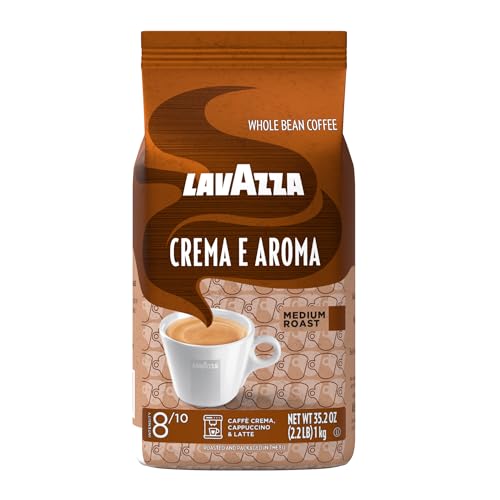
If you want a bold, full-bodied espresso with rich crema and earthy depth without venturing into bitter or over-roasted territory, this blend delivers consistency and balance right out of the bag. I’ve found Lavazza Crema e Aroma works well in both espresso machines and moka pots, producing a smooth, aromatic shot with chocolate notes and a clean finish. The mix of Arabica and Robusta beans from South America, Africa, and Asia guarantees depth without harshness. At a medium roast with an 8/10 intensity, it’s strong but not ashy. It’s also compatible with drip or French press if you prefer versatility. Just one 2.2-pound bag gives you plenty of shots without sacrificing freshness.
Best For: Coffee lovers seeking a consistent, full-bodied espresso with rich crema and smooth chocolate notes without bitter or burnt flavors.
Pros:
- Delivers a balanced, aromatic espresso with a long-lasting crema and earthy depth
- Versatile blend suitable for espresso machines, moka pots, drip brewers, and French press
- Made from 100% non-GMO coffee beans with a medium roast intensity (8/10) that avoids ashy overtones
Cons:
- Large 2.2-pound bag may be impractical for individuals or infrequent coffee drinkers
- Blend contains Robusta beans, which some purists may perceive as lower quality
- Origin-specific details are broad (South America, Africa, Asia), lacking transparency for single-origin enthusiasts
Death Wish Coffee Organic Espresso Beans

Death Wish Coffee Organic Espresso Beans pack a punch for espresso lovers who want intensity without bitterness. I use these dark roast beans when I need bold flavor fast, and they deliver every time. A mix of organic Arabica and Robusta from India, Peru, and Sumatra gives a balanced depth with notes of caramelized sugar, cocoa, and cherries. They’re Fair Trade and USDA certified, so I know they meet strict quality and ethical standards. I grind the whole beans fine for espresso or use them in drip machines for a strong, smooth cup. Each 14-ounce bag stays fresh and potent.
Best For: Espresso enthusiasts who want a bold, smooth, and ethically sourced dark roast with intense flavor and high caffeine content.
Pros:
- Bold, rich flavor with notes of caramelized sugar, cocoa, and cherries
- Certified organic and Fair Trade, ensuring quality and ethical sourcing
- Versatile whole beans suitable for espresso, drip coffee, and other brewing methods
Cons:
- Dark roast may be too intense for those who prefer mild or medium coffee
- Higher caffeine content may not suit caffeine-sensitive individuals
- Price point may be higher compared to non-certified or conventional brands
Factors to Consider When Choosing Coffee Beans for Espresso
You’ll want to pick beans with a roast level that suits your taste-darker roasts usually bring out the boldness espresso is known for, while lighter roasts can highlight origin-specific notes. Consider where the beans come from, since origin affects acidity, sweetness, and overall flavor balance in your shot. And don’t overlook how well the beans produce crema or match your machine’s brewing style-some work better with lever, others with pump pressure.
Roast Level Importance
While roast level doesn’t define a coffee’s origin or quality, it plays a decisive role in how the beans perform under the high pressure of espresso extraction. You’ll want a medium to dark roast-ideally between 5 and 8 on the roast scale-for the best balance of body, sweetness, and crema. These levels caramelize sugars enough to add richness without charring the beans, which can lead to bitter, ashy flavors. Light roasts often lack the full body and oil development needed for a proper crema and smooth mouthfeel, while overly dark roasts risk flattening the flavor. Medium-dark roasts extract more evenly under pressure, improving solubility and blending acidity with sweetness. Look for terms like “espresso roast” or “full city+” when buying. They usually indicate the right profile. Choose wisely-your shot depends on it.
Bean Origin Impact
Roast level sets the stage, but where your beans come from shapes the performance. You’ll find African beans, like Ethiopian or Kenyan, bring bright floral and fruity notes thanks to volcanic soils and high elevations. These offer lively acidity and aromatic complexity in espresso. Latin American beans, from Colombia or Guatemala, deliver balanced sweetness, mild acidity, and familiar chocolate or nutty tones-ideal if you prefer a smoother shot. Beans from Asia-Pacific regions, such as Sumatra or Papua New Guinea, add earthy, spicy, or woody depth with heavier body, perfect when you want boldness. Higher-altitude farms produce denser beans with more nuanced flavors and brighter acidity. So, choose origin based on taste preference: Africa for complexity, Latin America for balance, and Asia for depth. Your machine and grind matter, but origin defines the core profile you’re extracting.
Crema Quality Focus
Though crema isn’t the sole indicator of espresso quality, it’s a visible sign of proper extraction and fresh beans. You’ll get the best crema using beans 2–4 weeks post-roast, when gases and oils are at peak levels. Blends with Robusta boost crema thickness and stability-thanks to higher lipids and solubles-though pure Arabica can still produce good crema with care. Choose medium to dark roasts, as they release more gas during brewing than lighter roasts, enhancing crema volume. Grind your beans fine and uniform; inconsistent particles lead to uneven extraction and weak crema. Use a machine that delivers at least 9 bars of pressure and brew between 195°F and 205°F for stable, golden crema. These factors combined give you a rich, lasting layer every time.
Flavor Profile Balance
When you’re after a well-balanced espresso, aim for a flavor profile where sweetness, acidity, and bitterness work together without one overwhelming the others. Look for medium roasts-they keep the bean’s natural traits while boosting body and sweetness. Beans with notes of chocolate, nuts, or fruit often signal a balanced cup. If you want more structure, choose blends of Arabica and Robusta: Arabica adds bright, floral tones, while Robusta brings crema and richness. Keep intensity in mind; a lower to mid-range rating (around 5–7) usually means nuanced flavors aren’t drowned by heavy roast notes. Proper extraction matters too-pull shots that emphasize a full body and creamy feel, but still finish clean, not harsh or sour. This balance makes each sip smooth and layered without needing sugar or milk.
Brew Method Compatibility
Since not all brewing methods can deliver true espresso, you’ll want to match your beans to the device you’re using. Espresso machines require a fine grind to build the 9 bars of pressure needed for proper extraction and crema. If you’re using a moka pot, go with a medium-fine grind-too fine and it’ll clog, too coarse and it’ll taste weak. Drip coffee makers use medium-coarse grounds and rely on gravity, so they can’t produce real espresso. French press needs coarse grounds to avoid sludge and doesn’t generate enough pressure, so skip it for espresso. Only machines hitting 9 bars create authentic espresso shots. While some beans are labeled for specific methods, always check your device’s limits. Using espresso beans in the wrong brewer won’t fix a lack of pressure. Know your gear, grind right, and pick beans that fit your setup.
Frequently Asked Questions
What Is the Caffeine Content per Serving?
You get about 63 mg of caffeine per shot of espresso, and most servings use one or two shots, so that’s 63–126 mg total. The exact amount depends on the bean, roast level, and brew method. Light roasts keep slightly more caffeine than dark roasts. If you use Robusta beans, expect more caffeine-up to 80–100 mg per shot-versus Arabica.
Are These Beans Suitable for Cold Brew?
Yes, you can use these beans for cold brew, but they’re roasted for espresso, so the flavor profile might lean bitter or flat when steeped cold. Darker roasts lose some complexity in cold water, which extracts slower and smoother. If you like bold, intense cold brew, they’ll work. For brighter, fruitier results, try a medium roast like Ethiopian Yirgacheffe. Grind coarser than espresso, steep 12–18 hours, and adjust to taste.
Do Any Contain Allergens or Additives?
You won’t find allergens or additives in most pure coffee beans-just roasted coffee, nothing added. Always check the label, though; some flavored beans include artificial additives or oils that could trigger sensitivities. If you’re highly sensitive, stick to single-origin, unflavored beans from reputable roasters who list sourcing and processing details. Dark roasts like Ethiopian Yirgacheffe or Colombian Supremo are clean options. Store them in an airtight container, and grind fresh for best results.
How Should I Store the Beans Long-Term?
You should store the beans in an airtight container away from light, heat, and moisture. Keep them at room temperature-don’t freeze or refrigerate, since condensation damages flavor. Use a opaque, sealed canister and keep it in a cool cupboard. Grind only what you need right before brewing. If buying in bulk, divide and vacuum-seal portions, storing one at a time. Fresher beans last about 2–4 weeks this way.
Are the Bags Resealable or Vacuum Sealed?
You’ll find most coffee bags are resealable with a zip lock, but not vacuum sealed. They’re designed to keep beans fresh after opening by locking out air and moisture. Some brands, like Fellow or Planetary Design, even include one-way valves to let gas escape without letting air in. For long-term storage, transfer beans to an airtight container. Resealable bags work well short-term, but they’re not perfect-light and heat still degrade quality over time.