From Bean to Brew: The Evolution of Turkish Coffee Preparation Techniques
You start with dark-roasted Arabica beans, ground fresh to a fine powder using a hand mill or mortar and pest knife for best results. The cezve, usually copper or brass, heats the mix slowly to build foam-too fast and it collapses. Foam means success. Modern tools like PID heaters help, but the classic method still works if you control the heat. You’ll find even more ways this tradition has adapted over time.
Notable Insights
- Turkish coffee preparation evolved from traditional mortar and pestle grinding to modern hand grinders for consistent, fine powder.
- The cezve, a specialized pot, remains central to brewing, enabling slow heat buildup and rich foam development.
- Historically, coffee was roasted fresh and brewed with careful heat control to preserve flavor and aroma.
- Medium to dark roast Arabica beans from Ethiopia or Yemen are preferred for their balanced, spicy, and fruity notes.
- Modern innovations like PID-controlled heaters improve temperature precision, enhancing foam and extraction in traditional brewing.
How Turkish Coffee Began in the Ottoman Empire
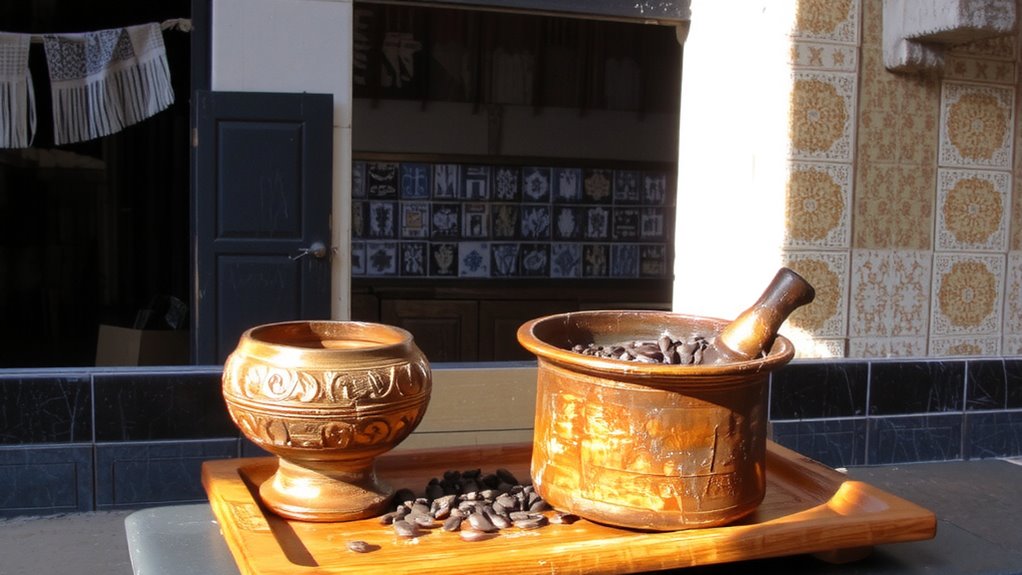
Although coffee didn’t originate in Turkey, it was during the Ottoman Empire that Turkish coffee as we recognize it really took shape, and you’d find it wasn’t just a drink-it was part of daily ritual. You’d see it served in homes, markets, and mosques, deeply woven into Ottoman rituals. Preparation became standardized: finely ground beans boiled slowly in water with sugar, if desired. This method guaranteed a strong, rich brew topped with foam-essential to a proper cup. In imperial ceremonies, coffee wasn’t mere refreshment; it symbolized hospitality and status. Served by trained servants in ornate trays, it reinforced social hierarchy and etiquette. You’d find that consistency in grind, heat control, and serving temperature were prioritized, even then. These early practices laid the foundation for modern techniques, emphasizing precision and tradition. While tools have evolved slightly, the core process remains unchanged-efficient, direct, and rooted in centuries of refinement. Modern enthusiasts can achieve similar results with consistent heat using an electric Turkish coffee maker.
The Cezve: Heart of Turkish Coffee Brewing
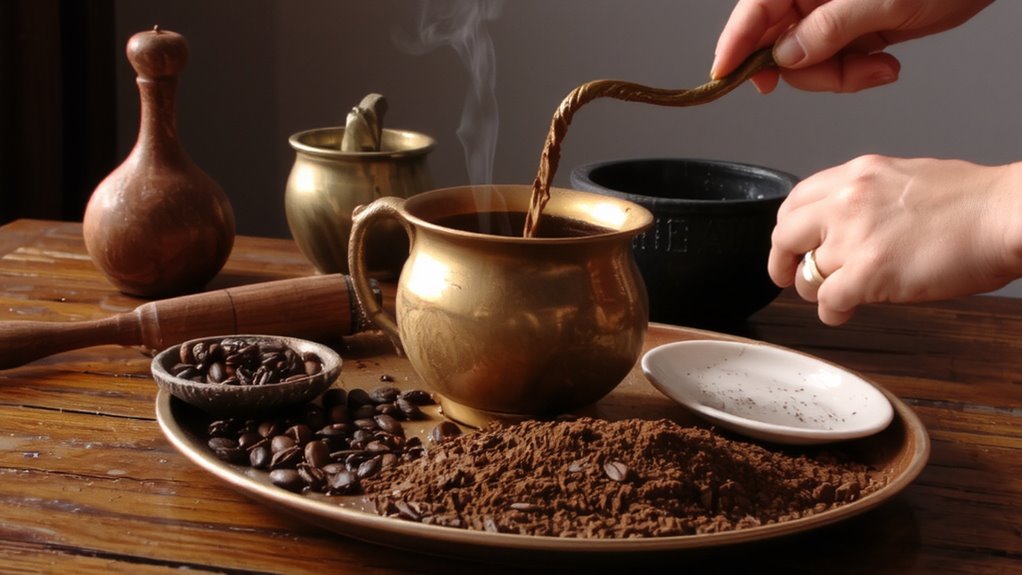
The cezve-the small, long-handled pot used to make Turkish coffee-is essential to the process, and you won’t get the right results without one. It’s designed to slowly heat finely ground coffee and water, letting foam rise just before boiling. You’ll find cezves in brass, copper, stainless steel, or sometimes silver-each affecting heat distribution and durability. Copper gives even heating but needs care to avoid tarnishing; stainless steel is durable but may heat less evenly. Your choice of cezve materials impacts both flavor and maintenance. These pots aren’t just tools-they’re central to traditional brewing rituals, passed down through generations. The slow pour, the watchful eye on rising foam, the serving with grace-each step depends on the cezve. Using anything else skips the ritual and alters the result. For authenticity and precision, stick with a well-made cezve tailored to your stove type and preferred serving size.
Choosing Beans and Roast for Authentic Flavor
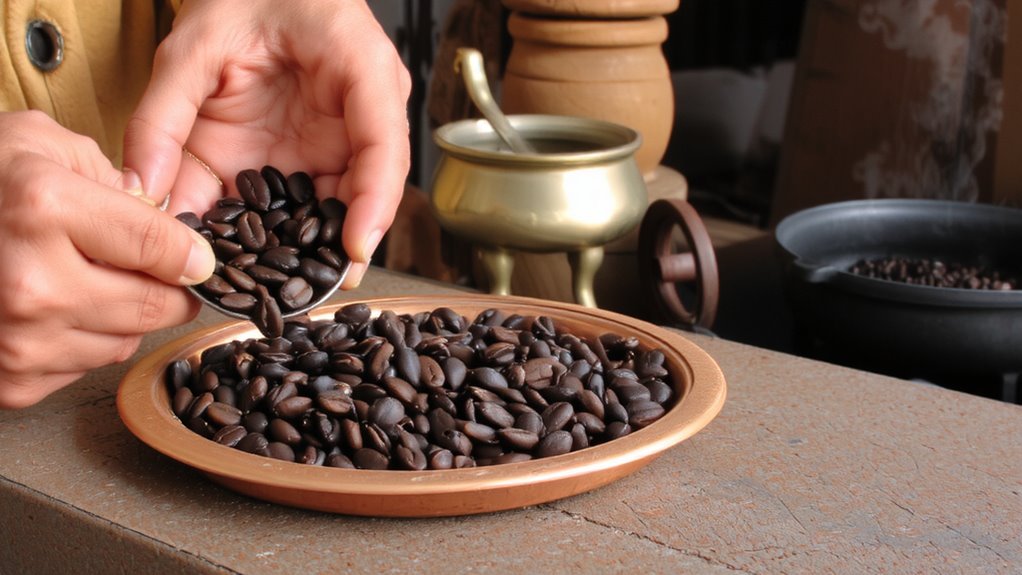
Freshness matters most when picking beans for Turkish coffee-aim for whole beans roasted within the past two weeks for peak flavor. You’ll want a medium to dark roast level; darker roasts add depth and balance the strong, unfiltered brew typical in traditional preparation. Light roasts bring acidity that’s often too sharp for this method. When checking bean origin, look for Arabica beans from Ethiopia or Yemen-regions historically tied to Turkish coffee culture. These tend to offer balanced notes with a slight fruitiness or spice, enhancing authenticity. Some blends mix in Brazilian beans for body, but purists prefer single-origin. Avoid pre-ground coffee since it loses aroma quickly. Your roast level and bean origin directly affect texture and taste, so choose based on whether you prefer boldness or nuance. Always store beans in an airtight container away from light.
How Grinding Tools Changed Turkish Coffee
You’ve picked your beans with care, favoring a medium-dark roast from Ethiopia or Yemen for that authentic profile-now the grind makes or breaks the result. Traditionally, a mortar and pestle delivered the finest, most consistent powder, essential for Turkish coffee’s texture. You’d crush small batches slowly, avoiding heat that alters flavor. But it’s labor-intensive and time-consuming. That’s where the hand mill comes in-especially brass burr models designed for Turkish grind. It’s faster and more uniform than pounding, letting you achieve that flour-like fineness with less effort. Still, cheap grinders create uneven particles, hurting extraction. A quality hand mill lasts longer and offers better control than blade versions. While purists swear by the mortar and pestle for ritual and precision, most home brewers today choose a reliable hand mill for daily use. Both tools demand care, but getting the grind right guarantees a rich, authentic cup every time. Advanced temperature control using PID controllers can further enhance brew consistency when preparing Turkish coffee on modern stovetop or electric setups.
Mastering Heat for Turkish Coffee Foam
While consistency in grind sets the foundation, getting the heat right is what brings Turkish coffee to life-especially when it comes to building that prized layer of foam. You need steady heat control to slowly raise the temperature without boiling the brew too fast. If the heat’s too high, the foam collapses; too low, and you won’t get enough lift. Traditional cezve users often rely on low to medium flame settings, especially with copper or brass pots that distribute heat evenly. The key is patience-let the coffee climb slowly, watching for the foam to rise just before it overflows. Good foam stability means a rich, velvety layer that stays intact when poured. Cast iron stoves offer more consistent output than electric, but with practice, you can adapt. Foam isn’t just visual-it carries flavor, so mastering heat control directly impacts taste.
Modern Twists on Traditional Turkish Coffee
Now that you’ve got the heat under control and know how to develop a solid foam layer, you can start exploring how modern tools and tastes are shaping the way Turkish coffee is made. Some baristas now experiment with cold brew versions, steeping finely ground coffee in cold water for 12+ hours to create a smoother, less acidic concentrate-though it lacks traditional foam and heat-based aroma. Others integrate flavored syrup, like vanilla or caramel, to appeal to sweeter palates, especially in urban cafes. While purists argue these twists undermine authenticity, they can attract new drinkers. A small electric ibrik heater maintains consistent temperature, improving foam without constant monitoring. Modern grinders offer finer, more uniform powder, critical for texture. These updates don’t replace tradition but expand options depending on your preference-whether you want bold authenticity or a creative twist. Use them thoughtfully.
On a final note
You’ve seen how Turkish coffee evolved from Ottoman traditions to modern kitchens. The cezve remains essential, best used with finely ground beans and careful heat control for that signature foam. While traditional methods use wood or gas, electric cezves offer convenience. Whichever you choose, consistency matters-use fresh, dark-roast Arabica beans, grind fine as powder, and simmer slowly. This method isn’t fast, but it’s proven.