Best Nicaraguan Coffee Beans Coffee Lovers Keep Coming Back To
You keep coming back to Nicaraguan coffee for its balanced flavor and high-altitude quality, especially from regions like Jinotega and Matagalpa. Try Volcanica’s whole bean or Amazon Fresh’s ground medium roast for bright chocolate and citrus notes. If you prefer bold, smooth cups, Patria’s dark roast delivers low acidity with subtle fruitiness. For ethical choices, Tiny Footprint offers certified organic, carbon-negative beans. Your taste and brew method will guide the best pick-each option gives you a consistent, fresh cup worth revisiting.
We are supported by our audience. When you purchase through links on our site, we may earn an affiliate commission, at no extra cost for you. Learn more. Last update on 19th July 2026 / Images from Amazon Product Advertising API.
Notable Insights
- Amazon Fresh Nicaraguan Coffee offers consistent quality with single-origin Arabica beans and a balanced medium-light roast.
- Volcanica Nicaragua Jinotega delivers rich chocolate, lemon, and honey flavors in a premium medium-roast whole bean format.
- PURE EARTH COFFEE CO. sources Matagalpa Highlands beans for a clean, caramel-nut medium roast popular among health-conscious drinkers.
- Santa Lucia Nicaraguan Roast earns loyalty with high-altitude, shade-grown dark roast beans and a smooth, cocoa-rich finish.
- Tiny Footprint Organic Dark Roast combines sustainability with taste, featuring chocolate-spice notes and carbon-negative production practices.
Amazon Fresh, Nicaragua Ground Coffee, Medium Roast, 12 Oz

If you’re after a straightforward, budget-friendly Nicaraguan coffee that doesn’t sacrifice origin authenticity, Amazon Fresh Nicaragua Ground Coffee fits the bill. I’ve tried it, and it delivers a clean, medium-light roast with subtle complexity and a noticeable chocolatey base-no overpowering notes, just balanced flavor. It’s 100% Arabica, single-origin, ground fine enough for drip brewers or pour-over. The 12-ounce resealable bag keeps it fresh, though you’ll want to store it in a cool, dark spot. Roasted and packaged in the U.S., it’s consistent and convenient. If you’re not into bold or smoky profiles, this one’s a smart, no-fuss pick.
Best For: Budget-conscious coffee drinkers who want a smooth, authentic single-origin Nicaraguan Arabica coffee with a mild, chocolatey flavor.
Pros:
- 100% Arabica, single-origin beans with a clean, balanced medium-light roast
- Noticeable chocolatey flavor notes without overpowering bitterness or acidity
- Resealable 12-ounce bag for freshness and convenient storage
Cons:
- Limited flavor complexity for those seeking bold or smoky profiles
- Pre-ground consistency may not suit all brewing methods
- Origin authenticity is maintained, but roasted and packaged in the U.S., which may matter to some purists
Patria Nicaragua Dark Roast Ground Coffee, 12oz Bag (Pack of 1)

Patria Nicaragua Dark Roast Ground Coffee is best for coffee drinkers who appreciate a smooth, approachable dark roast with subtle complexity, not overpowering bitterness. I’ve found it works well in standard drip machines, French presses, or pour-over setups-no finicky gear needed. The beans, grown at 3,600–5,250 feet in Nicaraguan fincas, deliver a mild fruity brightness with hints of citrus and florals. It’s a dark roast, but not harsh-acidity stays low, milder than most Central American beans. Patria uses only premium Arabica, roasted to highlight origin traits. If you want bold without the bite, this one’s a solid daily pick.
Best For: Coffee lovers seeking a smooth, low-acidity dark roast with nuanced citrus and floral notes without harsh bitterness.
Pros:
- Smooth dark roast with mild fruity brightness and subtle citrus and floral notes
- Grown at high elevations in Nicaragua for optimal bean quality and flavor development
- Versatile for use in drip machines, French press, and pour-over methods
Cons:
- Flavor profile may be too mild for those seeking a bold, intense dark roast
- Limited availability outside specialty coffee retailers
- Single 12oz bag format may not suit bulk buyers or heavy coffee consumers
Volcanica Nicaragua Coffee, Jinotega, Whole Bean, Fresh Roasted, 16-ounce
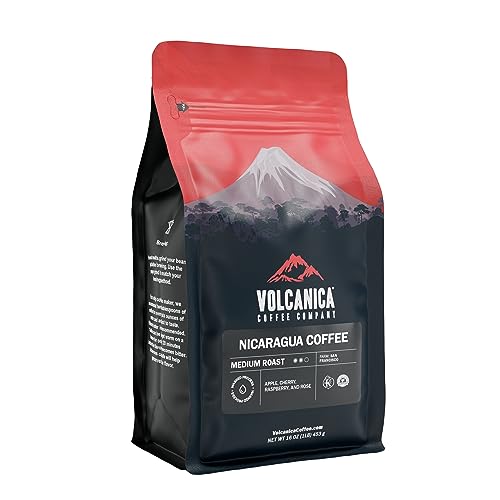
Volcanica Nicaragua Coffee, Jinotega, Whole Bean, Medium Roast, 16-ounce is a solid pick for coffee lovers who value freshness and clean, balanced flavor without the fuss. I get notes of chocolate, lemon, plum, and honey-subtle but distinct-with a smooth body that holds up well in pour-over or drip. The beans are medium roasted above 400°F, then sealed right after to lock in flavor. They’re tested for mold and mycotoxins, so I trust what I’m brewing. It’s whole bean, so I need a grinder, but that also means better freshness. Volcanica guarantees satisfaction, which makes trying it low-risk. If you want quality without hype, this is one to keep.
Best For: Coffee drinkers who appreciate a clean, balanced medium roast with nuanced flavor notes and prioritize freshness and safety in their beans.
Pros:
- Distinct flavor profile with notes of chocolate, lemon, plum, and honey undertones for a well-rounded cup
- Freshly roasted and immediately sealed to preserve aroma and taste, with rigorous lab testing for mold and mycotoxins
- 100% satisfaction guarantee makes it a low-risk choice for new buyers
Cons:
- Whole bean format requires a grinder, which may be inconvenient for those without one
- Subtle flavor notes may not stand out strongly in milk-based drinks
- Limited roast customization since only medium roast is available
Amazon Fresh, Nicaragua Whole Bean Coffee, Medium Roast, 12 Oz

Amazon Fresh Nicaragua Whole Bean Coffee is a solid pick for anyone seeking an affordable, reliable daily brew with clear origin transparency. I’ve found it delivers consistent flavor without the premium price tag. These 100% Arabica beans are single-origin, grown in Nicaragua and roasted in the U.S. The 12-ounce bag is small enough to stay fresh, especially if you grind just before brewing. You’ll taste subtle chocolate and toasted notes-nothing flashy, but satisfying for a medium-light roast. It works well with drip brewers or pour-over setups. While not as complex as specialty roasts, it’s a practical choice for everyday use.
Best For: Budget-conscious coffee drinkers who want a consistent, no-frills daily brew with transparent sourcing and a mild, chocolatey flavor profile.
Pros:
- Affordable price point with single-origin, 100% Arabica beans
- Freshly roasted and packed in the U.S. for optimal flavor retention
- Versatile medium-light roast that performs well in drip and pour-over brewers
Cons:
- Flavor profile is subtle but not particularly complex or distinctive
- Limited packaging size options (only 12 oz)
- May disappoint specialty coffee enthusiasts seeking bolder or more nuanced notes
PURE EARTH COFFEE CO. Nicaragua Medium Roast

If you’re after a clean, balanced cup with subtle sweetness and zero dietary extras, PURE EARTH COFFEE CO. delivers. Grown in Nicaragua’s Matagalpa Highlands, these fresh Arabica beans are sourced directly from farms, ensuring quality and traceability. I prefer medium roast for its smooth body and bright finish, and this one’s roasted fresh to order-no stale flavors. You’ll taste caramel, chocolate, and nuts, with a cocoa accent at the end. It’s low in acidity, so it’s easy on the stomach. The coffee’s vegan, keto-friendly, and has no sugar, carbs, or dairy-ideal for clean energy. Perfect if you value purity and performance without sacrificing flavor.
Best For: Health-conscious coffee drinkers seeking a clean, flavorful, and sustainably sourced medium roast with vegan and keto-friendly benefits.
Pros:
- Sourced directly from farms in Nicaragua’s Matagalpa Highlands for superior quality and traceability
- Medium roast with low acidity, offering a smooth, balanced cup with notes of caramel, chocolate, and nuts
- Vegan, keto-friendly, and free from sugar, carbs, and dairy-ideal for clean, sustained energy
Cons:
- Limited origin variety may not appeal to those seeking diverse global flavor profiles
- Fresh roast-to-order model may result in longer wait times for delivery
- Premium positioning may be priced higher than conventional supermarket coffee brands
Tiny Footprint Organic Dark Roast Coffee

When you’re looking for Nicaraguan coffee that delivers bold flavor without compromising ethics or the environment, Tiny Footprint Organic Dark Roast stands out. I source these USDA Organic, Fair Trade, and Rain Forest Alliance-certified beans from small farms in Segovia, roasted in small batches on a retrofitted Probat for precision. The dark roast brings out chocolate and spice, with hints of apricot and fig. It’s carbon negative-one pound sold removes more CO2 than it emits, funding reforestation in Ecuador. I compost the grounds, use biodegradable packaging, and appreciate how each purchase supports farmers and forest restoration.
Best For: Coffee lovers who prioritize bold, artisanal dark roast flavor and want their purchase to support sustainable farming, carbon-negative impact, and reforestation efforts.
Pros:
- USDA Organic, Fair Trade, and Rain Forest Alliance certified, ensuring ethical sourcing and support for small family farms
- Carbon negative-each pound sold funds reforestation in Ecuador, removing more CO2 than it emits
- Small batch roasted in a retrofitted vintage Probat for rich, nuanced flavor with notes of chocolate, spice, apricot, and fig
Cons:
- Single-origin and small batch production may lead to limited availability or frequent stockouts
- Dark roast profile may be too intense for those preferring milder or more balanced coffee flavors
- Higher price point due to ethical certifications, carbon-negative initiatives, and artisanal roasting process
Santa Lucia Nicaraguan Roast Coffee 16oz

Santa Lucia Nicaraguan Roast Coffee 16oz stands out for those who prioritize origin integrity and ethical sourcing without sacrificing bold flavor. I get my beans from high-altitude, shade-grown farms in Nicaragua, selecting only the top 20–25% of each harvest. You’ll notice a dark roast with full body, deep cocoa notes, and hints of citrus and florals. It’s low in acidity, so it’s easier on your stomach. I’m small-batch roasted for freshness, though the roast year is 2014-best consumed by now. This 91-point rated coffee comes ground in a 16 oz bag, ideal for drip or French press. I’m proud to support a women and Latin-owned business with 30+ years in specialty coffee, committed to sustainability and fair grower partnerships.
Best For: Coffee enthusiasts who value ethical sourcing, bold dark roast flavor, and low acidity in a premium single-origin brew.
Pros:
- Sourced from top-tier Nicaraguan beans with traceable, high-altitude, shade-grown origin
- Rich, full-bodied dark roast with chocolate, citrus, and floral notes and a smooth, sweet finish
- Supports a women and Latin-owned business committed to sustainability and fair grower partnerships
Cons:
- Roast year is 2014, meaning the coffee is past its peak freshness and no longer suitable for consumption
- Pre-ground format limits control over grind size and may further reduce freshness
- Limited availability due to small-batch production and older roast date
Amazon Fresh, Nicaragua Ground Coffee, Medium Roast, 12 Ounce (Pack of 3)

This medium-light roast from Amazon Fresh delivers a balanced cup with subtle complexity and a noticeable hint of chocolate, making it a smart pick for coffee drinkers who want quality Nicaraguan Arabica without the premium price tag. I’ve found it works well in drip brewers and French presses, offering consistent results. The beans are 100% single-origin Arabica, roasted and packed in the U.S.A. across three 12-ounce bags, so freshness is reliable. Since it’s AmazonFresh, the grind is standard medium-ideal for most home setups. You won’t get flashy notes here, but you do get honesty: a clean, approachable profile without bitterness. Compared to pricier Nicaraguan roasts, this one skips the frills but keeps the core flavor intact. It’s convenient, affordable, and ready to brew-no surprises, no hassle. If you need a no-fuss daily coffee that still tastes intentional, this pack earns its place in your cabinet.
Best For: Budget-conscious coffee drinkers seeking a reliable, no-fuss medium roast with authentic Nicaraguan Arabica flavor for everyday brewing.
Pros:
- Consistent, smooth flavor with pleasant chocolatey notes and no bitterness
- Convenient pack of three 12-ounce bags, roasted and packed in the U.S.A. for freshness
- Versatile medium grind ideal for drip machines, French presses, and standard home brewers
Cons:
- Lacks complex or nuanced flavor notes found in specialty roasts
- Packaging is functional but not resealable, requiring transfer for long-term storage
- Limited roast depth variation, as it skews more medium-light than a true medium
Cafe Presto Instant Coffee from Nicaragua – (40 Packets of 2gr).

If you’re after a no-fuss, authentic Nicaraguan coffee fix that delivers consistent flavor on the go, Cafe Presto Instant Coffee-40 individual 2-gram packets-fits the bill. Each pack makes one cup, dissolving quickly in hot water for a smooth, balanced brew. I find it works just as well with cold milk and a touch of sugar, giving a richer, creamier twist. Sourced from traditional Nicaraguan beans, it carries subtle tropical notes tied to Maya heritage-perfect with staples like gallo pinto or rosquillas. At 2.82 ounces, the pack is compact and travel-friendly. It’s not gourmet, but for reliability and convenience, it’s a solid option I keep handy.
Best For: Those seeking a convenient, authentic Nicaraguan coffee experience with consistent flavor and cultural connection, ideal for travel or quick daily use.
Pros:
- Quickly dissolves in hot water or cold milk for flexible, on-the-go preparation
- Made from 100% pure instant coffee with balanced aroma and subtle tropical notes rooted in Nicaraguan tradition
- Compact, lightweight packaging (40 single-serve 2g packets) ideal for travel and storage
Cons:
- Not positioned as a gourmet coffee, so may lack depth for connoisseurs
- Limited flavor variety within the product line
- Relatively small packet count and total weight compared to bulk instant coffee options
Nicaragua Coffee, Jinotega, Ground, Fresh Roasted, 16-ounce
When you’re after a consistently smooth and flavorful medium roast that highlights the natural qualities of high-altitude beans, this Nicaragua Coffee from Jinotega fits the bill. I’ve found it delivers a balanced cup with a clean flavor and a solid body-no harsh edges. You’ll taste chocolate and plum up front, with a hint of lemon brightness and honey sweetness in the aftertaste. It’s ground for convenience and roasted fresh, then sealed to lock in flavor. Each batch undergoes strict testing for mold and mycotoxins, and roasting exceeds 400°F to guarantee safety. If freshness or quality falls short, the 100% satisfaction guarantee has you covered.
Best For: Coffee lovers seeking a smooth, medium roast with rich flavor notes and guaranteed freshness from high-altitude Nicaraguan beans.
Pros:
- Balanced, clean cup with delightful notes of chocolate, plum, lemon, and honey
- Fresh roasted and sealed to preserve peak flavor and aroma
- Rigorous safety testing for mold and mycotoxins, with high-temperature roasting for purity
Cons:
- Ground coffee may lose freshness faster than whole bean if not used promptly
- Limited roast customization since only medium roast is available
- Flavor profile may be too nuanced for those preferring bold, dark roast intensity
Factors to Consider When Choosing Coffee From Nicaragua
You’ll want to take into account elevation and growing conditions first-coffee from higher altitudes like Jinotega or Matagalpa often has better acidity and complexity. Pick a roast profile that matches your brew method: medium roasts highlight bright, fruity notes, while darker roasts bring out deeper chocolate or nutty tones. Always check for bean quality indicators, such as screen size and defect count, and opt for beans with clear sourcing info so you know exactly where-and how-your coffee was grown.
Elevation And Growing Conditions
Elevation shapes the soul of Nicaraguan coffee. You’ll find most beans grown between 3,600 and 5,250 feet, where cooler temps and slower maturation boost sugar development and bean density. That means you get brighter acidity, richer body, and more nuanced flavors in your cup. The mountainous terrain and volcanic soil offer natural advantages-excellent drainage and steady nutrient supply-so the plants stay healthy with less intervention. High-altitude farms often have consistent cloud cover, protecting crops while prolonging cherry ripening. Many Nicaraguan growers use shade-grown methods, which support biodiversity and reduce stress on plants, leading to more balanced yields. Located in the Central American “Bean Belt,” Nicaragua enjoys distinct wet and dry seasons-ideal for flowering and harvest timing. When choosing beans, look for altitude labels; higher-elevation crops tend to deliver cleaner, more complex cups, especially if you’re brewing with pour-over or drip methods.
Roast Profile Selection
Roast level plays a key role in shaping the final taste of Nicaraguan coffee, and your choice directly affects acidity, body, and flavor clarity. If you prefer bright, nuanced cups, go with a medium-light roast-these highlight citrus, toasted nuts, and chocolate while keeping acidity moderate. Beans from high elevations hold up well here, offering clean, balanced profiles. For a bolder, smoother cup, choose a dark roast. Roasted above 400°F, these deliver deep cocoa, fig, and spice notes with full body and low acidity, ideal if you want a stomach-friendly coffee. While dark roasts mute subtle flavors, they bring out rich, sweet finishes. Nicaraguan beans’ density and sugar development let them shine across roast levels without losing integrity. Pick medium for complexity, dark for intensity-both deliver reliable, consistent results that suit different brewing styles and preferences.
Flavor Notes Exploration
Nicaraguan coffee delivers a balanced cup with distinct flavor notes shaped by elevation, processing, and roast. You’ll often taste chocolate, citrus, and floral hints, with a clean profile and milder acidity than other Central American coffees. Grown between 3,600 and 5,250 feet, the high altitude boosts complexity, giving you fruity brightness and honey-like sweetness. If you choose a medium roast, you’ll get crisp citrus acidity and toasted chocolate, which come through more as the coffee cools. Go for a dark roast, and you’ll pull out bold body, deep cocoa, light spice, and a smooth finish-but expect lower acidity. Sun-drying and hand-washing after harvest help preserve natural sweetness and clarity, so check the processing method. Your brewing method matters, too: pour-over highlights brightness, while French press brings out body. Pick based on the flavors you actually want in your cup.
Bean Quality Indicators
You already know how elevation and roast shape the flavor of your Nicaraguan coffee, but the real foundation of a great cup starts with bean quality. Grown between 3,600 and 5,250 feet, these beans mature slowly, forming dense, flavorful cores ideal for rich extraction. Only the top 20–25% of harvests make the cut, ensuring consistent, specialty-grade results. Most producers use wet or natural processing, then dry beans carefully to protect integrity and lower defect rates. After roasting, labs test for mycotoxins, mold, and impurities-critical steps that boost safety and uphold standards. Roasting above 400°F helps eliminate contaminants without masking the bean’s natural character. You’ll want beans that pass these checks, as they offer better flavor stability and fewer flaws in every batch. Look for documented processing and third-party testing-proof that quality isn’t left to chance.
Sourcing And Traceability
When selecting coffee from Nicaragua, starting with single-origin beans gives you clearer insight into where your coffee comes from and how it was grown. Look for labels specifying region or farm-level origin, especially from highland areas with volcanic soil, as these support better traceability and consistent quality. Beans grown at 3,600 to 5,250 feet mature slowly, enhancing flavor, and often come from small mountain farms where care and attention are high. For stronger traceability, choose roasters who share details like harvest methods-some select only the top 20–25% of beans per crop, boosting both quality and authenticity. Check if sourcing includes direct trade practices or documentation showing fair wages and community support, even if certifications aren’t present. Transparent roasters often publish farm visits or growing elevation, helping you verify claims. This level of detail guarantees you’re not just buying Nicaraguan coffee-you’re getting the real story behind every cup.
Certifications Matter
While not every great Nicaraguan coffee carries a label, third-party certifications give you a reliable way to verify ethical and environmental claims. If you see USDA Organic, you know the beans were grown without synthetic pesticides or fertilizers, following strict farming rules. Fair Trade Certified means farmers got fair pay and safe working conditions-important if you care about social impact. Rain Forest Alliance? That’s a sign of shade-grown coffee, which protects forests, wildlife, and soil. These eco-friendly methods often slow bean development, possibly boosting flavor depth. Organic and shade-grown practices frequently overlap, so look for both if sustainability matters to you. Keep in mind, certifications require audits and testing, adding traceability and trust. They’re not perfect, and some small farms can’t afford the fees, but when you want proof of standards, these labels help you choose with confidence.
Frequently Asked Questions
What Makes Nicaraguan Coffee Unique Compared to Other Central American Beans?
You’ll find Nicaraguan coffee stands out for its balanced profile, often medium-bodied with mild acidity and notes of chocolate, nuts, and caramel. Compared to brighter, fruitier Central Americans like Guatemalans or Costa Ricans, Nicaraguan beans tend to be smoother and more rounded. They thrive in diverse microclimates, especially Jinotega and Matagalpa, giving consistent quality. You can roast them light to medium to highlight sweetness without overwhelming sharpness.
Is Nicaraguan Coffee Generally Better for Espresso or Drip Brewing?
You can use Nicaraguan coffee well for both espresso and drip, but it’s slightly better for drip brewing. Its bright acidity and clean, balanced flavors-like citrus, chocolate, and nuts-shine in pour-over or filter methods. For espresso, it works if you prefer milder, sweeter shots, but it lacks the intense crema or body of beans from Brazil or Sumatra. Adjust your grind and dose accordingly.
How Does Altitude Affect the Flavor of Nicaraguan Coffee Beans?
You’ll find higher altitudes give Nicaraguan coffee brighter acidity and more complex flavors like citrus or berry, thanks to slower bean development. At lower elevations, beans develop faster, producing milder, earthier notes with less acidity. For espresso, medium-high grown beans add sweetness and balance; for drip, high-grown lots shine with clarity. Always check the elevation on the bag-1,200 meters and above typically deliver more nuanced cups.
Are Most Nicaraguan Coffees Shade-Grown or Sun-Grown?
Most Nicaraguan coffees are shade-grown, especially in higher-altitude regions like Jinotega and Matagalpa. You’ll find farmers using canopy trees to protect plants, boost biodiversity, and improve bean density. Shade slows cherry development, often enhancing sweetness and complexity. However, some sun-grown farms exist-they yield more but risk lower quality and soil stress. If you’re choosing beans, shade-grown typically means more balanced, nuanced cups worth the extra cost.
Does Nicaraguan Coffee Typically Have a Nutty or Fruity Flavor Profile?
You’ll typically find Nicaraguan coffee has a nutty flavor profile, often with notes of almond or cashew, though some beans show fruity hints like apple or stone fruit depending on the region and processing method. Washed beans lean cleaner and nuttier, while honey or natural processes add subtle fruitiness. If you prefer balanced, mild coffee with sweetness and low acidity, Nicaraguan beans are a solid, reliable choice for everyday brewing.