Best Coffee Makers for Beginners: BLACK+DECKER vs KEENSTAR
Start with a simple, reliable coffee maker like the BLACK+DECKER 12-Cup or Amazon Basics Programmable. They’re affordable, have pause-and-serve features, and dishwasher-safe parts for easy cleanup. If you want espresso, try the KEENSTAR 3.5Bar, but know it needs regular maintenance. Models with programmable brewing and auto shutoff save time and energy. Compact designs fit small spaces, while adjustable brew settings let you control strength. Your choice depends on your routine, cleanup preference, and whether you like espresso or drip. The right pick streamlines your mornings-and there’s more to think about before deciding.
We are supported by our audience. When you purchase through links on our site, we may earn an affiliate commission, at no extra cost for you. Learn more. Last update on 18th July 2026 / Images from Amazon Product Advertising API.
Notable Insights
- Look for models with programmable brewing to automate your coffee routine and ensure consistency daily.
- Choose coffee makers with simple controls and clear displays to minimize confusion and streamline operation.
- Prioritize machines with removable, dishwasher-safe parts for easy cleaning and minimal maintenance.
- Opt for compact designs that save counter space while still offering practical features like mid-brew pause.
- Select brewers with auto-shutoff and drip-free spouts for safety, convenience, and mess-free pouring.
BLACK+DECKER 12-Cup Coffee Maker

If you’re just starting out and want a no-fuss brewer that won’t break the bank, the BLACK+DECKER 12-Cup Coffee Maker is one of the most practical choices on the market. I use it daily, and the Vortex Technology really does extract richer flavor by evenly soaking the grounds. The Sneak-A-Cup feature lets me pour a mug mid-brew, but I always remember to put the carafe back within 30 seconds or it stops. The no-drip spout works as promised-clean pours every time. I toss the removable filter basket in the dishwasher, which saves effort. The keep-warm plate holds temperature well, though I recommend transferring coffee after two hours to preserve taste.
Best For: Budget-conscious beginners who want a reliable, easy-to-use coffee maker with convenient features for daily brewing.
Pros:
- Vortex Technology ensures even saturation of coffee grounds for richer flavor extraction
- Sneak-A-Cup function allows mid-brew pouring without making a mess
- Dishwasher-safe removable filter basket and no-drip spout simplify cleanup and serving
Cons:
- Keep-warm plate can degrade coffee flavor if left on for more than two hours
- Requires precise timing with Sneak-A-Cup-must return carafe within 30 seconds
- Basic design lacks advanced brewing controls or programmable options
KEENSTAR 3.5Bar Espresso Machine with Milk Frother

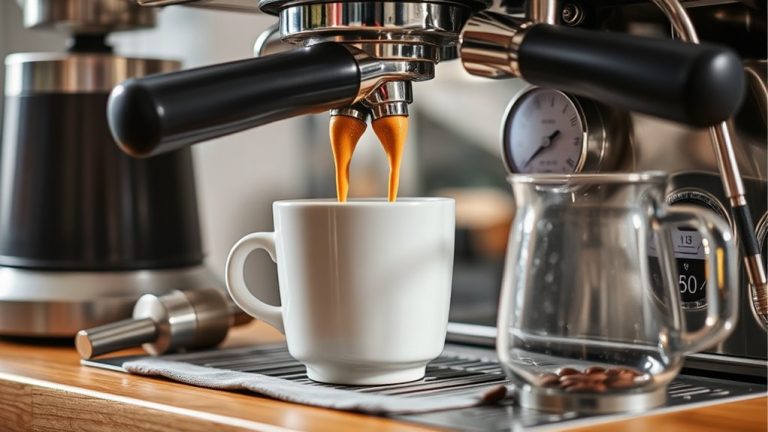
The KEENSTAR 3.5Bar Espresso Machine with Milk Frother suits beginners who want a compact, manual setup that still handles both brewing and frothing without cluttering the countertop. I use it to pull quick 1–4 cup shots in under two minutes, thanks to its 3.5 bar pressure and fast heat-up. The single knob controls are simple, and the pause function helps me avoid overflows. Its steam wand froths milk in 40 seconds, but I clean it right after to prevent clogs. I stick to medium grounds and never exceed 240ml water to avoid leaks. It’s not dishwasher-safe, so I wipe it down by hand. While basic, it’s reliable for small spaces.
Best For: Beginners seeking a compact, manual espresso machine that simplifies brewing and frothing in small spaces.
Pros:
- Compact, space-saving design ideal for small kitchens
- Fast brewing in under 2 minutes with 3.5 bar pressure and simple single-knob control
- Efficient 800W steam wand froths milk in 40 seconds for cappuccinos and lattes
Cons:
- Maximum 240ml water capacity; exceeding causes nozzle leakage
- Not dishwasher safe, requiring hand cleaning and regular maintenance to prevent clogs
- Manual operation lacks automated features, limiting advanced espresso customization
CASABREWS CM5418 20 Bar Espresso Machine

I start with the CASABREWS CM5418 when thinking about beginners who want real espresso without complexity, because its 20-bar pump and compact design make it ideal for small kitchens where space and ease matter. I use its 1350W boiler and Italian pump to pull rich, crema-heavy shots consistently. The steam wand heats up fast, letting me froth milk for lattes or cappuccinos, and the hot water function helps clean the system or make tea. I appreciate the removable 34oz tank and included tamper, though I clean it by hand since it’s not dishwasher safe. If the buttons flash, I run hot water to cool it down-simple.
Best For: Beginners who want authentic espresso with minimal complexity in small kitchens.
Pros:
- 20-bar pressure system and 1350W boiler deliver rich crema and consistent extraction
- Compact design with a steam wand for milk frothing and a hot water function for cleaning or tea
- Includes essential accessories like a tamper, portafilter, and removable water tank for convenience
Cons:
- Not dishwasher safe, requiring hand cleaning for maintenance
- May overheat if brewing immediately after steaming, needing hot water cooldown
- Limited portafilter size at 51mm, which may restrict advanced espresso techniques
Amazon Basics 12-Cup Programmable Coffee Maker

One standout option for beginners who want a simple, reliable coffee maker without overspending is the Amazon Basics 12-Cup Programmable Coffee Maker. I use its 24-hour timer to schedule brewing, so coffee’s ready when I wake up. The 1.9-quart Duralife glass carafe holds plenty and pours cleanly thanks to the drip-free spout and ergonomic handle. Auto-pause lets me grab a cup mid-brew without mess. It shuts off automatically after two hours, which saves energy and gives peace of mind. The removable filter basket makes cleanup fast. While it won’t grind beans or make espresso, it’s a no-fuss pick for basic, consistent coffee.
Best For: Beginners and budget-conscious buyers seeking a reliable, no-frills coffee maker with basic programmable features.
Pros:
- 24-hour programmable timer for convenient, scheduled brewing
- Auto-pause function allows for mid-brew pouring without spills
- Removable filter basket and drip-free carafe make cleanup easy
Cons:
- Lacks advanced features like built-in grinder or espresso capability
- Glass carafe is not thermal, so coffee cools faster
- Limited to 12-cup capacity, not ideal for large households or gatherings
Ninja 12-Cup Programmable Coffee Brewer
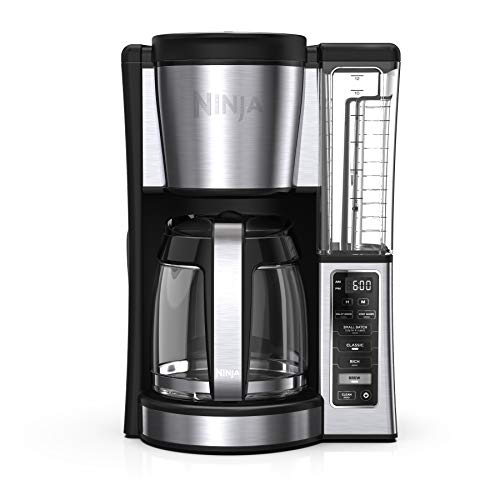
If you’re new to coffee makers but want flexibility without complexity, this 12-cup Ninja model gives you full control with straightforward features that won’t overwhelm. I use the Classic and Rich brew settings daily-Rich packs bold flavor without bitterness, while Classic suits mornings when I want something lighter. The small batch function works great for 1–4 cups, so coffee doesn’t turn watery. I set the 24-hour timer the night before, and my kitchen smells like fresh coffee by 7 a.m. The pause feature lets me pour mid-brew, which I actually use. Cleanup’s easy thanks to the single-button descaling alert.
Best For: Home coffee drinkers who want customizable brew options with simple, intuitive controls.
Pros:
- Offers both Classic and Rich brew settings for versatile flavor profiles
- Small Batch Function ensures strong, non-diluted coffee for 1–4 cups
- Programmable 24-hour brew and mid-brew pause add convenience
Cons:
- Glass carafe can be fragile and heavy when full
- No built-in grinder, requiring a separate purchase for fresh grounds
- Warming plate may overheat coffee if left on for hours
Elite Gourmet 4-Cup Coffee Maker with Pause N Serve

The Elite Gourmet 4-Cup Coffee Maker with Pause N Serve cuts through the clutter for beginners who want simplicity without sacrificing control. I use the semi-transparent water reservoir daily-it makes measuring precise and mess-free. The reusable filter saves money and reduces waste, and it’s easy to rinse out. My favorite feature? Pause N Serve-I grab a cup mid-brew without waiting. The keep warm plate maintains heat, though I recommend pouring into a thermos if you’re leaving it longer than 20 minutes. With just an on/off switch, it’s straightforward, no programming needed-perfect when you’re not ready for complexity. This machine suits small households or light drinkers.
Best For: Small households or light coffee drinkers who value simplicity and quick access to coffee without the need for complex features.
Pros:
- Pause N Serve function allows pouring a cup mid-brew for immediate use
- Reusable filter reduces waste and ongoing costs
- Clear water reservoir with level indicator ensures accurate, mess-free measurements
Cons:
- Keep warm function may lead to burnt taste if coffee sits over 20 minutes
- Limited 4-cup capacity not suitable for larger households or gatherings
- No programmable brewing options for advance scheduling
Mr. Coffee® 5-Cup Mini Brew Switch Coffee Maker, Black

You’re a solo coffee drinker or live with just one other person who shares your morning routine-this compact drip brewer fits your lifestyle perfectly. I use the Mr. Coffee® 5-Cup Mini Brew Switch daily, and it’s ideal for small batches-just enough for two 12-oz cups. It’s small, lightweight (only 1.56 pounds), and fits tight spaces, but still brews fully automatically with a simple ON/OFF switch. The glass carafe has ounce markings, and the Grab-a-Cup feature lets me pour mid-brew. Cleanup’s easy: I pop the filter basket up and rinse parts-or toss them in the dishwasher.
Best For: Solo coffee drinkers or couples who want a compact, easy-to-use coffee maker for brewing small batches.
Pros:
- Compact and lightweight design fits well in small spaces
- Grab-a-Cup Auto Pause feature allows pouring during brewing
- Dishwasher-safe parts make cleaning quick and convenient
Cons:
- Limited 5-cup capacity may be insufficient for larger households
- Glass carafe may be prone to breakage if not handled carefully
- No programmable features or timer for delayed brewing
KEENSTAR 3.5Bar Espresso Machine with Milk Frother

A compact pick like the KEENSTAR 3.5Bar Espresso Machine fits best for beginners tight on counter space but not willing to skip fresh espresso and foam. I use its 3.5 bar pressure and 800W heater to brew 1–4 cups in under two minutes. The single knob controls brewing and steaming-simple and reliable. I make micro-foam in 40 seconds for lattes, but I clean the steam wand right after to prevent clogs. It holds 240ml water-any more and it leaks. I lock the filter securely and use only medium grounds. No dishwasher use; I wipe parts by hand. It’s lightweight, BPA-free, and ranked well among entry-level models.
Best For: Beginners with limited counter space who want an affordable, compact espresso machine for making basic espresso and milk-based drinks at home.
Pros:
- Compact, lightweight design ideal for small kitchens
- Simple single-knob operation for brewing and steaming
- Fast 40-second micro-foam production with 800W steam power
Cons:
- Low 3.5 bar pressure limits espresso quality compared to higher-end models
- Maximum 240ml water capacity; overfilling causes leakage
- Not dishwasher safe, requiring manual cleaning after each use
Ninja DualBrew Pro 12-Cup Coffee Maker

I don’t need to juggle multiple appliances when this one handles both my morning drip coffee and afternoon latte. The Ninja DualBrew Pro brews from grounds or K-Cups, offering 13 sizes-from small cups to a full 12-cup carafe. Its Thermal Flavor Extraction guarantees even brewing, while four modes (Classic, Rich, Over Ice, Specialty) let me tweak strength. I use the built-in frother for lattes, and the reusable filter keeps coffee flavorful, like a French press. The hot water function is handy for tea or oatmeal. At 15.5 inches tall, it fits under most cabinets, and dishwasher-safe parts make cleanup easy.
Best For: Coffee lovers who want a versatile, all-in-one machine that brews both traditional drip coffee and specialty drinks like lattes with the convenience of ground coffee and K-Cup pods.
Pros:
- Offers 13 brew sizes including drip, single-serve, and travel mug options for ultimate flexibility
- Built-in frother and Thermal Flavor Extraction technology enable café-quality drinks at home
- Reusable filter and dishwasher-safe parts make it eco-friendly and easy to clean
Cons:
- Tall design at 15.5 inches may not fit under some kitchen cabinets
- K-Cup compatibility limited to 1 Hole pods, excluding some specialty brands
- Higher price point compared to basic drip coffee makers without frothers
BLACK+DECKER 12-Cup Programmable Coffee Maker

The BLACK+DECKER 12-Cup Programmable Coffee Maker stands out for beginners who want a straightforward, no-fuss way to brew coffee daily. I like its 12-cup Duralife glass carafe-it’s durable, has easy-grip handling, and clear measurement marks (each “cup” is about 5 ounces). The Sneak-A-Cup feature stops dripping so I can pour early without mess. I set brew time using simple rubberized buttons and a clear digital display. The 24-hour programming and auto shutoff after two hours save energy and add convenience. An easy-view water window helps me measure accurately. It’s basic but reliable for daily use.
Best For: Beginners and budget-conscious users seeking a reliable, easy-to-use coffee maker with essential programmable features.
Pros:
- Durable 12-cup glass carafe with clear measurement markings and an easy-grip handle
- Sneak-A-Cup feature allows mess-free early pouring by stopping brew flow temporarily
- 24-hour programmable auto brew and 2-hour auto shutoff for convenience and energy savings
Cons:
- “Cup” size is only 5 ounces, which is smaller than standard mugs
- Glass carafe may not retain heat as well as thermal models
- Basic features with no advanced options like strength control or Wi-Fi connectivity
Factors to Consider When Choosing a Coffee Maker for Beginners
You’ll want a coffee maker that’s easy to use, so look for simple controls and clear markings-models like the BLACK+DECKER 12-Cup keep things straightforward. Make sure it offers the right brew size for your needs, whether you’re making a single cup or a full pot, and check if programmable features save you time in the morning. Clean-up should be hassle-free, durability matters for daily use, and a solid build means fewer replacements down the line.
Ease Of Use
When starting with coffee makers, picking one that’s simple to operate makes a big difference in daily use. Look for models with intuitive controls-clearly labeled buttons or digital displays help you program and brew without hassle. Choose machines with automatic features like set-it-and-forget-it start times and auto-pause, so you can pour a cup mid-brew without mess or guesswork. Visual cues like water level windows and brew cycle lights keep you informed and reduce mistakes. Pick a model with easy maintenance: removable filters, dishwasher-safe parts, and simple reassembly save time and frustration. Built-in safety features like automatic shutoff and boil-dry protection prevent accidents, especially if you’re distracted or in a rush. Brands like Mr. Coffee and Hamilton Beach offer beginner-friendly options that balance function and simplicity. These details make your routine smoother and more reliable.
Brew Size Options
Choosing a coffee maker with flexible brew size options guarantees you’re not stuck with too much or too little coffee each morning. You can pick models that brew single servings (5–8 oz) or full carafes (up to 60 oz), depending on your needs. If you live alone or want coffee just for yourself, a single-serve or small-batch setting works best-plus, it avoids weak, over-diluted coffee when making less than 4 cups. Dual-function brewers let you switch between pods and carafes, giving you more variety in one machine. Look for clear water level indicators and carafe markings so your brew stays consistent. Machines with accurate measurements make certain you’re not guessing how much water to add. While some advanced options offer delayed brewing, focus now on size flexibility. Matching your typical serving needs with the right brew range saves time, coffee, and hassle every day.
Programmable Features
If your mornings follow a predictable routine, a programmable coffee maker can simplify your day by brewing automatically when you need it. You can set the start time up to 24 hours in advance, so coffee’s ready when you wake up or get home. The delay brew function lets you pour fresh coffee without lifting a finger. Many models have a digital clock and timer display, making it easy to monitor your settings. Automatic shutoff-usually after 2 hours-helps save energy and keeps things safe. These features support consistent daily brewing, which is perfect if you want minimal effort each morning. While non-programmable models are simpler, they require manual operation every time. For beginners who value convenience and timing, a machine with programming options, like those from Mr. Coffee or Cuisinart, offers a practical edge without complexity.
Cleanup Convenience
A programmable coffee maker saves time in the morning, but even the most automated brewer means extra work later if cleanup’s a hassle. Choose a model with removable filter baskets and dishwasher-safe parts so you can dump grounds and rinse components quickly. Non-drip spouts and sealed brewing systems cut down on messy spills and dried-on residue, so you’re not always wiping the outside. Look for machines with self-cleaning alerts or descaling indicators-they’ll tell you when it’s time to flush the system, keeping your coffee tasting fresh. Smooth interiors and wide water reservoirs make scrubbing easier and reduce gunk buildup in corners. A permanent reusable filter saves money, cuts waste, and means you skip handling paper filters altogether. These features add up, making cleanup fast and simple-so you spend less time scrubbing and more time enjoying your brew.
Durability And Build
Stainless steel bodies and BPA-free plastic parts stand up to daily use better than flimsy materials, especially in busy mornings or shared kitchens. You’ll want a machine that won’t crack or warp over time, so check for solid construction. Look for models with dishwasher-safe parts-regular cleaning keeps internal systems from degrading. Heat-resistant glass carafes with reinforced handles resist thermal shock and drops better than cheap plastic versions. If you’re using an espresso maker, a high-wattage heating element (800W or more) delivers steady performance without wearing out fast. Well-sealed internal tubing and tight-fitting components help prevent mineral buildup and corrosion, especially if you skip descaling. Machines like the Breville Bambino or Cuisinart DCC-3200 use these durable designs. Avoid lightweight builds with creaky parts-they’ll likely fail within a year. Choose smart materials and tight engineering, and your coffee maker will last longer with less hassle.
Brew Strength Control
While you might assume all coffee makers produce the same strength of brew, choosing one with adjustable brew strength settings gives you real control over flavor. Models with options like “classic” or “rich” adjust extraction time and water temperature, letting you customize intensity. If you prefer bolder coffee, look for machines with higher pressure-those above 15 bars excel at espresso with a rich crema. You can also fine-tune strength using programmable water-to-coffee ratios, especially useful if you like consistency. Pre-infusion features, which wet grounds briefly before brewing, improve extraction for a fuller, smoother cup. Thermal flavor extraction maintains ideal heat throughout brewing, boosting flavor without bitterness. These features aren’t just for experts-they help beginners explore their taste preferences with real results. Start with machines like the Breville Bambino Plus or Ninja CM401 to get these controls in beginner-friendly designs.
Space Saving Design
Fitting your coffee maker into a crowded kitchen or small living space means paying close attention to size and layout. Look for compact models under 7 inches wide-they slide into tight spots in apartments or offices. Vertical designs under 14 inches tall fit neatly under cabinets, freeing up countertop room. Lightweight units weighing 4 pounds or less are easy to move or stash away. Choose ones with removable water tanks or foldable parts so you’re not dedicating permanent space. Many space-saving brewers also bundle features, like built-in frothers or dual drip-pod systems, so you skip extra appliances. Keurig K-Mini or Mr. Coffee’s compact drip models are solid picks that balance size and function. Avoid bulkier espresso machines unless you need the features. Prioritize footprint, height, and portability-especially if space is tight. Small design doesn’t mean weak performance.
Frequently Asked Questions
How Often Should I Replace My Coffee Maker?
You should replace your coffee maker every 2 to 5 years, depending on use and maintenance. Daily use typically shortens its lifespan, especially with hard water and poor cleaning habits. Models like drip machines (e.g., Mr. Coffee) often fail earlier due to mineral buildup. Single-serve machines like Keurigs clog faster without descaling. Higher-end models, such as Technivorm or Moccamaster, last longer with care. Replace it when performance drops, leaks occur, or brewing takes too long.
Can I Use Ground Coffee in Espresso Machines?
Yes, you can use ground coffee in espresso machines, but it must be finely ground and tightly packed. Coarse or inconsistently ground coffee won’t extract properly and leads to weak, sour shots. Machines like the Breville BES870 or Gaggia Classic need a consistent medium-fine to fine grind. Pre-ground works in a pinch, but fresh grinding gives better flavor and control. Always check your machine’s portafilter size and dose correctly-usually 18–20 grams for double shots.
Are Coffee Makers Safe to Leave Unattended?
You can leave most modern coffee makers unattended, but it’s not always safe. Drip models like the Technivorm Moccamaster shut off automatically, making them safer. Single-serve machines like Keurigs also turn off after brewing. However, older or basic models without auto-shutoff pose fire risks if left on too long. Never skip checking manufacturer guidelines. Always unplug if unsure. Avoid leaving any coffee maker on overnight, especially near flammable materials, to stay safe.
Do I Need a Water Filter for My Coffee Maker?
You don’t always need a water filter, but you’ll get better results if your tap water’s hard or has strong odors. Unfiltered water can leave mineral buildup, hurting performance over time-especially in machines like the Keurig or Ninja. A charcoal filter, like Brita’s, or built-in systems in Cuisinart models help. If you notice scale or off-flavors, filtering’s worth it. It extends machine life and improves taste without major cost.
Can I Make Tea Using a Coffee Maker?
You can make tea in a coffee maker, but it’s not ideal. Just replace coffee grounds with loose-leaf tea or empty tea bags in the filter. Run a normal brew cycle, but expect weaker flavor since coffee makers don’t control water temperature precisely like kettles. Residue from coffee oils can also affect taste. For better results, use a dedicated electric kettle or French press. If you do use the coffee maker, clean it thoroughly afterward to avoid flavor transfer.