Best Barista Competition Equipment Pros Rely On
You’re using the right tools when you choose gear like the IMS Competition Convex 58mm basket for even water flow or the HUGH 51mm for precise distribution. Pair them with a Barista Hustle WDT or Aieve Spirographic tool to eliminate clumps. Use the X5 Pro Smart Tamper for consistent 30 lb pressure. A non-slip tamping mat and handleless pitcher improve control. Pros pick these for accuracy, durability, and fit-knowing small details make every shot repeatable. There’s more to get right if you want competition-level results.
We are supported by our audience. When you purchase through links on our site, we may earn an affiliate commission, at no extra cost for you. Learn more. Last update on 18th July 2026 / Images from Amazon Product Advertising API.
Notable Insights
- IMS Competition Convex Filter Baskets use precision hole patterns and nanotech coatings for consistent extraction and reduced channeling.
- High-grade WDT tools with 0.35–0.4mm stainless steel needles ensure even grind distribution and eliminate clumping in competition setups.
- Barista Hustle and X5 Pro tampers deliver uniform puck density with precise 58.4mm fit and smart pressure control up to 35 lbs.
- Competition-grade equipment maintains tolerances within ±0.05mm for optimal basket, tamper, and tool alignment.
- Durable materials like AISI304 stainless steel and hard-anodized aluminum ensure longevity under rigorous espresso competition conditions.
IMS Competition Convex Filter Basket 58mm

If you’re serious about pulling competition-level espressos at home, the IMS Competition Convex Filter Basket 58mm is a top-tier choice, especially if you’re using a bottomless portafilter on an E61 group machine. I use it daily, and the ridgeless convex base boosts water flow through the puck’s center, reducing channeling. The “Big Bang” hole pattern improves distribution, which helps balance body and sweetness. It holds 18–22g, works best at 20g, and fits 58–58.5mm tampers. Made in Italy from food-safe stainless steel with a nanotech coating, it resists oils, cleans fast, and maintains consistency. I’ve found it outperforms standard baskets, especially with fresh, evenly ground beans. It fits most E61 machines-Bezzera, Rancilio, La Marzocco, and more. This basket isn’t cheap, but if you want pro-level results, it’s worth every penny. You’ll notice better extraction, cleaner shots, and more clarity in flavor. I don’t use anything else.
Best For: Home baristas with E61 group head machines who want professional-level espresso extraction using a bottomless portafilter.
Pros:
- Ridgeless convex base and “Big Bang” hole pattern improve water distribution and reduce channeling for balanced, sweet, and clear espresso
- Nanotech quartz coating repels oils and water, enabling easier cleaning and consistent performance over time
- Precision 58mm fit with 18–22g capacity (optimized at 20g) and compatibility with 58–58.5mm tampers suits high-end grinders and quality beans
Cons:
- Higher price point compared to standard filter baskets may not justify the cost for casual users
- Requires precise grinding and tamping technique to fully realize performance benefits
- Only compatible with 58mm bottomless portafilters, limiting use on machines without E61 group heads
HUGH 51mm Precision Filter Basket (14-18g)
The HUGH 51mm Precision Filter Basket (14–18g) is built for baristas who treat extraction like a repeatable science, not luck. I use it because its 593 precision-drilled holes deliver even water flow and prevent channeling. Made by IMS Italy from durable stainless steel, it resists corrosion and handles daily use in my Leverpresso H26. It holds 14–18 grams, ideal for balanced, consistent shots. It’s not universal-check your portafilter size first. While it fits 51 mm groups, misfit risks leaks or poor tamping. I’ve found it outperforms stock baskets in clarity and shot control. One basket comes per pack. For better extraction, this upgrade’s worth it.
Best For: Baristas and espresso enthusiasts who prioritize precise, repeatable extraction and use a 51mm portafilter, especially on the Leverpresso H26.
Pros:
- 593 precision-engineered holes ensure even water distribution and reduce channeling for consistent shots
- Made from high-grade stainless steel for durability, corrosion resistance, and long-term performance
- Offers superior extraction quality and shot control compared to standard stock baskets
Cons:
- Not universally compatible-only fits 51mm portafilters, requiring exact fitment verification
- Risk of leaks or poor tamping if used with incompatible portafilters
- Premium price point may be unjustified for casual home users seeking basic performance
Aieve 54mm Spirographic Espresso Distribution Tool
I reach for the Aieve 54mm Spirographic Espresso Distribution Tool when precision and consistency matter most-especially in competitive settings where even extraction can make or break a score. Its three brass gears drive nine ultra-thin stainless steel needles in a spirographic motion, breaking up clumps far better than stirring or tapping. I only need seven clockwise turns to fully distribute grounds in my 54mm portafilter, especially Breville models. The anodized aluminum body feels solid, and the glass top lets me watch the grind dispersion. It’s easy to clean, stores neatly on its metal stand, and replaces needles when worn.
Best For: Competitive baristas, coffee enthusiasts, and precision-focused home brewers using 54mm portafilters, especially Breville Barista models.
Pros:
- Delivers consistent, even coffee ground distribution through a unique spirographic motion powered by three brass gears and nine precision stainless steel needles
- Durable, high-quality construction with anodized aluminum body, glass-top visibility, and detachable design for easy cleaning and needle replacement
- Includes a sturdy metal stand for safe storage and needle protection, enhancing longevity and convenience
Cons:
- Limited to 54mm portafilters with a three-ear design, reducing compatibility with certain machines
- Premium pricing may not justify the benefit for casual coffee drinkers or those not pursuing extraction precision
- Requires careful handling due to delicate 0.4mm needles that could bend if improperly stored or cleaned
Barista Hustle WDT Espresso Tool (25/30 Needles)
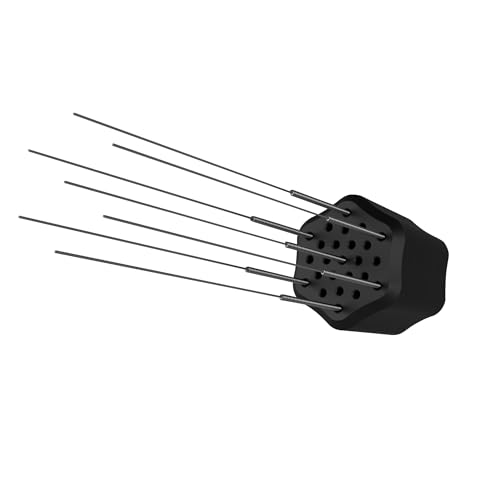
You’re working with finely tuned espresso setups and pushing for consistency shot after shot, so having a tool like the Barista Hustle WDT Espresso Tool (25/30 Needles) makes sense when precision matters. I use it daily because the 25-needle setup breaks up clumps evenly, and the extra five needles let me customize spacing if needed. The stainless steel needles are durable and corrosion-resistant, while the rounded tips won’t scratch baskets or nick fingers. I’ve dropped it a few times-no damage. The silicone handle stays grippy, even when my hands are wet. It’s lightweight but solid, and replacing needles is easy. If you’re serious about distribution, this tool’s flexibility and build justify the price. Compared to fixed-needle tools, it’s smarter long-term.
Best For: Espresso enthusiasts and professionals seeking precision, durability, and customizable coffee distribution in their daily brewing routine.
Pros:
- 25-needle design with 5 replaceable extras allows for customizable, even distribution and long-term use
- Durable 501 stainless steel needles with rounded tips prevent basket scratches and finger injuries
- Ergonomic, grippy silicone handle withstands drops and wet conditions, ideal for high-volume or daily use
Cons:
- Slightly higher price point compared to fixed-needle WDT tools
- Needle replacement requires manual insertion, which may be fiddly for some users
- Lightweight construction may feel less substantial to those preferring a heavier tool
Espresso Tamping Mat by Barista Basics
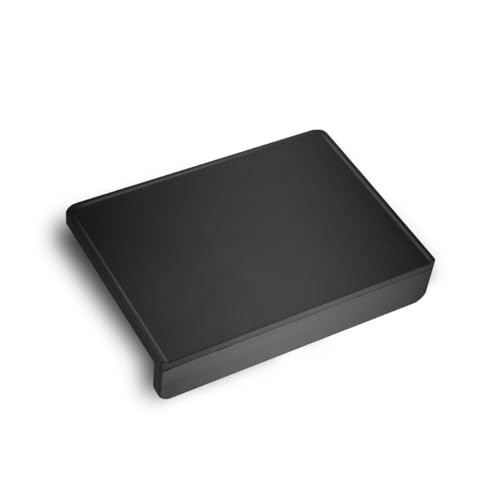
A thicker, more durable espresso tamping mat makes a real difference in fast-paced environments, and that’s where the Espresso Tamping Mat by Barista Basics stands out. I use it daily, and the 12.8-ounce NBR rubber base stays put during tamping, thanks to its non-slip surface. The raised rim catches stray grounds, while the 90-degree edge fits perfectly over most countertops. It’s compatible with all portafilters, including bottomless ones, and handles heat, oil, and water without degrading. At 6 by 8 inches, it’s spacious yet compact enough for tight stations. I just rinse it off or toss it in the dishwasher-clean-up’s a breeze. It’s reliable, food-safe, and backed by a manufacturer warranty, which is why so many pros trust it.
Best For: Baristas, cafe owners, and home espresso enthusiasts seeking a durable, non-slip tamping mat that enhances workflow and maintains cleanliness in high-use environments.
Pros:
- Made from food-grade, heat-resistant NBR rubber for safety and long-term durability
- Raised rim contains coffee grounds and non-slip surface keeps mat stable during tamping
- Dishwasher safe and easy to clean, with a 90-degree edge design that fits over countertops
Cons:
- Slightly heavier at 12.8 ounces, which may not appeal to those preferring ultra-light tools
- Black color may show light-colored coffee residue over time without frequent cleaning
- No color variation options available, limiting aesthetic customization for home bars
Barista Hustle Espresso Tamper 58.4mm

The Barista Hustle Espresso Tamper 58.4mm is built for competitors and daily drivers who demand precision, durability, and consistency under pressure. I use it because the 58.4 mm double-flanged base fits modern baskets perfectly, preventing vacuum seals and misalignment. Its 304 stainless steel base is replaceable, so drops won’t wreck it-great for busy cafes. The hard-anodized aluminum handle is lightweight but sturdy, weighing just 430 grams, with a textured grip that won’t slip. At 2.5 x 2.5 x 3.5 inches, it’s compact and balanced, making tamping smooth and repeatable.
Best For: Baristas and espresso enthusiasts who prioritize precision, durability, and consistent tamping performance in both high-volume cafes and home setups.
Pros:
- Precision 58.4 mm double-flanged base ensures proper fit in modern portafilter baskets and eliminates vacuum effect for consistent puck preparation
- Replaceable 304 stainless steel base enhances longevity and cost-effectiveness after accidental drops or wear
- Lightweight, ergonomic hard-anodized aluminum handle with textured grip offers comfort and control during extended use
Cons:
- Higher price point compared to entry-level tampers, which may deter casual home users
- Fixed height design lacks adjustability for users seeking personalized tamping depth
- Slim handle may not suit users with larger hands or those preferring a more substantial grip feel
IKAPE 51mm Mantis WDT Espresso Tool

Precision matters most when you’re pulling competitive-level espresso shots, and the IKAPE 51mm Mantis WDT Espresso Tool is built for those who treat consistency like a standard, not a goal. I use it to break up clumps and level grounds with its 8 precisely spaced 0.4mm needles, adjustable for depth by unscrewing the head. It fits 51mm portafilters like the DeLonghi ECP3120 and ECP3531. The walnut handle feels solid, the anodized aluminum body resists wear, and the built-in funnel plus stand keeps my station tidy. Pros rely on it in cafes and competitions-it’s not just for show.
Best For: Professional baristas, specialty coffee enthusiasts, and home espresso lovers who demand precision and consistency in their shot preparation.
Pros:
- Utilizes 8 precisely spaced 0.4mm needles for effective clump breaking and even distribution using the WDT method
- Adjustable needle depth enhances compatibility with various 51mm portafilter baskets
- Premium build with walnut handle and anodized aluminum construction offers durability and aesthetic appeal
Cons:
- Limited to 51mm portafilters, excluding use with larger or smaller basket sizes
- Higher price point may deter casual home users or beginners
- Integrated funnel and stand, while convenient, may not suit all workflow preferences
WDT Tool with Stainless Steel Needles (Matte Black)

If you’re serious about pulling consistent, high-quality espresso shots-whether at home or in a competitive setting-this WDT tool gives you full control over coffee distribution, thanks to its 10 precision 0.35mm stainless steel needles that break up clumps without damaging grounds. I can adjust the needle count down to 4, 5, 6, 7, or 8, which helps me match different portafilter sizes. The matte black aluminum handle feels sturdy and resists corrosion, and it stores neatly on its stand. It includes 10 spare food-safe 304 stainless steel needles-so I’m never stuck without backups. At just over 5 ounces, it’s lightweight but durable, and fits most setups. I use it before every tamp, and it noticeably reduces channeling, giving me cleaner, more balanced shots. Just be careful-it’s sharp.
Best For: Home baristas and coffee professionals seeking precise, customizable coffee distribution for consistent, high-quality espresso shots.
Pros:
- Features adjustable 0.35mm stainless steel needles (4–10) for tailored portafilter compatibility
- Durable matte black aluminum alloy handle with integrated stand and includes 10 spare food-safe needles
- Improves extraction by reducing clumping and channeling, enhancing shot consistency and flavor
Cons:
- Sharp needles require careful handling to avoid injury
- May be over-engineered for beginners or casual espresso users
- Limited portafilter fit with non-standard or unusually large baskets
X5 Pro Smart Coffee Tamper 53mm

Using smart pressure control, the X5 Pro Smart Coffee Tamper 53mm delivers consistent 25–35 lb tamps through an electronic chip, making it ideal for baristas who want repeatable results without adjusting springs or relying on feel. I don’t have to guess my pressure-just press once, and it tamps evenly every time. It fits 53mm and 54mm portafilters, self-centers with a rail guide, and prevents tilted puck issues. I get over 1,000 tamps per 2-hour charge, which lasts me weeks even during heavy use. The alloy body and stainless base feel solid, clean up fast, and the 2-year warranty gives peace of mind.
Best For: Home and professional baristas seeking consistent, precision tamping with minimal effort and maximum durability.
Pros:
- Delivers precise, repeatable 25–35 lb tamps via smart pressure control, eliminating human error
- Universal fit for 53mm and 54mm portafilters with self-centering rail guide to prevent puck channeling
- Long battery life (1,000+ tamps per charge) and durable construction with easy cleanup and 2-year warranty
Cons:
- Requires 2-hour charging period, which may interrupt use during back-to-back tamping sessions
- Premium price point may be high for casual home users
- Limited to 53mm/54mm portafilters, not suitable for other sizes without adapters
Normcore Handleless Milk Pitcher 15.2 oz
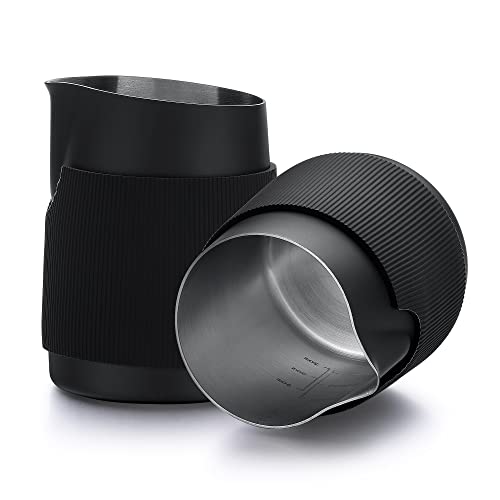
I’ve found the Normcore Handleless Milk Pitcher 15.2 oz works best for baristas who prioritize control and consistency, especially in competitive settings where every pour counts. The handleless design gives me better grip and precision, while the round spout guarantees smooth, balanced milk flow for clean latte art. I can feel the heat through the exposed steel base, so I know when the milk’s ready. It’s made of thick 18/8 stainless steel with a non-stick Teflon coating that resists scratches. The silicone grip stays cool and prevents slipping, even when I’m steaming fast. I use the 15.2 oz size for single shots and small pitches-it’s light, balanced, and built to last.
Best For: Professional and home baristas who value precision, control, and consistent results in milk steaming and latte art.
Pros:
- Handleless design and round spout enhance pouring accuracy and steam wand positioning for superior latte art
- Durable 18/8 stainless steel construction with non-stick Teflon coating resists scratches and ensures longevity
- Heat-resistant silicone grip and exposed metal base allow for safe handling and real-time temperature monitoring
Cons:
- Handleless design may take time to get used to for baristas accustomed to traditional handled pitchers
- Black finish may show scratches or scuffs over time despite non-stick coating
- Smaller 15.2 oz capacity may require refills for multiple drinks or larger servings
Factors to Consider When Choosing Barista Competition Equipment
You need equipment that guarantees precision and consistency, because small variations can affect shot quality and milk texture during high-pressure routines. Pick gear made from durable materials like stainless steel and check that it has an ergonomic design to reduce hand fatigue and boost control. Make sure everything’s compatible with your current setup-like portafilters, grinders, and espresso machines-so you can focus on performance optimization without hiccups.
Precision And Consistency
When every half-second and tenth of a millimeter counts, precision and consistency separate winning shots from also-rans. You need equipment built to within 0.1mm tolerances so dose distribution stays uniform and channeling drops. Aim for consistent tamping pressure between 25–35 pounds-this keeps puck density even and flow rates predictable. High-precision filter baskets, like those from IMS or VST, use 500+ laser-drilled holes in optimized patterns to spread water evenly. Look for competition gear with replaceable or adjustable parts; they maintain performance over hundreds of shots. Check measurement accuracy in basket diameter, tamper fit, and needle alignment-stay within ±0.05mm to cut out variables. A poorly fitting tool wobbles, channels, and ruins extraction. Choose gear that locks in specs, so your results stay sharp shot after shot. Skip the guesswork-precision is repeatable, and repeatable wins.
Material Durability
Durability starts with smart material choices-ones that hold up to daily abuse without sacrificing performance. You’re working fast, under pressure, and your gear needs to keep up. Stainless steel parts, especially AISI304 or SUS304, resist corrosion and stay food-safe, even with constant steam and moisture. Hard-anodized aluminum handles won’t chip or wear down, giving you military-grade toughness without extra weight. When you’re tamping shot after shot, food-grade NBR rubber mats stay intact, shrugging off heat, oil, and water. Inside precision tools, anodized aluminum and brass gears maintain alignment through hundreds of cycles, handling mechanical stress better than plastic alternatives. And when parts do wear, modular designs with replaceable stainless steel components-like needles or tamper bases-let you swap just what’s damaged. That cuts long-term costs and keeps your tools in action longer. Choose materials built to last, not just look good.
Ergonomic Design
Comfort starts with smart design-tools shaped to fit the hand, not the other way around. You’ll want textured or contoured grips that cut hand fatigue during tamping or steaming. A tamper weighing 400–500 grams balances well, giving you control without strain. Look for non-slip surfaces and heat-resistant materials-they keep tools safe and comfortable, even during long rounds. Adjustable features, like needle depth on distribution tools, let you tailor fit to your grip and technique. That tweak might seem small, but it helps you stay consistent. Smooth, seamless builds mean less grime buildup and easier cleaning, so hygiene doesn’t cost you grip. You won’t win with fancy looks-win with gear that feels natural in your hand, shift after shift. Choose function that fits *you*, not just what’s popular.
Compatibility With Gear
You can’t assume one size fits all when it comes to competition gear-your tools must match your machine’s specs down to the millimeter. Check that your portafilter diameter-51mm, 54mm, or 58mm-matches your basket and tamper exactly; even 0.1mm off causes leaks or misalignment. Verify group head type: E61 and spring piston systems require different accessories for proper fit. Your tamper base must fully cover the basket’s inner diameter without scraping edges. Distribution tools need to sit securely within the basket and align with the portafilter’s rim to stay stable during use. Also, confirm tool height and material thickness fit under the shower screen and into the group head without binding. A poorly matched tool slows you down or damages equipment. Compatibility isn’t optional-it’s the foundation of a smooth, reliable routine under pressure.
Performance Optimization
Just because your tools fit doesn’t mean they’re set up to perform-now it’s time to focus on how well they help you pull consistent, high-scoring shots. You need even water distribution, so look for shower screens with precision-drilled holes that prevent channeling. Nanotech-coated filter baskets repel oils and keep flow steady shot after shot. Choose ridgeless convex baskets-they push water through the puck’s center for more balanced extraction. Tamp with 25–35 pounds of pressure to lock in uniform puck density. Use a multi-needle distribution tool with 0.35–0.4mm pins to break up clumps and spread grounds evenly before tamping. These details matter: inconsistent distribution or poor flow dynamics can wreck an otherwise solid technique. Pros rely on gear that removes variability, so prioritize components that enhance control, repeatability, and extraction stability under pressure. Every millisecond and milligram counts when judges are watching.
Ease Of Maintenance
Durability meets efficiency when maintenance is built into the design. You need gear that handles back-to-back cleans without wearing down. Look for food-grade stainless steel-it resists corrosion and wipes clean fast. Smooth, seamless surfaces stop coffee grounds and milk from sticking, so you spend less time scrubbing. Avoid pieces with crevices or rough joints; they trap residue and invite contamination. Equipment with replaceable parts like tamper bases or WDT needles saves you long-term-swap them out instead of replacing entire tools. Non-porous, coated finishes repel oils and water, making stains and odors less likely. You can usually wipe them down in seconds. Opt for accessories that are dishwasher-safe, too. They endure hot cleaning cycles, staying sanitized with little effort. Smart maintenance isn’t just about cleaning-it’s about choosing gear that makes it easy.
Innovation And Technology
Smooth, low-maintenance designs set the foundation, but peak performance in competition demands tools that go beyond cleanability. You need gear that actively improves your shot consistency and workflow. Tools like nanocoated filter baskets resist oil buildup and help water flow evenly, giving you more control. Precision-drilled shower screens and baskets reduce channeling, so extraction stays balanced shot after shot. Smart tampers with digital force feedback let you lock in the exact pressure, removing guesswork and hand fatigue. Geared WDT tools use precise, rotating needle patterns to break up clumps faster and more uniformly than manual stirring. Materials matter too-food-grade stainless steel and hard-anodized aluminum stand up to constant use without warping or corroding. These aren’t gimmicks; they’re proven upgrades used by top baristas. When every second and milligram counts, technology gives you an edge. Choose tools that add measurable control, not just features.
Weight And Balance
While lightweight tools may seem easier to handle at first, you’ll find that mass and balance play a critical role in precision during high-stakes service. Heavier tampers-over 400 grams-use inertia to compact coffee more consistently, letting you apply less force. A centered balance between handle and base keeps the tool level, ensuring even pressure and avoiding puck tilt. That kind of stability directly improves extraction. You’ll also reduce wrist strain when tools like WDTs and tampers distribute weight evenly, especially during back-to-back rounds. Look for designs where the center of gravity sits near the middle for better control. While anodized aluminum keeps tools light and durable, too little mass can lead to imprecise tamp. Aim for balance: enough heft for consistency, light enough to avoid fatigue. Test how it feels in your grip-your hands will tell you what the specs won’t.
Frequently Asked Questions
What Barista Competition Tools Are Easiest to Clean After Use?
You’ll find portafilters and dosing cups the easiest to clean-they’re simple, with no moving parts. Just rinse and wipe. Scales and knock boxes clean up fast, too; both resist coffee oils. Go for stainless steel or ceramic knock boxes since they don’t stain like plastic. Wipe your tamper after each use. Tools with crevices, like some grinders and steam wands, take more effort. Stick to minimal designs, and cleaning saves time without sacrificing hygiene.
Do These Tools Work With Entry-Level Espresso Machines?
Yeah, most of these tools work fine with entry-level espresso machines. A good tamper, distribution tool, or scale doesn’t depend on high-end gear. They help you get consistent, which matters no matter what machine you use. Sure, pro machines offer more control, but the basics-like leveling grounds or timing shots-still apply. Using pro-style tools on a budget machine won’t hurt. It might even help you spot where your setup needs improvement.
Are There Eco-Friendly Alternatives to These Competition Tools?
Yes, there are eco-friendly alternatives you can use. You might swap disposable paper filters for reusable gold-tone ones or pick stainless steel milk frothing pitchers instead of plastic-coated ones. Some pros use biodegradable cleaning cloths and plant-based detergents. While competition-grade tools focus on precision, you’ll find sustainable versions that still deliver solid performance-just check durability and cleaning needs. They won’t match every high-end feature, but they’re practical for daily use and reduce waste.
How Often Should WDT Tools Be Replaced?
You should replace WDT tools only when the needle shows visible bending, corrosion, or wear-typically every 6–12 months with regular use. Stainless steel picks, like those from Motta or Pullman, last longer than cheaper alternatives. Inspect the tip often; a damaged needle can unevenly distribute coffee in the portafilter. Clean it after each use to prevent clogging. While the tool doesn’t wear out fast, dropping it or using excessive force shortens its life. Replace it promptly if performance declines.
Can These Tools Be Used for Home Brewing Efficiently?
Yes, you can use these tools for home brewing efficiently. WDT tools, like the PT Puck Punch or needle-style distributors, prevent channeling and improve extraction, even with budget grinders. They’re simple, durable, and require no maintenance. Just stir the coffee bed evenly before tamping. While competition gear has tighter tolerances, most tools work just as well at home-especially if you dial in your grind and dose consistently.