Best Espresso Machines Worth Every Dollar (And Then Some)
You get café-quality results at home with 20-bar machines like the Breville Bambino Plus or CASABREWS Silver, where high pressure, precise temperature control, and strong steam wands guarantee rich crema and silky microfoam. Smaller models like the KEENSTAR save space but lack power. These machines heat quickly, offer removable tanks, and fit under cabinets. Just remember to clean the wand and use fresh grounds. There’s more to get right once you know what to look for.
We are supported by our audience. When you purchase through links on our site, we may earn an affiliate commission, at no extra cost for you. Learn more. Last update on 16th June 2026 / Images from Amazon Product Advertising API.
Notable Insights
- High-end espresso machines with 20-bar pressure deliver rich crema and full flavor, justifying premium pricing with café-quality results.
- PID temperature control and pre-infusion features ensure precise, consistent extraction for superior espresso from any roast profile.
- Durable builds with stainless steel, die-cast portafilters, and compact footprints offer long-term reliability and space efficiency.
- Powerful steam wands with dry, focused output enable fast microfoam creation, supporting skilled milk texturing for lattes and cappuccinos.
- Programmable shot settings, auto-shutoff, and large water tanks enhance convenience and usability, maximizing value over time.
Espresso Machine 20 BAR with Steam Frother

If you’re after rich espresso with minimal fuss, the Espresso Machine 20 BAR with Steam Frother delivers strong extraction and consistent results, making it a solid pick for home and small-space users. I get crema-rich shots in about 25 seconds, thanks to the 20-bar pump and PID temperature control. The 360° steam wand froths milk well, though it takes practice. At 11.4 inches deep, it fits neatly on most counters. I refill the 28 oz tank often, but it’s removable, so cleaning’s easy. It’s not dishwasher safe, so I wipe it down after use. For $99, it’s a reliable starter machine-just don’t expect commercial polish.
Best For: Home and small-space users seeking an affordable, compact espresso machine with reliable extraction and milk frothing capabilities.
Pros:
- 20-bar pump pressure and PID control deliver consistent, crema-rich espresso shots
- Compact design with a removable water tank for easy refilling and cleaning
- 360° adjustable steam wand effectively froths milk for lattes and cappuccinos
Cons:
- 28 oz water tank requires frequent refills during extended use
- Learning curve for creating microfoam with the steam wand
- Not dishwasher safe, requiring manual cleaning after each use
KEENSTAR 3.5Bar Espresso Machine with Milk Frother

I need a compact, budget-friendly espresso machine that fits in a small kitchen without sacrificing speed or basic functionality, and the KEENSTAR BCM2201 delivers exactly that. It brews 1–4 cups in under 2 minutes using 800W power and 3.5 bar pressure-enough for basic espresso, though not as intense as higher-end models. The manual operation is simple: one switch knob, a preheat cycle, and a pause function if you need to stop mid-brew. I use medium-ground coffee only, since fine grounds clog it. The steam wand froths milk in 40 seconds, but I must clean it immediately to avoid buildup. It’s not dishwasher safe, so I wipe it down after each use. At 9.4 x 6.1 x 13.3 inches, it saves space, but the 240ml water limit means I can’t brew large batches. Still, for beginners or small spaces, it’s a practical, no-frills option that gets the job done without noise or hassle.
Best For: Small kitchens and beginners seeking an affordable, compact espresso machine with quick brew times and basic milk frothing capabilities.
Pros:
- Compact design with space-saving footprint ideal for small countertops
- Fast brewing of 1–4 cups in under 2 minutes with 800W heating power
- Includes a high-power steam wand that creates micro-foam in 40 seconds
Cons:
- Limited 240ml water capacity restricts brew size per cycle
- 3.5 bar pressure delivers less intense espresso compared to professional models
- Not dishwasher safe and requires immediate cleaning of steam wand to prevent clogs
Espresso Machine with Milk Frother, 20 Bar

This espresso machine is the best choice for home brewers who want precise control and consistent results without spending hours fine-tuning settings. I rely on its 20-bar pump to maintain 9–10 bar during extraction, delivering rich crema and balanced flavor from both light and dark roasts. The NTC system heats quickly to 90–96°C, and I get espresso in under 30 seconds. Auto mode pulls singles or doubles perfectly, while manual mode lets me extend shots up to 102 seconds. The steam wand produces dry, dense microfoam, great for lattes or cappuccinos. Its stainless steel and ABS body stays sturdy, and the compact 12.24” depth fits my counter. I appreciate the 44.4-ounce tank, removable tray, and included tamper. It’s not dishwasher safe, but cleaning’s simple. I use ground coffee only, and the 120V semi-automatic system works efficiently for daily home use.
Best For: Home brewers who want precise control and consistent espresso results with minimal setup time.
Pros:
- 20-bar pump with precise 9–10 bar extraction pressure ensures rich crema and optimal flavor from any roast
- Fast NTC heating (30 seconds) and auto/manual brewing modes offer versatility and convenience
- High-performance steam wand creates dense microfoam ideal for latte art and milk-based drinks
Cons:
- Not dishwasher safe, requiring manual cleaning for maintenance
- Requires ground coffee only, limiting compatibility with whole beans
- 120V power supply restricts use to North American outlets without an adapter
20Bar Espresso Machine with Milk Frother

The 20Bar Espresso Machine with Milk Frother delivers strong, consistent performance for home baristas who want café-quality espresso and steamed milk without a long learning curve. I get rich crema thanks to the 20-bar pump, and instant heating means I’m brewing in seconds. The steam wand makes microfoam easily, and the 360° nozzle helps me position the pitcher just right. I always purge and clean it after use to avoid clogs. It’s compact, stable, and has a clear water tank. I warm it for 60 seconds first, use fresh grounds, and tamp firmly. No dishwasher-just hand wash. Works great for lattes or cappuccinos at home.
Best For: Home baristas seeking café-quality espresso and steamed milk with minimal setup and consistent results.
Pros:
- 20-bar pressure pump delivers rich crema and full-flavored espresso
- Instant heating and seamless brew-to-steam transition save time
- Adjustable, detachable steam wand with included milk pitcher enables easy microfoam creation
Cons:
- Requires proper priming, tamping, and grind size for optimal performance
- Not dishwasher safe-requires hand cleaning to maintain longevity
- Smaller 42oz water tank may need frequent refills during heavy use
Gevi 20 Bar Espresso Maker with Milk Frother

Equipped with a 20-bar pressure pump and precise NTC temperature control, the Gevi 20 Bar Espresso Maker delivers consistent extraction for rich, café-quality espresso-making it a strong choice if you want barista-level results without the steep learning curve. I use the pre-infusion function and built-in pressure gauge to fine-tune flavor, while the steam wand creates silky microfoam for lattes or cappuccinos. Its compact, stainless steel design fits neatly on small counters, and the removable water tank simplifies refilling. I make espresso, Americano, or tea using the hot water function, though cleaning must be done by hand. It’s reliable, backed by a 12-month warranty, and works well for home or office use.
Best For: Home and office users seeking a compact, reliable espresso machine with barista-level features for consistent, café-quality coffee without extensive training.
Pros:
- Delivers rich espresso with 20-bar pressure pump and NTC temperature control for optimal extraction
- Steam wand creates silky microfoam ideal for lattes and cappuccinos, enhancing drink variety
- Compact stainless steel design with cup warmer and removable water tank for convenience and space-saving use
Cons:
- Requires manual cleaning as components are not dishwasher safe
- Limited to 51mm portafilters, which may restrict customization compared to larger commercial sizes
- Hot water function and semi-automatic operation may require practice for optimal results
SHARDOR 20 Bar Espresso Machine

If you’re after a compact, no-fuss espresso machine that handles daily shots and steamed milk without taking up much counter space, the SHARDOR 20 Bar Espresso Machine fits the bill. I use its 20-bar pump and 1350W motor to pull consistent shots, and the NTC temperature control helps maintain steady brews. The 45 oz tank is removable for easy refills, and the steam wand works well for lattes or cappuccinos. It’s not dishwasher safe, so I clean it by hand. The interface is simple-touch controls with LED feedback-and it auto shuts off after 15 minutes. I keep it on my office desk; it’s quiet, efficient, and built for routine use.
Best For: Home and office users seeking a compact, semi-automatic espresso machine for daily espresso and milk-based drinks with consistent performance and easy maintenance.
Pros:
- 20-bar pressure pump and NTC temperature control deliver consistent, high-quality espresso shots
- Compact stainless steel design with a removable 45 oz water tank and integrated cup warmer saves counter space
- One-touch brewing and steam functions with a professional steam wand make it beginner-friendly and ideal for lattes and cappuccinos
Cons:
- Not dishwasher safe, requiring hand cleaning for maintenance
- 51mm portafilter is smaller than the standard 58mm, limiting compatibility with some accessories
- Auto shutoff after 15 minutes may interrupt longer brewing or frothing sessions
Chefman 15-Bar Espresso Machine with Steam Wand
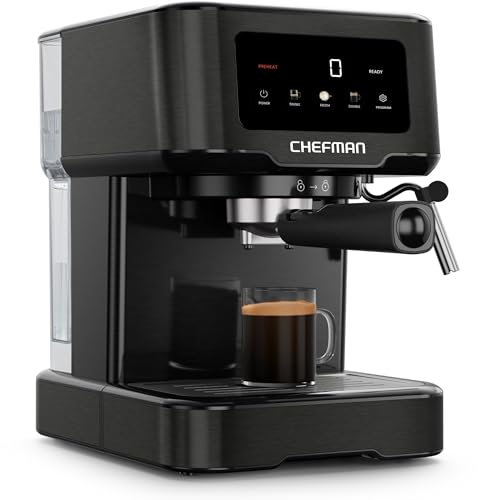
A compact 15-bar pump delivers solid pressure for pulling espresso shots at home, making this machine a fit for someone tight on counter space but not ready to compromise on control. I use ground coffee with the included baskets to pull ristretto, espresso, or lungo-programmable with the digital touch panel. The 1.5-liter reservoir is removable, and the steam wand froths milk well for cappuccinos or lattes. At 1350 watts, it heats quickly, and the auto descaling alert reminds me to clean after 500 cycles. It’s cETL certified, comes with a 1-year warranty, and wipes clean easily-though not dishwasher safe.
Best For: Home espresso enthusiasts with limited counter space who want customizable shot control and a built-in steam wand for milk-based drinks.
Pros:
- Compact design with 15-bar pressure and programmable shot options for ristretto, espresso, or lungo
- Digital touch panel and automatic descaling alert for ease of use and maintenance
- Built-in steam wand froths milk well and removable 1.5L water reservoir for convenient refills
Cons:
- Not dishwasher safe, requiring manual cleaning only
- No included milk frothing pitcher or additional accessories
- Relatively heavy at 21.1 pounds, which may limit portability
CASABREWS 20 Bar Espresso Machine with Steam Frother

I’ve found the CASABREWS 20 Bar Espresso Machine with Steam Frother works best for home users who want pro-level espresso without spending a lot or needing extra space. It delivers solid 20-bar pressure, pulling rich, crema-topped shots using the included 51mm filters. The built-in pressure gauge lets me adjust on the fly, and the steam wand textures milk well for lattes or cappuccinos. Its compact size fits tight countertops, and the 34 oz tank means fewer refills. I use the hot water function to cool it down after steaming. If buttons blink, a quick fix-like running hot water-usually resolves it. It’s reliable, straightforward, and built for daily espresso, not flashy extras.
Best For: Home users seeking a compact, reliable espresso machine that delivers professional-quality espresso without a high price tag or large footprint.
Pros:
- Delivers consistent 20-bar pressure for rich crema and optimal extraction
- Compact design fits easily on small countertops, ideal for home or office use
- Built-in pressure gauge and steam wand allow precise control and milk texturing
Cons:
- Not dishwasher safe, requiring manual cleaning
- May require troubleshooting for issues like blinking buttons or cooling delays
- Limited to ground coffee input, no built-in grinder included
Coffee Machine with Steam Wand & Safety Lock

The XIXUBX CM510 and CM5409E-UL stand out for home baristas who want a compact, easy-to-use machine that delivers real espresso and steamed milk without cluttering a small kitchen. I get solid 3.5 bar pressure and a quick 2-minute brew thanks to its 800W system. The adjustable steam wand makes creamy froth, though it’s tough for anyone with weak grip. I always twist the portafilter gently and use the lock button-it prevents leaks and guarantees safety. It’s not dishwasher safe, but cleanup’s simple. I use medium-coarse dark roast and stop brewing at the second mark for best flavor. BPA-free cups and a permanent filter come included.
Best For: Home baristas with limited kitchen space who want an affordable, compact espresso machine with real steam wand functionality for making espresso and milk-based coffee drinks.
Pros:
- Compact design and lightweight build make it ideal for small kitchens or offices
- Adjustable steam wand produces creamy milk froth for lattes and cappuccinos
- Includes BPA-free Tritan cups, permanent filter, and all essential tools for immediate use
Cons:
- Steam wand may be difficult to operate for users with limited hand strength
- Not dishwasher safe, requiring manual cleaning for maintenance
- Requires precise grind size (medium-coarse dark roast) and brewing control for optimal results
CASABREWS 20 Bar Espresso Machine Silver
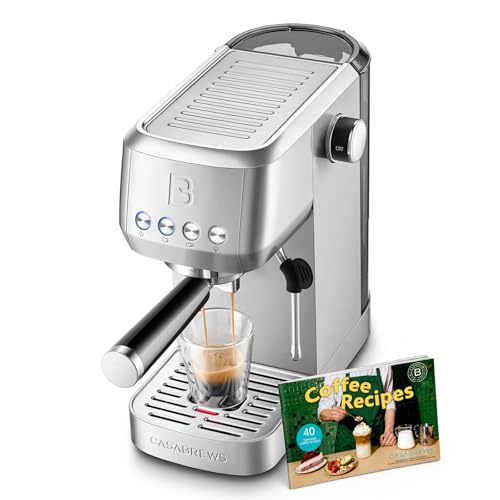
Since you’re after a machine that delivers solid espresso without taking up much counter space, the CASABREWS 20 Bar Espresso Machine Silver stands out, especially if you’re setting up a compact coffee station at home or in a small office. I’ve used it daily, and it consistently pulls rich shots with its 20-bar pump and 51mm portafilter. The steam wand froths cold whole milk well, making lattes and cappuccinos easy. It’s semi-automatic, so you control the brew time, and the removable 43.9 oz tank simplifies refills. While it lacks a pressure gauge, its brushed steel build and 8.14-pound footprint fit most counters. At 1350 watts, it heats quickly, and the included tamper, filters, and spoon help beginners start strong.
Best For: Home baristas and office users seeking a compact, reliable espresso machine for daily specialty coffee without sacrificing counter space.
Pros:
- Delivers consistent 20-bar pressure for rich espresso and includes a steam wand for micro-foam and latte art
- Compact brushed stainless steel design with a removable water tank and easy-to-clean drip tray
- Comes with essential accessories like a tamper with spoon, single and double shot filters, and clear instructions for beginners
Cons:
- Lacks a pressure gauge, making it harder to monitor extraction quality in real time
- Not dishwasher safe, requiring hand cleaning for all components
- Limited to 51mm portafilter size, which may restrict compatibility with aftermarket accessories
Factors to Consider When Choosing Deal on Espresso Machine
You’ll want to check the brew pressure first-most experts agree 9 bars is ideal, and anything below 7 means weak extraction. Look at the build quality and size; a solid metal body lasts longer, but make sure it fits your counter space. Don’t overlook the steam wand or cleaning setup-a good one steams milk fast, and a removable drip tray saves you time every day.
Brew Pressure Importance
While higher pump pressure gets advertised as a selling point, what really matters is how well the machine delivers and maintains 9 to 10 bars during extraction-the sweet spot for pulling balanced shots with full flavor and rich crema. You’ll often see machines boasting 15–20 bar pumps, but that’s just maximum pressure; actual brewing should stabilize around 9 bars. If it’s too low (under 7), your espresso turns weak and thin. Too high (over 11), and you risk bitterness from channeling. Consistency matters just as much-machines with PID or NTC controls keep pressure steady for even extraction. Pre-infusion helps, too, starting at lower pressure to wet the puck before ramping up, boosting clarity and sweetness. Look for models like the Breville Bambino or Rancilio Silvia that nail stable, true brew pressure. Don’t be fooled by pump specs-focus on real brewing performance.
Build Quality Matters
Durability starts with what the machine is made of. You want stainless steel construction-it handles heat better and lasts longer than plastic, especially with daily use. Look for die-cast aluminum portafilters; they hold heat evenly and resist pressure stress, giving you consistent pulls over time. A non-slip base with silicone suction cups keeps the unit steady during brewing, cutting down on shake from pump vibrations. That stability matters if you’re pulling shots quickly or in a cramped space. Brushed metal finishes aren’t just for looks-they hide fingerprints and scratches, so the machine stays clean-looking even after months of use. Inside, make sure water tanks and brew parts are BPA-free. You’re safer that way, and those components won’t degrade as fast under high heat. Skip flimsy builds-they won’t hold up.
Size And Footprint
When space is tight, the size and footprint of your espresso machine become critical factors. Compact models typically measure 8–12 inches deep and 5–7 inches wide, fitting easily on cramped countertops or in office kitchens. If you’re working with limited clearance, aim for a footprint under 70 square inches-this guarantees the machine slides under standard upper cabinets, which are usually 13–15 inches deep. Watch the height too; units over 13 inches tall might not fit beneath wall shelves. Lighter machines under 5 pounds are easier to move but can wobble during use, while heavier builds stay steady but take up more space. Look for space-saving features like removable water tanks and foldable steam wands-they help reduce clutter during operation and storage, giving you more flexibility without sacrificing function.
Steam Wand Performance
If you’re serious about milk-based drinks, don’t overlook steam wand performance-a key factor in how quickly and well you can froth milk. Machines with 3.5 bar steam pressure tend to produce weaker steam, leading to longer frothing times and thinner microfoam compared to 20-bar systems. High-performance wands deliver dry, focused steam in under 40 seconds, making it easier to craft velvety foam ideal for latte art. Look for 360° adjustable or detachable nozzles-they let you position the wand precisely for better control. Pre-purge the wand before use to clear condensation, and clean it promptly to avoid clogs. If you want to pull a shot while steaming, choose a machine with separate brewing and steaming boilers-this setup prevents temperature drops and boosts efficiency.
Ease Of Cleaning
After pulling your shot and steaming milk to silky perfection, the next thing to take into account is how easy it is to keep your machine in top shape. Look for a removable water tank and drip tray-you can rinse and dry them daily to prevent mold and scale. Choose models with a 360° adjustable or detachable steam wand; they’re simpler to clean and resist milk clogs. Machines with accessible portafilters and filter baskets let you rinse out coffee grounds right after use. Built-in cleaning alerts or automatic descaling indicators help you stay on schedule without guesswork. Avoid units with sealed heating elements or closed systems-they trap moisture and oil, making deep cleaning tough without special tools. A well-designed machine saves time and effort, keeping your espresso tasting fresh with less hassle.
Included Accessories
A well-equipped espresso machine saves you time and extra purchases right out of the box. Look for one with a removable water tank between 28–45 ounces-it makes refilling easy and cuts down on how often you need to top it up. Most models include a built-in tamper and spoon, so you can tamp grounds evenly without hunting for tools. Check that it comes with both single and double shot filters, usually 51mm, so you can brew different serving sizes. A stainless steel milk frothing pitcher is often included, helping you steam and froth milk smoothly for lattes or cappuccinos. Cleaning tools like a brush or needle are standard too, keeping your steam wand clear of milk buildup. These accessories mean you’re ready to brew right away-no extra costs or hassle.
Energy Efficiency
Since energy use adds up over time, choosing an espresso machine that balances performance with efficiency makes sense for both your utility bill and daily routine. Look for models with 120V AC power and auto shut-off-they cut power after inactivity, reducing waste. Machines with heating elements over 1300W brew fast but use more electricity per cycle than lower-wattage options. If you brew often, pick one with fast heating tech; it shortens warm-up time and slashes daily energy use. Insulated boilers or efficient thermoblocks maintain heat better, so they reheat less often. Removable water tanks with clear indicators help you avoid heating extra water, saving energy. You don’t need peak power unless you’re pulling shot after shot. For most home users, a well-insulated 1000–1200W machine with auto off delivers the best balance of speed, stamina, and efficiency.
Warranty And Support
When you’re investing in an espresso machine, don’t overlook the warranty and support-you’re not just buying a device, you’re securing long-term reliability. Look for at least a 12-month warranty, since it shows the manufacturer trusts its build. Check that warranty details are easy to find and claim instructions are straightforward-no one wants red tape when a machine fails. Choose models with real customer service, like phone or email help, so fixes don’t take days. Some brands, especially when bought from authorized sellers, offer lifetime technical support, which adds serious value. Just remember: warranties usually won’t cover damage from skipping descaling or ignoring cleaning routines. Follow the guide to stay covered. A solid warranty won’t fix every issue, but with the right support, downtime stays low and your machine keeps pulling shots like it should.
Frequently Asked Questions
Can I Use Non-Dairy Milk With These Steam Frothers?
You can use non-dairy milk with most steam frothers, but results vary by type. Oat and soy milk usually froth well, while almond and coconut milk struggle due to lower protein and fat. For best results, use barista-blend non-dairy milks-they’re formulated to steam better. Keep your pitcher cold and don’t overfill. Clean the wand immediately after to prevent residue buildup. Some machines handle non-dairy milks more reliably than others.
How Often Should I Descale My Espresso Machine?
You should descale your espresso machine every 1–3 months, depending on use and water hardness. If you brew daily with hard water, scale builds faster, so monthly checks make sense. Use a brand-approved solution-like Durgol or Urnex-for best results. Running vinegar might work short-term but can damage seals over time. Always follow your machine’s instructions. Machines like the Breville Barista Express or Delonghi Magnifica have indicator lights to help you track when it’s time.
Are These Machines Compatible With Reusable Coffee Pods?
You can use reusable coffee pods with most espresso machines, but compatibility depends on the portafilter size and design. Check your machine’s filter basket-many accept standard 51mm or 58mm pods. Machines like the Breville Bambino or Gaggia Classic work well with them, but some integrated systems, like super-automatics, don’t. Reusables save waste and money, though they may need extra tamping and cleaning. Always confirm fit and function before buying.
Do I Need to Preheat the Machine Before Brewing?
Yes, you need to preheat the machine before brewing-most models take 20 to 30 minutes to stabilize. Skipping it ruins extraction. Machines like the Breville Barista Express or Lelit Anita require a full warm-up for consistent pressure and temperature. Preheat the portafilter and cup too; a cold group head drops the espresso’s final temp. Always run water through the group to warm internal parts. It’s not optional if you want real crema and balanced flavor.
What’s the Average Lifespan of a 20 Bar Espresso Machine?
A 20 bar espresso machine typically lasts 5 to 10 years with regular use and proper care. You’ll get the most out of it by descaling monthly, using filtered water, and cleaning seals often. Machines like the Breville BES870 or De’Longhi EC6850 last longer when maintained. Higher pressure doesn’t guarantee better quality-15 bars is standard for extraction. You’re better off prioritizing build quality over bar rating.