Best Espresso Coffee Beans: Lavazza, Death Wish & More
You’ll want freshly ground, specialty-grade beans from transparent, sustainable sources like the Atlas Coffee Club World of Coffee Sampler-single-origin, small-batch roasted, and sourced from the top 1% of global harvests. These deliver clean, complex shots shaped by terroir, ideal for discerning palates. While blends like Lavazza Super Crema offer consistency and rich crema, true depth comes from origin-specific profiles. Whole beans preserve freshness, but you’ll need a grinder; pre-ground sacrifices nuance. There’s more to uncover about matching beans to your machine and taste.
We are supported by our audience. When you purchase through links on our site, we may earn an affiliate commission, at no extra cost for you. Learn more. Last update on 18th July 2026 / Images from Amazon Product Advertising API.
Notable Insights
- WBC Espresso by Klatch Coffee offers a nuanced, medium roast blend with notes of berry, spice, and dark chocolate from sustainably sourced single origins.
- Lavazza Super Crema delivers a balanced, creamy espresso with hazelnut and brown sugar notes, ideal for connoisseurs seeking consistency and rich crema.
- Cafe La Llave Dark Roast provides bold, authentic Cuban-style espresso with deep complexity and a smooth finish, rooted in 140 years of tradition.
- Atlas Coffee Club’s World of Coffee Sampler features rotating single-origin specialty beans roasted to highlight terroir, perfect for discerning palates seeking variety.
- Death Wish Organic Espresso Roast combines high caffeine with rich flavor notes of cocoa and cherry, catering to connoisseurs who value intensity and ethical sourcing.
Cafe La Llave Dark Roast Espresso (10 oz)

If you’re after a bold, no-nonsense espresso with deep roots and consistent performance, Cafe La Llave Dark Roast (10 oz) fits the bill. I’ve used it in espresso machines and moka pots-it delivers every time. The 10 oz airtight can keeps the fine grounds fresh, locking in that rich, intense aroma. You’ll taste deep, complex notes and a smooth, full body, classic of Cuban-style roasts. It works equally well for cafecito or lattes. Roasted in Los Angeles in a zero-waste facility, it’s made with care-for the planet and the craft. The Gaviña family’s 140-year tradition means you’re brewing authenticity.
Best For: Coffee lovers who want a bold, authentic Cuban-style dark roast with reliable performance across espresso machines, moka pots, and drip brewers.
Pros:
- Rich, full-bodied flavor with deep, complex notes and a smooth finish, true to traditional Cuban roasting practices
- Finely ground for versatility in multiple brewing methods, including espresso, moka pot, and drip
- Sustainably produced in a zero-waste facility with commitment to ethical sourcing and environmental responsibility
Cons:
- May be too strong or intense for those who prefer lighter, more acidic coffee profiles
- Airtight can is convenient but not resealable after opening, potentially reducing freshness over time
- Limited to 10 oz per can, which may require frequent repurchasing for heavy users
Death Wish Coffee Organic Espresso Roast

Death Wish Coffee Organic Espresso Roast is the go-to choice for anyone needing a bold, high-caffeine kick without sacrificing flavor. I’ve found it delivers double the caffeine of regular coffee, so it’s ideal when you need sustained focus. The dark roast blends arabica and robusta beans from India, Peru, and Sumatra, giving a rich profile with hints of caramelized sugar, cocoa, and cherries-intense but never bitter. It’s Fair Trade Certified, so ethical sourcing isn’t a concern. The 14-ounce ground pack works best in espresso machines or for strong coffee. Just mind the strength-it can overwhelm if you’re not used to it.
Best For: Those seeking a high-caffeine, richly flavored dark roast coffee with ethical sourcing and espresso strength.
Pros:
- Delivers double the caffeine of regular coffee for intense energy and focus
- Rich, smooth flavor with notes of caramelized sugar, cocoa, and cherries; bold but never bitter
- Fair Trade Certified, using ethically sourced beans from India, Peru, and Sumatra
Cons:
- High caffeine content may be too intense for sensitive individuals
- Dark roast flavor may not appeal to those who prefer lighter, more acidic coffees
- Ground format limits freshness compared to whole bean options
Lavazza Super Crema Whole Bean Coffee 22 oz
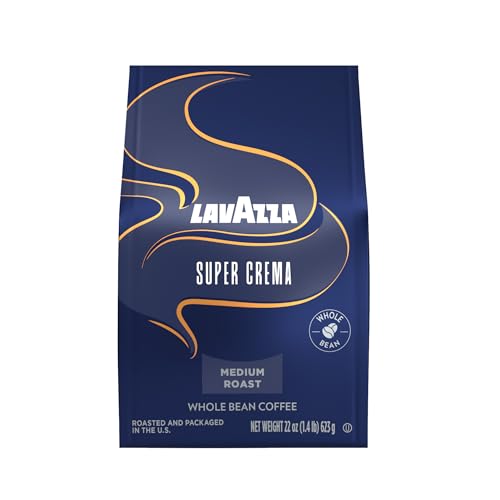
Lavazza Super Crema Whole Bean Coffee, a medium espresso roast in a 22 oz bag, delivers a smooth, full-bodied shot with a creamy crema that stands out in every pull-making it a top pick for home baristas who want reliable, café-quality espresso without branching into single-origin complexity. I use 0.28 oz of freshly ground beans per 1 oz shot, and it pulls consistently on most machines. The blend of Arabica and Robusta from 15 countries gives balanced flavor-hazelnut and brown sugar notes with a clean finish. It’s not ultra-strong, so if you want intense kick, try Death Wish. But for daily espresso with minimal fuss, this is a solid, no-surprise choice.
Best For: Home baristas seeking a consistent, smooth, and creamy espresso experience without the complexity of single-origin beans.
Pros:
- Smooth, full-bodied espresso with a rich crema and balanced flavor notes of hazelnut and brown sugar
- Reliable performance across most espresso machines using a standard 0.28 oz per 1 oz shot ratio
- Blend of Arabica and Robusta from 15 countries ensures complexity and consistency with every brew
Cons:
- Not ideal for those seeking very strong or intense espresso due to its medium roast profile
- Whole beans require a quality grinder for optimal extraction, adding to equipment needs
- May lack the nuanced, terroir-driven characteristics preferred by specialty coffee enthusiasts
Lavazza Super Crema Whole Bean Coffee 2.2 lb
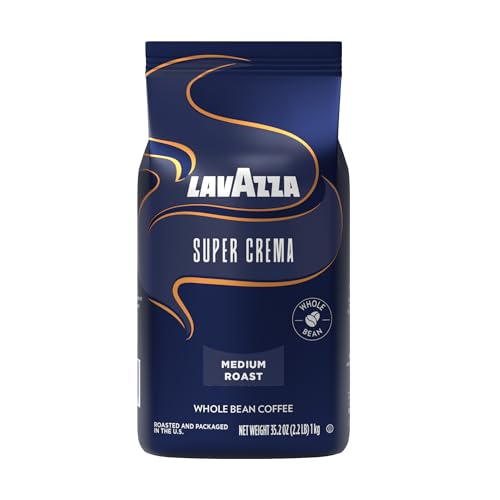
A smooth, rich crema defines the espresso experience, and for those who prioritize that velvety finish in every shot, Lavazza Super Crema Whole Bean Coffee is a practical choice. I use 0.28 oz of freshly ground beans for a 1 oz shot, and it consistently delivers a full-bodied, creamy pull with hints of hazelnut and brown sugar. The blend of Arabica and Robusta beans from 15 countries balances flavor and strength without bitterness. I appreciate that it’s medium roasted-bold but not burnt. It works best in espresso machines, not drip brewers. Since it comes in a 2.2 lb bag, I store it in an airtight container away from light to preserve freshness.
Best For: Espresso lovers who crave a smooth, creamy crema and balanced flavor with notes of hazelnut and brown sugar.
Pros:
- Creates a rich, full-bodied espresso with a consistently velvety crema
- Balanced medium roast blend of Arabica and Robusta beans from 15 countries
- Fresh whole beans allow for optimal flavor when ground just before brewing
Cons:
- Not ideal for drip coffee or other non-espresso brewing methods
- Large 2.2 lb bag may be impractical for light coffee drinkers
- Requires proper storage to maintain freshness due to large volume
Take Ground Espresso Roasted Coffee, Italian Blend Roasted in Italy
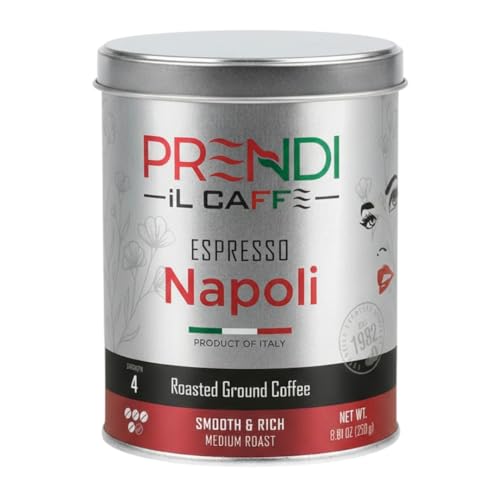
If you’re after a rich, full-bodied espresso that pulls smoothly whether you’re using a Moka Pot or an espresso machine, this pre-ground Italian blend roasted in Italy is a solid go-to. I’ve tried it on both setups, and it delivers consistent results-no fuss. The beans are high-quality, roasted for depth, and ground fine enough for espresso but not too dusty for a Moka Pot. You get a sweet, smooth shot with a persistent aroma and a clean finish. It’s not overly acidic or bitter, which makes it reliable daily. The can keeps the grounds fresh longer than bags, though I recommend using it within two weeks of opening.
Best For: Home baristas and coffee lovers seeking a consistently rich, smooth espresso experience from a convenient pre-ground Italian blend.
Pros:
- Delivers full-bodied, sweet, and smooth espresso with a rich, persistent aroma
- Optimized grind works well for both Moka Pot and espresso machines
- Packaged in a can that helps preserve freshness longer than traditional bags
Cons:
- Pre-ground format limits freshness compared to whole beans
- Flavor peak is within two weeks of opening, requiring prompt use
- Limited roast customization since it’s a fixed blend and pre-ground
Gaviña Old Havana Espresso Beans 32 oz

One 32-ounce bag of Gaviña Old Havana Espresso Beans delivers a reliable choice for those who want an authentic Latin-style espresso without paying premium specialty coffee prices. I use 100% Arabica beans, roasted medium-dark for a nutty, sweet flavor with a hint of citrus and a smooth finish. It works well in espresso machines or moka pots-just grind fresh for the best results. I’m roasted in Los Angeles at a zero-waste facility, and Café Gaviña sources ethically through their Direct Impact Initiative. Family-run since 1870, they know Cuban and Spanish espresso traditions inside out. This bean won’t wow you like a rare single-origin, but it’s consistent, affordable, and built for daily use.
Best For: Coffee lovers seeking a consistent, affordable, and authentic Latin-style espresso with a smooth, balanced profile for daily brewing at home.
Pros:
- Made from 100% Arabica beans with a rich, nutty, sweet flavor and subtle citrus notes
- Roasted in a zero-waste facility with ethical sourcing through the Direct Impact Initiative
- Versatile for espresso machines and moka pots, offering freshness and richness when ground just before brewing
Cons:
- Flavor profile is reliable but not exceptionally complex or distinctive compared to premium single-origin beans
- Limited appeal for those who prefer very light or very dark roasts outside the medium-dark range
- Large 32 oz bag may not be ideal for those who consume coffee slowly, risking loss of freshness over time
WBC Espresso by Klatch Coffee

Since you’re after an espresso that balances complexity and drinkability without needing a degree in coffee chemistry, WBC Espresso by Klatch Coffee delivers. I use their 310-gram whole bean blend-roasted in Rancho Cucamonga, CA-because it’s reliable and flavorful. It’s a medium & cozy roast with notes of spice, berry, orange citrus, and sweet dark chocolate, made from sustainably sourced Brazil Yellow Bourbon, Sumatra Lake Tawar, and Ethiopian Natural beans. Their peak of flavor roasting method locks in freshness. I recommend it for espresso, cortado, or milk-based drinks-where its balance really shows. It’s consistent, practical, and built for daily craft.
Best For: Coffee lovers seeking a balanced, flavorful espresso blend that’s easy to brew and perfect for daily milk-based drinks.
Pros:
- Complex flavor profile with notes of spice, berry, orange citrus, and sweet dark chocolate
- Sustainably sourced beans from Brazil, Sumatra, and Ethiopia
- Roasted using a precision “peak of flavor” method for consistent freshness and quality
Cons:
- Whole bean only, requiring a grinder for espresso preparation
- Limited to 310-gram packaging, which may not suit low-consumption users
- Flavor nuances may be muted in heavily milk-forward drinks
NESCAFÉ Gold Espresso Blonde, Instant Coffee, 3.5 oz
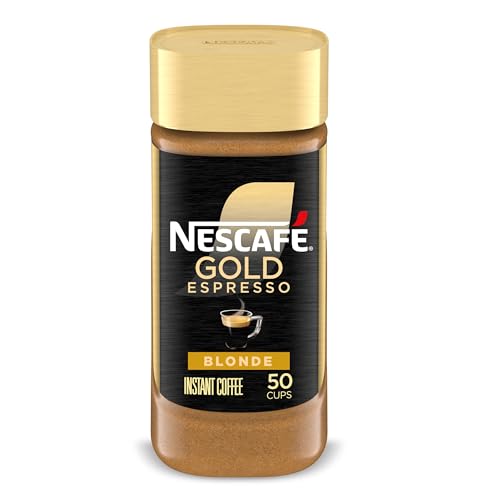
NESCAFÉ Gold Espresso Blonde is the best choice for anyone who wants a smooth, café-quality espresso without the hassle of complex machines or grinding beans. I use 1 teaspoon with 2 ounces of hot water, stir, and get a rich shot with a velvety crema-no gear needed. It’s made from responsibly sourced, golden-roasted Arabica beans, so the flavor’s balanced and clean. The 3.5-oz jar gives up to 50 servings, making it cost-effective. While it won’t replace fresh espresso for purists, it’s ideal when speed and simplicity matter. Great for travel, offices, or quick Americanos.
Best For: Coffee lovers who want a smooth, café-quality espresso experience at home or on the go without the need for expensive equipment or complicated brewing methods.
Pros:
- Delivers a rich, velvety espresso with a distinctive crema using just hot water and a teaspoon
- Made from responsibly sourced, golden-roasted Arabica beans for a balanced, clean flavor
- Highly convenient and portable-ideal for travel, offices, or quick Americanos with up to 50 servings per jar
Cons:
- Lacks the depth and complexity of freshly brewed or machine-pulled espresso
- Instant coffee texture may not satisfy espresso purists
- Limited customization compared to grind-and-brew methods
Cafe La Llave Dark Roast Ground Espresso
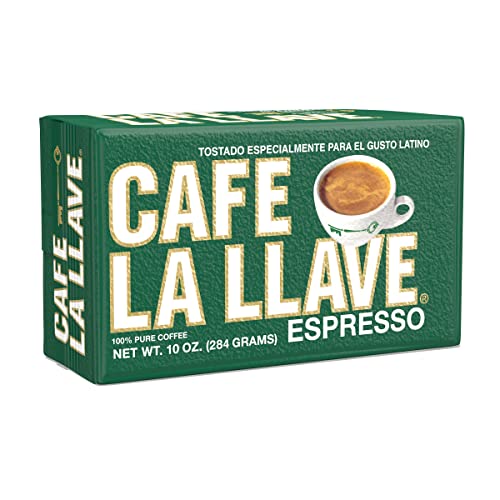
If you’re after a bold, no-nonsense espresso that delivers a consistently rich punch, Cafe La Llave Dark Roast Ground Espresso is a solid pick-especially if you value tradition and straightforward brewing. I’ve used it in espresso machines and moka pots, and it pulls strong shots with deep crema and a full body. The 10 oz vacuum-sealed brick keeps flavors fresh, thanks to airtight protection. Roasted in Los Angeles at a Zero Waste facility, it supports sustainability and ethical sourcing. Ground fine, it works across methods but shines in stovetop or espresso brewing. With roots in 140 years of Cuban expertise, it’s reliable, authentic, and built for daily ritual, not flair.
Best For: Coffee lovers who appreciate bold, full-bodied espresso with deep Cuban heritage and sustainable production practices.
Pros:
- Rich, intense dark roast flavor with authentic Cuban-style profile and strong crema
- Finely ground for versatility across espresso machines, moka pots, and drip brewers
- Vacuum-sealed 10 oz brick preserves freshness and aroma, produced in a Zero Waste facility
Cons:
- May be too strong or bold for those preferring mild or balanced coffee profiles
- Limited grind size options since it’s only available pre-ground
- Niche flavor profile may not appeal to those unfamiliar with traditional Cuban coffee
Atlas Coffee Club World of Coffee Sampler

The Atlas Coffee Club World of Coffee Sampler is your best pick if you want to explore high-quality espresso from around the globe without committing to a single origin. It includes four 1.8-ounce bags of single-origin, specialty-grade beans from top regions, roasted in small batches in Austin, Texas. Each coffee comes with tasting notes and a collectible postcard, helping you track flavor differences-like brightness from Ethiopian beans or richness from Sumatran ones. I appreciate that they source from the top 1% of beans and pay farmers above-market prices, supporting sustainability. The sampler’s freshness and ethical standards make it a reliable choice for any serious espresso lover looking to learn or gift something truly global.
Best For: Coffee enthusiasts seeking a global, ethically sourced tasting experience with high-quality, single-origin beans.
Pros:
- Features four specialty-grade, single-origin coffees from top-producing regions, ideal for exploring diverse flavor profiles
- Includes tasting note cards and collectible postcards for an immersive, educational coffee journey
- Ethically sourced by paying farmers above-market prices, supporting sustainability and community empowerment
Cons:
- Small 1.8-ounce bag sizes may not provide enough coffee for multiple brewing attempts per origin
- Limited to only four origins, which may not satisfy those seeking a broader variety
- Focused on whole beans, potentially excluding convenience-seeking customers who prefer pre-ground or pods
Factors to Consider When Choosing Espresso Coffee in the World
You’ll want to take into account roast level and intensity first-lighter roasts often highlight origin flavors, while dark roasts bring boldness and smokiness to your shot. Think about bean origin and quality, since single-origin beans from regions like Ethiopia or Colombia offer distinct taste profiles, and higher quality usually means better sweetness and clarity. Don’t overlook caffeine potency, brewing method compatibility, and whether the brand supports sustainable, ethical farming-especially if you’re using a home espresso machine or portable brewer regularly.
Roast Level And Intensity
While you might think a darker roast automatically means stronger coffee, when it comes to espresso, roast level shapes flavor and body more than caffeine punch. You’ll find most espresso blends use dark roasts because they deliver bold, rich taste with low acidity and a full body-ideal for that intense shot. The darker the roast, the more oils rise to the surface, boosting crema for a thicker, creamier layer on top. Medium roasts are an option too, offering a balanced profile with more origin nuance and moderate intensity. Don’t confuse flavor strength with caffeine-dark roasts aren’t higher in caffeine, just more robust in taste. If you prefer powerful, smoky notes, go dark. For brighter balance without sacrificing punch, try medium. Your machine and grind settings should match the roast’s density, so adjust accordingly.
Bean Origin And Quality
Origin and quality shape the soul of your espresso, starting with the type of bean you choose. You’ll mainly pick between Arabica and Robusta-Arabica’s smooth, complex notes suit refined palates, while Robusta’s bold, bitter punch brings intensity and extra crema. For depth and clarity, go Arabica. Elevation matters: beans grown above 1,200 meters develop denser structures and brighter acidity thanks to cooler temps and slower growth. Single-origin beans let you taste a region’s unique terroir, from Ethiopian florals to Sumatran earthiness. If ethics and purity count, look for Fair Trade or organic labels-they confirm sustainable practices and fair wages. Always aim for specialty-grade; it means experts scored the beans at 80+ on quality, ensuring clean, balanced flavors without defects. That score isn’t just marketing-it’s proof of craft.
Caffeine Potency Considerations
Though caffeine levels in espresso might seem straightforward, they’re shaped by several key factors that go beyond the roast. You’ll find shots ranging from 60–80 mg in standard 1-ounce pulls using 7–9 grams of arabica, but some high-caffeine blends hit up to 120 mg. That boost usually comes from adding robusta beans, which pack about 2.7% caffeine-almost double arabica’s 1.5%. Don’t assume dark roasts mean more caffeine; degradation during roasting is minimal, so bean type and dose matter more. If you’re after potency, check the blend composition-100% arabica will typically deliver less caffeine than mixes with robusta. Also, keep in mind that caffeine extracts quickly, mostly within the first 20–30 seconds. Pulling a shorter shot? You might get less caffeine, even with the same beans. Choose based on your needed kick-not roast color.
Brewing Method Compatibility
If you’re using an espresso machine, you’ll need finely ground coffee to build the pressure required for proper extraction and that signature layer of crema. But if you’re using a Moka pot, go for medium-fine grind-like table salt-for strong, rich results without clogging. Drip coffee makers? Stick with medium grind; espresso grounds are too fine and can cause over-extraction or blocked filters. For French press, coarse grounds are essential; fine espresso grind will slip through, creating muddy, bitter coffee. Cold brew systems also demand coarse grounds-using fine grounds leads to excessive silt and over-extraction over long steep times. Choosing the right coffee grind for your brewing method isn’t just preference-it directly impacts flavor, texture, and performance. Match your grind to your gear, and you’ll get the best results every time.
Sustainability And Ethics
You’ve matched your grind to your machine, but there’s another factor that matters just as much: the impact of your coffee beyond the cup. Look for certifications like Fair Trade or Rainforest Alliance-they confirm ethical labor and environmental standards. Shade-grown farming helps preserve biodiversity and reduces deforestation, making it a smarter ecological choice. Ethical sourcing often means farmers receive premiums above market rates, supporting their livelihoods and long-term sustainability. Some roasters go further with zero-waste-to-landfill programs, cutting environmental harm across production. Transparent supply chains let you see where beans come from and how they’re grown, so you know exactly what you’re buying. Choosing brands that disclose origins and practices puts you in control. While these options may cost slightly more, they offer measurable benefits for people and the planet. Actively seeking them shapes a more responsible coffee culture-one espresso at a time.
Frequently Asked Questions
What Is the Caffeine Content per Serving in These Espressos?
You’re looking at around 63 milligrams of caffeine per single espresso shot, and most of these espressos follow that standard. A double shot gives you about 125 mg. The exact amount varies slightly based on bean origin, roast level, and brew time. Darker roasts lose a bit of caffeine during roasting, so lighter roasts might have a small edge. Your machine’s pressure and grind size also affect extraction.
Are Any of These Espressos Suitable for Cold Brew?
You can use any espresso roast for cold brew, but it’s not ideal-espresso beans are usually dark roasted, leading to a bitter, flat result when steeped cold. For smoother cold brew, medium or light roasts work better. If you do use espresso beans, shorten the steep time to 10–12 hours and chill it fast. A better bet is a dedicated cold brew blend like Stumptown’s or Chameleon’s.
Do These Brands Offer Decaffeinated Espresso Options?
Yes, some top espresso brands offer decaffeinated options, but not all. You’ll find decaf versions from Illy, Lavazza, and Counter Culture, often using Swiss Water Process for cleaner flavor. These won’t have the exact intensity of regular espresso, but they’re solid for sensitivity or evening use. Check packaging for roast type-darker decaf roasts tend to work better under high pressure. Always grind fresh for best results.
Which Espresso Is Best for People With Sensitive Stomachs?
You’ll want low-acid espresso beans if you have a sensitive stomach-look for dark roasts like Lavazza Super Crema or Kicking Horse Cancer Alley, as longer roasting lowers acidity. Choose 100% Arabica or blends with some Robusta for smoother digestion. Avoid citrusy or bright single-origins. Opt for espressos labeled “gentle” or “stomach-friendly.” Always brew with fresh, cold water and clean equipment to reduce irritants.
Are the Coffee Beans Fair Trade Certified?
Yes, many espresso beans you’ll find are fair trade certified, especially from brands like Stumptown, Counter Culture, and Lavazza’s Organic Line. You’ll want to check the packaging or product details-look for the Fair Trade Certified seal. It guarantees farmers received fair wages and ethical growing conditions. If that matters to you, prioritizing certified beans makes a difference, though they might cost a bit more than conventional options.