Top-Rated Espresso Machines Perfect for Light Roast Lovers
You need stable temperature and pressure to brew light roasts well. Machines like the Breville Barista Express and Bambino offer PID control and 9-bar pressure for balanced extraction, while SHARDOR’s NTC system provides basic stability. A conical burr grinder guarantees fresh, even grounds critical for clarity. Avoid low-end models with inconsistent pumps or high-heat grinders. Look for pre-infusion and quick heat-up times to improve results. The best picks make precision routine. You’ll see which models deliver consistency where it counts.
We are supported by our audience. When you purchase through links on our site, we may earn an affiliate commission, at no extra cost for you. Learn more. Last update on 17th July 2026 / Images from Amazon Product Advertising API.
Notable Insights
- PID temperature control ensures precise water temperature (195°F–205°F) for balanced extraction of delicate light roast flavors.
- 20-bar pumps with stable 9-bar brewing pressure prevent channeling and optimize flavor clarity in light roasts.
- Integrated conical burr grinders deliver consistent, cool grinding to preserve aromatic complexity in less-soluble light roast beans.
- Low-pressure pre-infusion gently expands the coffee puck, improving even extraction and reducing sourness in light roasts.
- Rapid thermojet or dual boiler systems provide quick heat-up and temperature stability for repeatable light roast shots.
SHARDOR 20 Bar Espresso Machine

If you’re a light roast enthusiast who wants consistent extraction without spending a fortune, the SHARDOR 20 Bar Espresso Machine is a solid pick. I use it daily at home, and the 20-bar pressure pulls even shots with bright acidity and clarity. The 51mm portafilter fits standard doses, and the NTC temperature control helps avoid scorching delicate beans. Its stainless steel body resists fingerprints, and the compact size fits small kitchens. The steam wand froths milk well for lattes, though cleaning the portafilter takes a minute. It’s not dishwasher safe, so I wipe it down after each use.
Best For: Home baristas seeking an affordable, compact espresso machine that delivers consistent extraction for light roasts and milk-based drinks.
Pros:
- 20-bar pressure and NTC temperature control ensure balanced, flavorful espresso shots
- Compact stainless steel design resists fingerprints and fits well in small spaces
- Professional steam wand effectively froths milk for lattes and cappuccinos
Cons:
- Portafilter and components are not dishwasher safe, requiring manual cleaning
- 51mm portafilter is smaller than the commercial standard, limiting dose flexibility
- Steam wand performance good but may require practice for beginners to master
Breville Barista Express Espresso Machine BES870XL, Brushed Stainless Steel

The Breville Barista Express BES870XL suits light roast lovers who want control over their espresso without stepping into pro-level machines. I use its integrated conical burr grinder to dose fresh beans directly into the portafilter, giving me consistency and minimizing waste. The digital PID controller stabilizes water temperature, critical for light roasts that need precise heat to extract cleanly. Low-pressure pre-infusion ramps up evenly, balancing acidity and body. I appreciate the built-in tamper and dose trimming tool-they save time and boost repeatability. At under 23 pounds, it’s heavy but sturdy for home use. It’s not dishwasher safe, so I clean it daily to maintain performance.
Best For: Home baristas who want full control over their espresso brewing process with fresh grinding, precise temperature management, and consistent tamping, especially those favoring light roasts.
Pros:
- Integrated conical burr grinder delivers fresh, consistent doses directly into the portafilter for optimal flavor and minimal waste
- Digital PID temperature control and low-pressure pre-infusion ensure precise, balanced extraction ideal for light roasts
- Includes built-in tamper and dose trimming tool for improved consistency and ease of use
Cons:
- Heavy at 22.1 pounds, which may limit countertop mobility
- Not dishwasher safe, requiring daily manual cleaning to maintain performance
- Learning curve for beginners due to semi-automatic operation and manual fine-tuning needed for best results
Breville Bambino Espresso Machine BES450BSS, Brushed Stainless Steel
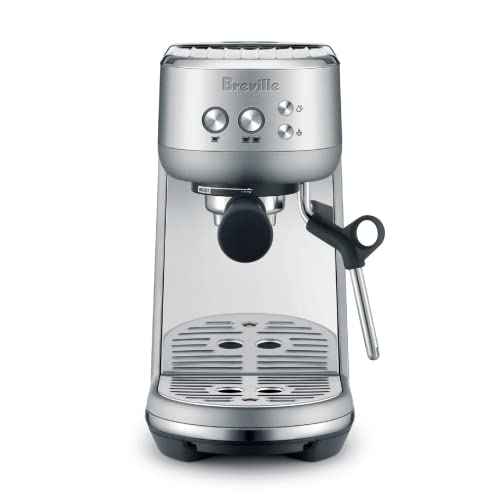
I’d recommend the Breville Bambino BES450BSS to light roast lovers who want precise temperature control and fast heat-up times for extracting bright, nuanced flavors. Its Thermojet heating system reaches ideal temps in just 3 seconds, and the PID guarantees consistent water temperature. The 54mm portafilter with 19-gram capacity allows full flavor development, while low-pressure pre-infusion promotes even extraction. I appreciate the automatic steam wand-it creates microfoam with minimal effort, great for lattes. It’s compact, easy to clean, and the stainless steel build fits most kitchens. At 1560 watts, it’s powerful but uses standard 120V outlets. A solid pick for beginners and small spaces.
Best For: Home baristas who prioritize quick heat-up times, precise temperature control, and compact design for brewing high-quality espresso with ease.
Pros:
- Thermojet heating system reaches optimal brewing temperature in just 3 seconds
- PID temperature control ensures consistent, accurate water temperature for balanced extraction
- Automatic steam wand creates barista-quality microfoam with minimal effort
Cons:
- Limited to 19-gram dose, which may restrict advanced espresso techniques
- Stainless steel exterior shows fingerprints and smudges easily
- No built-in grinder, requiring a separate purchase for whole bean use
20 Bar Espresso Machine with Grinder & Milk Frother

You’ll get the most out of this 20 Bar Espresso Machine with Grinder & Milk Frother if you prefer light roast beans and want full control over extraction, since the PID temperature system keeps heat steady for even brewing-critical when highlighting the bright, delicate notes in lighter roasts. I use the conical burr grinder daily; its six settings let me tweak the grind just right. The touchscreen lets me program brew strength, temperature, and volume, so shots stay consistent. I make lattes often-the steam wand gives me silky microfoam, and the removable 50oz tank is easy to refill. At under 18 pounds, it’s compact but solid, fitting neatly on my counter without sacrificing power.
Best For: Home baristas who prefer light roast beans and want precise control over extraction with a semi-automatic espresso machine featuring built-in grinding and milk frothing capabilities.
Pros:
- Integrated conical burr grinder with 6 adjustable settings ensures fresh, consistent grinds for optimal flavor
- PID temperature control and programmable touchscreen deliver precise, repeatable espresso shots
- Compact design with removable 50oz water tank and steam wand for silky microfoam enhances ease of use and cleaning
Cons:
- Limited to 200 units available, potentially affecting long-term availability and support
- Semi-automatic operation may require practice for beginners to master shot consistency
- Only one color option (Light Black) available, limiting aesthetic choices
Factors to Consider When Choosing an Espresso Machine for Light Roast
You’ll want precision temperature control since light roasts need hotter, more stable water to extract cleanly. Make sure the machine delivers consistent pressure and has a quality integrated grinder-these two things directly affect flavor clarity and shot balance. Don’t overlook milk frothing capability and ease of cleaning, especially if you regularly make drinks like lattes and prefer hassle-free maintenance.
Precision Temperature Control
How do you pull a balanced shot from dense, high-acidity light roast beans? You start with precision temperature control. Water must hit the puck between 195°F and 205°F-too cool, and you’ll under-extract, leaving sharp, sour notes; too hot, and you’ll scorch delicate flavors. Machines with PID let you adjust temps in 1°F steps, so you can fine-tune for any light roast. Pair that with a thermoblock or dual-boiler system, and your machine holds steady heat, even during back-to-back shots. That stability matters-fluctuations hurt the bright, complex profiles light roast lovers want. Low-pressure pre-infusion helps too, working with precise temps to wet grounds evenly and prevent channeling. Avoid basic boilers without PID; they can’t keep the tight thermal control light roasts demand. For consistent results, pick a machine built for accuracy, not just power.
Consistent Pressure Extraction
While temperature stability sets the stage, consistent pressure extraction is what truly activates the complexity of light roast espresso. You need steady 9-bar pressure during the brew phase-machines with precision pumps deliver this reliably, helping you avoid sour or bitter flavors. Look for models that include pre-infusion, as gently ramping up pressure lets trapped gases escape and water flow evenly through the dense puck, boosting clarity in floral and acidic notes. Fluctuating pressure causes channeling, which ruins the balance light roasts depend on. Machines built with robust components and advanced pressure control-like the Profitec Pro 300 or Rocket R58-offer repeatable results. Don’t settle for basic vibe pumps in entry-level units; they often lack the stability you need. Consistency means you can tweak grind or dose without surprise outcomes, which matters when chasing the ideal shot of a delicate Ethiopian or Kenyan bean.
Integrated Grinder Quality
A good integrated grinder can make or break your light roast espresso, and it starts with conical burrs-they crush beans evenly, producing a consistent particle size that’s essential for balanced extraction. You’ll want multiple grind settings so you can fine-tune the dose for light roast’s dense, less-soluble beans. On-demand grinding is key-grinding right before brewing keeps those delicate, aromatic compounds fresh. Low-speed motors help too, minimizing heat that could scorch beans and mute bright, nuanced notes. Look for models like the Breville Barista Pro or Jura E8 that pair precise conical burr grinders with dose control features. Consistent dosing and built-in tamper tools reduce variability, making your shots more repeatable. Cheaper grinders often use flat burrs or high-speed spinning, which increase heat and uneven particles-both hurt light roast clarity. Skip those if you’re serious about flavor accuracy. A quality integrated grinder saves time and boosts results, but only if it’s built for precision, not convenience.
Milk Frothing Capability
If you’re pulling bright, complex shots from light roast beans, you’ll want a machine that can craft milk textures to match-starting with a steam wand that offers precise temperature control. That precision helps create smooth microfoam, which blends cleanly with the espresso’s bright acidity. Look for adjustable steam pressure, so you can tweak texture from velvety to airy, depending on the coffee’s profile. Rapid heating systems matter too-they minimize delays between brewing and steaming, preserving the roast’s delicate aromas. If consistency is a priority, automatic milk frothing with preset modes delivers reliable microfoam without guesswork, ideal for beginners. Cool-touch steam wands improve safety and comfort during longer frothing sessions, especially when practicing latte art or dialing in texture. While manual wands give more control, automatic systems save time and reduce error. Choose based on your skill level and how often you’re making drinks.
Ease Of Cleaning
Pulling vibrant shots from light roast beans means your machine sees regular use, and frequent operation demands easy maintenance to keep flavors clean and performance sharp. Look for models with removable water tanks and drip trays-you’ll wipe them down weekly to prevent mineral buildup. A dishwasher-safe portafilter saves time, though some baskets still need hand washing. Steam wands with automatic cleaning cycles help you avoid clogged nozzles, especially if you steam milk daily. Machines with one-touch descaling or backflushing make deep cleaning simple-just press a button. Stainless steel finishes with smudge resistance stay looking clean longer and need less wiping. While fully automatic cleaning is rare, built-in programs boost consistency. Prioritize accessible parts and smart design; they cut effort and keep your machine running clean, shot after shot. Maintenance shouldn’t be a chore-choose a model that fits your rhythm.
Frequently Asked Questions
Can I Use Pre-Ground Coffee in These Machines?
Yes, you can use pre-ground coffee in these machines, but you’ll sacrifice freshness and flavor control. Pre-ground loses CO₂ quickly, leading to flatter shots, especially with light roasts that need precise extraction. For best results, grind beans just before brewing. If you must use pre-ground, seal it airtight and use within a day. Machines like the Breville BES870 or Gaggia Classic still work, but freshness matters more with lighter beans.
How Often Should I Clean the Portafilter?
You should clean the portafilter after every use to prevent coffee oils from building up and affecting flavor. Just knock out the puck, rinse it under warm water, and wipe it dry. If you skip this, leftover residue can lead to bitter shots over time. Do a deeper clean weekly with a brush and maybe a quick soak in mild detergent, especially if you’re pulling multiple shots daily. It keeps your machine running smoothly and your espresso tasting clean.
Are These Espresso Machines Easy to Disassemble for Cleaning?
You can disassemble these machines easily for cleaning-most let you remove the portafilter, filter basket, and shower screen without tools. Machines like the Rocket Appartamento or Lelit Bianca break down fast, while others may need occasional screw removal. Seals and gaskets stay accessible for maintenance. Just remember to power off and cool down first. Regular disassembly prevents coffee oil buildup and keeps shots tasting clean.
Do Light Roast Beans Require Different Tamping Pressure?
You don’t need different tamping pressure just because you’re using light roast beans. Tamping pressure stays consistent-usually 20–30 pounds-regardless of roast level. What really changes with light roasts is grind size, dose, and brew time. Light roasts are denser and often need a finer grind and slightly longer extraction. Adjust those first. Tamping matters for evenness, not pressure tweaks. Use a calibrated tamper for best results.
Is Soft Water Necessary for Brewing With These Machines?
Yes, soft water is necessary-you’ll protect your machine and improve extraction. Hard water leaves scale, which damages heating elements and affects performance over time. Most manufacturers, like Breville or Rocket, recommend water under 3–5 grains hardness. Use a filtration system or buy bottled soft water if your tap’s too hard. It’s not optional if you want consistent shots and long machine life. Skip it, and you’ll face more maintenance, poor temperature control, and shorter equipment lifespan.