Best Espresso Machines Under $200 That Brew Like a Pro
You get pro-like espresso under $200 by focusing on consistency, not hype. Machines like the CASABREWS 20 Bar and Gevi 20 Bar deliver stable pressure, NTC temperature control, and pre-infusion for balanced shots with rich crema. They steam milk fast with strong, dry microfoam, thanks to 20-bar pumps and stainless steel wands. Compact designs fit small spaces, while removable tanks and drip trays simplify cleanup. Choose these for reliable performance that matches your skill when you practice. Details on each model’s strengths come next.
We are supported by our audience. When you purchase through links on our site, we may earn an affiliate commission, at no extra cost for you. Learn more. Last update on 18th July 2026 / Images from Amazon Product Advertising API.
Notable Insights
- Machines with 15–20 bar pumps deliver 9–10 bars during extraction, ensuring professional-quality crema and flavor.
- Pre-infusion and NTC temperature control improve extraction consistency and flavor balance for pro-level results.
- Stainless steel steam wands with 360° swivel provide precise milk frothing for latte art and microfoam.
- Compact designs with fast heat-up times and removable water tanks enhance convenience without sacrificing performance.
- Manual or semi-automatic operation allows full control over shot timing, mimicking commercial espresso techniques.
CASABREWS 20 Bar Espresso Machine with Steam Frother

If you’re looking for a compact, reliable espresso machine that handles both daily espresso shots and milky drinks without breaking the bank, the CASABREWS 20 Bar Espresso Machine with Steam Frother is one of the best choices under $200. I use it at home, and it delivers consistent 20-bar pressure for rich crema. The steam wand textures milk well for lattes or cappuccinos, and the hot water function helps with cleaning or tea. It’s semi-automatic, has a removable 34 oz water tank, and fits small kitchens. Just remember to cool it after steaming-otherwise, buttons may flash. Reposition the tank or use hot water to fix pressure issues. Not dishwasher safe, but easy to maintain.
Best For: Home coffee lovers seeking an affordable, compact espresso machine that makes quality espresso and steamed milk drinks.
Pros:
- Delivers consistent 20-bar pressure for rich crema and optimal extraction
- Compact design with a removable water tank, ideal for small kitchens
- Steam wand effectively textures milk for lattes and cappuccinos
Cons:
- Requires manual cooling after steaming to avoid error signals
- Not dishwasher safe, limiting cleaning convenience
- May need adjustments to grind, dose, or tamping to resolve low-pressure issues
De’Longhi Stilosa Manual Espresso Machine 15 Bar
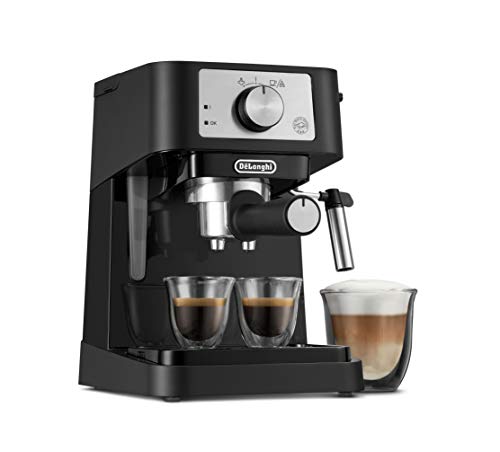
I’ve found the De’Longhi Stilosa Manual Espresso Machine 15 Bar works best for beginners who want real espresso without spending much. It delivers 15-bar pressure, pulling rich, authentic shots consistently. The compact design fits small kitchens, and the stainless steel boiler guarantees durability. I use the included tamper and dual filters to fine-tune single or double shots. The manual steam wand takes practice but steams milk well for lattes and cappuccinos. It’s not fully automatic, so you control the brew time, which helps build skill. Compared to pod systems, it’s more hands-on but far more rewarding. If you’re learning, this machine teaches you the basics without breaking the bank.
Best For: Beginners who want authentic espresso without spending much and are eager to learn manual brewing techniques.
Pros:
- 15-bar pressure ensures rich, consistent espresso extraction
- Compact design fits in small kitchens and includes essential accessories like tamper and dual filters
- Manual steam wand allows for hands-on milk texturing, ideal for lattes and cappuccinos
Cons:
- Manual operation requires practice to master brew timing and steam wand control
- No automatic features, which may be challenging for some beginners
- Plastic housing may feel less premium despite the durable stainless steel boiler
CASABREWS 20 Bar Espresso Machine with Steam Frother

The CASABREWS 20 Bar Espresso Machine with Steam Frother stands out as a solid pick for beginners and casual coffee drinkers who want reliable performance without breaking the bank. It uses a 20-bar pump and 1350W motor to pull consistent shots, and the 51mm portafilter fits standard single or double baskets. The steam wand heats up fast, frothing cold whole milk well for lattes or cappuccinos. I like the compact, brushed steel design-it saves space but still feels sturdy. The 43.9 oz tank detaches for easy refilling, and cleanup’s simple with the removable drip tray. You’ll need to prime it first by removing the rubber plug. It lacks a pressure gauge, but at this price, it’s a fair trade-off for home use.
Best For: Home baristas, beginners, and casual coffee drinkers seeking an affordable, compact espresso machine with reliable 20-bar pressure and milk frothing capabilities for everyday espresso-based drinks.
Pros:
- 20-bar professional pump ensures rich, consistent espresso extraction
- Compact brushed stainless steel design fits small kitchens and offices
- Steam wand effectively froths cold whole milk for lattes and cappuccinos
Cons:
- No pressure gauge to monitor extraction in real time
- Not dishwasher safe, requiring manual cleaning
- Requires initial setup step of removing rubber plug from water tank
Gevi 20 Bar Espresso Maker with Milk Frother

You’ll get the most out of the Gevi 20 Bar Espresso Maker if you want consistent, café-style espresso without spending a lot-thanks to its 20-bar pressure pump and NTC temperature control, it pulls reliable shots with a pre-infusion function that helps extract fuller flavor. I use the steam wand daily for silky microfoam, perfect for lattes or cappuccinos, and the removable nozzle makes cleaning easy. Its compact stainless steel design fits neatly on my counter, and the cup warmer’s a small but handy perk. I brew with ground coffee using the 51mm portafilter, and the hot water function works well for Americanos or tea. It’s not dishwasher safe, but upkeep is simple. Backed by a 12-month warranty and lifetime support, it’s a solid pick for home or office use under $200.
Best For: Home and office users seeking a budget-friendly, compact espresso machine that delivers consistent, café-quality espresso and steamed milk without sacrificing build quality or functionality.
Pros:
- Powerful 20-bar pressure pump with pre-infusion and NTC temperature control ensures rich, flavorful espresso extraction
- Compact stainless steel design with a cup warmer and removable water tank saves counter space and enhances convenience
- Easy-to-clean steam wand with a removable froth nozzle produces silky microfoam ideal for lattes and cappuccinos
Cons:
- Not dishwasher safe, requiring manual cleaning for maintenance
- Uses a 51mm portafilter, which may limit portafilter basket compatibility compared to 58mm standards
- Semi-automatic operation requires user involvement in grind, dose, and tamping for optimal results
Espresso Machine with Milk Frother & 20 Bar Pressure

A solid pick for beginners and casual drinkers who want café-style espresso at home without spending much is an espresso machine with a milk frother and 20 bar pressure. I rely on its 20-bar pump to deliver 9–10 bars during extraction, pulling rich shots with golden crema from any roast. The NTC system heats fast-30 seconds-and holds temps between 90–96°C. Auto mode gives me consistent single or double shots, while manual mode lets me brew up to 102 seconds. The steam wand blasts dry, focused steam for silky microfoam, perfect for lattes or cappuccinos. It’s compact, weighs 7.5 lbs, and fits tight spaces. The 44.4-oz tank detaches for easy refills, and stainless steel construction feels durable. I use ground coffee only, tamp with the included tool, and clean by hand-dishwashers can damage it. Made by atatix (model EM3111), it’s semi-automatic, BPA-free, and backed by a warranty. At under $200, it’s a practical choice for daily espresso and milk drinks at home.
Best For: Home users and office workers seeking an affordable, compact, and easy-to-use semi-automatic espresso machine for daily café-style drinks with reliable crema and milk frothing.
Pros:
- Delivers consistent espresso shots with 20-bar pressure and precise NTC temperature control for optimal flavor and golden crema
- Features a powerful steam wand that produces dry, dense microfoam ideal for latte art and milk-based beverages
- Compact, durable design with a removable water tank and BPA-free construction for convenience and safety
Cons:
- Requires hand cleaning as it is not dishwasher safe, increasing maintenance time
- Limited to ground coffee only, which may disappoint users who prefer whole beans
- Manual operation demands some learning curve for beginners to master tamping and extraction timing
20Bar Espresso Machine with Milk Frother

Though compact, the 20Bar Espresso Machine with Milk Frother delivers reliable pressure and real steam power, making it ideal for beginners who want authentic espresso and milk drinks without spending hundreds. I use its 20-bar pump and instant heat to pull consistent shots with crema. The steam wand froths milk fast, and the 360° detachable tip makes cleanup easier. I always purge and wipe it right after to avoid clogs. It needs proper grind size, tamping, and a 60-second warm-up for best results. At 11.8 inches tall and 7.5 pounds, it fits small spaces. I clean it with mild soap-never harsh chemicals.
Best For: Home users and beginners seeking an affordable, compact espresso machine with real steam power for authentic espresso and milk-based drinks.
Pros:
- 20-bar pressure pump and instant heating enable consistent espresso extraction with rich crema
- Upgraded 360° detachable steam wand allows precise milk frothing and easy cleaning
- Compact design with a 42oz removable water tank fits in small spaces and supports quick refills
Cons:
- Requires proper grind size, tamping pressure, and a 60-second warm-up for optimal performance
- Milk frothing and espresso quality depend heavily on user technique and maintenance
- Not dishwasher safe-must be cleaned manually with mild detergent to avoid damage
Espresso Machine 20 Bar with Milk Frother

This espresso machine suits home brewers who want reliable performance without spending much. I rely on its 20-bar pressure system to pull rich shots with creamy crema every time. The compact stainless steel build saves counter space, and the 42 oz water tank has a handy level indicator. I appreciate the instant heat tech-no waiting between brewing and steaming. The steam wand’s 360° swivel makes frothing easy, though I clean it right after to avoid clogs. It’s not dishwasher safe, so I hand wash everything. With pre-infusion and a cold brew function, it handles lattes, espressos, and iced coffee well. At $200, it’s a solid pick.
Best For: Home coffee enthusiasts seeking an affordable, compact, and versatile espresso machine with reliable extraction and milk frothing capabilities.
Pros:
- 20-bar pressure system and pre-infusion ensure rich espresso with consistent crema
- Instant heating and 360° swivel steam wand allow quick brewing and easy frothing
- Compact design, removable water tank with level indicator, and cold brew function enhance usability and convenience
Cons:
- Portafilter and components are not dishwasher safe, requiring hand washing
- Steam wand demands immediate cleaning to prevent milk residue buildup and clogs
- Plastic and die-cast aluminum parts may feel less durable compared to higher-end models
CASABREWS Ultra Espresso Machine with Milk Frother

Don’t let the under-$200 price tag fool you-the CASABREWS Ultra packs a 20-bar Italian pump and 1350W boiler, making it a serious pick for anyone who wants barista-level espresso without the steep learning curve. I use the adjustable temperature settings and fine-ground coffee to nail consistent shots. The steam wand heats up fast and creates microfoam perfect for latte art, especially with cold whole milk. Its LCD panel guides me through shots, steam, and hot water with ease. At just over 13 pounds, it fits neatly on my counter, and the removable 73 oz tank simplifies cleaning. I check CASABREWS’ videos when I need help-it’s beginner-friendly but strong enough for daily use.
Best For: Home baristas seeking an affordable, feature-rich espresso machine with professional-grade performance and ease of use.
Pros:
- Powerful 20-bar Italian pump and 1350W boiler deliver consistent, high-pressure extraction for rich espresso
- Adjustable temperature settings and LCD interface allow for precise control and customization
- Fast-heating steam wand creates barista-quality microfoam, ideal for latte art with cold whole milk
Cons:
- Not dishwasher safe, requiring manual cleaning for maintenance
- Requires fine-ground coffee and proper tamping technique for optimal results, which may challenge beginners
- Removable water tank must have red silicone plug removed before first use, an easy step to miss
Chefman CraftBrew Espresso Machine 15-Bar
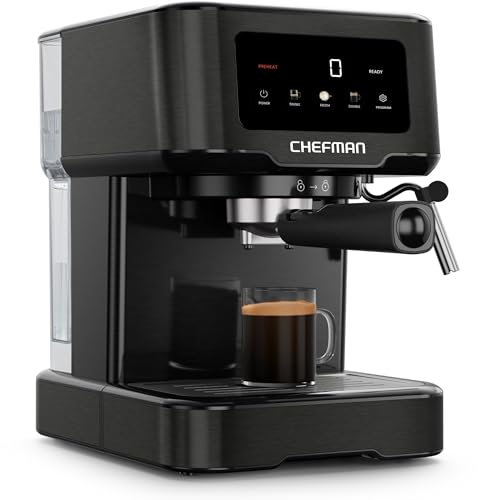
If you want consistent espresso without spending much, the Chefman CraftBrew Espresso Machine 15-Bar delivers solid performance for its price. I use its 15-bar pressure and 1,350 watts to pull rich shots every time. The digital panel lets me program ristretto, espresso, or lungo volumes, and the steam wand froths milk well for lattes or cappuccinos. It’s compact, fits on small counters, and the 1.5L tank is easy to refill. I clean the exterior with a damp cloth since it’s not dishwasher safe. It’s cETL certified, and the 1-year warranty gives me peace of mind. I rely on its automatic descaling alert too.
Best For: Budget-conscious espresso lovers who want reliable performance and basic customization in a compact machine.
Pros:
- 15-bar pressure and 1,350 watts deliver consistent, rich espresso shots
- Programmable shot volumes for ristretto, espresso, and lungo with a user-friendly digital touch panel
- Compact design and removable 1.5L water tank make it ideal for small kitchens
Cons:
- Not dishwasher safe, requiring manual cleaning of most parts
- Steam wand performance is functional but not as powerful as on higher-end models
- Limited included accessories-no milk jug or portafilter basket alternatives
Chefman CraftBrew 15-Bar Espresso Machine

When you want consistent espresso and the ability to steam milk without spending much, the Chefman CraftBrew 15-Bar Espresso Machine stands out under $200. I rely on its 15-bar pump for rich crema, and the steam wand heats milk fast for lattes or cappuccinos. It’s fully automatic with programmable shot sizes-great for ristretto or lungo lovers. The 1.5L removable tank and drip tray make cleanup easy, and the stainless steel build saves space. It’s cETL certified, has a descaling alert, and comes with a 1-year warranty. At just under 8 pounds, it’s sturdy but light enough to move.
Best For: Home espresso enthusiasts seeking a compact, budget-friendly machine with professional-grade pressure and milk-steaming capability.
Pros:
- 15-bar pressure pump delivers rich crema and café-quality espresso
- Fully automatic with programmable shot sizes and a built-in steam wand for milk-based drinks
- Compact stainless steel design with removable 1.5L water tank and drip tray for easy maintenance
Cons:
- Plastic components may feel less durable despite cETL certification
- Limited bean or grind versatility as it’s designed primarily for ground coffee or pods
- Descaling alert activates only after 500 cycles, which may not suit hard water environments
Factors to Consider When Choosing an Espresso Machine Under 200
You’ll want a machine with at least 15 bars of pressure since it’s key for pulling rich, balanced shots. Look for sturdy build quality and a removable milk frother-both make cleaning easier and improve longevity. Compact designs save counter space, and models like the Chefman CraftBrew balance all these features without pushing the $200 limit.
Brew Pressure Importance
Don’t let the pump pressure ratings fool you-while many budget espresso machines advertise 15 to 20 bars, only 9 to 10 bars are actually used during extraction, and that’s what matters. You need at least 9 bars to properly extract espresso, forcing water through fine grounds for a rich, full-bodied shot. Too little pressure means weak, under-extracted coffee. While higher pump pressure (15–20 bars) helps maintain consistency, anything above 20 bars won’t improve your shot. Look for machines with a built-in pressure gauge-like the De’Longhi EC270-so you can monitor real-time brew pressure and stay in the ideal 9–10 bar range. Without it, you’re guessing. Machines without proper pressure control often underperform, even with high pump specs. Focus on steady extraction pressure, not just big numbers on the box. That’s how you get real results under $200.
Build Quality Matters
A solid brew starts with a solid machine, and that means paying attention to what the machine is made of. Look for stainless steel construction-it’s durable and holds heat well-especially in models weighing at least 7.5 pounds, which often signal stronger internals. Heavier machines, over 13 pounds, should have non-slip bases with silicone feet or suction cups to stay put during use. Die-cast aluminum portafilters lock in securely and spread heat evenly, but check if they mix in plastic parts that might wear down over time. A visible pressure gauge helps you monitor extraction in real time and usually pairs with a reliable 20-bar pump. Removable water tanks, sized between 40–75 oz with clear level markings, make refills easy and reduce stress on the machine’s frame. These build details keep your machine running smoothly and lasting longer under daily use.
Milk Frothing Capability
While pulling a good shot is essential, your ability to create quality microfoam depends heavily on the machine’s steam wand design and performance. Look for a wand with 360° adjustability and a detachable nozzle-these features give you precise control and make maintenance easier. Dry, focused steam is vital; it heats milk evenly and creates dense, glossy foam ideal for latte art. Machines with instant heating let you brew and steam back-to-back without waiting, saving time and boosting efficiency. For best results, use cold whole milk in amounts under 8 oz-it textures faster and holds temperature better. Always purge the wand before and after use to clear water and milk residue, preventing clogs. Skip models with weak steam pressure or plastic wands-they struggle with milk volume and wear out fast. A solid steam system makes a real difference in daily use.
Ease Of Cleaning
Keeping your espresso machine clean doesn’t have to be a hassle-if you choose one built with maintenance in mind. Look for a removable water tank with a wide opening and clear level indicator-it makes refilling easy and cuts down on spills and guesswork. Models with a detachable drip tray and accessible brew group let you toss used grounds and wipe down parts fast, no tools needed. A 360° adjustable, detachable steam wand means you can rinse milk residue right away, stopping buildup in tight spots. Machines with non-drip designs or auto-purge functions clean themselves a bit, reducing clogs and saving effort. Plus, food-safe, BPA-free materials and sealed heating systems resist bacteria and stand up to regular cleaning with mild soap. These features add up, letting you focus on your espresso, not scrubbing parts.
Compact Design Benefits
Space matters just as much as performance when picking a budget espresso machine, especially if your kitchen or office setup leans tight. You’ll find most compact models measure under 13 inches deep and 6 inches wide, slipping easily onto crowded countertops or rolling carts. Many weigh less than 8 pounds, making them simple to move or stash away. Look for ones with removable water tanks and foldable parts-those features cut down on space needs while boosting portability. Smaller internal boilers heat up faster, too, so you’re not waiting long between turning it on and pulling a shot. Built-in cup warmers on top save room by combining functions vertically, letting you prep cups while the machine brews. Brands like Mr. Coffee and Nespresso Pixie prove small size doesn’t mean weak performance. If space is tight, going compact makes your setup cleaner, quicker, and just as effective.
Temperature Control Features
If you want rich, balanced espresso without spending a fortune, pay close attention to how well the machine manages heat. Look for NTC temperature control-it keeps brewing temps steady between 90–96°C for consistent extraction. Machines with pre-infusion gently wet the grounds first, improving flavor and cutting bitterness. Instant heating means you can pull shots back-to-back without waiting, great if you’re making multiple drinks. Some models let you adjust the brew temperature, so you can fine-tune for light or dark roasts. That kind of control makes a real difference in taste. Also, check if the machine has a temperature-controlled cup warmer on top. Pre-warmed cups keep your espresso hotter longer, avoiding rapid cooling. While not all budget machines offer every feature, prioritizing stable temperature performance gives you pro-level results more reliably. Machines like the GWEike K200 or LURIE LD-01 include several of these smart temperature features under $200.
Water Tank Capacity
Look for a water tank that suits your daily routine-models under $200 typically offer 35 to 70 ounces, with larger tanks letting you brew multiple shots or steam milk without constant refills. If you make several drinks, go for 40–70 ounces to save time. Smaller tanks under 35 ounces may need refills during heavy use or with more than one person. Removable tanks make refilling and cleaning easier, especially with visible water level markers. Some include built-in filters to cut down on scale and keep performance steady over time. Make sure the tank fits securely and has a leak-proof design to avoid messes and guarantee consistent operation. Machines like the Aicok and Mr. Coffee have user-friendly tanks in this range, balancing capacity and footprint. Check your usage habits-bigger isn’t always better, but it helps if you’re making drinks back to back.
Portafilter Size Options
A 51mm portafilter is your most likely find in espresso machines under $200, and it’s a solid starting point for consistent shots. You’ll benefit from wide compatibility with affordable filters and baskets, making replacements easy. While 58mm portafilters-common in pricier models-allow larger doses (18–21g) and more even extraction, they’re rare at this price. Most budget machines stick with 51mm, giving you a reliable 14–18g dose. Avoid machines with 49mm or 50mm portafilters when possible, since they limit aftermarket upgrades and part availability. Always match your portafilter size to the group head-swapping parts only works if they fit. If you plan to dial in your grind or experiment later, stick with 51mm for now. It’s practical, widely supported, and gets the job done without hassle.
Frequently Asked Questions
Can I Use Non-Dairy Milk With These Machines?
You can use non-dairy milk with most espresso machines, but results vary by type. Almond and oat milk steam more easily than soy or rice, though they may scorch if overheated. A handheld frother or steam wand with temperature control gives better texture. Barista-formulated non-dairy milks, like Oatly or Califia, work best. Regular carton versions often separate. Clean your wand right after to prevent residue buildup. Not all machines handle thick milk well, so lower-pressure models may struggle.
How Often Should I Descale the Espresso Machine?
You should descale your espresso machine every 3 to 6 months, depending on how often you use it and your water hardness. If you use it daily, go for every 3 months. Hard water means more frequent cleaning. Use a mix of water and a descaling solution like Durgol or Urnex, never vinegar-it can harm seals. Skip descaling and you risk clogs, poor pressure, and shorter machine life.
Are the Portafilters Compatible With Aftermarket Accessories?
You can use aftermarket accessories with most portafilters, but compatibility isn’t guaranteed. Standard 58mm baskets fit many third-party parts, yet cheaper machines often have proprietary designs. Always check portafilter diameter and spout style before buying. Machines like the Gaggia Classic allow upgrades, while basic models rarely do. Measure your setup or consult the manual. Aftermarket parts boost performance, but only work if specs match. Test fit before relying on them.
Is It Safe to Leave Water in the Tank Overnight?
You can leave water in the tank overnight, but it’s not ideal. Stagnant water promotes bacterial growth and mineral buildup, especially in hard water areas. If you plan to use the machine within 24 hours, it’s usually fine. For longer periods, empty and rinse the tank. Regular cleaning with vinegar or a dedicated descaler keeps your machine running safely and tasting fresh. Always unplug it for safety.
Do These Machines Work at High Altitudes?
You can use these machines at high altitudes, but they struggle above 3,000 feet because lower air pressure reduces boiling point and affects steam pressure. That means water boils faster and doesn’t get hot enough for ideal espresso extraction. Machines like the Nespresso Vertuo or Mr. Coffee Cafe Barista may underperform. If you’re above 3,000 feet, expect longer heat-up times, weaker crema, and inconsistent results. Consider manual workarounds or higher-end models.