Best Non Pod Espresso Machines That Brew Like a Barista
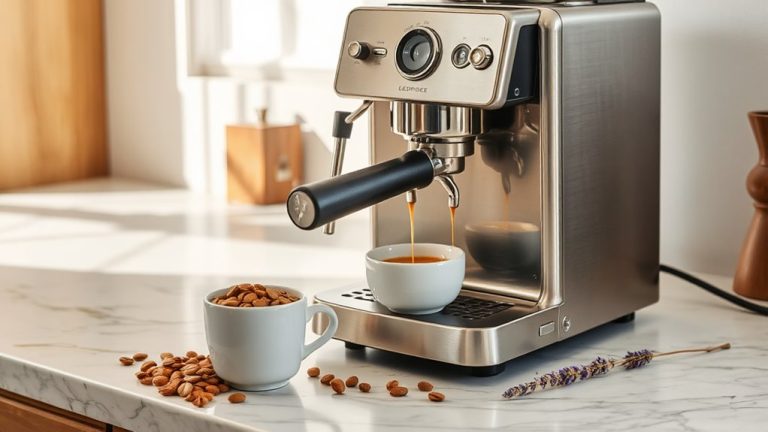
You’ll get barista-like espresso at home with a 20-bar pump machine like the Gevi or CASABREWS models, which deliver steady pressure for rich crema. Look for PID or NTC temperature control to guarantee consistency across roast levels. A pro-style 360° steam wand lets you texture milk for lattes and cappuccinos. These machines use 51mm portafilters and need pre-ground coffee, so invest in a good grinder. Choose stainless steel builds for durability and heat stability. More details on top picks follow.
We are supported by our audience. When you purchase through links on our site, we may earn an affiliate commission, at no extra cost for you. Learn more. Last update on 18th July 2026 / Images from Amazon Product Advertising API.
Notable Insights
- Utilizes a 20-bar pressure pump and pre-infusion to extract rich espresso with consistent crema like a professional machine.
- Maintains precise brewing temperatures (90–96°C) via PID or NTC control for balanced flavor across roast profiles.
- Features a 360° adjustable steam wand that produces microfoam for barista-quality latte art with proper technique.
- Includes a 51mm portafilter and manual brewing process, allowing full control over grind, dose, and tamping.
- Offers fast heat-up times under 60 seconds and independent boiler or thermoblock systems for efficient brewing and steaming.
Gevi 20 Bar Espresso Maker with Milk Frother

If you’re looking for a compact, no-frills espresso machine that still delivers solid performance without relying on pods, the Gevi 20 Bar Espresso Maker is a strong pick-especially if you want barista-style drinks at home without spending a lot. I use its 20-bar pump and pre-infusion to pull rich shots every morning, and the steam wand creates microfoam ideal for lattes. The stainless steel build saves space but feels durable, and the removable water tank simplifies refills. I appreciate the hot water function for Americanos or tea. Just note: it’s not dishwasher safe, and you’ll need to descale regularly. It’s a no-nonsense machine that works well for daily use.
Best For: Home espresso enthusiasts seeking a compact, durable machine with barista-style features for crafting rich coffee drinks without pods.
Pros:
- Delivers high-pressure 20-bar extraction and pre-infusion for flavorful, café-quality espresso
- Compact stainless steel design saves countertop space while ensuring durability
- Powerful steam wand creates silky microfoam ideal for lattes and cappuccinos
Cons:
- Not dishwasher safe, requiring hand cleaning and regular descaling
- Only compatible with ground coffee, limiting convenience for some users
- Manual operation may have a learning curve for beginners
CASABREWS 20 Bar Espresso Machine with Milk Frother

The CASABREWS 20 Bar Espresso Machine with Milk Frother stands out for home baristas who want real espresso control without the complexity of high-end models. I use its 20-bar Italian pump and 1350W boiler to pull rich, balanced shots every time. The built-in pressure gauge helps me monitor extraction, while the steam wand creates microfoam for latte art. It’s compact-just 12.3” deep-so it fits my small kitchen. I remove the 34 oz water tank for quick refills. After steaming, I run hot water for 20 seconds to cool the machine and avoid flashing lights. I’ve learned that grind size and tamping pressure matter here-adjustments make a real difference. It’s not dishwasher safe, but cleaning’s simple with regular wiping and rinsing.
Best For: Home baristas seeking an affordable, compact espresso machine with professional features for crafting espresso, cappuccinos, and latte art.
Pros:
- Powerful 20-bar Italian pump and 1350W boiler deliver consistent, high-quality espresso extraction
- Compact stainless steel design fits easily in small kitchens while offering a built-in steam wand for microfoam and latte art
- Removable 34 oz water tank and intuitive controls make refilling and operation convenient for daily use
Cons:
- Not dishwasher safe, requiring manual cleaning and regular maintenance
- Requires cooling after steaming to prevent overheating indicators and flashing buttons
- Performance highly dependent on grind size, dose, and tamping pressure, which may challenge beginners
20Bar Espresso Machine with Milk Frother

You’ll get the most out of this 20Bar espresso machine with milk frother if you want full control over your espresso and milk drinks without relying on pods. I rely on its 20-bar pump for consistent shots with rich crema, and the instant heating means I can brew and steam back-to-back. The 360° adjustable steam wand gives me pro-level microfoam, though I always purge and clean it right after. It’s compact, stable, and has a handy pressure gauge. I use the included frothing pitcher and tamper daily. Just hand-wash parts-don’t risk the dishwasher. Quiet, efficient, and built for real use.
Best For: Home baristas who want full control over crafting espresso and milk-based drinks without relying on pods.
Pros:
- 20-bar pressure pump delivers consistent extraction with rich crema
- Instant heating allows quick back-to-back brewing and steaming
- Compact, stable design with a 360° adjustable steam wand and useful accessories like a frothing pitcher and tamper
Cons:
- Requires manual cleaning of steam wand and components-no automatic milk system
- Smaller 51mm portafilter may limit compatibility with premium aftermarket filters
- Not dishwasher safe, increasing maintenance time and effort
CASABREWS 20 Bar Espresso Machine Silver

Though compact and built for simplicity, the CASABREWS 20 Bar Espresso Machine Silver delivers professional-grade pressure that matters most for proper espresso extraction, making it a strong pick for beginners and home baristas who want real control without relying on pods. I use its 51mm portafilter and 20-bar pump to pull consistent shots, and the steam wand froths milk well-just use cold whole milk and clean the wand after. It’s small (12.6”D), fits my counter, and the removable 43.9 oz tank makes refilling easy. I tamp with the included tool, run a cleaning cycle first, and follow the manual for best results. Not dishwasher-safe, but straightforward.
Best For: Home baristas and beginners seeking an affordable, compact espresso machine with manual control for authentic espresso and milk-based drinks.
Pros:
- Delivers 20-bar professional pressure for consistent espresso extraction
- Compact design with removable water tank for easy refilling and countertop fit
- Includes steam wand for manual milk frothing and essential accessories like tamper and portafilter
Cons:
- Not dishwasher safe, requiring hand cleaning for maintenance
- Steam wand needs immediate cleaning to prevent milk residue buildup
- 51mm portafilter is smaller than the standard 58mm, limiting filter basket options
Espresso Machine 20 Bar with Milk Frother

If you want consistent espresso with a rich crema and enjoy milk-based drinks like lattes or cappuccinos, the Espresso Machine 20 Bar with Milk Frother delivers without relying on pods. I use its 20-bar pressure system daily to pull quick, flavorful shots with ground coffee. The instant heating means I brew right after steaming-no waiting. Its 360° adjustable steam wand creates silky microfoam, perfect for latte art. I appreciate the cold brew function for smooth iced coffee in summer. At just over a foot wide, it fits my small kitchen. The removable tank and drip tray make cleanup easy, though I hand-wash the portafilter to preserve it.
Best For: Home baristas who want café-quality espresso and milk-based drinks using ground coffee, value compact design, and appreciate features like instant heating and a cold brew function.
Pros:
- 20-bar pressure system ensures rich espresso with consistent crema
- 360° adjustable steam wand creates professional-quality microfoam for lattes and cappuccinos
- Compact size and removable components make it ideal for small kitchens and easy maintenance
Cons:
- Portafilter requires hand washing only, not dishwasher safe
- Limited to ground coffee, incompatible with pods or whole beans
- 51mm portafilter and filters are smaller than the standard 58mm, limiting accessory options
Espresso Machine with Milk Frother, 20 Bar

A 20-bar espresso machine with a built-in milk frother suits home baristas who want café-quality drinks without the complexity of pro gear. I rely on its 20-bar pump to maintain 9–10 bar during extraction, delivering rich flavor and golden crema. The NTC system holds 90–96°C, so I get consistent results across roast types. It preheats in 30 seconds and offers automatic or manual brewing-great for precision or flexibility. The steam wand produces dry, dense microfoam, perfect for lattes or cappuccinos. Built with stainless steel and ABS, the atatix EM3111 is compact, BPA-free, and easy to clean, weighing 7.5 pounds.
Best For: Home baristas seeking café-quality espresso and milk-based drinks with minimal effort and space requirements.
Pros:
- Delivers consistent extraction with 20-bar pressure and NTC temperature control for rich flavor and golden crema
- Compact, durable design with BPA-free materials and a powerful steam wand for professional-quality microfoam
- Quick 30-second preheat and dual brewing modes (automatic and manual) offer flexibility and convenience
Cons:
- Not dishwasher safe, requiring hand cleaning for water tank and drip tray
- Limited to manual milk frothing with no automatic milk system
- Lower maximum brew time in manual mode (102 seconds) may restrict advanced brewing techniques
Philips Baristina Espresso Machine (BAR302/20)
The Philips Baristina Espresso Machine (BAR302/20) is ideal for people who want real espresso with zero guesswork. I use its 16-bar pressure pump to pull rich shots every time-no tamping or grinding by hand. Just add whole beans, swipe the handle, and it brews in under 60 seconds. It’s fully automatic, so I get consistent espresso, lungo, or extra-intense styles with ease. The built-in grinder keeps flavors fresh, and the compact design fits my small kitchen. It’s made with over 50% recycled plastic and has an A+ energy rating. I clean it by hand since it’s not dishwasher safe, but the simple controls and one-step operation save me time daily.
Best For: People who want authentic espresso with minimal effort and a compact, eco-friendly design.
Pros:
- Fully automatic operation with built-in grinder for fresh, consistent coffee in under 60 seconds
- Offers multiple brew styles (espresso, lungo, extra intense) with 16-bar pressure for rich flavor
- Compact size and A+ energy rating make it ideal for small kitchens and energy-conscious users
Cons:
- Compatible only with whole beans, limiting flexibility for pre-ground users
- Not dishwasher safe, requiring manual cleaning
- Higher price point compared to semi-automatic or manual espresso machines
Espresso Machine with 20 BAR Pump

You get precise control and consistent results with this 20-bar pump espresso machine, making it a solid pick for home baristas who want real espresso without pods. I use its PID control to maintain stable temps, so my shots pull evenly every time. The 60-second heat-up and quick brew cycle save time, and the steam wand froths milk well for lattes or cappuccinos. I fill the 28 oz tank easily, and the compact size fits my small kitchen. It’s not dishwasher safe, so I clean it by hand. I run a short water flush before brewing-it helps with temperature stability. The 51mm portafilter works fine, though it’s smaller than commercial models.
Best For: Home baristas seeking authentic espresso with precise temperature control and quick brew times in a compact, semi-automatic machine.
Pros:
- 20-bar pump and PID temperature control ensure consistent, high-quality espresso with rich crema
- Fast 60-second heat-up and short brew cycle enhance efficiency for daily use
- Compact design with a 360° adjustable steam wand makes it ideal for small spaces and milk-based drinks
Cons:
- 51mm portafilter is smaller than standard commercial size, limiting compatibility with some accessories
- Not dishwasher safe, requiring hand cleaning for maintenance
- Removable water tank may need frequent refilling for multiple drinks due to 28 oz capacity
Espresso Machine 20 Bar with Milk Frother
Built for coffee lovers who want real control without relying on pods, this espresso machine delivers with a 20 bar pressure system that pulls rich, authentic shots every time. I use the semi-automatic ST-699B from ANYCOLD, which combines a 1450W motor and high-pressure extraction to access bold flavor and crema. Its steam wand heats milk quickly, creating microfoam ideal for lattes or cappuccinos, though it needs cooling between uses. The stainless steel and ABS design is compact, fitting neatly on most counters. With a 34-ounce tank, detachable drip tray, and included filters and tamper, it’s ready for daily use-perfect for beginners or as a reliable gift.
Best For: Coffee enthusiasts, beginners, and home users seeking authentic espresso and milk-based drinks with a compact, semi-automatic machine.
Pros:
- 20 bar pressure system and 1450W motor deliver rich crema and bold flavor extraction
- Steam wand creates microfoam for lattes and cappuccinos, supporting latte art
- Compact stainless steel design with a removable 34-ounce water tank and easy-to-clean components
Cons:
- Steam wand requires cooling between uses, limiting back-to-back milk steaming
- Semi-automatic operation may require practice for beginners to master shot pulling
- Plastic (ABS) components, while durable, may feel less premium compared to全-metal builds
De’Longhi Stilosa Manual Espresso Machine
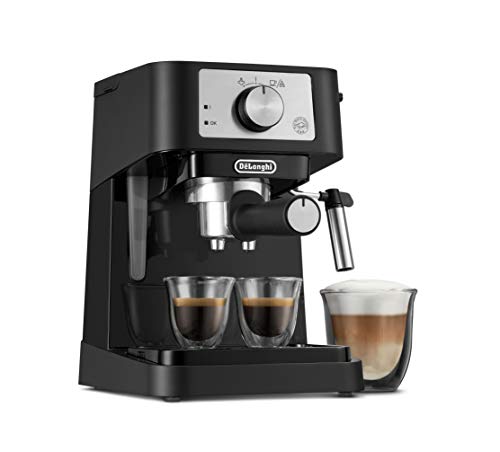
For beginners who want full control without the complexity, the De’Longhi Stilosa Manual Espresso Machine (EC260BK) delivers reliable performance at a reasonable price. I use its 15-bar pump to pull rich, consistent shots, and the manual steam wand froths milk well for lattes or cappuccinos. The stainless steel boiler holds heat steadily, and the ergonomic portafilter fits comfortably in my hand. It’s compact, fitting easily on my counter, and the 33.8 fl.oz. tank means fewer refills. I clean it regularly since it’s not dishwasher safe, but maintenance is straightforward. With a 1-year warranty and available support, it’s a practical starter machine that’s still built to last.
Best For: Beginners who want manual control over espresso and milk frothing without the complexity of more advanced machines.
Pros:
- 15-bar pump pressure ensures rich, consistent espresso extraction
- Manual steam wand allows for customized milk frothing for lattes and cappuccinos
- Compact design with a large 33.8 fl.oz water tank fits well on countertops and reduces refill frequency
Cons:
- Not dishwasher safe, requiring hand cleaning for maintenance
- Manual operation may have a learning curve for complete beginners
- Plastic housing over stainless steel elements may feel less premium despite durable build
Factors to Consider When Choosing a Non Pod Espresso Machine
You’ll want to check the brew pressure strength, since most good non pod machines run at 9 to 15 bars for proper espresso extraction. Look at build quality and design-stainless steel units like the Breville Bambino last longer and heat up faster than plastic models. Consider milk frothing capability, ease of cleaning, and whether the machine fits your counter space before you buy.
Brew Pressure Strength
While higher pump ratings don’t mean stronger espresso, they do help maintain the 9 bars of extraction pressure that experts agree delivers the best balance of flavor and crema. You’ll often see machines with 15–20 bar pumps-not because you need that much during brewing, but because the system loses pressure. A stronger pump compensates, ensuring steady 9 bar output. Consistent pressure means even water flow through the puck, which prevents channeling and bitter or weak shots. It also helps extract more oils and aromas for a richer, fuller-bodied result. Cheap pumps may fluctuate, especially during long brews, hurting crema and taste. Look for models like the Breville Bambino or Gaggia Classic Pro-both use reliable vibratory pumps that hold pressure well. Temperature stability matters too, since heat affects pressure. Choose a machine where both factors work together for truly barista-level performance.
Build Quality And Design
A well-built espresso machine stands up to daily use while delivering consistent results, and starting with a stainless steel housing makes a clear difference in durability and heat retention compared to plastic or ABS models. You’ll notice it stays cooler to the touch yet maintains stable brewing temps. Look for a brushed finish-it hides fingerprints and scratches better than shiny surfaces. If counter space is tight, pick a model under 13 inches deep; many still fit sizable water tanks and drip trays without crowding your setup. Non-slip silicone or rubberized feet keep the machine steady when the pump kicks in, so it won’t slide around. An ergonomic portafilter handle and well-placed controls reduce strain during daily use, making your routine smoother. These design details aren’t just cosmetic-they impact performance and usability every time you pull a shot. Choose smart construction, not just looks.
Milk Frothing Capability
Steam wand performance plays a crucial role in crafting high-quality milk drinks, and a 20-bar pump system delivers the pressure needed for dense, velvety microfoam that blends smoothly into espresso. You’ll want an adjustable steam wand with 360° rotation-it gives you better control and lets you position the pitcher at the ideal angle. Detachable or swivel nozzles make cleaning easier and help prevent clogs from dried milk. If you hate waiting, pick a machine with an independent boiler or thermoblock system so you can brew and steam at the same time. Always purge the steam wand before and after use to clear condensation and maintain strong, dry steam. Models like the Breville BES870 or Gaggia Classic Pro offer solid steam power and smart design without fuss. Choose based on how often you make milk drinks and how much control you actually need.
Ease Of Cleaning
You just wrapped up steaming milk, and now it’s time to think about cleanup-how easy your machine is to maintain matters just as much as its performance. Look for a removable water tank and drip tray; they let you dry and scrub parts, cutting down on mold and scale. A detachable steam wand with a simple tip is easier to wipe free of milk gunk, preventing clogs. Stainless steel surfaces resist stains and bacteria, so a quick wipe keeps them clean. Machines with built-in cleaning cycles or backflush functions clear coffee oils from internal parts without tearing the machine apart. After pulling a shot, rinse the portafilter and basket right away-this stops oils from hardening and clogging filters. Models like the Breville BES870 or Rancilio Silvia make these tasks simple. Good cleaning design saves time and keeps your espresso tasting fresh.
Size And Space Fit
Don’t assume all espresso machines fit any kitchen-measure your countertop before buying, since non pod models usually take up 11 to 15 inches in depth and 5 to 7 inches in width. Check height too; many machines stand 11 to 14 inches tall and might not fit under low cabinets. Leave at least 1–2 inches of clearance on all sides for airflow and easy access. You’ll also need extra space behind for cords, hoses, and steam wands to vent safely. If you’ve got a small kitchen, pick a compact model like the Breville Bambino-it saves space without sacrificing function. Go for a removable water tank if possible; it lets you refill away from the machine and reduces the need for overhead clearance. Always account for daily use: you need room to plumb, refill, and clean without cramping. Measure twice, buy once-space issues can ruin even the best machine’s performance.
Temperature Control Accuracy
While pulling a great shot starts with fresh beans and proper grind size, nailing the temperature is what brings out the best in your espresso. You need consistent heat between 90–96°C to extract flavors evenly and avoid sour or bitter results. Machines with PID or NTC controls hold that range tightly, so your brew stays stable shot after shot. Fluctuating temps can wreck delicate profiles, especially with light or dark roasts that demand precision. Pre-infusion helps too, wetting the puck evenly before full pressure kicks in-just make sure your machine heats up fast and stabilizes quickly, ideally under 60 seconds. That way, you’re not waiting forever, and every pull hits the right thermal sweet spot. Look for solid thermal stability in models like the Breville Dual Boiler or Rancilio Silvia-both keep temps locked in, so you’re not guessing where your shot’s going.
Grind Compatibility Options
When selecting a non-pod espresso machine, one of the first things to evaluate is how it handles grind input, since nearly all of these machines require you to supply pre-ground coffee-most commonly through a portafilter fitted with a 51mm filter basket, the industry standard for dose consistency. You’ll need to grind beans externally, as these machines don’t accept whole beans unless they come with an integrated grinder. Most models work only with finely ground coffee; coarser grinds won’t create enough resistance under 20 bar pressure, leading to weak, under-extracted shots. While using pre-ground is convenient, it sacrifices freshness-exposure to air degrades aromatic oils and reduces crema. Some machines offer flexibility with dual-filter baskets or pressurized portafilters, helping with grind inconsistency, but for best results, you’ll want a quality burr grinder and beans ground just before brewing.
Frequently Asked Questions
How Often Should I Descale My Non-Pod Espresso Machine?
You should descale your espresso machine every 1–3 months, depending on how often you use it and your water hardness. If you brew daily with hard water, monthly descaling keeps buildup low. Machines like Breville or Rancilio Silvia show performance drops-slower flow, inconsistent temps-when it’s time. Use a citric acid or brand-approved solution, never vinegar. Skip it, and you’ll risk clogs, poor extraction, and costly repairs over time. Keep it routine.
Can I Use Tap Water in My Espresso Machine?
You can use tap water, but it’s not ideal. Hard tap water causes scale buildup and affects taste. Soft or filtered water works better and extends your machine’s life. If your area has very hard water, use a filter or bottled water. Avoid distilled-low minerals harm heating elements and extraction. Test your water quality first. Machines like Breville or Rocket perform best with balanced water, improving espresso consistency and reducing maintenance issues over time.
What’s the Ideal Grind Size for Manual Espresso Machines?
You need a fine grind, like table salt, for manual espresso machines. Too coarse and your shot pulls fast with weak flavor; too fine and it clogs or over-extracts, turning bitter. Adjust based on your machine-Leva or Flair models respond well to consistent tamp pressure and fresh beans. Dial in by testing shot time: aim for 25–30 seconds for 1 oz. Freshly grind with a quality hand grinder like the 1ZPresso JX-Pro for best results.
How Do I Clean the Portafilter and Group Head?
You clean the portafilter and group head right after pulling a shot. Knock out the puck, then rinse the portafilter under warm water. Use a brush to scrub off coffee oils and residue. For the group head, purge it with steam or water, then wipe it with a damp cloth. Backflush if your machine allows it-use a blind basket and clean water or detergent weekly to remove built-up grime and keep performance consistent.
Why Is My Espresso Pulling Too Fast or Too Slow?
Your espresso pulls too fast because the grind’s too coarse or you’re under-dosing-adjust finer or add more coffee. It pulls too slow if the grind’s too fine or you’re over-tamping-dial coarser or ease up. Fresh beans matter: stale ones flow fast. Check distribution and level the tamp. Machines like the Breville BES870 or Rancilio Silvia need consistent prep. Temperature and pump pressure matter less day-to-day than grind and dose.