Best Peruvian Coffee Beans Experts Keep Coming Back To
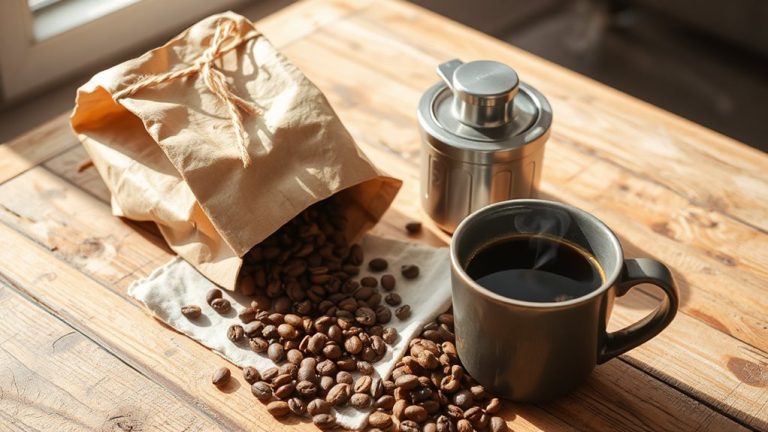
You keep coming back to Peruvian coffee beans for their smooth, nuanced flavor shaped by high-altitude Andean farms. Experts favor organic, medium-roast options like Amazon Fresh Organic Peru and Mt. Comfort for their balanced notes of chocolate, nuts, and brown sugar. Whole beans preserve freshness, especially when ground just before brewing for drip, pour-over, or French press. Fair Trade and USDA Organic certifications guarantee ethical, clean farming. While K-cups like Victor Allen’s offer convenience, they sacrifice peak flavor. There’s more to explore in how origin and roast affect your daily cup.
We are supported by our audience. When you purchase through links on our site, we may earn an affiliate commission, at no extra cost for you. Learn more. Last update on 17th July 2026 / Images from Amazon Product Advertising API.
Notable Insights
- Amazon Fresh Organic Peru Whole Bean coffee is favored for its USDA Organic and Fair Trade certifications, with rich chocolate and brown sugar notes.
- Mt. Comfort Organic Peru Medium Roast offers consistent, nutty-chocolate flavor from ethically sourced, high-altitude small farms.
- Victor Allen’s Organic Peruvian single-serve pods deliver smooth, low-bitterness coffee with 100% Arabica beans and organic certification.
- Expert roasters prefer medium roast Peruvian beans for balancing natural sweetness, acidity, and complex flavor from high-elevation growing.
- Organic Peruvian coffee from El Palto Farm is single-origin, small-batch roasted, and prized for traceability and clean, bright taste.
Amazon Fresh Organic Peru Coffee 12 Oz

If you’re looking for a reliable, ethically sourced Peruvian coffee that doesn’t sacrifice flavor, Amazon Fresh Organic Peru Coffee is a solid pick-especially if you value certifications like Fair Trade and USDA Organic. I use it because it’s 100% Arabica, grown in the high altitudes of Peru, and roasted light to medium to preserve its smooth, balanced profile. You’ll taste gentle notes of brown sugar and chocolate, with a clean finish. The beans are roasted and packed in the U.S. in a 12-ounce bag with a freshness seal, so they stay aromatic. I recommend grinding them just before brewing for the best results-works well with drip, pour-over, or French press. It’s not the cheapest option, but the ethical sourcing and consistent quality make it worth it for daily use.
Best For: Ethically conscious coffee drinkers who want a smooth, medium-bodied organic coffee with balanced flavor notes and Fair Trade assurance.
Pros:
- USDA Organic and Fair Trade certified, ensuring ethical and sustainable farming practices
- 100% Arabica beans with a fragrant aroma and pleasant notes of brown sugar and chocolate
- Roasted and sealed in the U.S. to preserve freshness, suitable for multiple brewing methods
Cons:
- Priced higher than conventional non-organic or non-Fair Trade coffee options
- Flavor profile may be too mild for those who prefer bold, dark roasts
- Only available in a 12-ounce bag, which may not suit bulk buyers
Mt. Comfort Organic Peru Medium Roast (2.5 lbs)
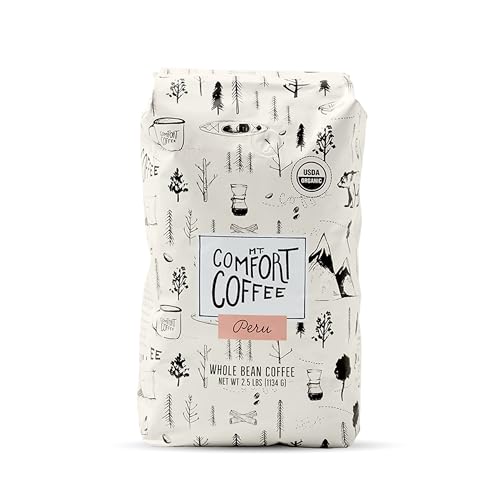
I choose Mt. Comfort Organic Peru Medium Roast when I want quality and value in one bag. Sourced from small high-altitude farms, these 100% whole beans are roasted to a medium level, preserving their smooth, luscious flavor. The 2.5-pound resealable bag keeps coffee fresh and cuts down on waste-ideal for daily drinkers. You’ll taste notes of nutty chocolate with a hint of citrus, a balanced profile that works well with drip brewers or French press. Mt. Comfort focuses on consistency and organic standards, so I trust each batch. It’s a practical pick over smaller, pricier packs like Amazon Fresh’s 12-ounce option.
Best For: Daily coffee drinkers seeking a high-quality, organic, single-origin medium roast in a large, value-packed resealable bag.
Pros:
- Sourced from small, high-altitude Peruvian farms for premium quality and ethical practices
- Smooth, balanced flavor with notes of nutty chocolate and citrus, suitable for multiple brewing methods
- 2.5-pound resealable bag maintains freshness and reduces packaging waste
Cons:
- Whole beans require grinding, which may be inconvenient for some users
- Larger size may not be ideal for those who prefer to rotate coffee varieties frequently
- Limited availability compared to mainstream grocery store brands
Amazon Fresh Organic Fair Trade Peru Ground Coffee, Medium Roast, 12 Ounce

This medium roast from Amazon Fresh delivers a dependable, no-fuss cup for anyone who values organic and ethically sourced coffee without sacrificing flavor. I find it smooth and aromatic, with clear notes of brown sugar and chocolate that hold up well in both drip machines and French presses. The 100% Peruvian Arabica beans are USDA Organic and Fair Trade certified, so you’re getting ethical sourcing without extra cost. Roasted and packed in the U.S.A. in a 12-ounce bag, it stays fresh if stored properly. While it’s not bulk-sized like some competitors, it’s ideal for casual drinkers who want consistency and quality on a regular basis.
Best For: Casual coffee drinkers who prioritize organic, ethically sourced beans and a consistent, smooth medium roast without needing large quantities.
Pros:
- USDA Organic and Fair Trade certified, ensuring ethical sourcing and environmental responsibility
- Smooth, aromatic flavor with pleasant notes of brown sugar and chocolate, suitable for multiple brewing methods
- Roasted and packed in the U.S.A. for freshness in a convenient 12-ounce resealable bag
Cons:
- Smaller 12-ounce size may require frequent repurchasing for heavy coffee drinkers
- Flavor profile, while consistent, lacks complexity compared to specialty single-origin roasts
- Not available in whole bean option for those who prefer grinding fresh
Victor Allen’s Organic Peruvian Coffee (80 Count)

Victor Allen’s Organic Peruvian Medium Roast delivers a reliable, smooth cup for those who want quality Peruvian coffee without the fuss of measuring grounds or owning a specialty brewer. I use it daily in my Keurig, and it brews consistently every time. The medium roast has a full body and mild flavor, never bitter. Made from 100% Arabica beans, it’s certified organic and kosher, plus gluten-free and non-GMO. Each 80-count box works with any single-serve machine. I get 90–150 mg of caffeine per cup, which is standard. For convenience and steady taste, it’s a solid pick.
Best For: Busy coffee drinkers who want a convenient, consistently smooth cup of certified organic, single-serve medium roast coffee without needing a specialty brewer.
Pros:
- Brews smoothly and consistently in any single-serve coffee maker, including Keurig models
- Certified organic, kosher, gluten-free, and non-GMO for health- and values-conscious consumers
- Made from 100% Arabica beans with a full-bodied, mild flavor and no bitterness
Cons:
- Limited flavor complexity compared to freshly ground or specialty-brewed Peruvian coffees
- Single-use pods create more waste than bulk ground coffee
- Caffeine content varies (90–150 mg), which may be inconsistent for sensitive drinkers
Organic Peruvian Coffee Medium Roast 12 oz

If you’re looking for a dependable, ethically sourced medium roast that delivers consistent flavor without requiring specialty equipment, Organic Peruvian Coffee Medium Roast 12 oz fits the bill. Grown at high altitudes in Peru’s Amazonas region on the El Palto Farm, these 100% Arabica beans are Fair Trade and organically farmed. Small-batch roasted daily in South Carolina, the coffee stays fresh and never mass-produced. The 12 oz bag gives you at least 22 standard cups. Pre-ground for convenience, it works well in drip machines, French presses, or pour-overs. You’ll taste balanced notes of brown sugar, dark chocolate, and a hint of citrus-smooth, sweet, and reliable.
Best For: Coffee drinkers seeking a consistently smooth, ethically sourced medium roast that brews easily in standard home equipment without sacrificing flavor or quality.
Pros:
- Sustainably and organically grown, Fair Trade certified for ethical sourcing
- Pre-ground convenience with rich, balanced flavor notes of chocolate, brown sugar, and citrus
- Small-batch roasted daily in the USA for maximum freshness and artisanal quality
Cons:
- Pre-ground format limits customization for specialty brewing methods
- Single-origin profile may be less complex than blended gourmet coffees
- Availability restricted to 12 oz size, which may not suit bulk buyers
Amazon Fresh Organic Peru Coffee (3-Pack)

When you’re looking for consistent quality and ethical sourcing without paying a premium, Amazon Fresh Organic Peru Coffee fits the bill, especially if you prefer a medium-bodied brew with subtle sweetness. I’ve found it reliably smooth, with gentle notes of brown sugar and chocolate, and a clean finish. It’s 100% Arabica, USDA Organic, and Fair Trade certified-meaning you’re getting ethically sourced beans without compromise. The coffee is ground and packed in the U.S., so freshness is solid. Each pack gives you three 12-ounce bags, which is great for routine drinkers. Just store it in an airtight container away from light to preserve flavor.
Best For: Coffee drinkers who want a smooth, medium-bodied organic brew with ethical sourcing and consistent quality at an affordable price.
Pros:
- USDA Organic and Fair Trade certified, ensuring ethical and sustainable farming practices
- 100% Arabica beans with a flavorful profile featuring notes of brown sugar and chocolate
- Comes in a 3-pack of 12-ounce bags for convenient stocking and lasting supply
Cons:
- Pre-ground format may lose freshness faster compared to whole beans
- Flavor profile is mild, which may not satisfy those who prefer bold or intense coffee
- Limited origin complexity compared to specialty single-origin or artisan-roasted coffees
AmazonFresh Organic Peru K-Cups (80 Ct)

For the everyday coffee drinker who values convenience without sacrificing quality, AmazonFresh Organic Peru K-Cups (80 Ct) offer a solid choice rooted in ethical sourcing and consistent flavor. I rely on these single-origin Peruvian Arabica beans when I want a quick, clean cup without complexity. USDA Organic and Fair Trade certified, they’re roasted in the U.S.A. for freshness. The medium roast delivers a fragrant aroma, smooth finish, and subtly layered taste-nothing flashy, just dependable. At 80 pods, the pack suits daily use, works with any Keurig, and cuts waste versus drip. If you prioritize ease and ethics over bold intensity, these are worth a try.
Best For: Everyday coffee drinkers who value convenience, ethical sourcing, and a consistent, smooth medium roast without needing bold or complex flavors.
Pros:
- USDA Organic and Fair Trade certified, supporting sustainable and ethical farming practices
- Single-origin Peruvian Arabica beans offer a clean, fragrant, and smoothly layered cup
- Compatible with all Keurig K-Cup brewers and packaged for freshness with minimal waste
Cons:
- Flavor profile is mild and undemanding, which may disappoint those seeking bold or intense coffee
- Limited origin variety compared to blended K-Cup offerings
- Single-use pods may still raise environmental concerns despite improvements in packaging
Low Acid Organic Coffee by Java Planet

I find the Low Acid Organic Coffee by Java Planet especially well-suited for anyone with a sensitive stomach or those who prioritize clean, chemical-free ingredients without sacrificing flavor. I brew it as a medium-dark roast, which keeps its sweet, floral notes while offering a smooth, full body. It’s made from 100% organic, specialty-grade Arabica beans grown at high altitudes in Peru, and it’s independently tested-free of mold, pesticides, and heavy metals. The whole beans work well across brewing methods, from drip to French press. It’s also Smithsonian Bird Friendly certified, so I know it supports sustainable farming. If you want clean, safe coffee with verified quality, this is a reliable choice.
Best For: Individuals with sensitive stomachs or those seeking clean, organic, low-acid coffee without compromising on flavor.
Pros:
- Smooth, full-bodied flavor with sweet, floral notes preserved by medium-dark roast
- Independently tested and free from mold, pesticides, and heavy metals for safe consumption
- Smithsonian Bird Friendly certified, supporting sustainable farming and environmental stewardship
Cons:
- Limited to Peruvian single origin, which may lack the variety desired by flavor explorers
- Whole bean format requires grinding, which may be inconvenient for some users
- Premium certifications and organic standards may result in higher price point
Amazon Fresh Organic Peru Coffee (3-Pack)
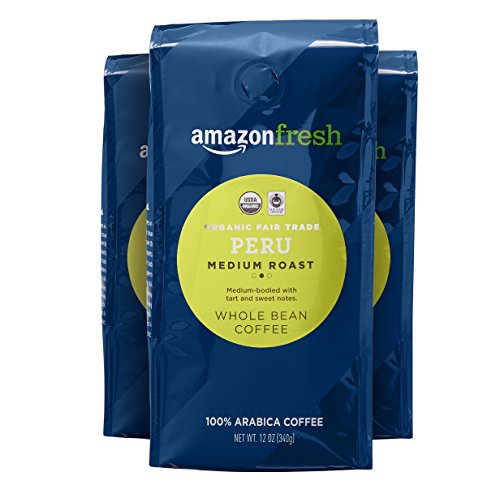
If you’re looking for a reliable, no-fuss Peruvian coffee that balances quality and value, Amazon Fresh Organic Peru Coffee fits the bill-especially if you prioritize certifications like USDA Organic and Fair Trade. I’ve found it delivers a consistent, medium-bodied cup with a smooth finish, flavored subtly with notes of brown sugar and chocolate. The 100% Arabica beans are roasted in the U.S.A. and packed immediately, which helps lock in freshness. Each pack includes three 12-ounce bags of whole beans, giving you plenty without sacrificing storage flexibility. Since it’s a medium roast, it works well with drip brewers, French presses, or pour-overs-no specialized gear needed.
Best For: Coffee drinkers seeking a consistently smooth, medium-roast Peruvian coffee with USDA Organic and Fair Trade certifications at a value-driven price.
Pros:
- Offers a balanced, medium-bodied cup with pleasant flavor notes of brown sugar and chocolate
- Certified USDA Organic and Fair Trade, appealing to ethically and environmentally conscious buyers
- Comes in a convenient 3-pack of 12-ounce whole bean bags, freshly roasted and packed in the U.S.A.
Cons:
- Limited roast variety, as it’s only available as a medium roast
- Whole bean format requires a grinder, which may be inconvenient for some users
- Subtle flavor profile may not stand out to those seeking bolder or more complex coffee notes
Victor Allen’s Organic Peruvian Coffee (42 Count)

This medium roast from Victor Allen’s stands out for anyone who wants a consistent, hassle-free cup using single-serve tech without sacrificing quality. I use it in my Keurig daily, and it delivers smooth, robust flavor with a full body-no bitterness, just balanced, mild notes in every 8 fl-oz brew. Each of the 42 pods contains 100% organic Arabica beans from small Peruvian farms, grown under ideal conditions and carefully harvested. The beans are precision-roasted, ensuring freshness and uniformity. It’s non-GMO and gluten-free, with 90–150 mg of caffeine per cup. I tilt the pod slightly after brewing to avoid drips-a small but useful habit.
Best For: Coffee lovers who want a convenient, high-quality single-serve medium roast with smooth flavor and organic credentials.
Pros:
- Consistently smooth, robust taste with balanced, mild notes and no bitterness
- Made from 100% organic Arabica beans sourced from small Peruvian farms
- Compatible with Keurig and other single-serve systems, non-GMO and gluten-free
Cons:
- Caffeine content varies (90–150 mg per cup), which may be inconsistent for sensitive users
- Pod dripping can occur if not tilted carefully after brewing
- Limited to medium roast preference despite brand’s wider roast range
Factors to Consider When Choosing Peruvian Coffee
You’ll want to check where your Peruvian coffee comes from-regions like Chanchamayo or Amazonas often offer distinct flavor notes thanks to their altitude and soil. Look at the roast level too, since lighter roasts preserve floral or fruity tones while darker ones bring out chocolatey or nutty notes. Don’t skip the label details: certified organic or shade-grown options support sustainability, and choosing whole beans over pre-ground keeps your brew fresher longer.
Origin And Sourcing
When evaluating Peruvian coffee, start by considering where and how it’s grown, since altitude, farm size, and farming practices directly impact flavor and quality. You’ll find most Peruvian beans grown at high elevations in the Andes, where cooler temperatures slow bean development, boosting acidity and complexity. Look for single-origin options-they come entirely from Peru and offer a clear taste of its unique terroir. Most farms are small, under five hectares, so beans are often hand-harvested with care. That attention helps guarantee quality, but batch variation can occur. Many growers use organic methods, and certifications like USDA Organic or Fair Trade verify sustainable practices. Peruvian coffee is almost all 100% Arabica, prized for its smooth body and notes of chocolate, nuts, and citrus. Choosing beans with traceable sourcing means you know exactly where your coffee comes from and support responsible farming.
Roast Level Options
While light roasts highlight the bright, citrusy acidity of high-grown Peruvian beans, medium roast remains the most popular choice for good reason-it strikes a balanced profile that showcases the coffee’s natural sweetness and complexity without overshadowing its delicate notes. You’ll get a medium body, smooth finish, and flavors like brown sugar, chocolate, and soft citrus-ideal for drip, pour-over, or French press. Medium-dark roasts are also available and boost body and sweetness while keeping subtle floral or fruity tones intact. If you prefer clarity and acidity, go light-just know those options are less common. Avoid dark roast Peruvian beans; they’re rare for a reason, often masking the nuanced, high-elevation character you’re after. Match the roast to your brew method and taste: medium for versatility, light for brightness, medium-dark for richness-each reveals a different side of Peru’s quality.
Certifications Matter
If you care about sustainability and quality, paying attention to certifications can make a real difference in your choice of Peruvian coffee. Fair Trade means farmers get fair pay and ethical working conditions, helping support whole communities. When you pick USDA Organic, you’re choosing beans grown without synthetic pesticides, fertilizers, or GMOs-strict rules back that up. For even higher environmental standards, Smithsonian Bird Friendly goes further by requiring shade-grown farming that protects birds and biodiversity. These certifications aren’t just labels-they’re backed by third-party audits and traceability, so you know the claims are verified. While uncertified coffee might cost less, it often skips these protections. Choosing certified means supporting better farming practices and clearer supply chains. It’s a small step that aligns your brew with sustainability. Look for these marks on bags-they’re practical signals of a producer’s commitment.
Flavor Profile
Because Peruvian coffee grows at high altitudes, the beans develop slowly, giving them a naturally clean and sweet profile with balanced acidity. You’ll typically notice a medium body with flavor notes like brown sugar, chocolate, and nutty tones, often rounded out by subtle citrus or fruity hints. These characteristics come through clearly because organic, shade-grown farming practices help preserve flavor while reducing bitterness and defects. If you’re roasting at home or choosing pre-roasted beans, go with a medium roast-it brings out the coffee’s inherent sweetness and aroma without masking delicate notes. Single-origin Peruvian coffees deliver consistent taste and a smooth finish, so they work well across pour-over, drip, or French press methods. Just avoid dark roasts, which can overwhelm the nuanced profile you’re after.
Bean Form
When choosing Peruvian coffee, picking the right bean form makes a real difference in freshness and flavor. Go with whole beans if you want the best taste-they lock in oils and aroma until you grind them. Once ground, coffee degrades fast from oxygen exposure, so freshly grinding before brewing gives you brighter, richer results. Pre-ground is convenient and works well for drip machines or single-serve brewers like Keurig, where consistency matters more than customization. But you can’t adjust the grind size, which limits control over flavor. For French press, you need coarse; drip needs medium; espresso requires fine. Whole beans let you match the grind to your method. If you use a French press or pour-over, always choose whole beans and grind just before brewing. It’s an extra step, but it’s worth it for peak flavor.
Packaging Freshness
Freshness doesn’t stop at the grind-the way your Peruvian coffee is packaged plays a key role in how well it holds its flavor. Look for oxygen-free sealed bags with one-way degassing valves; they let CO₂ escape without letting air in, preventing staleness. Resealable zippers help by limiting exposure to air and moisture after opening, so your beans stay vibrant longer. Choose opaque or foil-lined packaging-light-resistant materials shield coffee from UV rays that degrade taste. Smaller batch roasting followed by prompt packaging guarantees peak freshness, shortening the gap between roasting and your first brew. Avoid pre-ground coffee when possible; it degrades faster due to greater surface area, making packaging integrity even more critical. If you do buy pre-ground, prioritize vacuum-sealed or nitrogen-flushed packs to slow oxidation and preserve quality longer.
Brew Compatibility
While your brewing method shapes the final cup, matching your Peruvian coffee form-whole bean, ground, or pod-to your equipment guarantees peak results. If you use a drip machine or automatic brewer, go with pre-ground coffee for even extraction and convenience. But if you own a French press, pour-over, or espresso machine, start with whole beans-you’ll want to grind fresh and adjust the size. Use a fine grind for espresso, a medium for drip, and coarse for French press or cold brew to avoid bitterness. Pods? They’re hassle-free but only work with compatible single-serve brewers. And remember: your roast level affects extraction, so pair medium or dark roasts with the right brew time and grind. Match the form to your gear, and you’re set.
Acidity Levels
What gives Peruvian coffee its bright yet smooth character? It’s the medium acidity, shaped by high-altitude farming that slows bean development and boosts complexity. You’ll notice a clean, gentle tang-never sharp-thanks to washed processing, which removes fruit residue early and highlights crisp acidity. If you prefer nuanced brightness, stick with medium roasts; they preserve the bean’s natural acidic notes, while dark roasts tend to mute them. Organic practices common in Peru also support steady acidity by maintaining healthy, mineral-rich soil. For pour-over or drip brewing, this balanced acidity shines, especially with beans from regions like Chanchamayo or San Martín. Just know: if you dislike any tang at all, even mild, Peruvian coffee might still feel too lively. Otherwise, its acidity offers a reliable, smooth brightness you can count on every morning.
Frequently Asked Questions
What Is the Caffeine Content in Peruvian Coffee Beans?
You’ll find Peruvian coffee beans typically contain about 1.2% to 1.5% caffeine, slightly less than some robusta-heavy blends but standard for arabica. That means your average 8-ounce cup delivers around 95 to 120 milligrams of caffeine. It’s a clean, moderate kick-ideal if you want alertness without jitters. Light roasts retain more caffeine than dark, so adjust your roast choice based on your preference. Grind fresh and brew by pour-over or drip for best results.
Are Peruvian Coffee Beans Suitable for Espresso Brewing?
Yes, you can use Peruvian coffee beans for espresso, but they’re better suited for balanced, mellow shots rather than heavy, syrupy ones. Their medium body and low to moderate acidity produce smooth, nuanced flavors-think milk chocolate, nuts, and caramel. If you like lighter espresso with subtle sweetness, roast them to a medium-dark level and use a precise grind. Just don’t expect the intense punch African or traditional Italian blends deliver.
How Should I Store Peruvian Coffee to Maintain Freshness?
You should store Peruvian coffee in an airtight container away from light, heat, and moisture. Keep it at room temperature, not in the fridge or freezer, since condensation degrades freshness. Buy whole beans and grind just before brewing for the best flavor. Exposure to oxygen is the main enemy, so minimize air in the container. Use within 2–4 weeks for peak freshness.
Is Peruvian Coffee Naturally Low in Acidity Compared to Other Origins?
Yes, Peruvian coffee is naturally lower in acidity compared to many other origins, especially when grown at moderate altitudes. You’ll often find it smoother and milder than high-acid beans like Kenyan or Ethiopian coffees. If you prefer a balanced, easy-drinking cup without sharp brightness, Peruvian beans are a solid choice. They work well for drip brewing and espresso, especially when you want a less tangy profile.
Can I Use Peruvian Medium Roast for Cold Brew?
Yes, you can use Peruvian medium roast for cold brew. It typically has balanced acidity, medium body, and notes of chocolate or nuts, which stay smooth and flavorful when steeped cold. The lower acidity works well in long brews, preventing bitterness. Use a coarse grind and steep for 12–16 hours. While dark roasts are more common for cold brew, medium roasts like Peruvian offer a brighter, cleaner profile. Just adjust brew time and ratio to taste.