Best Kona Coffee K-Cups for a Luxurious Morning Brew
For a luxurious morning brew, choose 100% Kona pods like Blue Horse or Greenwell Farms-single-origin, estate-grown on Hawaii’s Big Island for authentic flavor with floral, nutty, and sweet notes. Avoid blends like Happy Belly or Solimo that use only 10% Kona. These premium pods cost more but deliver richer, smoother taste. They work best in Keurig 2.0 brewers. If you want sustainability, try Maud’s solar-roasted beans or Fresh Roasted Hawaiian’s Direct Trade pods. There’s more to know about freshness and sourcing that could change how you brew.
We are supported by our audience. When you purchase through links on our site, we may earn an affiliate commission, at no extra cost for you. Learn more. Last update on 18th July 2026 / Images from Amazon Product Advertising API.
Notable Insights
- Choose 100% Kona coffee pods like Blue Horse or Greenwell Farms for premium, single-origin luxury and authentic Hawaiian flavor.
- Opt for estate-grown, small-batch roasts such as Hawaiian Paradise or Fresh Roasted Hawaiian for rich, complex, and fresh-tasting morning brews.
- Select medium roast K-Cups like Fresh Roasted Hawaiian or Maud’s to highlight floral, nutty, or sweet molasses notes with smooth balance.
- Prioritize sustainably produced luxury options like Maud’s solar-roasted or Loring-roasted Fresh Roasted Hawaiian coffee for ethical indulgence.
- Look for verified origin and certifications to ensure authenticity, avoiding blends labeled with only 10% Kona coffee.
Happy Belly Kona Blend Coffee Pods (100 Count)
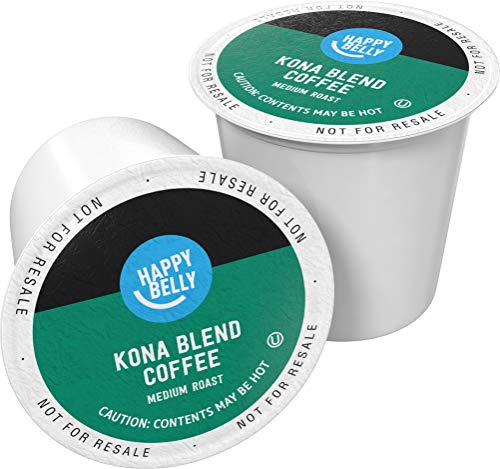
If you’re looking for a budget-friendly option that still delivers a taste of Hawaiian Kona, the Happy Belly Kona Blend Coffee Pods might be your best bet. I use them daily in my Keurig, and they work flawlessly with both 1.0 and 2.0 brewers. Each pod contains a blend of 10% real Kona from Hawaii’s Big Island and Latin American Arabica beans, giving you a medium roast with bright acidity, mild sweetness, and a smooth finish. I brew mine at 8oz, but cutting the water boosts flavor. As an Amazon brand, packaging may vary, but quality stays consistent-no guesswork, just reliable cups.
Best For: Budget-conscious coffee lovers who want a convenient, Kona-blend coffee with authentic flavor and reliable performance in Keurig brewers.
Pros:
- Smooth medium roast with balanced acidity, mild sweetness, and a consistent, satisfying flavor
- Compatible with both Keurig 1.0 and 2.0 brewers for hassle-free single-serve brewing
- Contains 10% real Kona coffee from Hawaii blended with premium Latin American Arabica beans
Cons:
- Only 10% Kona content means less of the distinctive Hawaiian coffee flavor
- Flavor can be mild for those who prefer bold or strong coffee profiles
- Packaging varies, which may cause confusion for repeat buyers expecting consistency
Don Francisco’s Kona Blend Coffee Pods (100 Count)

Don Francisco’s Kona Blend Coffee Pods (100 Count) deliver a reliable, smooth cup for coffee lovers who want a taste of Hawaii without sacrificing convenience. I get a balanced brew every time-10% Kona beans mixed with 90% premium Arabica offer subtle fruity notes and a light floral aroma. These pods work flawlessly in my Keurig, giving consistent results with zero fuss. Cleanup’s easy, and the 100-count pack lasts weeks. I appreciate that they’re recyclable through TerraCycle, which fits my need to reduce waste. The brand’s been family-run since 1870, so quality’s built in.
Best For: Coffee lovers seeking a convenient, consistently smooth cup with a touch of premium Kona flavor and a commitment to sustainability.
Pros:
- Delivers a balanced, aromatic brew with subtle fruity and floral notes thanks to 10% Kona and 90% Arabica blend
- Fully compatible with Keurig machines for quick, easy, and consistent brewing at home or work
- Recyclable via TerraCycle, supporting eco-friendly disposal and aligning with sustainable values
Cons:
- Contains only 10% Kona coffee, which may disappoint those seeking a stronger or more authentic Kona taste
- Higher price point compared to non-Kona or generic single-serve pods
- TerraCycle recycling requires mailing in pods, which is less convenient than curbside recycling
Don Francisco’s Kona Blend Coffee Pods (24 Count)

You’ll find Don Francisco’s Kona Blend Coffee Pods a solid choice if you want a convenient, consistent cup with a touch of premium Kona flavor without the high cost of 100% Kona beans. I use the 24-count box when I don’t need a large supply, making it ideal for light users or office sampling. Each pod brews fast in my Keurig, delivering a smooth, medium roast with floral hints and mild fruit notes. The blend’s 10% Kona and 100% Arabica beans offer reliable taste. Being a family brand since 1870 adds trust, and I appreciate their TerraCycle recycling partnership for reducing waste.
Best For: Light coffee drinkers or offices looking for a convenient, budget-friendly way to enjoy a touch of Kona flavor with consistent, smooth taste using Keurig machines.
Pros:
- Offers a smooth medium roast with pleasant floral and fruity notes thanks to 10% Kona and 100% Arabica beans
- Convenient 24-count single-serve pods compatible with Keurig brewers for quick, one-touch brewing
- Backed by a family-owned brand with a long heritage and includes eco-friendly pod recycling via TerraCycle
Cons:
- Contains only 10% Kona coffee, which may disappoint those seeking a stronger Kona presence
- Limited pod count per box may require frequent reordering for regular users
- Price per ounce is higher compared to ground coffee or larger brew methods
Don Francisco’s Kona Blend Coffee Pods

When choosing a Kona coffee blend that delivers authentic flavor without requiring special brewing equipment, Don Francisco’s Kona Blend Coffee Pods stand out for Keurig users who want a balanced, high-quality cup with minimal effort. I use the 55-pod pack, and it consistently delivers a smooth medium roast with a light floral aroma and hints of fruit. The blend contains 10% Kona and 90% premium Arabica beans, so it’s flavorful but not overpowering. These pods work in any Keurig machine, brew fast, and taste fresh every time. I also appreciate that the pods are recyclable through TerraCycle, supporting the brand’s eco-friendly commitment. Don Francisco’s has been family-run since 1870, so quality isn’t luck-it’s tradition. While it’s pricier than regular coffee, you’re paying for heritage, consistency, and real Kona. For daily use, it’s a reliable, no-fuss option that doesn’t cut corners.
Best For: Keurig users seeking a convenient, high-quality medium roast with authentic Kona flavor and sustainable disposal options.
Pros:
- Smooth, balanced flavor with a light floral aroma and subtle fruity notes from a blend of 10% Kona and 90% Arabica beans
- Compatible with all Keurig single-serve brewers for fast, consistent, and hassle-free brewing
- Pods are recyclable through TerraCycle, reflecting the brand’s commitment to sustainability and eco-conscious practices
Cons:
- Higher price point compared to standard coffee pods, which may deter budget-conscious buyers
- Contains only 10% Kona coffee, so purists seeking 100% Kona may find it underwhelming
- Limited to Keurig machines, reducing accessibility for users of other single-serve systems
Solimo Medium Roast Kona Coffee Pods (100 Count)

One of the most accessible options for enjoying authentic Kona coffee at home is the Solimo Medium Roast Kona Coffee Pods (100 Count), a solid choice for regular Keurig users who want a taste of Hawaiian-grown beans without the premium price tag. I like that it blends 10% Kona coffee from Hawaii’s Big Island with Latin American Arabica beans, giving it a balanced, smooth profile. You’ll notice mild sweetness, vibrant acidity, and a soft aroma. It brews best at the 8oz setting, though I’ve found using less water sharpens the flavor. These pods work with both Keurig 1.0 and 2.0 brewers, making them reliable for most setups.
Best For: Keurig users seeking an affordable way to enjoy a smooth, balanced cup with a touch of authentic Hawaiian Kona coffee.
Pros:
- Contains 10% real Kona coffee from Hawaii’s Big Island for a taste of premium beans at a lower cost
- Smooth, balanced flavor with mild sweetness, vibrant acidity, and a soft aroma
- Compatible with both Keurig 1.0 and 2.0 brewers for wide usability
Cons:
- Only 10% Kona coffee, so purists may find the blend too diluted
- Flavor can be on the lighter side for those who prefer bold or dark roasts
- Single-serve pods generate more waste compared to bulk coffee grounds
Blue Horse 100% Kona Coffee Pods 10ct
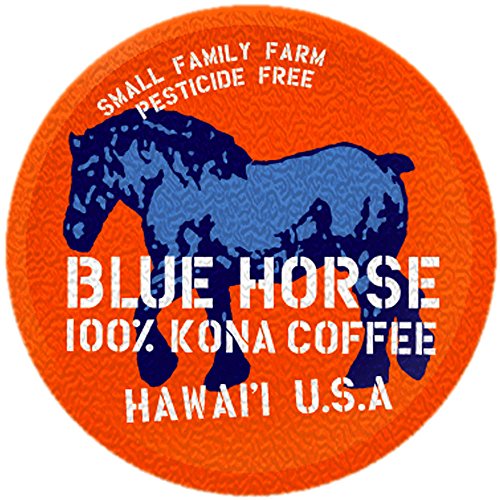
A solid pick for Kona coffee purists who want convenience without compromise, Blue Horse 100% Kona Coffee Pods 10ct delivers estate-grade Arabica beans in a single-serve format that’s true to origin. Grown on Hawaii’s Big Island in volcanic soil and high elevations, these shade-grown, handpicked beans are sun-dried and rainwater-washed for clean flavor. I get a smooth medium roast with floral notes, hints of almond and vanilla, and a sweet finish. It’s 100% Kona-no filler-roasted in the USA to meet USDA and Hawaiian standards. Pods work in all Keurig 2.0 machines. Ten-count packs cost more than blends, but you’re paying for real estate-specific quality. Ideal if you value origin integrity and convenience.
Best For: Kona coffee enthusiasts who want authentic, estate-grade 100% Kona flavor in a convenient single-serve pod format without blends or fillers.
Pros:
- Made from 100% estate-quality Kona Arabica beans with no inferior beans or fillers
- Rich, complex flavor profile with floral notes, almond, vanilla, and a smooth, sweet finish
- Compatible with all Keurig 2.0 machines and grown, processed, and roasted in the USA to strict quality standards
Cons:
- Higher price point compared to coffee blends or lower-grade Kona products
- Limited to Keurig users; not compatible with other brewing systems
- Smaller 10-count pack size may require frequent reordering for heavy coffee drinkers
Hawaiian Paradise 100% Kona Coffee (18 Count)
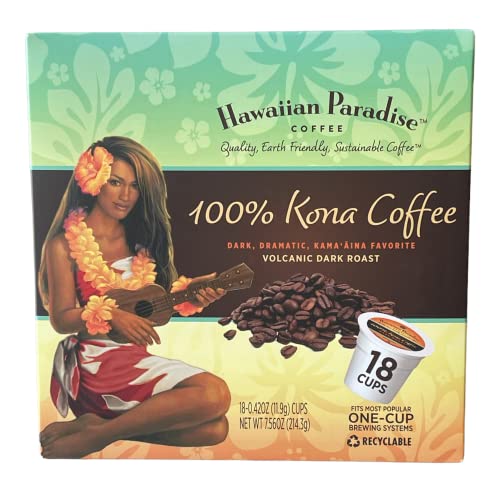
If you’re after authentic 100% Kona coffee with the depth and richness only Hawaiian volcanic soil can deliver, Hawaiian Paradise 100% Kona Coffee (18 Count) is your best bet for a premium single-serve option. I’ve found it’s roasted in small batches in Hawaii, ensuring freshness and full-bodied flavor. The dark roast brings out bold, rich notes without bitterness, and it’s compatible with Keurig brewers-though it’s not affiliated with Keurig. Grown across the Hawaiian Islands, including the Big Island, it’s a reliable choice for daily use or impressing guests. You get more pods per pack than cheaper blends, making it cost-effective long-term.
Best For: Coffee lovers seeking authentic, premium 100% Kona coffee in convenient single-serve pods with rich, full-bodied flavor from Hawaiian volcanic soil.
Pros:
- Made from 100% Kona coffee grown and roasted in Hawaii, ensuring authenticity and high quality
- Compatible with Keur sobrewers and packaged in 18-count single-serve cups for convenience
- Small-batch slow roasting enhances bold, rich flavor without bitterness
Cons:
- Higher price point compared to blended or non-Kona coffee pods
- Limited availability outside of Hawaii or specialty retailers
- Not officially affiliated with Keurig, which may cause confusion for some buyers
Fresh Roasted Hawaiian Kona Coffee (24 Pods)

Serious coffee lovers who demand authenticity and quality will find these Fresh Roasted Hawaiian Kona Coffee K-Cups a standout choice, especially when convenience doesn’t mean sacrificing origin or craftsmanship. I get my beans from South Kona in Captain Cook, Hawaii-real 100% Kona, medium roasted for a smooth, rich cup with notes of coconut and sweet molasses. These 24 pods are nitrogen-flushed to lock in freshness and roasted on Loring Smart Roasters to cut emissions, which matters if you care about sustainability. It’s Direct Trade, Kosher certified, and roasted right here in the U.S. If you want true island Kona without compromise, this is one of the few K-Cup options that delivers the real thing.
Best For: Discerning coffee enthusiasts who want authentic, sustainably sourced 100% Hawaiian Kona coffee in a convenient, single-serve K-Cup format without compromising on quality or origin.
Pros:
- Made with rare, 100% Kona coffee from South Kona, Hawaii, offering a rich, smooth cup with distinctive tasting notes of coconut and sweet molasses
- Sustainably produced using Direct Trade practices and roasted on eco-friendly Loring Smart Roasters to reduce carbon emissions
- Nitrogen-flushed and Kosher certified, ensuring maximum freshness and quality in every pod
Cons:
- Higher price point compared to standard K-Cup blends, reflective of its premium, single-origin beans
- Limited to medium roast profile, which may not appeal to those who prefer darker roasts
- Availability may be restricted due to the rarity of authentic Hawaiian Kona coffee
Maud’s Kona Coffee Pods 18ct

When it comes to crafting a smooth, full-bodied cup without the bitterness often found in cheaper pods, Maud’s Kona Coffee Pods 18ct stand out as a top pick for coffee lovers who want quality without complexity. I’ve found these medium-roast pods deliver a rich, low-acidity brew with chocolate-nutty notes, thanks to 100% premium Arabica beans. They work in nearly all single-serve machines, including Keurig, and the easy-peel lid helps with recycling. Roasted in a solar-powered facility, they reflect real sustainability. Maud’s, a family-owned brand, stands behind their product-so if a batch falls short, they’ll make it right.
Best For: Coffee enthusiasts seeking a smooth, full-flavored, sustainably sourced single-serve brew without bitterness.
Pros:
- Rich, medium-roast flavor with chocolate-nutty undertones and low acidity
- Compatible with most single-serve coffee makers, including Keurig systems
- Sustainably sourced, ethically produced, and roasted in a solar-powered facility
Cons:
- Kona coffee is often expensive and may be cost-prohibitive for daily use
- Availability may be limited compared to larger commercial brands
- Some users may prefer a bolder, darker roast profile
Tully’s Hawaiian Blend K-Cup Pods (60 Count)
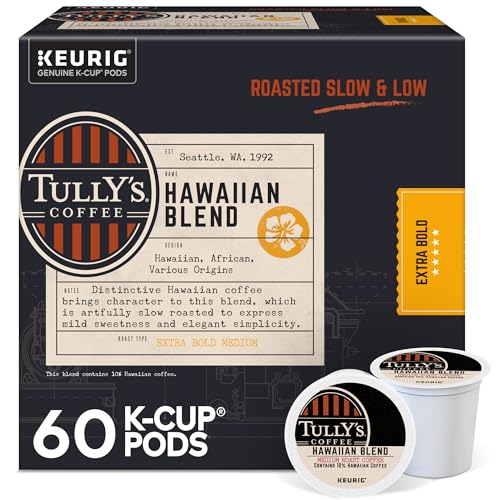
I reach for Tully’s Hawaiian Blend K-Cup Pods when I want a smooth, medium-roast coffee with a touch of sweetness and a balanced profile-all without the hassle of grinding beans or prepping a drip machine. The blend mixes Hawaiian coffee with other beans, roasted low and slow to bring out rich flavor and mild sweetness. This method enhances aroma and guarantees even caramelization, giving a consistent cup every time. These 60 count pods work in any Keurig machine and are OU Kosher certified. While not 100% Kona, they offer a practical, affordable way to enjoy Hawaiian-inspired taste daily.
Best For: Coffee lovers seeking a smooth, medium-roast cup with a hint of sweetness and the convenience of single-serve Keurig pods.
Pros:
- Features a low and slow roasting process that enhances aroma, flavor, and balanced sweetness
- Compatible with all Keurig K-Cup pod brewers for quick, hassle-free brewing
- OU Kosher certified and offers a consistent, high-quality taste with each pod
Cons:
- Not made with 100% Kona beans, which may disappoint purists seeking authentic Hawaiian coffee
- Medium roast may lack the bold intensity preferred by dark roast enthusiasts
- Single-use pods contribute to environmental waste compared to reusable options
Factors to Consider When Choosing Kona Coffee K-Cups
You should check the Kona coffee percentage, since blends with only 10% real Kona beans offer less authenticity than 100% Kona options. Pick a roast level-light, medium, or dark-based on your taste, and make sure the K-cup works with your brewer, whether it’s Keurig or another system. Also, look for brands that share origin details and sustainable practices, like Peet’s or Green Mountain, so you know what you’re really drinking.
Kona Coffee Percentage
Most Kona coffee K-Cups on the market blend 10% to 50% genuine Kona beans with other high-quality Arabica beans, balancing flavor and affordability. You’ll find that higher percentages deliver a more distinct taste, thanks to Kona’s unique growing conditions in Hawaii’s volcanic soil. If you want the full experience, go for 100% Kona options like those from Greenwell Farms or Koa Coffee-they offer rich, nuanced flavor but cost more due to limited supply. Blends with lower Kona content still brew a smooth, aromatic cup but lack the depth of pure Kona. Because real Kona is rare and regulated, watch for misleading labels. Stick to reputable brands that clearly state the percentage. For best results, match your pick to your budget and taste preference-higher Kona content means more authenticity, but even 10% can enhance an everyday brew.
Roast Level Choice
Medium roast stands as the go-to choice for most Kona coffee K-Cups, striking a balance between bright acidity and smooth finish that suits a wide range of palates. You’ll often find brands like Greenwell Farms and Koa using this profile to showcase the bean’s natural sweetness without overpowering it. If you prefer brighter, more floral or fruity notes, go for a light roast-it preserves the delicate flavors of high-quality Arabica beans but can taste a bit sharp if you’re sensitive to acidity. For a richer, fuller body with chocolate or nutty tones, try a dark roast; just know it usually brings lower acidity and bolder aroma due to longer roasting. Slower roasting at lower heat builds complexity and caramelization, so check roast times if depth matters to you. Pick based on your taste: bright and nuanced, balanced, or deep and smooth.
Bean Origin Transparency
What’s really in your K-Cup? If it’s not 100% Kona coffee, you’re likely getting a blend with as little as 10% real Kona beans mixed with cheaper Arabica. Always check the label-true Kona is grown only in the Kona region on Hawaii’s Big Island and should say so clearly. Avoid terms like “Kona flavor” or “Kona style,” which mean artificial additives or minimal actual beans. Look for precise origin details, such as “North or South Kona District,” since microclimates affect taste. Certifications from the USDA, Hawaiian government, or Kosher agencies add trust by verifying claims. Blends aren’t always bad, but they shouldn’t hide what’s inside. Transparent brands list exact bean percentages and sourcing. When you choose full-origin clarity, you guarantee authenticity and support honest farming. That matters in every sip.
Brewer Compatibility
Just as knowing where your Kona beans come from guarantees authenticity, making sure your K-Cups work with your brewer guarantees a smooth morning routine. Most K-Cup pods fit Keurig 1.0 and 2.0 systems, which use built-in needles to pierce the pod and brew at ideal temperatures. But not all single-serve machines are the same-some only accept certain pod sizes or heights. Check your brewer’s specs before buying. Older Keurigs are more flexible, while newer models like the Keurig K-Elite may require branded or certified pods with optical recognition dots to start brewing. Generic or non-Keurig pods sometimes fail in these machines. If you own a proprietary system, stick to pods labeled compatible with your model. Universal fit isn’t guaranteed, so confirm pod type, seal style, and height. Matching the right K-Cup to your brewer avoids leaks, misfires, and wasted coffee.
Sustainability Practices
Many Kona coffee K-Cups now reflect a shift toward more sustainable practices, and your choice can make a real difference. Look for brands that offer recyclable pods through specialized programs like TerraCycle, since most standard recycling can’t handle coffee pods. Opt for companies using Direct Trade sourcing-it guarantees farmers get fair pay and use eco-friendly farming. Nitrogen flushing in packaging keeps coffee fresh without preservatives, cutting down waste from stale beans. Some roasters use low and slow roasting, which saves energy and reduces carbon emissions. Others power their facilities with solar energy, further lowering environmental impact. You don’t have to sacrifice convenience for sustainability-brands like Koa and Hawaii Coffee Company combine both. Just check packaging details and certifications. Your morning cup can support better practices without extra effort.
Flavor Profile Accuracy
Choosing Kona coffee K-Cups that deliver a true-to-origin flavor means paying attention to how the beans are roasted, blended, and preserved. You’ll want a medium roast-typical for Kona-that brings out its smooth body, bright acidity, and subtle sweetness, often with floral, fruity, or tropical hints. Slow roasting at lower heat helps develop these flavors evenly, so check for brands using this method. For the most accurate taste, go for 100% single-origin Kona, which highlights nutty or vanilla-like notes from the volcanic soil. If you choose a blend, make sure it contains real Kona beans-around 10%-to add complexity, though it won’t be as distinct. Accuracy drops with cheaper blends that rely mostly on non-Kona Arabica.
Freshness Preservation Method
While flavor begins at the source, it won’t reach your cup unless the Kona coffee K-Cups are packed to stay fresh. Look for pods flushed with nitrogen-it pushes out oxygen and slows oxidation, keeping flavors vibrant. Most quality brands use hermetic seals to lock out air, moisture, and light, all of which break down aroma and taste over time. Foil lids add another barrier, blocking contaminants better than plastic. Some pods also come in airtight packaging with one-way valves, letting coffee release built-up gases without letting outside air in. That means fewer stale beans and more consistent brews. Choose brands that package shortly after roasting, so the volatile compounds that give Kona its rich, smooth character stay intact. If freshness matters to you, check labels for nitrogen flushing, foil sealing, and roast-to-pod timelines-you’ll taste the difference.
Frequently Asked Questions
Are Kona Coffee K-Cups Compatible With All Keurig Machines?
Yes, Kona coffee K-Cups work with all Keurig machines, including K-Mini, K-Compact, and K-Elite models. They’re designed to fit standard brewers without issues. Just make sure you’re using genuine #1 K-Cup pods, not knock-offs that might clog or misfit. Some refillable K-Cups let you use ground Kona beans, but pre-filled pods offer consistent strength and ease. Avoid using them in non-Keurig single-serve machines-they’re not compatible.
How Should I Store Kona Coffee Pods for Freshness?
You should store Kona coffee pods in a cool, dry place away from sunlight, heat, and moisture. Keep them sealed in their original packaging until use to preserve freshness. Avoid the fridge or freezer-they introduce humidity and odors. Use within 6–9 months for best flavor. Don’t stack or crush pods; store flat to prevent damage. Always check the roast date when possible, and buy in smaller batches to guarantee you’re drinking them at peak quality.
Is There a Difference Between Kona Blend and 100% Kona?
Yes, there’s a clear difference. 100% Kona means all beans come from Hawaii’s Kona region, offering richer flavor and smoothness, like those from Greenwell Farms. Kona blends mix a small amount of Kona with cheaper beans-often only 10%-cutting cost and quality. You’ll taste the drop-off in depth and aroma. For real authenticity and quality, go 100%; for savings with compromise, blends work. Check labels carefully.
Can I Recycle Kona Coffee K-Cups After Use?
You can’t recycle most Kona coffee K-Cups after use because they’re mixed plastic, foil, and coffee grounds. Standard recycling facilities don’t process them. Some brands, like Keurig’s K-Cup pods, now offer recyclable versions-check the packaging for recycling symbols. Even then, you must empty grounds, rinse, and separate components. Consider reusable K-Cups instead-they cut waste and work with any coffee, including 100% Kona.
What Makes Kona Coffee More Expensive Than Other Types?
You pay more for Kona coffee because it’s grown in a small, specific region of Hawaii with ideal but limited acreage, making supply tight. Labor costs there are high, and farming is often done by hand. Unlike mass-produced coffees from South America or Vietnam, Kona isn’t farmed at scale, so economies of scale don’t apply. Authentic Kona must be 100% pure, not blended, which also affects price.