Best Single Origin Espresso Beans Coffee Snobs Rave About
You’ll get clean, complex shots with distinct terroir notes by choosing Lifeboost Organic from Nicaragua or Bristot’s Ethiopia Sidamo-both roasted to highlight origin character without bitterness. These single-origin beans are USDA Organic, third-party tested, and ideal for espresso machines that extract nuanced flavors. Dark roast lovers might prefer Juan Valdez for crema-rich intensity. There’s a clear difference in acidity, body, and sweetness depending on origin and roast-knowing that helps you pick the right bean for your machine and palate. You’ll find each option balances purity, freshness, and brewing precision in its own way.
We are supported by our audience. When you purchase through links on our site, we may earn an affiliate commission, at no extra cost for you. Learn more. Last update on 10th July 2026 / Images from Amazon Product Advertising API.
Notable Insights
- Lifeboost Organic Espresso Coffee is praised for its clean, rich flavor, being toxin-free, low-acid, and sourced from shade-grown Nicaraguan beans.
- Bristot’s Ethiopia Sidamo beans offer a refined medium roast with vibrant notes of bergamot and spice, favored for their balanced acidity and origin authenticity.
- Kicking Horse Coffee delivers bold crema and intense aroma from 100% organic, single-origin Arabica beans, appealing to purists seeking unblended quality.
- Fresh Roasted Organic Guatemala beans feature bright milk chocolate and citrus notes, with third-party testing confirming purity and premium high-altitude terroir expression.
- Bristot Colombia Huila’s volcanic-grown beans provide complex red berry and toffee notes, roasted to Full City perfection for a smooth, crema-rich espresso.
Fresh Roasted Organic Guatemala Coffee

If you’re looking for espresso beans that deliver consistent quality and clean flavor without artificial additives, Fresh Roasted Organic Guatemala Coffee is a strong choice, especially if you prioritize certified organic and ethically sourced beans. Grown in Huehuetenango at high altitudes, these Bourbon and Caturra varietals are fully washed and sun-dried, which helps guarantee clarity in the cup. I’ve found the medium roast strikes a solid balance-smooth body, mild citrusy acidity, with notes of milk chocolate and sweet orange. It’s 100% Arabica, whole bean, and free from fillers or additives. Third-party tests confirm no detectable mycotoxins, so you get a clean, safe brew. The beans work well across brewing methods, including espresso machines, French press, and pour over. While it’s not a dark roast, so don’t expect heavy crema or smoky tones, it shines in clarity and purity. If you value transparency, sustainability, and versatility, this is a dependable option from a family-owned roaster that’s committed to ethical sourcing and quality control.
Best For: Coffee drinkers who prioritize organic, ethically sourced beans and seek a clean, balanced cup with bright, nuanced flavors across multiple brewing methods.
Pros:
- USDA Organic, Fair Trade, and OU Kosher certified, ensuring high ethical and quality standards
- Third-party tested with no detectable mycotoxins, guaranteeing a safe and pure brew
- Versatile medium roast with balanced flavor and bright acidity, ideal for espresso, pour over, and more
Cons:
- Not a dark roast, so it may lack the heavy crema and bold, smoky notes preferred in traditional espresso blends
- Single-origin profile may be too subtle for those who enjoy flavored or blended coffees
- Whole bean only, requiring a grinder for certain brewing methods
Lifeboost Organic Espresso Coffee (12oz)

Lifeboost Organic Espresso Coffee (12oz) stands out for those who prioritize both purity and bold flavor in their espresso, especially if you have a sensitive stomach. Grown at high elevations in Nicaragua’s shaded rainforests, these beans are hand-selected, sun-dried, and spring-water washed for cleanliness. The slow cherry development creates a rich, intense flavor, deepened by high-temperature roasting for authentic espresso character. It’s USDA Organic, Non-GMO, and free from pesticides, mycotoxins, and heavy metals-verified by third-party testing. If you want clean, bold espresso without gut irritation, this is a reliable choice. They back it with a 30-day satisfaction promise.
Best For: Those seeking a clean, bold espresso that’s easy on sensitive stomachs and free from toxins.
Pros:
- USDA Organic, Non-GMO, and rigorously third-party tested for pesticides, mycotoxins, and heavy metals
- Grown in shaded rainforest conditions with sustainable, bird-friendly practices
- Deep, rich flavor with high intensity from slow cherry development and high-temperature roasting
Cons:
- Higher price point due to premium sourcing and testing processes
- Limited to single-origin profile, which may lack complexity for some espresso blends
- 12oz package size may be insufficient for heavy daily users
Lifeboost Organic Espresso Coffee – 12 oz

I reach for Lifeboost Organic Espresso Coffee when I want a clean, bold shot without the usual acid punch-this bean’s naturally low acidity makes it a smart pick for anyone with a sensitive stomach or a preference for smoother espresso. Grown high in Nicaragua’s shaded rainforests, these single-origin beans are hand-selected, organic, and bird-friendly. The slow cherry development cuts acid naturally, while the dark roast enhances richness and crema. Each batch is third-party tested for toxins, mold, and pesticides-rare for most brands. USDA Organic and non-GMO certified, it’s backed by a 30-day guarantee. If purity and consistency matter, this coffee delivers.
Best For: Coffee lovers seeking a clean, low-acid espresso with organic integrity and a smooth, bold flavor profile.
Pros:
- USDA Certified Organic, non-GMO, and third-party tested for over 400 toxins, mold, and pesticides
- Naturally low-acid due to high-altitude, shade-grown cultivation and slow cherry development
- Rich, dark roast with bold flavor and smooth crema, ideal for espresso enthusiasts
Cons:
- Premium pricing may be higher than conventional espresso brands
- Single-origin profile may lack the complexity some prefer in blended espressos
- Whole bean only, requiring a grinder for optimal espresso preparation
Bristot Colombia Huila Espresso Beans 7.93 oz

The Bristot Colombia Huila Espresso Beans 7.93 oz stand out for those who want a clean, nuanced espresso with a balance of sweetness and acidity, all drawn from 100% Arabica beans grown in Colombia’s volcanic Huila region. Roasted in the Dolomites by Bristot, a company with mastery since 1919, these beans use a medium to full city roast that brings out red berry and toffee notes, with marzipan sweetness. Acidity hits a balanced 7.5-lively but smooth. The 225-gram bag includes a clear best-by date in European format, helping track freshness. You’ll get peak flavor within four weeks of opening if stored airtight, away from light.
Best For: Coffee lovers seeking a balanced, flavorful espresso with bright acidity and sweet, fruity notes from premium 100% Arabica beans.
Pros:
- Sourced from high-quality 100% Arabica beans grown in Colombia’s volcanic-rich Huila region
- Expertly roasted by a historic Italian roaster with over a century of craft experience
- Offers complex flavor notes of red berries, toffee, and marzipan with a smooth, lingering finish
Cons:
- Smaller 7.93 oz (225 g) package may not last heavy coffee drinkers long
- Best-by date in European format (DAY/MONTH/YEAR) could confuse some users
- Requires strict airtight storage to maintain peak freshness within four weeks of opening
Juan Valdez Espresso Roast Whole Bean Coffee

For anyone seeking a consistently rich and authentic espresso with minimal fuss, Juan Valdez Espresso Roast Whole Bean Coffee stands out as a solid choice. I’ve found this dark roast delivers bold flavor and a crema-rich body, with distinct caramelized sweetness and a clean finish. The 100% Colombian Arabica beans are grown at high altitudes and sourced directly through a farmer-owned cooperative, ensuring traceability and quality. Being Fair Trade and Rainforest Alliance certified, it supports ethical farming. I grind it fresh for espresso, but it works well with drip or French press too. Whole beans stay fresh longer, and the roast is forgiving across machines.
Best For: Espresso lovers seeking a bold, consistently rich cup with ethically sourced, single-origin Colombian beans.
Pros:
- Rich, crema-rich espresso with caramelized sweetness and smooth finish
- 100% single-origin Colombian Arabica beans with farm-to-cup traceability
- Fair Trade and Rainforest Alliance certified for ethical and sustainable sourcing
Cons:
- Dark roast may be too intense for those preferring lighter, more acidic profiles
- Whole bean format requires a grinder for optimal espresso preparation
- Limited origin variety for coffee enthusiasts seeking blend complexity
Furious Espresso Organic Medium Roast Beans

You’ll want beans that deliver consistency and depth if you’re pulling shots at home with a semi-automatic espresso machine, and Furious Espresso Organic Medium Roast Beans are built for that job. I use 100% Arabica, single-origin beans-no blends, no junk. Grown organically, they’re clean and pure. The medium roast brings out natural cocoa and nutty notes while keeping acidity in check. I get bold crema, rich aroma, and smooth finishes every time. I’m batch-roasted and sealed fresh, so flavor stays locked in. Whether I’m pulling a ristretto or brewing a cappuccino, I deliver café-level results without fuss.
Best For: Home espresso enthusiasts using semi-automatic machines who value organic, single-origin beans for consistent, café-quality shots.
Pros:
- Delivers rich, balanced flavor with notes of cocoa and roasted nuts due to precision medium roast
- Produces bold crema and intense aroma, ideal for espresso-based drinks from ristretto to cappuccino
- Organic, 100% Arabica, single-origin beans with no blends or artificial additives, ensuring purity and freshness
Cons:
- Limited origin variety due to single-origin focus, which may lack the complexity some prefer in blended espressos
- May be pricier than conventional or blended beans due to organic certification and small-batch production
- Medium roast may not satisfy those seeking a darker, more robust or smoky espresso profile
Bristot Ethiopia Sidamo Espresso Beans 7.93 oz

Bristot Ethiopia Sidamo Espresso Beans stand out for espresso lovers who prioritize floral brightness and clean acidity in their cup. I use these 100% Arabica beans from Ethiopia’s Sidamo region, grown in volcanic soil at high altitude, for their clean, aromatic profile. Bristot, roasting in the Italian Dolomites since 1919, gives them a medium Full City roast that balances refinement and strength. I taste bergamot, orange, and spice-bright but never sharp, with an acidity level of 8 that enhances natural sweetness. At 7.93 oz (225 g), the pack stays fresh if used within the best-by date, printed in DAY/MONTH/YEAR format.
Best For: Espresso enthusiasts who appreciate bright, floral, and citrus-forward notes with a clean, refined finish.
Pros:
- Distinctive flavor profile with notes of bergamot, orange, and spice
- 100% Arabica beans from high-altitude volcanic terrain for superior quality
- Crafted by a historic roaster with over a century of expertise
Cons:
- Acidity level of 8 may be too intense for those preferring mellow coffee
- Best-by date format (DAY/MONTH/YEAR) may confuse some users
- Smaller 7.93 oz package size offers fewer servings compared to larger options
Fabula Organic Espresso Coffee 12 oz

Though not the cheapest option on the shelf, Fabula Organic Espresso Coffee stands out for health-conscious drinkers who want a low-acid, clean cup without sacrificing flavor intensity. I choose it when I need a smooth, full-bodied espresso that won’t upset my stomach. Grown at high altitudes under shade, it’s USDA Organic, non-GMO, and free from molds, mycotoxins, and pesticides. The beans are ethically sourced and roasted to order, so freshness is guaranteed. It delivers a rich, concentrated shot with a deep aroma-ideal for daily use. If you’re sensitive to acid or want a truly clean brew, this is one of the few that consistently delivers.
Best For: Health-conscious coffee drinkers seeking a low-acid, clean, and flavorful espresso that’s gentle on the stomach and sustainably sourced.
Pros:
- USDA Organic, non-GMO, and free from molds, mycotoxins, and pesticides for a clean, chemical-free brew
- Low acidity makes it ideal for those with acid reflux, digestive sensitivities, or mold allergies
- Ethically sourced, shade-grown, and roasted to order for peak freshness and rich, full-bodied flavor
Cons:
- Higher price point compared to conventional espresso brands
- Limited to 12 oz size, which may require frequent reordering for heavy users
- Flavor profile, while rich, may be less intense for espresso drinkers who prefer a more robust, traditional roast
Furious Espresso by Coffea Flavor

Furious Espresso by Coffea Flavor is best suited for home brewers who want café-quality results without compromising on flavor or freshness. I use it in my manual espresso maker and get bold crema every time. The precision grind works great for moka pots and home machines too. Sourced from a single farm, the 100% Arabica beans are organic and roasted in small batches, so flavor stays consistent. It’s a medium roast, but don’t let that fool you-flavors are bold, with cocoa, toasted almond, and a hint of citrus. Acidity is balanced, never sharp. I’ve tried darker roasts, but this one gives smoothness without bitterness. Ristretto or lungo, it holds up. If you want clean, rich espresso at home, this is a solid go-to.
Best For: Home espresso enthusiasts seeking bold, café-quality flavor with smoothness and consistency using manual or home espresso makers, moka pots, or similar devices.
Pros:
- Precision-ground for optimal extraction, delivering rich crema and full-bodied flavor across ristretto, espresso, and lungo
- Made from 100% single-origin Arabica beans, certified organic, and roasted in small batches for peak freshness and purity
- Medium roast with bold cocoa, toasted almond, and citrus notes-balanced acidity without bitterness
Cons:
- Single-origin profile may lack complexity for those who prefer blended beans
- Precision grind may not suit all espresso machine types, especially super-automatic models
- Higher price point compared to commercial blends due to small-batch, organic production
BAZAN COFFEE – Too Strong Robusta Vietnamese
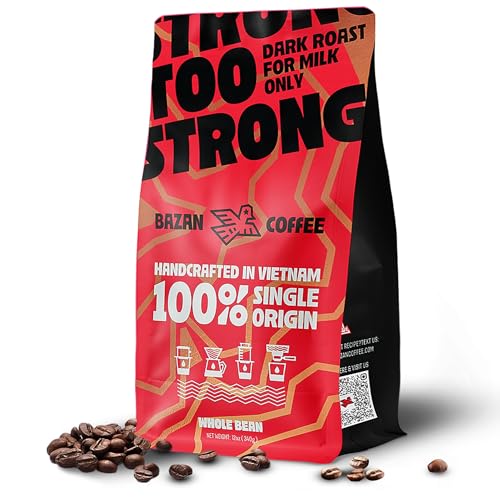
If you’re after a bold, no-nonsense espresso with serious kick, BAZAN COFFEE – Too Strong Robusta Vietnamese is built for drinkers who want intensity without harshness. I find it’s sourced from small farms in Vietnam’s highlands, grown in mineral-rich red soil and hand-picked for peak quality. It’s 100% Robusta, dark-roasted in small batches-no additives, just pure, strong coffee. Expect deep cocoa and toasted nut flavors, a smooth full body, and a clean, smoky finish. The caffeine hit is high, ideal for sustained energy. It pulls well on espresso machines, produces golden crema, and works with Phin filters, Moka pots, or French Press. Low acidity means it’s bold yet gentle on sensitive stomachs.
Best For: Coffee lovers who crave a bold, high-caffeine brew with intense flavor and smooth, low-acid digestibility.
Pros:
- 100% pure Robusta beans, dark roasted in small batches for maximum freshness and strength
- Rich flavor profile with notes of cocoa and toasted nuts, plus a clean, smoky finish
- Versatile for espresso, Phin, Moka pot, and French Press, with a naturally low-acid, stomach-friendly profile
Cons:
- Intensity may overwhelm those who prefer mild or balanced coffee profiles
- Robusta’s inherently strong character isn’t ideal for fans of smoother, aromatic Arabica beans
- Limited appeal for drinkers who enjoy flavored or lighter roast coffees
Factors to Consider When Choosing Single Origin Espresso
You’ll want to evaluate origin and terroir because they shape the bean’s natural flavor-think bright citrus from Ethiopian highlands or deep chocolate notes from Sumatra. Match the roast level to your taste and machine: lighter roasts preserve origin character, while medium-dark offers smoother balance for espresso pressure. Always check for bean purity and pick a profile that fits your brewing method, since single origins behave differently than blends in extraction.
Origin And Terroir Impact
While you might not think of geography as a deciding factor in your morning espresso, the origin and terroir of coffee beans play a direct role in shaping flavor, acidity, and body. You’ll find higher altitudes produce denser beans with brighter acidity-think Ethiopian beans with citrusy zing or Kenyan ones with berry notes. Volcanic soils, like those in Guatemala or Sumatra, add spice and depth thanks to rich minerals. Temperature swings and rainfall patterns slow cherry growth, boosting sweetness you can actually taste. Even farms near each other can differ thanks to microclimates shaped by shade, wind, or humidity. Terroir-altitude, soil, and climate combined-gives each region’s beans a signature you won’t replicate elsewhere. That’s why a Colombian highland espresso tastes nothing like one from Yemeni terraces. Pick beans knowing where they’re grown, because that farm’s environment already decided much of your shot’s final character.
Roast Level Selection
The origin of your beans sets the stage, but the roast level fine-tunes how those flavors come through in the cup. You’ll want a medium roast if you’re after balanced sweetness and brighter acidity-it preserves the bean’s original character and works well for nuanced espresso. For a bolder shot with heavier body and less acidity, go dark; these roasts bring intense flavor, strong crema, and faster extraction due to higher solubility. Light roasts? Skip them-they’re too acidic and underdeveloped for reliable espresso. Consider a Full City roast (midway between medium and dark) for the best of both worlds: caramelized sugars, rich aroma, and clean complexity. Your machine’s timing matters-medium roasts need precision, while darker ones extract faster. Match the roast to your taste and setup, and you’ll pull a better shot every time.
Flavor Profile Balance
Though origin sets the foundation, achieving a balanced flavor profile in single origin espresso comes down to how well sweetness, acidity, and bitterness work together. You want sweetness that’s caramel-like or fruity, not cloying, paired with bright but smooth acidity-think citrus or red apple, not vinegar. Bitterness should be present but mild, adding depth without harshness. Medium roasts usually help preserve this balance, keeping origin flavors intact without burning off delicate notes. A creamy body smooths sharp edges, making the shot feel rounded and full. Pull your shot right: grind fine but consistent, use 90–96°C water, and aim for a 25–30 second extraction. Under-extract, and it’s sour; over-extract, and it turns bitter. Dial in your machine like a pro-this balance isn’t automatic, but you can nail it with practice and attention.
Bean Purity Standards
You’ll want to prioritize bean purity when selecting single-origin espresso, as it directly affects both flavor and safety. You’re looking for beans sourced entirely from one region, guaranteeing traceability and no hidden blends. Stick to 100% Arabica or 100% Robusta-avoid anything with additives, artificial flavors, or fillers. High-purity beans often come with certifications like USDA Organic, Fair Trade, or non-GMO, which confirm strict growing and processing standards. Third-party testing for contaminants such as mold, mycotoxins, pesticides, and heavy metals adds another safety layer. To preserve freshness, choose brands that use small-batch roasting and seal beans immediately after roasting, limiting exposure to oxygen and moisture. These practices guarantee you get a clean, true-to-origin shot without off-flavors or health risks. Brands like Stumptown and Onyx follow these protocols closely.
Brewing Method Match
Single origin beans that meet high purity standards set the foundation, but your brewing method shapes the final shot. For espresso, pick beans roasted to a medium or full city level-they balance acidity and body while boosting crema. Grind them fine, right before brewing; a consistent fine grind creates the resistance needed for rich extraction and that golden crema. Always use whole beans-pre-ground coffee loses aromatics fast, dulling your shot. A high-pressure espresso machine is key; it forces hot water through the puck, pulling out oils and solubles others can’t, giving you that intense, syrupy body. Look for beans from high-altitude farms-they tend to have brighter acidity and natural sweetness that shine under high pressure. Light roasts might under-extract; dark roasts can turn bitter. Match your gear and grind to the bean, and you’ll pull a clean, balanced, flavorful shot every time.
Frequently Asked Questions
What Is the Shelf Life of Single Origin Espresso Beans?
They stay fresh for about 2 to 4 weeks after roasting, but you’ll get the best flavor within the first 10–14 days. You should check the roast date on the bag-no roast date, no go. Store them in an airtight container away from light, heat, and moisture. Don’t freeze or refrigerate; it can damage the beans. Grind just before brewing for peak taste.
Can I Use Single Origin Beans for Drip Coffee?
You can absolutely use single origin beans for drip coffee. They shine in pour-over or drip brewers, highlighting unique flavors like fruity, floral, or chocolatey notes depending on the region. Just grind medium-coarse and brew with water around 195–205°F. While blends offer balanced, consistent taste, single origins give you a clearer sense of terroir. They work especially well if you enjoy tasting subtle differences between beans from Ethiopia, Colombia, or Kenya.
Are Single Origin Espressos More Acidic Than Blends?
You’ll often find single origin espressos more acidic than blends because they highlight the unique traits of one region’s beans, like the bright, citrusy notes in Ethiopian Yirgacheffe. Blends usually balance acidity with mellower beans from other regions. If you prefer smoother shots, blends may suit you better. But if you enjoy vibrant, wine-like flavors, go for a single origin. Your machine and grind matter just as much-adjust accordingly.
Do Single Origin Beans Require Special Storage?
Yes, you need to store single origin beans properly to preserve their distinct flavors. Keep them in an airtight container away from light, heat, and moisture-just like any specialty coffee. A cool, dark cupboard works fine; no need for the fridge or freezer. Use within 2–4 weeks of roasting for peak freshness. While they’re not more fragile than blends, their nuanced profiles make staleness easier to notice.
How Does Roast Date Affect Single Origin Espresso Flavor?
You get the best single origin espresso flavor when you use beans within 3–6 weeks of their roast date. Right after roasting, gases escape and flavors evolve, so too fresh means uneven shots, while too old means flat, dull results. You’ll notice brighter acidity and clearer notes in the first few weeks. For consistency, buy recently roasted beans and track the date to time your brews right.