How to Identify a Grind That’s Too Fine for a 30-Second Pour Over Brew
If your pour over takes longer than 30 seconds, the grind’s likely too fine. Water pools on top, drips slow to a crawl, or you get sudden spurts at the end. Your coffee tastes bitter and feels muddy, signs of over-extraction. Espresso-fine grinds clog filters and choke flow-use medium-coarse, like table salt. Adjust your burr grinder one notch at a time. Get the grind right, and you’ll see smoother, faster brewing with better flavor. There’s more to fine-tuning the ideal setup just ahead.
Notable Insights
- Water pools on the coffee bed and drains slowly, indicating restricted flow from too-fine grind.
- Drip rate exceeds 30 seconds or stops completely, signaling over-resistance due to fine particles.
- Unexpected spurts of water emerge at the end, caused by uneven channeling through compacted fines.
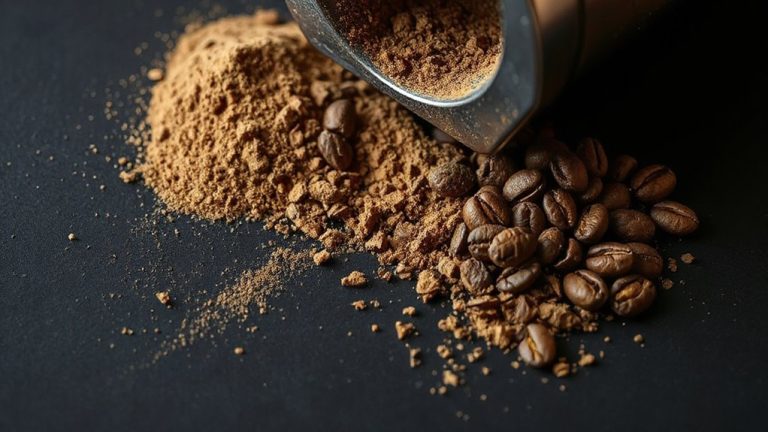
- Grind texture resembles powdered sugar instead of table salt, confirming it’s too fine for pour over.
- Brew tastes bitter and harsh with a muddy mouthfeel, signs of over-extraction from excessive contact time.
Why a Too-Fine Grind Kills Your 30-Second Pour Over
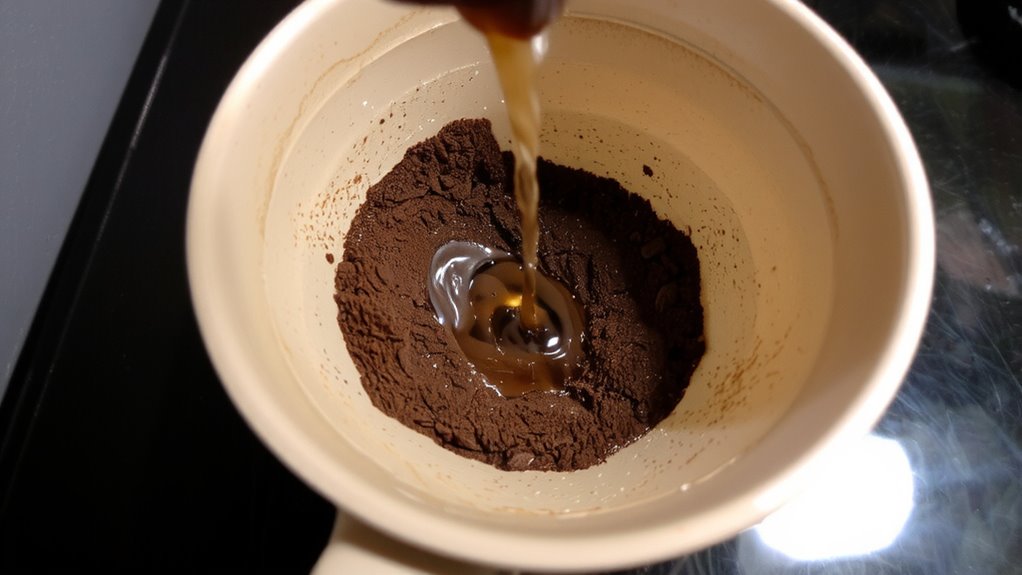
A too-fine grind is a silent culprit behind most failed 30-second pour overs. It chokes the flow, making water struggle through packed particles, which over-extracts bitter compounds and stalls your brew time. Even with ideal brew temperature-typically 195–205°F-the water can’t move fast enough, leading to uneven extraction. Fresh bean freshness matters too: newly roasted beans release CO₂, and with fine grounds, that gas gets trapped, causing channeling or puffing. This disrupts the even saturation needed for balanced flavor. A quality burr grinder set too tight creates this issue often; stepping it coarser just slightly improves flow. For fast pour overs, aim for a grind closer to table salt, not powdered sugar. That adjustment, paired with fresh beans and stable brew temperature, gives you a cleaner, quicker, more repeatable result without clogging or bitterness. Choosing the right best coffee grinder can make a significant difference in achieving consistent grind size for both pour-over and espresso.
How to Tell Your Grind Is Too Fine During Brewing
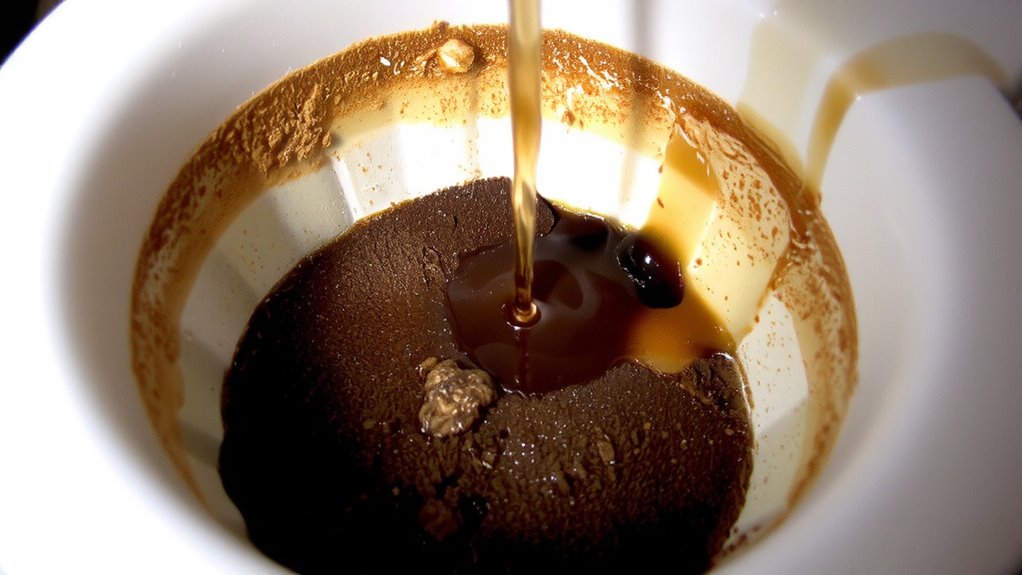
While you’re pouring, if the water pools on top of the bed and drips through slower than a slow drip, your grind’s likely too fine. That fine grind texture restricts water diffusion, causing channels to form or stalling flow entirely. You’ll notice the brew takes well past 30 seconds, even with proper pouring. The coffee may also spurt unexpectedly at the end from trapped pressure. A good pour over needs balanced resistance-too fine, and water can’t move freely through the grounds. Aim for a consistency like table salt; anything finer, like powdered sugar, increases surface area too much. Adjust your grinder one step coarser and test again. Consistent water diffusion depends on proper grind texture, so don’t skip checking this. It’s a quick fix that keeps your brew clean and timed right. For optimal results, choose the best coffee grinds for pour-over mastery, such as medium-coarse grind.
Why Espresso Grind Clogs Your Pour Over
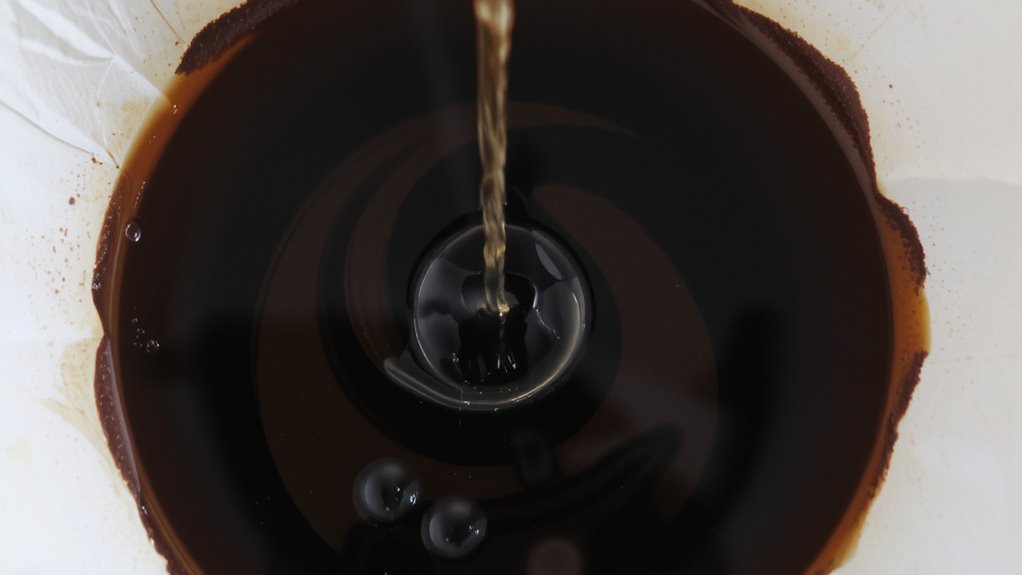
If you’re using an espresso grind for pour over, you’ll almost certainly clog the filter-those ultra-fine particles pack too tightly, blocking water flow and turning your brew into a frustrating slog. The right grind size is critical: espresso calls for fines that need high water pressure to push through, but pour over relies on gravity alone. Without that pressure, water stalls and over-extracts bitter compounds. For best results, always match your grind size to your brewing method to avoid issues like channeling or clogging, especially since the coarse French press grind prevents sediment and ensures smooth extraction.
| Brew Method | Grind Size | Water Pressure |
|---|---|---|
| Espresso | Ultra-fine | High (9+ bars) |
| Pour Over | Medium-fine | Low (gravity) |
| French Press | Coarse | None |
| AeroPress | Fine | Moderate |
| Cold Brew | Coarse | None |
Using espresso grind in a pour over disrupts extraction and causes clogs-stick to medium-fine for balanced flow and flavor.
When Water Channels or Stalls: Fixing Flow Issues
Why does water suddenly veer off to one side or stop dripping altogether during your pour over? You’re likely dealing with channel formation, where water exploits weak spots in the coffee bed, avoiding denser areas. This happens when the grind is too fine, creating uneven extraction and flow resistance that stalls the brew. A consistent, medium-fine grind-like for a V60 or Kalita Wave-helps prevent this. Adjust your grinder to a coarser setting; even one or two clicks can reduce clogging and promote even flow. Make sure you’re pouring evenly and using proper water distribution to avoid disturbing the grounds too much. If water still stalls, check your filter placement and coffee bed level. Fixing these flow issues isn’t about speed-it’s about balance between grind size, water, and resistance.
Bitter or Muddy? It’s Over-Extraction From Fine Grind
Ever tasted a pour over that left a harsh, lingering bitterness or a flat, muddy finish? That’s a sign of over-extraction, usually caused by a grind that’s too fine. When particles are too small, water pulls out too many compounds, including undesirable ones. You’re left with a bitter taste and a muddy texture, lacking clarity or brightness. This harshness isn’t from dark roast alone-it’s from extended, uneven extraction. Light-roast beans are especially vulnerable, but even medium or dark roasts turn unpleasant when over-extracted. A 30-second brew shouldn’t taste this way. If your coffee’s clogging the filter or dripping slowly, the fine grind is likely the culprit. High-end grinders can still cause this if misadjusted. Fixing it means coarsening the grind, but that’s the next step. Right now, just know: bitterness and sludgy mouthfeel mean you’ve extracted too much, too aggressively.
Adjust Your Grinder for Faster 30-Second Flow
You’ve probably noticed that frustrating drip-your pour over crawling instead of flowing, clocking in way past 30 seconds. That’s a clear sign your grind is too fine. To fix it, adjust your grinder to a coarser setting. Most blade grinders lack precision, but burr grinders-like the Baratza Encore orOXO Brew-give you control over grind consistency, which is key. Inconsistent particles slow water dispersion, creating uneven flow. A uniform, slightly coarser grind opens pathways for water, speeding up extraction. Start by adjusting one notch coarser and test the brew time. Repeat until you hit 30 seconds. Remember: even if your grind size looks right, poor consistency can still choke the filter. Good water dispersion depends on evenly sized grounds. Avoid overly fine or bunched particles. Coarser isn’t weaker-it’s balanced. Proper adjustment means faster flow, better clarity, and cleaner flavor without sacrificing strength.
How to Grind for a Perfect 30-Second Pour Over
A single adjustment can make the difference between a sluggish pour and a smooth, 30-second brew. To hit that sweet spot, set your grinder to a medium-coarse setting-think the texture of beach sand. This guarantees proper extraction without over-slowing the flow. Grind consistency is critical; inconsistent particles lead to uneven brewing, with some over-extracting and others under-extracting. A burr grinder, like the Baratza Encore, gives far better results than a blade model. Aim for a brew temperature between 195°F and 205°F-too hot and you scorch the grounds, too cool and the coffee tastes flat. Pre-wet your filter and use a gooseneck kettle for controlled pouring. With the right grind and stable temperature, your coffee pulls evenly in exactly 30 seconds, delivering balanced flavor, clarity, and strength every time.
On a final note
If your pour over takes longer than 30 seconds, the grind is likely too fine. Water slows or stalls, causing over-extraction and bitter, muddy flavors. Espresso-fine grounds clog filters, especially in V60 or Chemex. Adjust your grinder to a coarser setting-try a Baratza Encore or Fellow Ode-for better flow. Flush the bed with a pre-wet to check drainage. Aim for even extraction and clean, balanced coffee.