How to Use Refractometer Readings to Perfect Your Grind Size
You use a refractometer to measure TDS and pair that with brew time to fine-tune your grind. If TDS is low and time is short, go finer; if TDS is high and time’s long, go coarser. Small adjustments-just 1–2 grinder clicks-make big differences. Track results across shots on machines like the EK43 or Decent EP5 to spot trends. Check temperature and water quality first if numbers stray. You’ll find the sweet spot faster with data than taste alone-there’s more to how it all works than most realize.
Notable Insights
- Use refractometer readings to measure TDS and objectively assess extraction when dialing in grind size.
- Adjust grind finer if TDS is low and brew time is short to increase extraction.
- Adjust grind coarser if TDS is high and brew time is long to prevent over-extraction.
- Make small grind changes (1–2 clicks) and retest with the refractometer for precise tuning.
- Verify consistent brew temperature and water quality before attributing TDS issues to grind size.
Use Refractometer Readings to Optimize Grind
Why keep guessing if your grind size is on point? A refractometer removes the guesswork, giving you real data to fine-tune your grind. You’ll see how even small grind changes impact extraction, especially when your coffee origin varies-dense beans from Ethiopia might need a finer grind than those from Brazil. Adjusting grind affects brewing time, too; too fine and your brew drags, risking over-extraction. Too coarse? It’ll run fast and taste weak. With refractometer readings, you match the grind to both coffee origin and ideal brewing time. For example, a medium-coarse grind might work for a 3-minute pour-over with a Sumatran bean, but a medium-fine setting could suit a 2:30 brew with a Kenyan. You’re not just reacting-you’re adjusting with purpose, based on measurable results, not hunches.
How Refractometers Reveal Coffee Strength
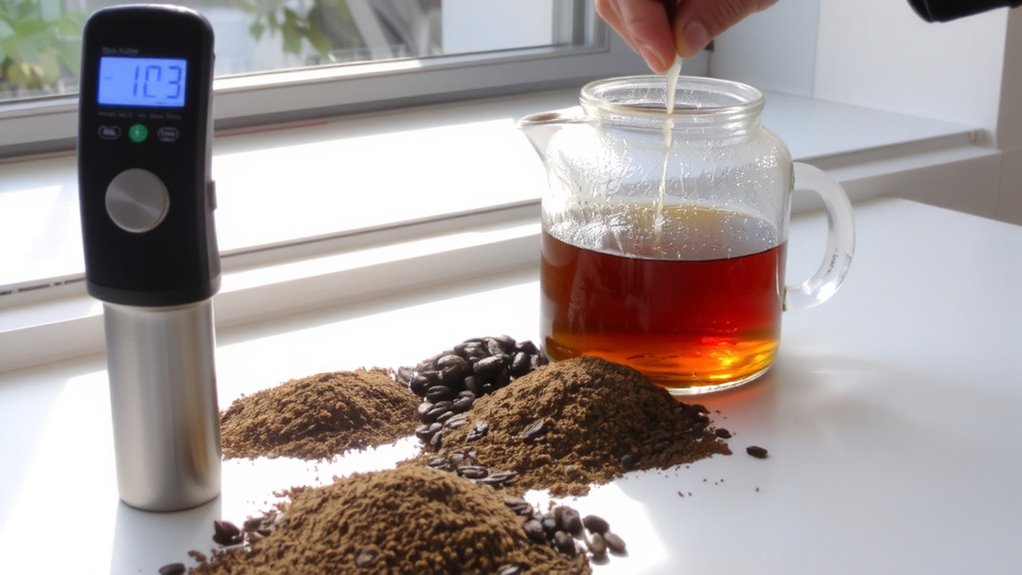
How strong is your coffee, really? A refractometer gives you the exact answer by measuring dissolved solids in your brew, showing strength in precise percentages. This number reflects how much coffee has been extracted, directly tied to your roast level and coffee origin. Lighter roasts, often from African or Central American origins, typically show higher solubility, leading to stronger readings if ground fine. Darker roasts, like those from Indonesia, may yield lower strength due to degraded sugars and increased brittleness. Your brew method matters, but the refractometer cuts through guesswork. Strength isn’t flavor-just concentration-so knowing it helps you adjust dose, grind, or time. Without this tool, you’re judging strength by taste or color, which varies by perception. With it, you track consistency across batches, origins, and roast levels, making improvements based on data, not habit.
Take Readings to Dial In Your Grind
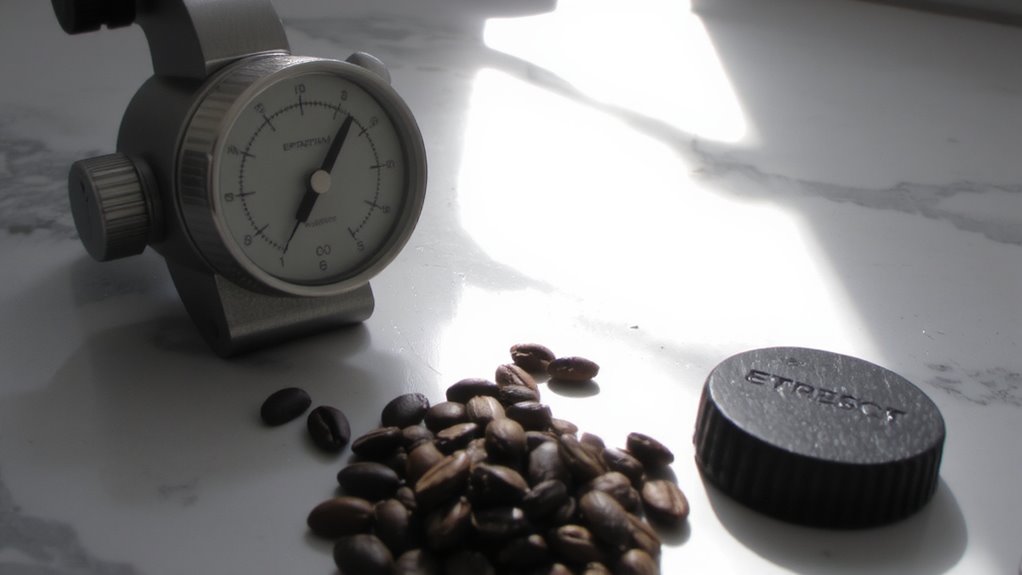
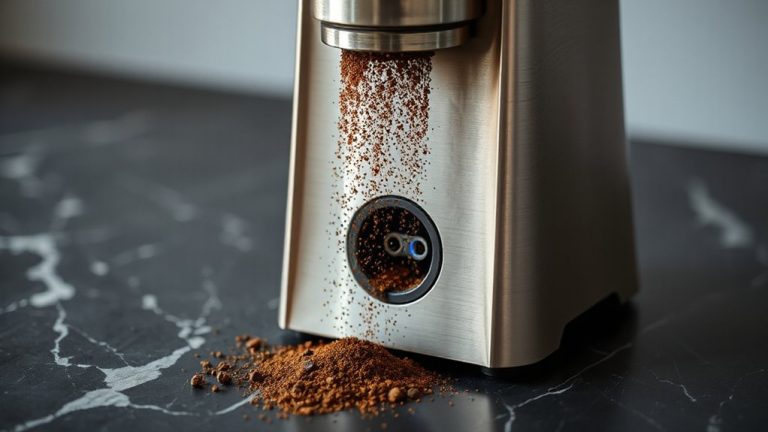
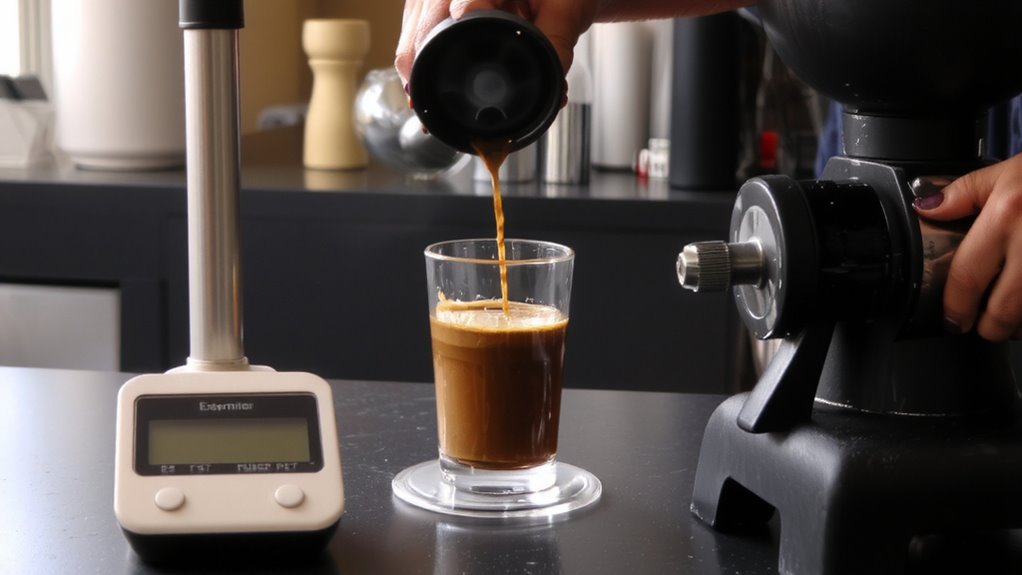
Ever wonder why your espresso shots vary from morning to morning? That taste variance often comes down to grind size, and you can fix it with consistent readings. Start by pulling a shot using your current grind setting, noting the extraction timing-say, 25 seconds. Run that coffee through your refractometer to get the TDS. If the number’s off target, adjust your grinder. Go finer for lower extraction, coarser if it’s too high. Small changes matter: even 1–2 clicks alters results. Repeat the process, tracking both extraction timing and taste variance with each tweak. Aim for consistency across three shots before settling. Machines like the Nuova Simonelli or EK43 respond well to these micro-adjustments. This method beats guessing and builds repeatable results. With each reading, you’re not just tweaking-you’re dialing in scientifically. It takes patience, but the payoff is a reliable, delicious shot every time.
Read TDS for Better Grind Settings
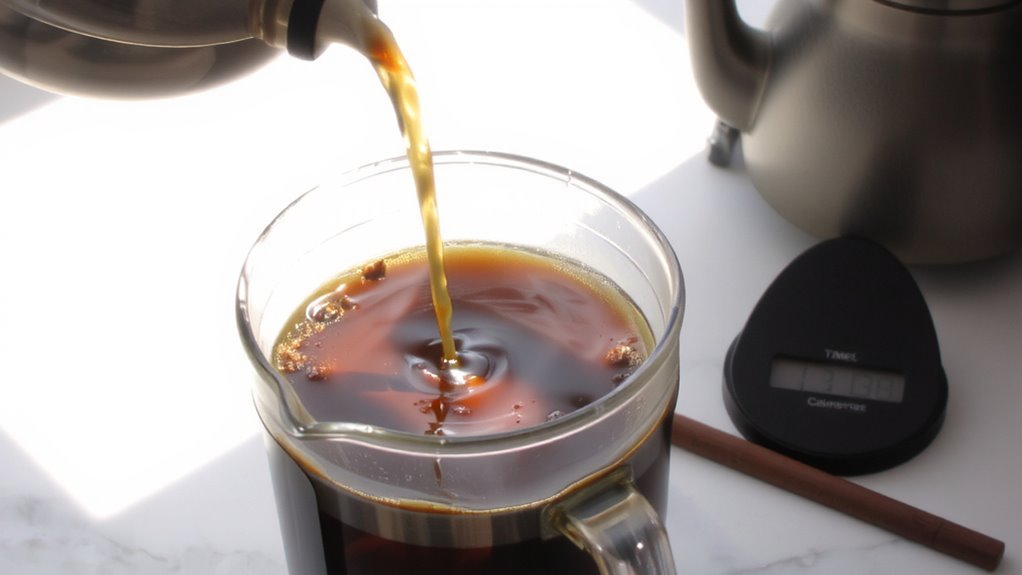
You’ve pulled shots, tracked times, and adjusted your grinder based on taste and extraction windows-now it’s time to let the numbers guide you. Total Dissolved Solids (TDS) from your refractometer show how much coffee is in your brew, giving you an objective measure of extraction. When you pair TDS with brew time and water temperature, you get a clearer picture of how grind size affects results. If your TDS is low but brew time is short, your grind may be too coarse-even with proper water temperature. If TDS is high but brew time is long, your grind might be too fine, risking over-extraction. Adjust in small increments, retest, and track changes. Machines like the Slayer or Decent EP5 allow real-time tuning, but even basic setups benefit from this data. Stop guessing-use TDS to make informed, consistent adjustments.
Fix Grind Problems With Refractometer Data
Why keep chasing the same inconsistencies when your refractometer can pinpoint the issue? If your TDS readings are off, your grind size is likely the culprit-too fine leads to over-extraction, too coarse to under-extraction. Check your brew temperature first; even a 5°F shift can skew results. Once that’s stable at 195–205°F, confirm your water quality. Poor mineral balance distorts extraction and refractometer accuracy. Use filtered water with balanced alkalinity, like Third Wave Water or a calibrated mix. Then adjust your grinder in small increments. Run new brews, measure TDS, and track changes. If numbers stay inconsistent despite stable variables, your grinder’s particle distribution may be uneven-common with blade or low-end burr grinders. Step-changes on a flat burr grinder often give more predictable results. Your refractometer doesn’t lie-use it to isolate variables and fix what’s broken.
Refine Grind for New Beans Using Feedback
How do you nail the right grind when switching to a new bean? Start by noting the bean origin and roast level-these directly affect extraction. Lighter roasts from Ethiopia, for example, often need a finer grind due to higher density, while darker Colombian roasts may require a coarser setting to avoid bitterness. Run a shot and measure it with your refractometer. If TDS is low, your grind’s likely too coarse; if it’s high, you’re too fine. Adjust in small increments, retesting each change. A burr grinder like the EK43 allows precise tweaks. Don’t assume past settings apply. Each bean behaves differently. Trust the feedback: let the data guide your adjustments. This method cuts guesswork, giving you a repeatable, quality shot. Over time, you’ll spot patterns tied to origin and roast level-but always verify with readings.
On a final note
You now use refractometer readings to fine-tune your grind with real data, not guesswork. By checking TDS, you spot under- or over-extraction quickly-sour or bitter coffee gets adjusted right away. When switching beans, you adapt grind size based on feedback, not habit. While not every brew needs this, cafes and serious home baristas benefit from the precision. It’s a tool, not a requirement-but with practice, it sharpens results.