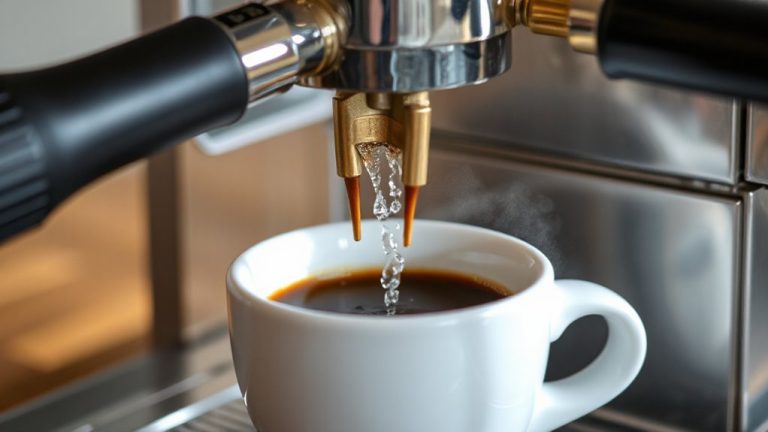
Why Your Coffee Maker’s Carafe Is Cracking From Thermal Shock
Your coffee maker’s carafe cracks from thermal shock when boiling water hits cold glass, causing uneven expansion and stress. This risk goes up if the carafe has scratches, soap residue, or temperature differences from storage. Borosilicate and tempered glass resist it better, but repeated heating and cooling weaken even strong glass over time. Always preheat the carafe with warm water first. Skip harsh cleaners and never put a hot carafe on a cold, wet surface-doing so risks sudden failure. You’ll want to know what small habits make the biggest difference in avoiding surprise cracks.
Notable Insights
- Sudden temperature changes cause glass to expand unevenly, creating internal stress that leads to cracks.
- Pouring boiling water into a cold carafe risks thermal shock, especially if the glass wasn’t pre-warmed.
- Repeated heating and cooling cycles cause material fatigue, weakening the glass over time.
- Manufacturing flaws like uneven thickness or microscopic defects make carafes more susceptible to cracking.
- Pre-warming the carafe and using borosilicate or tempered glass can significantly reduce thermal shock risk.
What Is Thermal Shock and Why It Cracks Glass
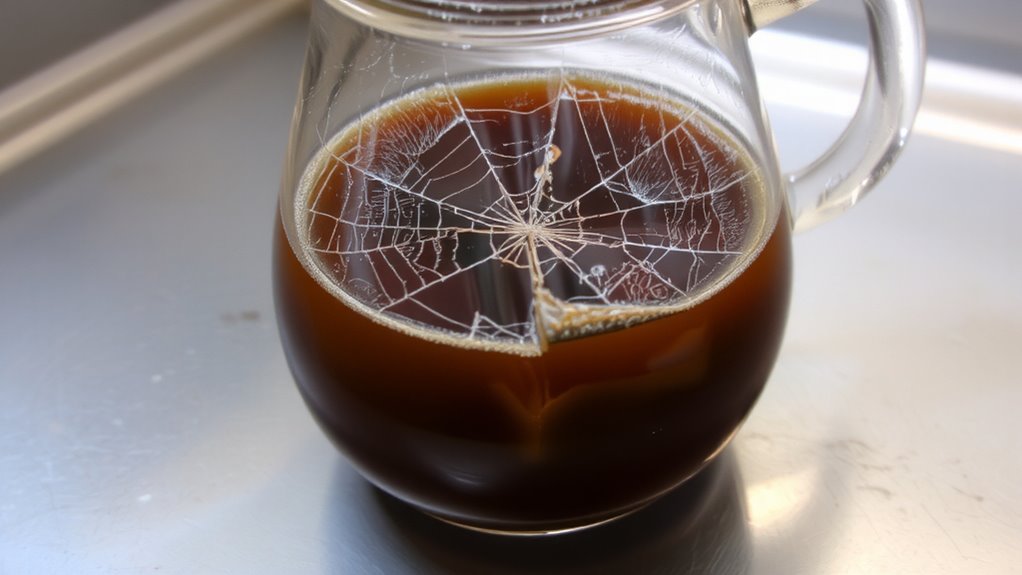
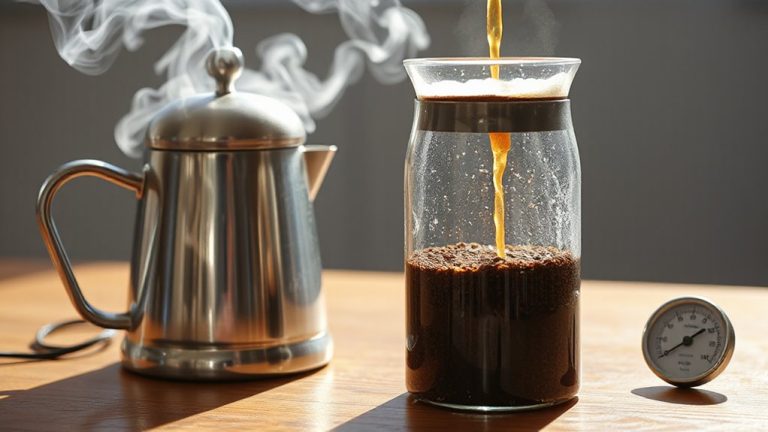
Thermal shock happens when glass heats or cools too quickly, creating stress that can lead to cracks-and your coffee maker’s carafe is a prime target. When you pour hot water into a cold glass carafe, different parts expand at uneven rates due to thermal expansion. This mismatch builds internal pressure, especially in areas like the base or sides, where temperature changes are most abrupt. Over time, repeated stress causes material fatigue, weakening the glass even if you don’t see cracks yet. That’s why a carafe might suddenly fail after months of use. Borosilicate glass handles temperature swings better than soda-lime glass, but it’s not immune. Avoid placing your carafe on cold surfaces or rinsing with cold water while hot. Let it cool naturally instead. These simple steps reduce stress and extend its life. Preventing thermal shock isn’t about being cautious-it’s about understanding how materials react. For long-term durability, consider upgrading to a glass-lined coffee carafe made with high-quality borosilicate construction.
Why Your Coffee Pot Is at Risk of Thermal Shock
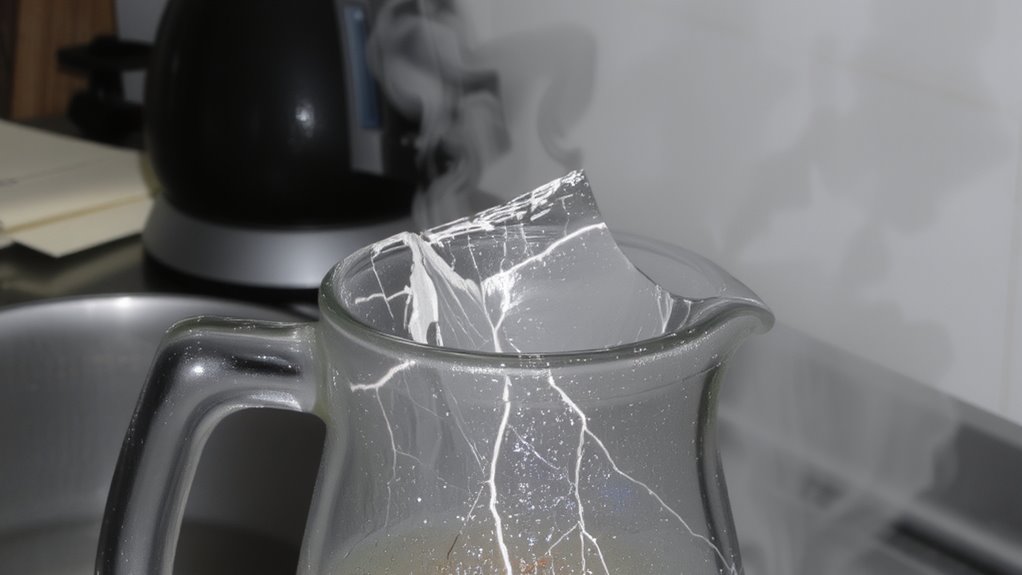
While you might not think twice about pouring boiling water into your coffee pot each morning, that habit could be putting your carafe at serious risk. Sudden temperature shifts stress the glass, especially if it’s already weakened. Over time, repeated heating and cooling lead to material fatigue, making the carafe more prone to cracking-even from minor thermal changes. Some pots fail sooner due to manufacturing defects, like uneven glass thickness or microscopic flaws invisible to the eye. These weak spots amplify stress during temperature swings. Borosilicate glass resists thermal shock better than regular soda-lime glass, but even high-quality carafes aren’t immune if misused. Skipping a pre-warm increases the chance of failure. You can’t control every variable, but knowing your carafe’s limits helps. Replace it if you notice hairline cracks or cloudiness-signs it’s nearing the end of its safe lifespan.
Mistakes That Cause Sudden Temperature Cracks
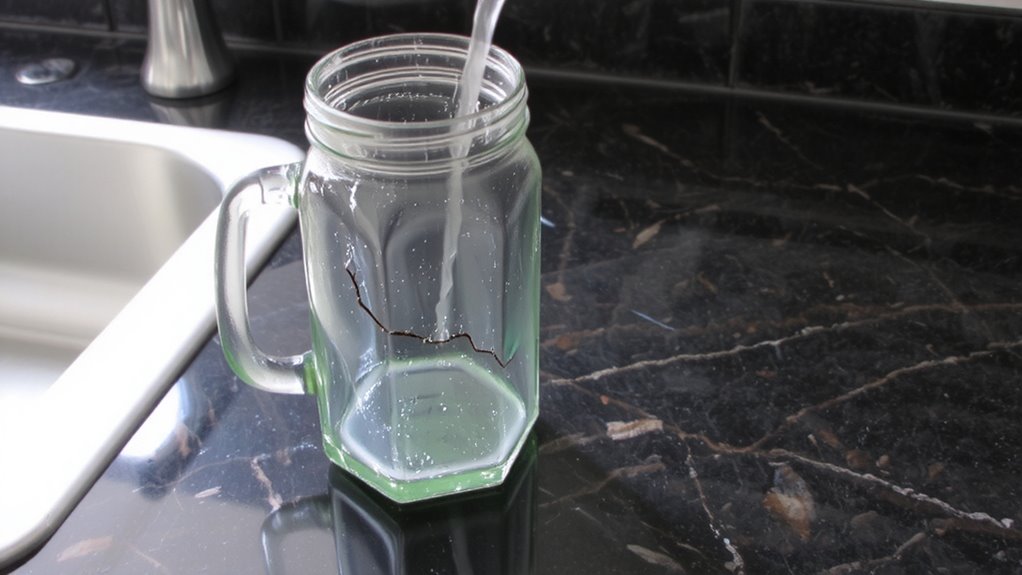
If you’re in a rush and skip preheating your carafe before adding hot coffee, you’re more likely to cause a crack-especially if the glass is cold from washing or sitting overnight. Even slight temperature shifts can stress the glass, and skipping this simple step increases the risk. Improper cleaning contributes too; using abrasive pads or harsh chemicals weakens the carafe over time, making it more prone to sudden failure. Residue from soap or mineral buildup can also create hot spots. Another overlooked issue: foreign objects. Small bits of debris or leftover grounds can trap heat unevenly, creating weak points. Never place a hot carafe on a cold, wet surface or rinse it immediately with cold water-both cause rapid temperature changes. Always inspect your carafe for scratches or chips, which act as starting points for cracks. Preheating with warm water, using gentle cleaners, and avoiding physical damage go a long way in preventing sudden breaks.
Stop Thermal Shock Before It Cracks Your Carafe
You’ve likely already seen how skipping preheats or using rough cleaners sets the stage for cracks, but there’s a bigger force at play-thermal shock. When you pour hot coffee into a cold glass carafe, or place a hot carafe on a cool surface, rapid temperature shifts create thermal stress. That stress weakens the glass over time, making it far more likely to fail. The key to crack prevention isn’t just careful handling-it’s consistent temperature management. Always preheat your carafe with warm water before brewing, especially in colder kitchens. Avoid transferring it directly from a hot plate to a cold countertop or sink. Opt for borosilicate or tempered glass carafes-they handle thermal stress better than standard glass. While stainless steel carafes don’t face this issue, they may affect coffee flavor. Stay mindful of temperature extremes, and you’ll extend your carafe’s life notably. For those seeking to minimize plastic exposure, consider coffee makers with non-plastic construction that avoid synthetic materials in critical components.
Can You Repair a Cracked Carafe?
How do you handle a crack when it finally appears? Once your carafe is compromised, you’re better off replacing it than relying on temporary fixes. Adhesive repair attempts might seem like a quick fix, but they rarely hold under repeated heat stress and can create safety risks. Most coffee makers use tempered glass carafes that can’t be effectively bonded once cracked. Instead, look into carafe replacement options directly from the manufacturer or reputable third-party suppliers-brands like Braun, Cuisinart, and Mr. Coffee often offer them. A new carafe typically costs under $30 and restores your brewer’s full function without risk. Using a cracked carafe can lead to sudden breakage during brewing, especially with thermal fluctuations. Replacement is safer, more reliable, and more cost-effective long-term than patching it.
Pick a Coffee Carafe That Resists Thermal Shock
A good coffee carafe shouldn’t crack the first time hot water hits it, and that’s where thermal shock resistance matters. You need a carafe built with material durability in mind-borosilicate glass is your best bet, as it handles rapid temperature shifts far better than regular glass. Stainless steel models also resist thermal shock well and add extra protection against drops. Watch out for design flaws like thin walls or tapered shapes that create weak spots under heat stress. Some cheaper brands use soda-lime glass, which cracks easily when exposed to boiling water on a cold surface. If you brew daily, consider a Cuisinart or Bodum thermal carafe-they’re tested for repeated heating and cooling. Avoid pouring hot coffee into a cold carafe straight from the sink. Instead, pre-warm it with a quick rinse of warm water. Planning ahead prevents cracks and saves you money in the long run.
On a final note
You can prevent thermal shock by avoiding sudden temperature changes-never pour hot coffee into a cold glass carafe or place it on a cold surface right after brewing. If it cracks, replacement is safer than repair. Opt for borosilicate glass or thermal-shock-resistant models from brands like Chemex or Bodum. These handle heat swings better than regular glass, giving you longer-lasting, more reliable performance with fewer surprises.