How to Use the 4:6 Method for Balanced and Sweet Pour Over Coffee
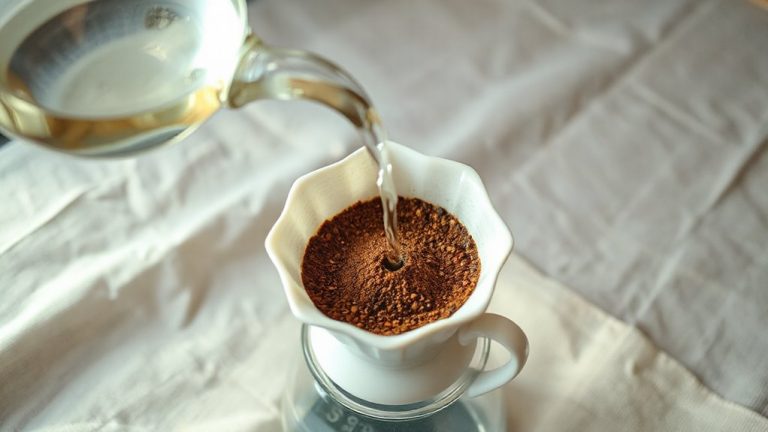
Use 40% of your water for a 40–45 second bloom to release CO₂ and prevent sourness. Then pour the remaining 60% in two or three slow, even spirals with a gooseneck kettle to avoid channeling. Grind medium-fine, like table salt, using a burr grinder for consistency. Keep water between 195°F–205°F. This method balances sweetness, body, and clarity-tiny tweaks can fine-tune flavor based on roast and taste. You’ll find the best results depend on a few key adjustments.
Notable Insights
- Use a 40% bloom and 60% main pour water split for balanced extraction and sweetness.
- Bloom coffee for 40–45 seconds to release CO₂ and prevent under-extraction.
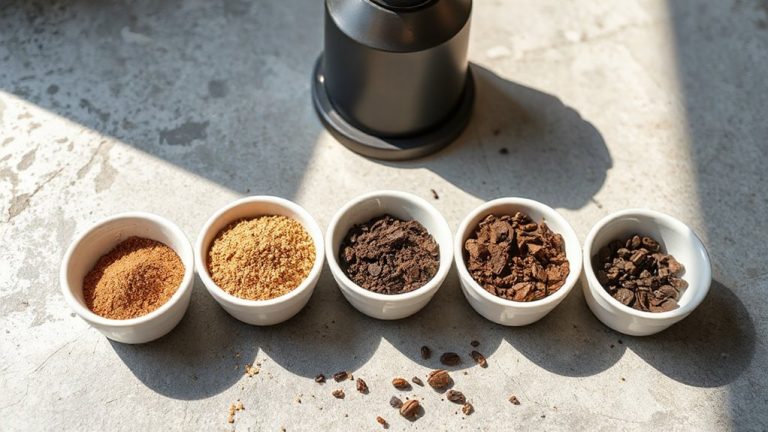
- Grind coffee to a medium-fine consistency, like table salt, for even extraction.
- Adjust ratio slightly-4.2:5.8 for dark roasts, 3.8:6.2 for light roasts-to match roast profile.
- Use a gooseneck kettle to control pour speed and avoid channeling.
How to Brew 4:6 Pour Over Coffee
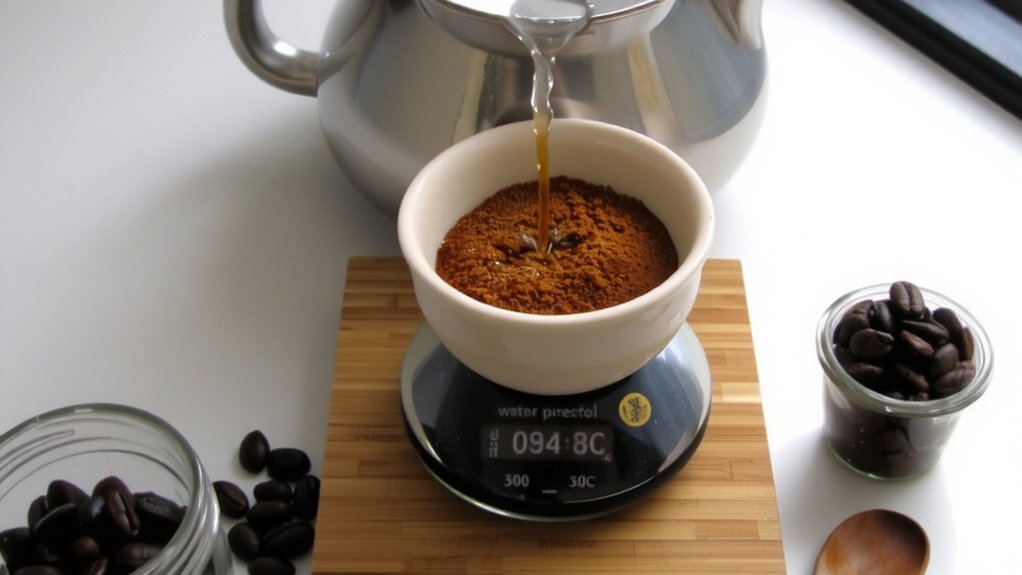
Water hits the grounds-your brew clock starts now. The 4:6 method means 40% of your water goes in the bloom phase, 60% in later pours. For bloom control, pour 40% of total water evenly over grounds and start your timer. Let it degas for 40–45 seconds; this stabilizes CO₂ release and prevents uneven extraction. After the bloom, proceed with careful pour timing: split the remaining 60% into two to three pours, each spaced 15–20 seconds apart. Use a gooseneck kettle-like the Fellow Stagg or Hario Buono-for precision. Keep pours slow and centered to avoid channeling. Total brew time should land between 2:30 and 3:00 minutes for a 15g dose. If it’s too fast, your grind’s likely too coarse; too slow, it’s too fine. Adjust grind size next time-don’t change pour timing mid-brew. For consistent results, consider a best gooseneck kettle with variable temperature control and a long, thin spout designed for pour-over accuracy.
How to Grind for the 4:6 Method
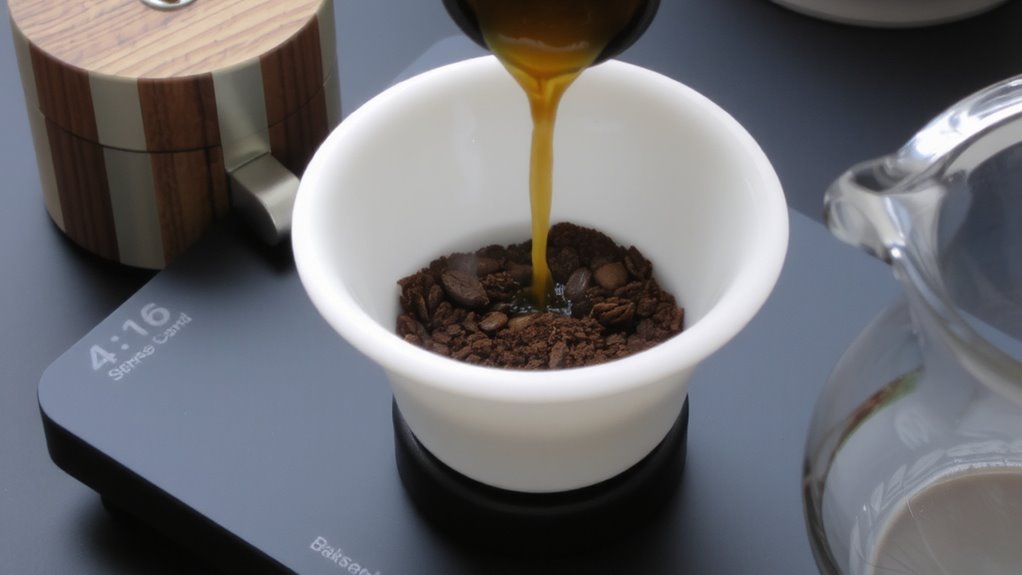
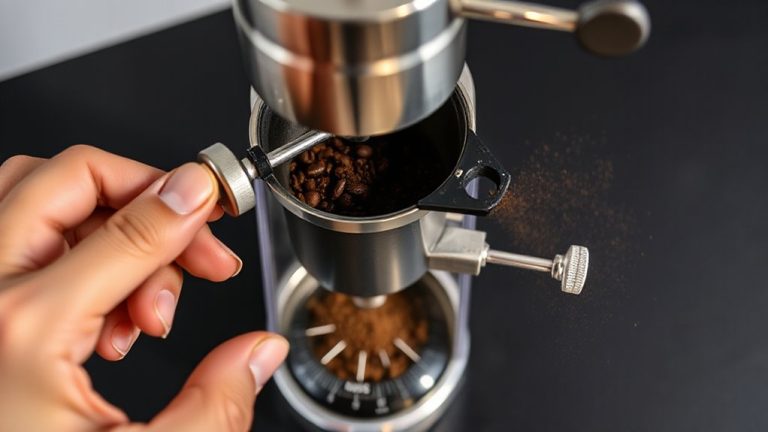
You just saw how timing and pour structure shape the 4:6 method, but your grinder plays just as big a role in hitting that balanced extraction. For this ratio, you need a consistent particle size-too many fines or boulders skews extraction. Aim for a medium-fine grind, similar to table salt, to support even flow and control. A burr grinder is essential; blade grinders can’t deliver the grind consistency needed. Entry models like the Baratza Encore or 1ZPresso Q2 offer reliable performance without high cost. If your grind’s uneven, you’ll see channeling or clogging, both hurting flavor. Adjust in small steps: go finer if under-extracted (sour, weak), coarser if over-extracted (bitter). Your water and beans matter, but without proper grind consistency and accurate particle size, the 4:6 method won’t reach its potential. Test, tweak, and keep notes. For more options tailored to this brew style, check out the best grinders for filter coffee.
Why the 4:6 Ratio Tastes Balanced
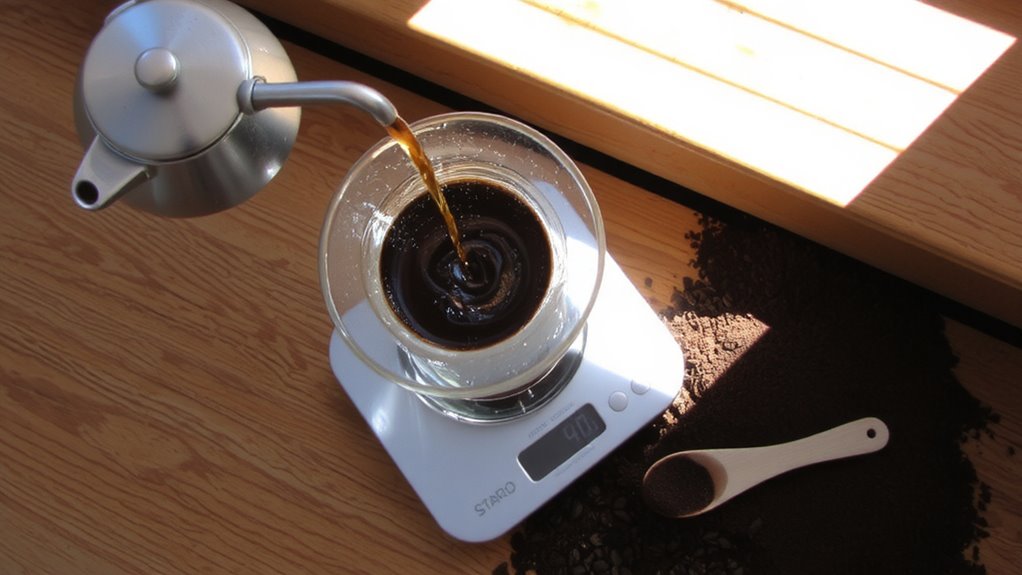
While you might assume that higher coffee concentration always means stronger flavor, the 4:6 ratio actually strikes a sweet spot between strength and clarity by balancing extraction efficiency with solubility limits. This ratio promotes flavor symmetry, ensuring no single note overpowers the cup. You get taste harmony because under-extracted sourness and over-extracted bitterness are minimized. The sweetest, cleanest notes emerge when coffee and water work in proportion.
| Component | Effect on Brew |
|---|---|
| 40% coffee | Enhances body and sweetness |
| 60% water | Improves clarity and flow |
| Balanced ratio | Reduces harshness, improves aftertaste |
You’ll find this balance especially with medium roasts and a consistent grind. It’s not just about strength-it’s about letting the bean’s natural characteristics shine without strain or distortion. The 4:6 ratio makes that repeatable.
How to Adjust 4:6 for Roast and Taste
The 4:6 ratio works well out of the gate, but it’s not set in stone-roast level and personal taste mean you’ll often need small tweaks. With lighter roasts, which have more acidity and complex sugars, you might pull the ratio closer to 3.8:6.2 to highlight brightness without harshness. Darker roasts, already bold and sweet, often do better near 4.2:5.8 to avoid overwhelming bitterness. Your flavor preference plays a big role-want something fruitier or tea-like? Lean into the lighter end. Prefer chocolatey, rounded tones? Adjust for a heavier body. Roast selection changes how flavors extract, so dialing in isn’t one-size-fits-all. Try small shifts-0.1–0.2 grams at a time-and document results. A gooseneck kettle and good grinder help consistency. This method isn’t rigid; it’s a framework shaped by your roast and taste. For optimal results, use a coffee grind size that matches the pour-over method to ensure even extraction and balanced flavor.
Common 4:6 Pour Over Mistakes to Fix
Though the 4:6 method simplifies pour over brewing, mistakes still creep in-especially when scaling or timing’s off. If your coffee tastes sour, check your water temperature-it should be between 195°F and 205°F. Too low, and extraction suffers; too high, and bitterness follows. Another common error is cutting the bloom duration short. Let it last 30–45 seconds so gases escape and water evenly saturates the grounds. Skipping this causes uneven brewing and weak flavor. Over-pouring too fast disrupts the 4:6 ratio’s balance, leading to under-extraction. Use a gooseneck kettle for control. If coffee’s too strong or weak, adjust grind size, not water amount. A finer grind slows flow; coarser speeds it up. Fixing these small issues improves results fast-no extra gear needed. Just attention to detail.
On a final note
You’ve now got a reliable method for balanced, sweet pour over coffee. The 4:6 ratio works well with medium to light roasts and a medium-fine grind-think Chemex or V60. Adjust grind or brew time slightly if it tastes too bitter or sour. Avoid over-pouring or uneven saturation. Compared to 1:15 brews, this ratio concentrates flavor without heaviness. Use accurate scales and fresh beans for best results.