How to Brew With a Siphon Coffee Maker: a Complete Guide to Vacuum Brewing
You heat water in the lower chamber of a siphon maker, and vapor pressure pushes it up into the upper chamber. Add medium-fine ground coffee-about 20g for 300g water-stir gently, and let it brew for 1:30 to 2 minutes. When you remove the heat, vacuum pulls the brewed coffee back down through the filter. Use fresh beans, a precise scale, and a consistent grind for best results. Cloth or glass filters affect flavor, so pick based on your taste preference-more clarity or more body. The right setup and timing make a clean, vibrant cup every time, and there’s more to fine-tuning the ideal brew just beyond this.
Notable Insights
- Use a medium-fine grind, similar to table salt, for balanced extraction and optimal brew time.
- Assemble the siphon brewer securely and add hot water to the lower chamber before applying heat.
- Apply heat to force water into the upper chamber, then add ground coffee and stir gently to bloom.
- Maintain a 1:15 coffee-to-water ratio and brew for 1:30 to 2:00 minutes for ideal extraction.
- Remove heat after brewing; vacuum pulls coffee through the filter as the lower chamber cools.
How Does a Siphon Coffee Maker Work?
While it might look like something out of a science lab, a siphon coffee maker actually relies on basic physics to brew coffee-specifically vapor pressure and vacuum. When you apply heat, water in the lower chamber warms up, creating vapor pressure that pushes the liquid up through the siphon tube into the upper chamber. That’s where coffee grounds steep as you maintain precise heat control. Once you remove the heat source, the pressure dynamics shift-cooling the lower chamber creates a vacuum, pulling the brewed coffee back down through the filter. The process depends on careful timing and consistent heat control to avoid over-extraction. With practice, you get a clean, tea-like cup with bright acidity. Glass models like the Hario Tec or Yama are popular, but they require attention and a stable flame or electric heat source. It’s not the fastest method, but it rewards precision. For those interested in exploring top-performing models, checking out the best siphon coffee makers can help guide a well-informed purchase.
What You Need to Brew Siphon Coffee at Home
You now know how vapor pressure and vacuum move water through the siphon brewer, but setting up your own brew at home means having the right gear on hand. A proper coffee gear list includes a siphon brewer, heat source, and fresh beans. Your brewing setup isn’t complete without a grinder, scale, and timer for consistency. For portable brewing options, consider the convenience of battery-operated coffee makers when away from traditional power sources.
| Item | Purpose | Common Options |
|---|---|---|
| Siphon Brewer | Holds water and coffee during brew | Hario, Yama, Cona |
| Heat Source | Heats water to create vapor | Butane burner, electric |
| Coffee Grinder | Grinds beans to even medium-coarse | Baratza Encore, 1ZPress |
| Scale & Timer | Guarantees accurate dose and time | Hario V60 Timer, Brewmaster |
Choose reliable coffee gear to keep your brewing setup precise and repeatable.
Step-by-Step: Brewing Siphon Coffee at Home
Once you’ve gathered your siphon brewer, heat source, fresh beans, grinder, scale, and timer, it’s time to assemble the system and start brewing. Attach the upper and lower chambers securely, then add hot water to the bottom globe-just below the fill line. Place the burner beneath and turn it on. As vapor builds, pressure forces water into the upper chamber. Once most of the water rises, add your ground coffee and begin stirring gently. Let it bloom, then maintain steady heat. After brewing, remove the heat source. As the lower chamber cools, a vacuum forms, pulling the brewed coffee down through the filter. This method isn’t just effective-it’s central to coffee culture, turning brewing into visual, engaging rituals. These brewing rituals reward precision and attention. Done right, siphon coffee delivers clean, aromatic cups every time, blending science and tradition in one striking setup.
Best Grind, Ratio, and Timing for Great Flavor
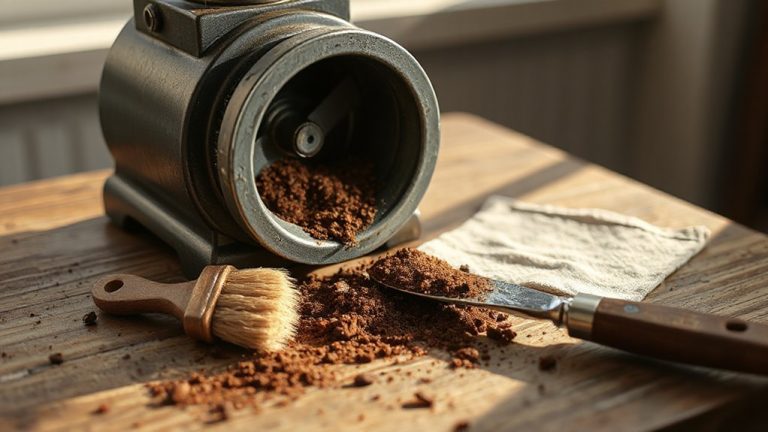
Because the siphon brewer relies on precise temperature control and filtration, getting the grind, ratio, and timing right makes or breaks the final cup. Use a medium-fine grind-like table salt-for balanced extraction technique and clarity. Too fine, and you’ll over-extract, creating bitterness; too coarse, and the flavor profile turns sour and weak. Aim for a 1:15 coffee-to-water ratio (e.g., 20g coffee to 300g water) as a reliable starting point. Brew time should be around 1 minute 30 seconds to 2 minutes, including drawdown. This window supports full extraction without staling. Adjust grind slightly finer or coarser to fine-tune taste, depending on bean freshness and roast. Light roasts may need a finer grind and full 2 minutes for ideal flavor development, while darker roasts often do better slightly coarser and on the shorter end. Consistent timing and grind quality directly shape your cup’s balance and brightness.
Fixing Common Siphon Coffee Problems
A well-tuned grind, ratio, and brew time set the foundation for great siphon coffee, but even with those dialed in, things can go wrong. If your coffee tastes flat, check coffee freshness-stale beans lose complexity fast, especially in full immersion brewing. Always use beans roasted within the last two weeks. Weak or bitter brews often stem from incorrect grind size; adjust finer or coarser in small increments. Make certain your filter is clean and properly seated-cloth filters need regular rinsing to avoid off-flavors. Seal issues between chambers can halt siphoning, so inspect for cracks and guarantee snug fittings. Equipment durability matters-glassware withstands heat, but sudden temperature shifts can crack it. Use a gentle heat source and avoid cold surfaces. Replacements parts like filters and burners vary by model-Hario and Yama offer reliable, long-lasting options. Small tweaks prevent big problems.
On a final note
You’ve got the basics down now. A siphon brewer takes practice, but it rewards precision with clean, bright coffee. Use medium-fine grounds, stick to a 1:15 coffee-to-water ratio, and time your brew around 1:30 to 2:30 minutes. Glass models like the Hario or Yama work well but break easily-handle carefully. If coffee tastes weak or bitter, adjust grind or timing. It’s not the fastest method, but for flavor clarity, few brewers match its quality.