The Effect of Water Hardness on Grind Setting Requirements
Hard water, rich in minerals like calcium and magnesium, slows extraction, so you’ll need a finer grind to pull out enough flavor-especially in fast methods like espresso. Soft water lacks minerals and extracts quickly, risking bitterness unless you use a coarser grind. If you’re in a place like Las Vegas or Chicago, test your tap water with strips to see where you fall. Adjusting grind based on hardness gives you better control and a more balanced cup. Your next brew could be noticeably better with just one small tweak.
Notable Insights
- Hard water requires a finer grind to improve extraction due to higher calcium and magnesium content.
- Soft water needs a coarser grind to prevent over-extraction and bitterness from rapid solubles dissolution.
- Water hardness between 50–150 ppm is ideal, influencing optimal grind size for balanced flavor.
- Espresso with hard water demands a much finer grind to compensate for short brew time and slow extraction.
- Grind adjustments should align with water hardness, brewing method, and water temperature for best results.
Understand Water Hardness and Coffee
While you might not think about it often, the water you use plays a critical role in how your coffee tastes. Water chemistry directly affects extraction, influencing acidity, sweetness, and bitterness. The mineral content in your water-specifically calcium and magnesium-helps pull flavor from coffee grounds. Too little, as in soft water, leads to flat, under-extracted coffee because there aren’t enough minerals to carry oils and compounds. Too much, like in hard water, can over-extract or cause scaling in machines. Ideal water has balanced mineral content: 50–150 ppm total hardness. You don’t need lab gear to check-use test strips or a TDS meter. Brands like Third Wave Water offer mineral packets to standardize water chemistry at home. If your tap water tastes off or leaves scale, consider filtered or custom-blended water. Good coffee starts with good water-don’t skip this step.
Grind Finer for Hard Water (Slower Extraction)
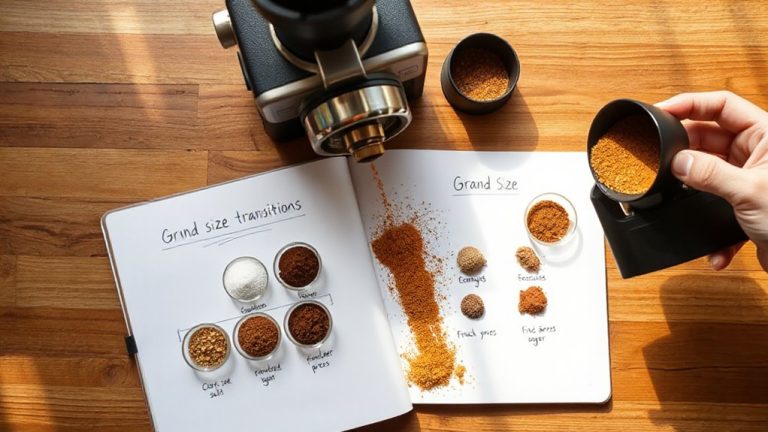
A good rule of thumb is to grind finer when using hard water, since the high mineral content can slow down extraction during brewing. Hard water contains more calcium and magnesium, which increase mineral resistance and reduce how quickly water dissolves coffee compounds. This calcium impact means your shot might under-extract even at normal grind settings. To compensate, going finer helps increase surface area and prolong contact time, improving extraction. You’ll notice better flavor balance-less sourness, more body. If you use tap water in cities like Las Vegas or Chicago, this adjustment is especially relevant. Try adjusting in small increments; too fine can lead to clogging or over-extraction if pushed too far. A reliable burr grinder lets you make precise changes. Testing with consistent brew times and observing flavor changes helps dial it in. Just remember, it’s not about hardness alone, but how it interacts with your beans and equipment.
Go Coarser With Soft Water (Avoid Bitterness)
Soft water, with its low mineral content, dissolves coffee compounds more easily than hard water, so you’ll want to go coarser to avoid over-extraction and the bitterness it brings. When brewing with softer water, your grinder faces reduced friction, which can subtly affect consistency-especially with blade grinders or lower-burrs. A coarser setting slows extraction, balancing the faster dissolution rate.
| Water Type | Recommended Grind Setting |
|---|---|
| Soft | Coarser (e.g., setting 6–8 on a Baratza Encore) |
| Hard | Finer (e.g., setting 3–5 on a Baratza Encore) |
This tweak guarantees clarity and sweetness in your cup instead of harsh, bitter notes. Don’t assume soft water always means better brewing-it demands adjustments just like hard water. You’re not fighting the water; you’re optimizing for it. Match your grind to your water, and the results will show.
Check Your Water Hardness at Home
You can easily check your water hardness at home using a simple test kit or strips designed to measure mineral content. These water test tools give fast, reliable results and are widely available online or at hardware stores. Popular brands like API or LaMotte offer home methods that require just a few drops or a dip in your tap water. Compare the color change to the included chart to determine hardness in grains per gallon (gpg) or parts per million (ppm). Some fridge filters or reverse osmosis systems also include indicators, but standalone testing is more accurate. While home methods won’t replace lab analysis, they’re sufficient for adjusting coffee variables. Knowing your water’s mineral levels helps you make informed decisions before tweaking grind settings. Skip guessing-run a quick water test first. It’s a small step that improves brew consistency without extra gear or cost.
Pick the Right Grind for Your Water
Why does the same grind setting brew weak coffee one day and bitter the next? Your water hardness is likely the culprit. Hard water, rich in minerals like calcium and magnesium, resists dissolving coffee compounds, so you’ll need a finer grind to extract enough flavor. Soft water dissolves more easily, meaning a slightly coarser grind helps prevent over-extraction. Your brewing method matters too-espresso, with its high pressure and short contact time, demands finer grinds, especially in hard water. Pour-over systems like the Hario V60 rely on longer contact, so grind size adjustments must align with both water hardness and water temperature. If your water heats to 200°F but is soft, go coarser. Hard water at 195°F? Try finer. Always match grind to your specific combo of water hardness, brewing method, and water temperature for best results.
Adjust Grind for Balanced, Tasty Coffee
How do you get from inconsistent brews to a perfectly balanced cup? You adjust your grind based on your water chemistry. Hard water, high in minerals like calcium and magnesium, can over-extract coffee, making it bitter. To counter this, use a coarser grind to slow extraction and smooth the flavor profile. Soft water, low in minerals, often under-extracts, leading to sourness. In that case, go finer to increase extraction and boost sweetness. Testing small changes in grind size-like adjusting your burr grinder from 18 to 16-makes a real difference. Tools like the Bonaerra water testing kit help identify your water’s profile, letting you match grind settings more precisely. Ultimately, balancing grind size with your water chemistry improves clarity, body, and overall taste. It’s not just about the beans or brewer-your water and grind work together to shape the final cup.
On a final note
You’ll need a finer grind with hard water since it slows extraction and can lead to under-extracted, sour coffee. Soft water, lacking minerals, extracts faster-go coarser to avoid bitterness. Check your water with a simple test strip or a TDS meter under $20. Brands like Baratza offer grinders with fine enough adjustments for this. Adjusting your grind based on water hardness balances flavor, giving you cleaner, more consistent espresso or pour-over without needing specialty additives.