Best Espresso Machine PID Controllers for Precision Brewing
You get precise, consistent shots with PID-controlled machines that maintain temperature within ±1°C. Models like the Tuni E2 and Gevi EzBru 1000C offer dual boilers or thermoblocks with real-time NTC feedback for stability. The Sungaze PID kit upgrades older machines affordably. Look for one-degree adjustability, pre-infusion, and real-time monitoring. Choose based on build quality, control type, and whether you need simultaneous brew and steam-your next step depends on which features match your brewing style.
We are supported by our audience. When you purchase through links on our site, we may earn an affiliate commission, at no extra cost for you. Learn more. Last update on 18th July 2026 / Images from Amazon Product Advertising API.
Notable Insights
- PID controllers maintain brew temperature within ±1°C for consistent extraction and optimal flavor balance.
- Dual boiler systems with PID allow simultaneous brewing and steaming without temperature fluctuations.
- Real-time NTC sensors monitor boiler temperature up to 10 times per second for rapid adjustments.
- Adjustable temperature in one-degree increments enables precise tuning for different coffee bean profiles.
- Programmable pre-infusion and volumetric dosing enhance shot consistency and extraction quality in PID-equipped machines.
Tuni E2 58mm Espresso Machine Dual Boiler
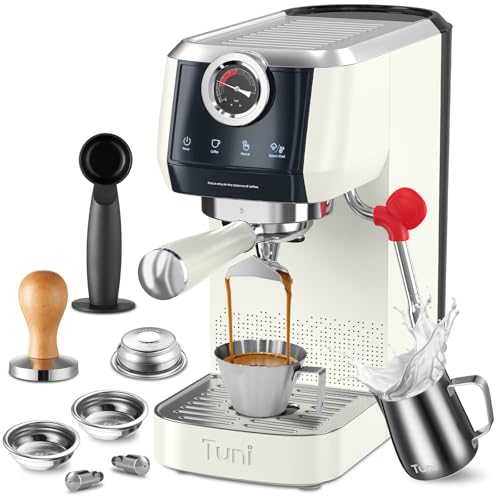
If you’re serious about pulling consistent, café-quality shots at home, the Tuni E2 58mm Espresso Machine Dual Boiler stands out with its dual boiler system and PID + NTC temperature control, giving you precise command over brew temperature. I use its 58mm commercial group head and low-pressure pre-infusion to pull balanced shots with rich crema. The ULKA pump delivers steady 20-bar pressure, and the thermal block heats in 30 seconds. I monitor extraction in real time using the pressure gauge while adjusting temperature and volume to taste. Its compact size fits my small kitchen, and the included steam wand and accessories handle daily use without fuss.
Best For: Home baristas seeking professional-grade espresso performance with precise temperature control and compact design.
Pros:
- Dual boiler system with PID + NTC temperature control ensures stable, precise brewing temperatures for consistent shot quality
- 58mm commercial-grade group head and portafilter enable higher extraction efficiency and rich crema compared to standard 51mm systems
- Compact footprint and intuitive touch interface with real-time pressure monitoring make it ideal for small kitchens and daily use
Cons:
- No built-in grinder, requiring a separate purchase for fresh bean grinding
- Plastic-free brewing head may require careful maintenance to avoid scaling or wear
- Limited water tank capacity not specified, potentially necessitating frequent refills during extended use
Gevi EzBru 1000C Commercial Espresso Machine

The Gevi EzBru 1000C stands out for home baristas and small café owners who demand precise temperature control and consistent extraction-exactly what a reliable PID brings to daily espresso making. I rely on its PID and NTC system to hold temps steady between 92°C and 96°C, giving me four set points for different beans. The 20-bar pump and pre-infusion guarantee rich crema and balanced shots, while the pressure gauge lets me monitor every pull. Its 58mm portafilter, steam wand, and included tools perform like commercial gear. The 2.2L tank and stainless build suit long sessions. I’ve found it’s reliable, backed by a 12-month warranty and lifetime support.
Best For: Home baristas and small café owners seeking professional-grade espresso performance with precise temperature control and consistent extraction.
Pros:
- Features a PID and NTC temperature control system with four customizable settings (92°C–96°C) for optimal flavor extraction across different coffee beans
- Equipped with a 20-bar pump, 58mm portafilter, and commercial-style steam wand for rich crema and café-quality milk textures
- Durable stainless steel build with a 2.2L removable water tank, designed for heavy daily use and easy maintenance
Cons:
- Lacks built-in grinder, requiring a separate purchase for fresh grounds
- No auto-shutoff or energy-saving mode, which may be less convenient for home users
- Compact design may limit portafilter and steam wand maneuverability on tight countertops
Sungaze Gaggio Classic Pro PID Kit

You get real control over temperature stability with the Sungaze Gaggio Classic Pro PID Kit, making it ideal for home baristas who want repeatable, high-quality shots without stepping into commercial equipment costs. I’ve seen it transform a Gaggio Classic Pro into a machine that pulls $2000+ tier shots, thanks to precise PID temperature management. It boosts extraction consistency, steam performance, and flow control-key for balanced, nuanced espresso. Compatible with Gaggio Classic, Classic Pro, and Evo models, it’s an affordable upgrade that maximizes your machine’s potential. If you want pro-level results at home, this kit delivers, no fuss.
Best For: Home baristas seeking professional-grade espresso precision and consistency without investing in commercial equipment.
Pros:
- Enables precise temperature control via PID technology for repeatable, high-quality espresso shots
- Significantly enhances brew, steam, and flow performance across Gaggio Classic, Classic Pro, and Evo models
- Cost-effective upgrade that unlocks commercial-level extraction and thermal stability at home
Cons:
- Requires basic technical skill for installation, which may deter less experienced users
- Compatibility limited to Gaggio Classic series machines only
- Potential voiding of machine warranty depending on manufacturer policies
Diletta Bello+ Espresso Machine (Black)
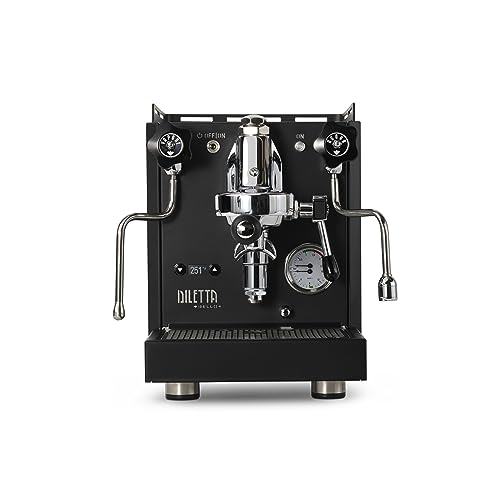
Who wouldn’t want precise temperature control and consistent extractions in a compact, handcrafted machine? I’ve found the Diletta Bello+ delivers just that. Its PID system lets me fine-tune steam boiler temps, while the screen doubles as a shot timer. I appreciate the programmable 10-second preinfusion-it boosts extraction without fuss. The stainless steel frame, case, and boiler guarantee durability, and it’s built to last in any home kitchen. Made by hand in Milan, it blends manual controls with thoughtful design. Eco-mode cuts power use by lowering boiler temp, yet recovery stays quick. If you want precision without complexity, this machine is a solid pick.
Best For: Home baristas seeking precision, durability, and artisanal design in a compact, manually operated espresso machine.
Pros:
- PID temperature control and shot timer ensure consistent, high-quality extractions
- Durable stainless steel construction for long-term reliability in home use
- Programmable preinfusion and eco-mode enhance performance and energy efficiency
Cons:
- Manual controls may intimidate beginners unfamiliar with espresso brewing
- Made in Italy, which could lead to higher shipping costs or import fees
- Limited automation compared to super-automatic machines, requiring more user involvement
Gevi 58mm Espresso Machine with PID Control

Precision matters most when pulling a great shot, and the Gevi 58mm Espresso Machine with PID Control is built for those who want consistent results without stepping into pro-level complexity. I use its 58mm commercial portafilter and PID-controlled temperatures (90°C–96°C) to pull balanced shots with full extraction. The pre-infusion feature wets the puck evenly, boosting flavor. Four programmable volume settings save time, and the steam wand heats up fast, creating microfoam for lattes or cappuccinos. Its stainless steel body stays cool and fits small countertops. The 2.2L tank reduces refills, and the included barista tools help beginners. It’s backed by a 12-month warranty and lifetime support-ideal for thoughtful gifting.
Best For: Home baristas seeking professional-quality espresso with precise temperature control and ease of use in a compact, durable design.
Pros:
- 58mm commercial portafilter and PID temperature control ensure consistent, full-flavor extraction
- Programmable volume settings and pre-infusion enhance customization and convenience
- Compact stainless steel build with a large 2.2L water tank and included barista tools for beginners
Cons:
- Steam wand requires practice to master for optimal milk frothing
- No built-in grinder, requiring a separate purchase for fresh beans
- PID feature may be underutilized by casual users unfamiliar with temperature profiling
Garvee Espresso Machine with Grinder, 20 Bar

The Garvee Espresso Machine with Grinder, 20 Bar, is a solid pick for home baristas who want consistent results without the complexity of high-end models. I appreciate its dual PID control, which keeps brewing temps stable at 201.2°F, ensuring even extraction and reliable milk steaming. Its 20-bar pump and 1450W motor deliver strong pressure, while the built-in gauge lets me monitor brew pressure in real time. The ThermoJet system heats in under 30 seconds, so I’m not waiting long. I also like the adjustable steam wand-it froths well and cleans easily. With the built-in grinder and simple controls, I get good shots fast, though fine tuning takes practice.
Best For: Home baristas seeking a user-friendly, all-in-one espresso machine with grinder for consistent espresso and milk-based drinks.
Pros:
- Dual PID temperature control ensures stable brewing and steaming temperatures for consistent results
- Rapid ThermoJet heating system brings the machine to temperature in under 30 seconds
- Integrated grinder and adjustable steam wand offer customization and ease of use
Cons:
- Learning curve for dialing in optimal grind and extraction settings
- Built-in grinder may require frequent recalibration for best results
- Compact design may limit water tank and bean hopper capacity
Turin Legato Espresso Machine (Stainless Steel)
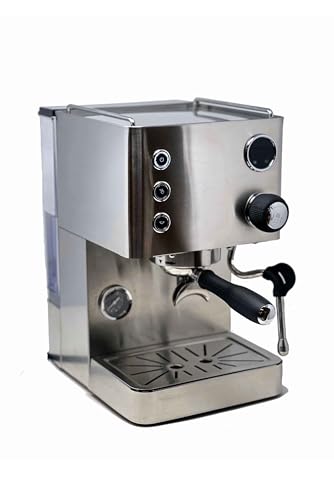
If you’re after a machine that handles busy morning routines without breaking stride, the Turin Legato Espresso Machine (Stainless Steel) stands out with its dual boiler-thermoblock system-delivering steady brew temps and real-time steam recovery so you can pull a shot and froth milk at the same time. I rely on its PID to keep temperatures stable, and the programmable shot timer lets me fine-tune brews consistently. The 58mm portafilter fits standard filters and locks in firmly. Pre-infusion ramps up pressure gently, boosting crema and flavor balance. Stainless steel construction feels solid, and the removable tank and drip tray make cleanup simple. It’s no frills, but it works.
Best For: Home baristas and espresso enthusiasts who want professional-grade performance with reliable temperature control and the ability to brew and steam simultaneously.
Pros:
- Dual boiler-thermoblock system allows for simultaneous brewing and steaming with quick heat-up and consistent performance
- 58mm portafilter and PID temperature control deliver precise, customizable extractions for high-quality espresso
- Durable stainless steel build with removable water tank and drip tray for easy maintenance
Cons:
- Lacks advanced automation or built-in grinder, requiring separate equipment for full workflow
- No touchscreen or app connectivity, which may appeal to tech-focused users
- Pre-infusion is preset rather than adjustable, limiting customization for advanced users
Ascaso Steel DUO Espresso Machine (White)

You’ll want the Ascaso Steel DUO Espresso Machine (White) if you’re serious about temperature accuracy without the steep learning curve. I rely on its PID control for one-degree adjustments, giving me repeatable extractions. The dual thermoblock delivers steady steam and hot water on demand, so I never wait. I’ve programmed my shots-preinfusion, single, double-and it nails consistency every time. The 58mm portafilter with walnut handle feels solid and fits standard baskets. Its steel-and-powder-coated body resists scratches and matches my kitchen. It’s not flashy, but it performs like pricier models.
Best For: Home baristas who prioritize precise temperature control and consistent, programmable espresso without a steep learning curve.
Pros:
- Advanced PID temperature control with one-degree increments ensures highly accurate and repeatable extractions
- Dual thermoblock system provides continuous steam and hot water with excellent thermal stability
- Programmable volumetric dosing for preinfusion, single, and double shots enhances convenience and consistency
Cons:
- Lacks built-in grinder, requiring a separate purchase for fresh grinding
- No pressure profiling or manual pump control for advanced users seeking customization
- Design is functional but less flashy, which may not appeal to those wanting a more premium aesthetic
Factors to Consider When Choosing Espresso Machine PID Controllers
You’ll want to check how precisely the PID maintains brew temperature, since even small fluctuations can affect extraction. Look for models with accurate PID control and dual boiler integration if you plan to pull shots and steam milk at the same time without compromise. Features like pre-infusion support and a wide temperature range give you more control, especially when working with different beans or roast levels.
Brew Temperature Precision
Temperature stability lies at the heart of every great espresso shot. You need precise brew temperature control-usually within ±1°C-to get consistent extraction and balanced flavors. PID controllers help by constantly tweaking the heating element using real-time feedback from temperature sensors, keeping water steady. Look for machines that let you adjust temps in one-degree increments, so you can fine-tune for different beans. This level of control matters most when pulling back-to-back shots, as thermal drops can skew flavor. Dual systems that pair PID with NTC sensors respond faster to shifts, correcting deviations before they affect your espresso. Machines like the Rocket R58 or the Decent EP offer this kind of precision. If you’re serious about shot quality and repeatability, especially with varying roast profiles, don’t overlook how tightly your machine manages heat.
PID Control Accuracy
A well-tuned PID controller makes all the difference when chasing consistent espresso. You want one that holds temperature within ±1°C of your set point, giving you stable brewing conditions every time. High-end models use NTC sensors that check boiler temps up to 10 times per second, correcting drift before it affects your shot. Look for adjustable PID settings-you’ll fine-tune how fast the system responds, cutting overshoot and smoothing out heat delivery. This accuracy keeps water between 90°C and 96°C, right where you need it to avoid sour or bitter flavors. A properly calibrated PID also guarantees shot-to-shot repeatability, even during busy morning rushes or back-to-back pulls. Machines like the Breville Dual Boiler or Rocket R58 use these systems well, offering real precision without constant babysitting. When comparing options, check sensor speed, stability ratings, and user tuning ability-don’t assume all PIDs work the same.
Dual Boiler Integration
Dual boiler systems take PID control to the next level by giving you independent heating circuits for brewing and steaming, so you can pull a shot while steaming milk without either function losing stability. You get precise temperature management for each boiler, letting you set brew water to within ±1°C and maintain strong steam pressure at the same time. PID controllers here prevent swings during back-to-back shots, which matters if you’re making multiple drinks in a row. Machines like the Rocket R58 or Profitec Pro 800 use this setup to deliver fast recovery and consistent brew temps, even under heavy use. You’ll pay more upfront, but the performance payoff is clear-especially if you run a busy home setup or small café. Just make sure your water quality supports the system; hard water can undermine precision over time. This integration is ideal when stability, speed, and precision are non-negotiable.
Pre Infusion Support
While pulling a great shot starts with fresh beans and proper grind size, don’t overlook how pre-infusion support in a PID-controlled machine can improve extraction. You get better flavor and crema by gently wetting the puck with low-pressure water before full pressure kicks in. PID machines guarantee the water’s at the right temp from the start, so your pre-infusion isn’t just timed well-it’s thermally precise. Look for models with adjustable pre-infusion, letting you set durations from 3 to 10 seconds depending on roast level; lighter roasts often need longer. Active, pump-driven pre-infusion gives you more control than passive versions using restrictor baskets. It reduces channeling by helping the puck expand evenly, leading to balanced shots. If you want consistency across beans and grinds, pick a machine with programmable pre-infusion-it’s a game-changer for serious espresso at home.
Temperature Range Flexibility
What if your espresso tastes off not because of the beans or grind, but because the water’s just a few degrees too hot or too cold? A PID controller with temperature range flexibility lets you fine-tune brew temps between 90°C and 96°C (194°F to 204.8°F), matching each bean’s ideal extraction profile. You can adjust in one-degree increments, making small tweaks that boost shot consistency and flavor clarity. Look for systems holding stability within ±1°C to avoid scalding or under-extraction, preserving sweetness and aroma. Flexible temps also help with pre-infusion, letting you start cooler and ramp up for balanced extraction. High-end models like the Expobar Brewtus IV or Rocket R58 offer this precision, maintaining steady output even under heavy use or changing room conditions. When you control the heat this closely, you’re not guessing-you’re dialing in.
User Interface Simplicity
You’ve got the brew temperature dialed in, but if your machine’s interface is cluttered or slow, hitting that perfect 94°C shot after shot becomes a hassle. Look for PID controllers with simple, intuitive controls-like dials or touch panels-that let you adjust temps quickly without digging through menus. A real-time boiler temperature display gives you immediate feedback, so you know exactly when the system stabilizes. Models with one-touch presets, like the Breville Dual Boiler or Rocket R58, help maintain consistency with minimal input. Clear labeling and fewer buttons cut down on errors and speed up learning. Backlit digital screens, such as those on the ECM Mechanika VI, improve visibility in dim lighting, making early mornings easier. Don’t overlook layout-well-organized interfaces save time and frustration during daily use. Simplicity isn’t just about looks; it boosts precision and reliability when it matters most.
Build Quality And Durability
When choosing a PID controller for your espresso machine, prioritize build quality that matches your brewing demands. Look for units with stainless steel or reinforced polymer casings-they resist heat, corrosion, and daily wear. Durable PIDs pair with stainless steel boilers or thermoblocks that handle constant heating without breaking down. Precision NTC thermistors keep readings accurate within ±1°C, even after thousands of brews. If you pull many shots per day, go for commercial-grade wiring and sealed electronics; they protect against steam, moisture, and power spikes. Reinforced connectors and high-temperature soldering on control boards guarantee stability under constant thermal stress. Don’t skimp here-cheaper plastics and thin wiring fail faster, especially in busy setups. A well-built PID lasts longer and delivers consistent performance, which matters whether you’re at home or in a café. Choose toughness that matches your routine.
Real Time Monitoring Features
A solid build keeps your PID running, but real-time monitoring turns it into a precision tool. You see extraction pressure instantly with built-in pressure gauges, measured in bars, so you can catch issues before they ruin your shot. Digital PID displays show brew temperature in Fahrenheit or Celsius, letting you tweak heat on the fly for better flavor. Shot timers track every second of the pull, making it easy to replicate results. With continuous NTC sensor feedback, you get real-time water temperature updates, reducing heat swings during brewing. Some controllers show boiler temp alongside brewing metrics, so you’re not guessing when adjusting settings. Machines like the Breville Dual Boiler or Profitec Pro 300 give you all this data at once, helping you fine-tune. If you want consistency, real-time feedback isn’t a luxury-it’s essential. Skip it, and you’re flying blind.
Frequently Asked Questions
What Is the Ideal PID Temperature for Espresso?
You’ll want to set your PID temperature between 195°F and 205°F for espresso-it’s the sweet spot most baristas use. Go too low, and your shot tastes sour; too high, and it burns, turning bitter. Machines like the Breville Dual Boiler or Rancilio Silvia let you lock in that range accurately. Pre-infusion helps, but nailing the temp means more consistent, balanced shots every time.
How Often Should I Clean a PID Espresso Machine?
You should clean your PID espresso machine every 1–3 months, depending on usage. Run water-through cycles weekly and backflush with water daily if you have a dual boiler. Use descaling solution every 2–3 months to prevent mineral buildup. Wipe group heads and portafilters after each use. Machines like the Expobar Brewtus or La Marzocco Linea Mini need consistent care-neglect hurts performance. More frequent use means more frequent cleaning.
Can PID Controllers Improve Milk Steaming Performance?
Yes, PID controllers can improve milk steaming performance by stabilizing your steam boiler’s temperature. You’ll get consistent steam pressure, so milk textures faster and more evenly. Without PID, temperature swings cause uneven steaming-especially during back-to-back drinks. Machines like the Breville Dual Boiler or Rancilio Silvia Pro let you set exact steam temps, giving you better control. Just remember, proper steaming still depends on your technique and pitcher skill-PID helps, but doesn’t replace practice.
Do PID Machines Use More Electricity Than Standard Ones?
You’ll find PID machines don’t use considerably more electricity than standard ones. They cycle heating elements similarly but smarter-maintaining temperature with precision rather than constant full power. While the digital controller draws a small amount of extra energy, it’s negligible over time. In practice, your electricity use stays about the same, but you gain consistent brew temps and fewer fluctuations, which helps espresso quality without driving up your bill.
Are PID Espresso Machines Safe for Beginners?
Yeah, PID espresso machines are safe for beginners-you won’t damage them by making mistakes. They’re actually easier in some ways since the PID holds your temperature steady, so you get consistent shots without babysitting the machine. Machines like the Breville BES870 or Rancilio Silvia with PID help you learn faster by removing guesswork. Just follow the manual, clean regularly, and you’re good. They’re as safe and simple as any home appliance when used correctly.