Why Grind Size Must Be Coarsened for High-Humidity Environments
You need to coarsen your grind in humid conditions because moisture softens beans, making them produce more fines and clump up. This clogs grinders-especially blade or older burr models-and causes uneven extraction. High-end grinders like the Baratza Virtuoso handle it better, but you’ll still want to adjust. A slightly coarser setting reduces clogging and static, keeping your shots balanced. Stick to airtight storage, and you’ll see how small tweaks make a real difference.
Notable Insights
- High humidity softens coffee beans, making them fracture unevenly and produce more fines during grinding.
- Damp beans increase static, causing grounds to clump and clog grinders, especially in fine espresso settings.
- Moisture raises bean stickiness, reducing flow and leading to inconsistent particle distribution in the grind.
- More fines and clumping promote over-extraction, resulting in bitter, slow-pulling espresso shots.
- Coarsening the grind compensates for humidity effects by improving flow and reducing clogging and static buildup.
How Humidity Softens Coffee Beans
A fair amount of moisture in the air can noticeably change how your coffee beans behave during grinding. When humidity rises, your beans absorb water through moisture absorption, altering their internal structure. This makes the bean texture softer than usual, especially noticeable in lighter roasts that are naturally more porous. Softer beans fracture unevenly under pressure, producing more fines and clumping during grinding. You’ll see this most with blade grinders or older burr models that lack consistent chamber control. In contrast, high-end grinders like the Baratza Virtuoso or 1ZPresso units handle these changes slightly better due to tighter burr alignment. But even then, the change in texture demands adjustment. You’re not imagining it-humidity really does make beans less brittle. That’s why adapting your setup isn’t optional if you want consistent results in muggy conditions.
Why Damp Beans Clog Your Grinder
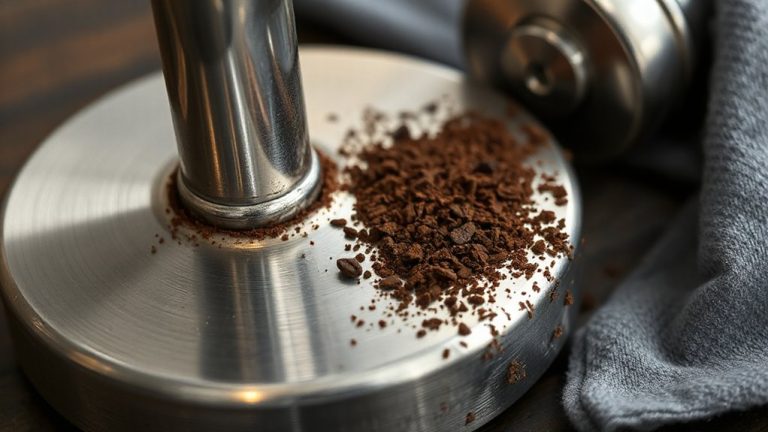
When humidity causes your beans to absorb moisture, they become stickier and less free-flowing, which increases the odds of clogging in your grinder. That dampness boosts static friction, making grounds cling to the burrs and each other instead of falling smoothly. You’ll notice clumps building up, especially in fine grinds for espresso, where airflow is already restricted. This isn’t just messy-it forces your grinder to work harder, increasing heat and accelerating blade erosion over time. Low-end blade grinders suffer worst, but even high-end burr models struggle if not cleaned regularly. To reduce clogs, store beans in airtight containers with humidity-controlled environments, and consider grinding slightly coarser in humid conditions. While some grinders have anti-static coatings or timed pulses to disrupt clumping, avoiding moist beans in the first place remains the most reliable fix. Older models, especially well-maintained vintage coffee grinders, often feature robust builds that resist moisture-related wear better than modern budget equivalents.
Stop Over-Extracting in Humid Weather
Why does your espresso taste bitter or flat during the muggy season? Humid air increases static buildup in your grinder, causing uneven particle distribution and channeling in the puck. This leads to over-extraction, even with unchanged settings. Moisture-laden beans also speed up coffee oxidation post-grind, dulling flavor fast. You’re not imagining it-your coffee degrades quicker when the air’s thick.
Adjustments are essential, but not just in grind size. Consider these factors:
| Factor | Impact |
|---|---|
| Static buildup | Causes clumping, clogs, uneven extraction |
| Coffee oxidation | Speeds flavor loss, especially in humidity |
| Grind consistency | Poor dispersion ruins shot balance |
| Shot time | Over-extracted shots run too slow, taste bitter |
Prevent issues with quick grinder cleanings and tightly sealed storage. Your machine didn’t fail-humidity did. Act accordingly. A consistent espresso grinders choice can greatly reduce static and preserve grind quality in high-moisture environments.
Adjust Your Grind Size for Humidity
Though your grinder settings may have worked perfectly in dry conditions, they’ll likely need adjusting when humidity rises. High moisture in the air reduces bean brittleness, making coffee beans slightly softer and harder to fracture cleanly. This changes how they grind, often producing more fines and uneven particles. You’ll also notice increased static resistance, causing grounds to cling to the burrs and chute, further disrupting consistency. To compensate, you should coarsen your grind incrementally-especially with blade or low-tier burr grinders, which are less precise. For example, on a Baratza Encore, turning the dial one notch can make a measurable difference. Monitoring dose, yield, and brew time helps fine-tune the adjustment. You’re not just fighting clogs-you’re preserving extraction balance. A slightly coarser setting improves flow and reduces channeling, keeping your espresso or filter coffee steady even when the air feels sticky. Choosing the right best coffee grinders can significantly reduce humidity-related grinding issues due to better burr precision and static control.
Keep Your Coffee Consistent in Muggy Air
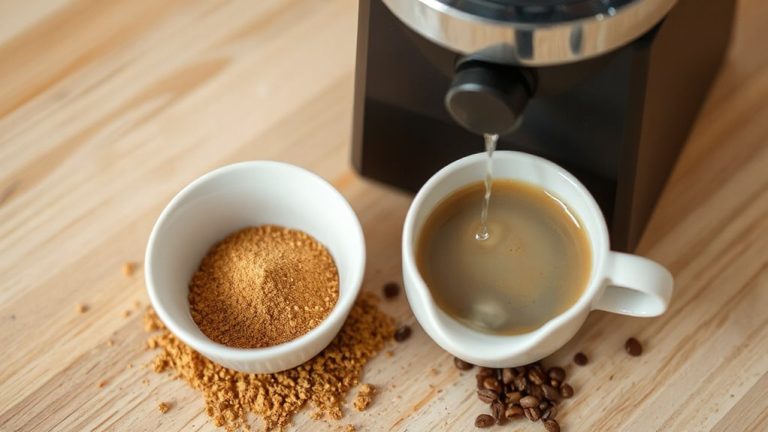
A stable grind keeps your coffee tasting consistent, even when humidity throws a wrench in the works. High moisture absorption in muggy air affects bean density, making beans slightly heavier and more prone to clumping during grinding. That uneven grind leads to inconsistent extraction and off flavors. To counter this, adjust your grinder settings slightly coarser in humid conditions-especially with burr grinders. This helps maintain flow and reduces clogging. Here’s how different grinders respond:
| Grinder Type | Humidity Performance |
|---|---|
| Blade | Poor – inconsistent due to heat and moisture absorption |
| Flat Burr | Good – stable grind with minor bean density shifts |
| Conical Burr | Best – handles humidity with minimal adjustment |
Store beans in airtight containers to limit moisture exposure. Pre-grind only what you need.
On a final note
You’ll want to go coarser when grinding in humid conditions because moisture softens beans, making them more likely to clump and clog your grinder. Damp beans also extract too quickly, leading to bitter, over-extracted coffee. A slightly coarser setting helps prevent this. It keeps flow consistent, especially with blade or low-end burr grinders. For best results, grind just before brewing and store beans in an airtight container to minimize moisture exposure.