How to Deep Clean a Coffee Scale to Maintain Precise Measurement Accuracy
You should deep clean your coffee scale regularly to maintain accuracy, especially since oils and coffee grounds can throw off measurements under 1 gram. Turn it off and unplug it first, then wipe with a damp microfiber cloth and mild soap. Use a soft brush or cotton swab for tight spots, avoiding harsh chemicals or soaking. Let it air-dry completely before recalibrating with a known weight. Keep up daily wipe-downs to prevent buildup-and there’s more to get right for long-term precision.
Notable Insights
- Power off and unplug the scale before cleaning to ensure safety and prevent damage.
- Clean the surface with a damp microfiber cloth and mild soapy water to remove oils and residue.
- Use a soft brush or cotton swabs to gently remove debris from crevices and edges.
- Never soak the scale or use abrasive cleaners that can damage the finish and affect accuracy.
- Air-dry completely for 1–2 hours and recalibrate with a known weight before reuse.
Why Cleaning Your Coffee Scale Matters for Accuracy
Dust, coffee grounds, and oily residues-those tiny leftovers you might overlook-can throw off your coffee scale’s precision over time. Even small buildups create an impact on precision, especially when measuring under 1 gram, where accuracy matters most. If you’re using a typical 0.1g-resolution scale like those from Hario or Acaia, residue can cause measurement drift, meaning readings slowly shift away from true weight without you noticing. This drift may lead to inconsistent brews-over-extracted or weak coffee-because your coffee-to-water ratio is off. Regular cleaning minimizes these errors and maintains calibration. Scales with stainless steel platforms resist grime better than plastic, but both accumulate debris. Skipping cleanings lets residue build, increasing inaccuracies. Wiping after use helps, but periodic deep cleaning is essential for reliable results. Accuracy isn’t just about the readout-it’s about trusting every brew. For best long-term performance, consider models highlighted in the Best Scales for 2024 roundup, which balance durability, precision, and ease of maintenance.
Gather the Right Supplies for Safe Deep Cleaning
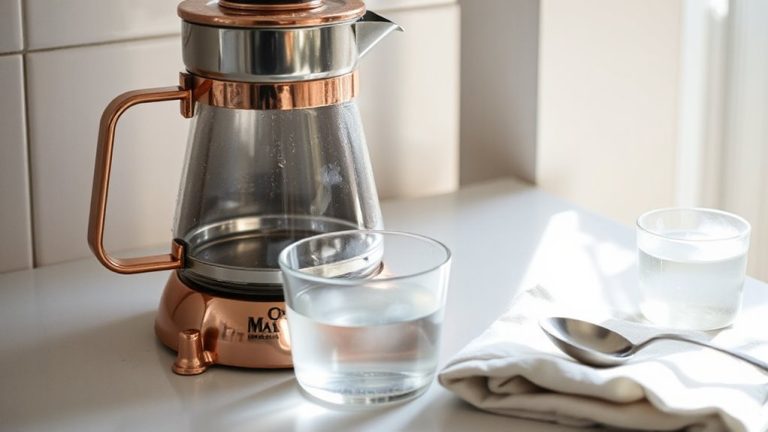
You’ll want to gather a few basic supplies before starting a deep clean, since using the wrong tools can damage your scale’s sensitive components. Stick to a soft microfiber cloth, mild dish soap, distilled water, and cotton swabs. Avoid abrasive sponges or harsh chemicals-these can scratch the surface or compromise calibration. Check your scale’s manual for chemical resistance and material compatibility; some plastics and coatings react poorly to ammonia or alcohol-based cleaners. For example, brands like Acaia or Hario often use specific polymer finishes that require gentle care. A small brush can help dislodge coffee grounds from crevices, but make sure it’s non-metallic to avoid scratches. Using distilled water prevents mineral spots on the display. Always unplug or remove batteries before cleaning. Preparing the right tools guarantees a safe, effective clean without risking long-term damage to accuracy or components.
Step-by-Step: How to Deep Clean Your Coffee Scale
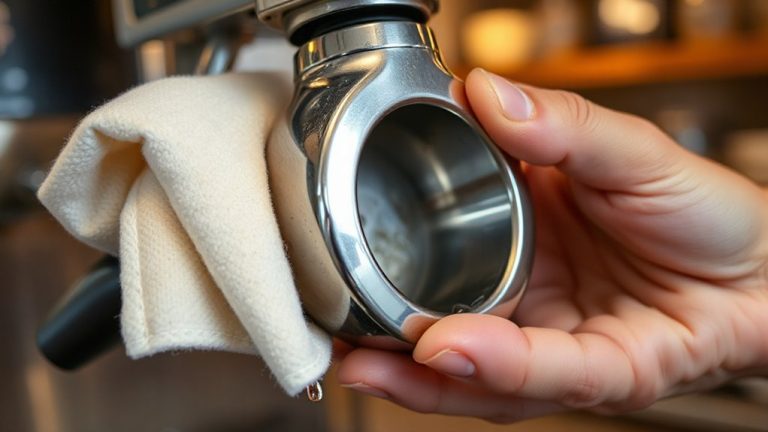
Now that you’ve got your supplies ready-microfiber cloth, mild dish soap, distilled water, cotton swabs, and a soft brush-it’s time to clean your coffee scale properly. Start by powering off and unplugging the scale if it’s not battery-operated. Gently wipe the surface with a damp microfiber cloth lightly soaped in water to remove coffee stains and oils. Avoid soaking it-water can damage electronics. Use the soft brush on any textured or uneven surfaces where grime hides, like around the edges or display screen. Dip cotton swabs in distilled water to clean tight spots, such as crevices or under buttons. Be thorough but gentle to prevent scratching. Don’t use harsh chemicals or abrasive pads-they can degrade the finish and affect accuracy. Regular cleaning prevents buildup that could interfere with precise weight readings during brewing.
Drying and Recalibrating After Cleaning
After cleaning, let the scale air-dry completely before turning it back on-residual moisture can interfere with internal components or lead to inaccurate readings. Air drying for at least 1–2 hours guarantees all traces of water evaporate, especially around the edges and under the weighing platform. Don’t rush this step; using the scale while damp risks damage or inconsistent performance. Once dry, power it on and check for stability. Most models auto-zero, but you’ll likely need recalibration methods to restore accuracy. Use a known weight-many coffee pros rely on 500g calibration masses-or follow the manufacturer’s recommended process. Some scales require specific button sequences; others support external weights. Skipping recalibration may result in measurements off by grams, which matters when dosing espresso. Always recalibrate after deep cleaning to maintain precision. This step isn’t optional if you want repeatable, trustworthy results. For optimal brewing results, consider pairing your maintenance routine with one of the top-rated best coffee scales known for reliability and precision.
Prevent Buildup: Daily Habits for a Spotless Scale
Regularly wiping down your coffee scale only takes a few seconds but makes a big difference in preventing grime buildup. After each use, quickly wipe the surface with a dry or slightly damp cloth to remove coffee grounds and residue. This simple habit stops coffee spills from drying and forming sticky spots that are harder to clean later. Avoid leaving the scale near steam wands or boiling kettles to reduce moisture exposure, which can damage internal components over time. Use a protective mat if placing the scale near water sources. Always let spilled liquids dry before wiping-don’t smear them into crevices. Never submerge the scale or use harsh cleaners. Models like the Acaia or Hario have sensitive electronics, so consistent surface care prevents long-term wear. Keep it powered off when not in use. These small steps extend the life of your scale and maintain accurate readings daily.
On a final note
You’ve cleaned your scale, now let it dry fully-moisture skews readings. Recalibrate using a known weight, like a 500g calibration mass or a U.S. nickel (5g). Daily, wipe crumbs with a dry cloth; avoid sprays near the edges. For sticky spills, use a slightly damp cloth, never submerge. A well-maintained scale lasts years, keeps doses consistent, and beats guessing. Ignore this, and your espresso shots will drift. Accuracy starts with hygiene.