Top-Rated Espresso Machines Experts Actually Recommend
Experts recommend espresso machines like La Marzocco, Breville, and Jura for their durability and performance. Keep them running right by using Urnex Cafiza for daily backflushing and Dezcal for descaling every 1–3 months. Match your cleaner to your machine type-powder for precise dosing, tablets for convenience. Always check compatibility with materials like brass or stainless steel. Proper maintenance prevents oil buildup and scale, ensuring clean flavor and long life. The right care makes all the difference.
We are supported by our audience. When you purchase through links on our site, we may earn an affiliate commission, at no extra cost for you. Learn more. Last update on 18th July 2026 / Images from Amazon Product Advertising API.
Notable Insights
- Experts recommend machines with robust build quality, like those from La Marzocco, for durability and consistent performance.
- Semi-automatic espresso machines are favored for greater control over brewing temperature and pressure.
- Dual boiler systems, found in models from Expobar and Rocket, allow simultaneous brewing and steaming.
- Machines designed for portability and ease of maintenance, like Quick Mill, are highly rated for home use.
- Compatibility with high-quality cleaning products, such as Urnex, ensures longevity and optimal flavor output.
Urnex Cafiza Espresso Machine Cleaner (566g)

If you run a busy café or pull dozens of shots daily at home, the Urnex Cafiza Espresso Machine Cleaner (566g) is the best choice for keeping your machine in top condition. I use it daily to clean group heads, valves, and internal lines where oils build up. The powder mixes fast, disperses well, and backflushes easily with no residue. It’s NSF certified, safe on metals, and OMRI listed-so it’s reliable. One scoop goes a long way, making it cost-effective. I’ve tried tablets, but this powder gives better control and dissolves more completely. For heavy use, nothing beats Cafiza.
Best For: Professional baristas and heavy-use home espresso enthusiasts who need a reliable, high-performance cleaner for daily maintenance of their machines.
Pros:
- NSF certified and OMRI listed, ensuring safety and compatibility with metals
- Highly soluble powder enables thorough cleaning with no residue
- Ideal for backflushing, effectively removing coffee oils and buildup in group heads and internal lines
Cons:
- Powder format may be messier to handle compared to pre-measured tablets
- Strong cleaning power may be excessive for very low-use home machines
- Slight learning curve in measuring the correct dose for optimal use
Urnex Cafiza Espresso Machine Cleaner (100 Count)

I rely on Urnex Cafiza Espresso Machine Cleaner when I need thorough, consistent maintenance for high-use machines, especially if I’m using a commercial or prosumer espresso setup that demands daily backflushing. Each 1.2-gram tablet dissolves fast and cuts through stubborn coffee oils in group heads, valves, and internal lines. The 100-count pack is compact-just 2.75 inches wide-and weighs under 4 ounces, making it easy to store or replace. I appreciate that it’s NSF certified and OMRI listed, so it’s safe for food-contact surfaces and meets strict cleaning standards. It’s not the cheapest option, but for daily use, it prevents clogs and keeps shots tasting clean. I’ve found it works faster than powder versions, especially in busy setups where time matters. Alternatives exist, but few offer this balance of convenience, safety, and performance. If you backflush daily, these tablets make maintenance efficient and reliable-no guesswork, just results.
Best For: Professionals and serious home baristas with high-use espresso machines requiring daily backflushing for consistent, residue-free performance.
Pros:
- Dissolves quickly and effectively removes stubborn coffee oils from group heads, valves, and internal lines
- NSF certified and OMRI listed, ensuring safety on food-contact surfaces and compliance with stringent standards
- Compact, lightweight 100-count tablet format offers convenience, precise dosing, and easy storage
Cons:
- Higher price point compared to some powder or generic cleaning alternatives
- Limited quantity per pack may require frequent reordering for commercial use
- Overkill for low-use or occasional home machines needing only infrequent cleaning
Urnex Cleancaf Coffee Maker Cleaner (3-Pack)

Since proper maintenance directly impacts flavor and machine longevity, I rely on Urnex Cleancaf Coffee Maker Cleaner (3-Pack) when I want to keep my espresso machine running efficiently without using harsh chemicals or vinegar. It tackles built-up oils and scale that turn bitter and slow down brewing. I’ve used it on my Delonghi and Nespresso machines-it works quietly, leaves no odor, and improves taste. Each packet runs through like coffee, so it’s simple. The formula is non-toxic and made in the USA. Three doses last about three months, which fits my routine. I find it performs better than vinegar, without the smell or residue.
Best For: Coffee and espresso machine owners seeking a safe, effective, and convenient cleaner that maintains machine performance and coffee taste without harsh chemicals or vinegar.
Pros:
- Effectively removes coffee oils and mineral buildup to improve flavor and brewing efficiency
- Easy to use with a standard brewing process-no disassembly or harsh chemicals required
- Non-toxic, odorless, and made in the USA for safe, worry-free cleaning
Cons:
- Slightly higher cost per use compared to homemade solutions like vinegar
- Single-use packets may generate more waste than bulk cleaner options
- May require regular use to maintain results, adding to long-term maintenance routine
Urnex Dezcal Coffee Machine Descaler (900g)
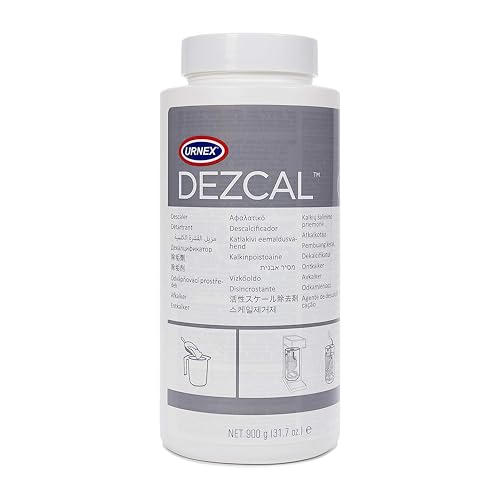
The Urnex Dezcal Coffee Machine Descaler (900g) is a go-to for coffee lovers who treat their espresso machine like a precision tool-because it is. I use it every 1–3 months to clear limescale from boilers, heating elements, and spray heads. It works faster and better than vinegar, with no lingering odor. The powder lets me dose precisely-1 oz per 32 oz of water-and it’s safe for Keurig, Breville, Jura, and others. Regular use prevents corrosion, keeps temperatures ideal, and extends my machine’s life. For hard water areas, it’s not optional-it’s essential maintenance.
Best For: Coffee enthusiasts with espresso or drip machines in hard water areas who prioritize optimal machine performance and longevity.
Pros:
- Universally compatible with major coffee machine brands including Keurig, Breville, Jura, and Delonghi
- More effective and faster at removing limescale than vinegar, with an odorless formula that leaves no residue
- Powder format allows precise dosing (1 oz per 32 oz of water) for consistent, reliable descaling
Cons:
- Higher cost compared to household alternatives like vinegar
- Requires careful handling as a concentrated chemical powder
- Overuse or improper rinsing may potentially damage sensitive machine components
Urnex Cafiza Professional Espresso Machine Cleaning Tablets, 100 Count

You need a reliable way to maintain your espresso machine if you pull multiple shots daily, and that’s where Urnex Cafiza Professional Espresso Machine Cleaning Tablets stand out-especially for owners of high-use traditional or full automatic machines. I use one 2g tablet in the group head or delivery chamber for backflush cleaning, which removes built-up oils and residue from valves and internal lines. The tablets offer precise dosing, so I don’t waste product. They work best alongside Dezcal for descaling and Rinza for milk systems. I’ve found this system keeps my machine running smoothly with minimal guesswork.
Best For: Espresso machine owners who pull multiple shots daily and need a precise, effective way to clean coffee oils and residue from high-use traditional or full automatic machines.
Pros:
- Convenient tablet form ensures accurate, mess-free dosing
- Effectively removes built-up coffee oils, residue, and waste from group heads, valves, and internal lines
- Optimized for backflush cleaning and works seamlessly with other Urnex products like Dezcal and Rinza
Cons:
- Requires regular use alongside descaling agents for complete maintenance, increasing overall cost
- Tablet format may dissolve too slowly if not used with proper water pressure or temperature
- Limited to espresso machines, not suitable for general appliance or countertop cleaning
Urnex Cafiza Espresso Machine Cleaner (3-Pack)

If you’re serious about maintaining peak performance from your espresso machine-whether it’s in a busy café, office kitchen, or at home-regular cleaning with a proven formula makes all the difference, and that’s where Urnex Cafiza Espresso Machine Cleaner (3-Pack) stands out. I rely on this powder to remove built-up coffee oils and residue from group heads, lines, and portafilters. It’s OMRI listed and NSF certified, so it’s safe yet strong enough for daily backflushing. The powder form gives me control over dosing, and each 566-gram container lasts. Made in the USA, it’s ideal for high-volume and home use alike.
Best For: Coffee enthusiasts, baristas, and office managers seeking a reliable, professional-grade cleaner to maintain espresso machine performance and coffee taste in high-use or home environments.
Pros:
- Effectively removes coffee oils and residue from group heads, lines, portafilters, and valves
- OMRI listed and NSF certified, ensuring safety and environmental responsibility
- Powder format allows precise, adjustable dosing for different cleaning needs
Cons:
- Powder form may require careful handling to avoid spills or inhalation
- Slightly higher cost compared to non-professional cleaning products
- May require frequent use in high-volume settings, leading to faster consumption
Urnex Dezcal Descaling Solution 33.6oz

For anyone serious about maintaining their espresso machine-especially high-performance models like those from Breville or Gaggia-using a reliable descaling solution makes a clear difference in both taste and longevity. I rely on Urnex Dezcal because its 33.6oz bottle delivers up to 8 descaling cycles, which saves money over time. It works fast, removing limescale from espresso machines, Keurigs, kettles, and even irons. I’ve seen it restore steam wand pressure and improve water flow. Unlike vinegar, it’s odorless and won’t leave residue. If you use hard water, regular descaling with Dezcal keeps your machine running cleanly and extends its life.
Best For: Home baristas and coffee enthusiasts with espresso machines, Keurigs, or other appliances who use hard water and want to maintain optimal performance and taste.
Pros:
- Effectively removes limescale and mineral buildup without leaving odors or residue
- Compatible with a wide range of appliances including espresso machines, kettles, and steam irons
- Cost-effective with up to 8 descaling cycles per 33.6oz bottle
Cons:
- May require multiple applications for heavily scaled machines
- Liquid format takes up more storage space compared to powder or tablets
- Slightly higher upfront cost compared to generic descaling alternatives
Urnex Cafiza Espresso Machine Cleaner (2 Pack)
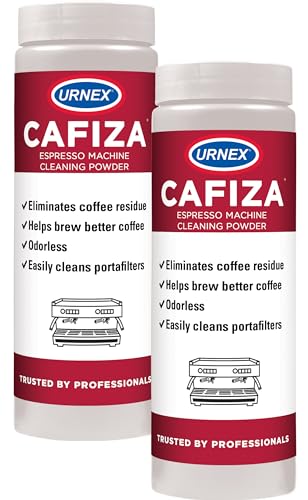
A barista running a busy café knows that machine maintenance isn’t optional-it’s essential, and the Urnex Cafiza Espresso Machine Cleaner (2 Pack) delivers where it matters most. I use it daily to cut through stubborn coffee oils and residue in group heads, valves, and lines. The powder dissolves fast, cleans deep, and rinses completely-no gunk left behind. It’s NSF certified for metal safety and OMRI listed, so it works in organic-compliant settings. I trust it on my La Marzocco and other traditional machines. For peak performance, I backflush with Cafiza every day. It’s non-negotiable for hygiene, flavor consistency, and machine longevity.
Best For: Baristas and café owners seeking a reliable, daily-use espresso machine cleaner for commercial machines that removes coffee oils and ensures hygiene, flavor consistency, and machine longevity.
Pros:
- NSF certified for metal safety and OMRI listed, making it safe for use in organic-compliant environments
- Highly soluble powder ensures fast, deep cleaning and complete rinsing with no residue buildup
- Specifically formulated for heavy-duty cleaning in high-volume settings, ideal for daily backflushing routines
Cons:
- Powder form may require careful handling to avoid spills or inconsistent dosing
- Primarily designed for professional machines, making it potentially overpowered for home use
- Slightly higher cost compared to generic espresso machine cleaners due to professional-grade formulation
Urnex Dezcal Coffee Descaler 2-Pack

I reach for the Urnex Dezcal Coffee Descaler 2-Pack when I need a reliable, fast-acting solution to keep my espresso machine running at its best, especially if I use hard water. Each box has four single-use packets-eight total-so I always have extras on hand. It works on all my machines, including Keurig, Breville, and Jura models, and is faster and more effective than vinegar. The odorless formula removes limescale without damaging parts, protecting heating elements and preventing malfunctions. I use it every 2–3 months to maintain performance and extend equipment life. It’s not messy, easy to follow, and keeps machines heating water at the right temperature.
Best For: Home coffee enthusiasts with espresso or pod machines who use hard water and want a fast, effective, and odorless descaling solution to maintain machine performance and longevity.
Pros:
- Universally compatible with a wide range of coffee and espresso machines, including Keurig, Breville, Jura, and Nespresso
- More effective and faster at removing limescale than vinegar, with an odorless formula that’s safe on machine components
- Comes in convenient single-use packets (8 total) for mess-free use and easy storage
Cons:
- Higher cost compared to DIY alternatives like vinegar
- Some users may prefer liquid descalers for certain machine types
- Limited availability in physical retail stores, primarily sold online
Descaler for Keurig & Nespresso (2 Uses)

You want your espresso machine running cleanly, and mineral buildup from hard water can dull performance over time-especially with frequent use. I use the Descaler for Keurig & Nespresso because it’s made for both single-serve and drip machines, including brands like Delonghi and Cuisinart. This 8 oz. bottle gives two full descaling cycles (4 oz. each), which beats buying multiple small packs. I pour it with water and run it through the machine per the manual-no strong smells, thanks to its odor-free, non-toxic formula. It’s made in the USA by Weiman and uses naturally derived ingredients, so it’s safer than vinegar. I find it effective for routine maintenance, though heavy buildup may need repeat use.
Best For: Coffee and espresso machine owners seeking an easy, non-toxic solution for routine descaling of single-serve and drip machines.
Pros:
- Compatible with a wide range of brands including Keurig, Nespresso, Delonghi, and Cuisinart
- Odor-free, non-toxic formula made with naturally derived ingredients
- Two full descaling uses per 8 oz. bottle, offering better value than single-use packets
Cons:
- May require multiple applications for machines with heavy mineral buildup
- Slightly higher upfront cost compared to DIY vinegar solutions
- Limited quantity per bottle for users with frequent descaling needs
Factors to Consider When Choosing an Espresso Machine Wirecutter
You’ll want to check how often your machine needs cleaning, since frequent use demands more regular maintenance. Make sure any cleaner you pick works with your model-some brands, like Breville or De’Longhi, have specific requirements. Think about whether you prefer tablets or powder, and look for options with safety certifications so you know they’re tested and reliable.
Cleaning Frequency Needs
Regular cleaning keeps your espresso machine running smoothly and guarantees each shot tastes as it should. If you use your machine multiple times daily, clean it every day to prevent coffee oil buildup that hurts flavor and performance. For lighter home use, cleaning every 3 to 7 days is usually enough. After every 40 to 50 shots, run a backflush with a dedicated cleaner-this is key for machines under heavy use. Watch for red flags like visible residue, off-flavors, or uneven brew times; they mean you need to clean more often. Sticking to a routine prevents clogs in the group head and valves, helping avoid costly repairs. Machines like the Breville Barista Express or Gaggia Classic need this care to last. Clean regularly, and you’ll get better espresso with fewer issues over time.
Machine Compatibility Check
While choosing a cleaning product, it’s critical to match it with your machine’s build and design to avoid damage. You need to verify that the cleaner works with your machine’s materials-like brass, aluminum, or stainless steel-so you don’t risk corrosion. It must also suit your machine type, whether it’s a semi-automatic, super-automatic, or lever model, since their internal parts differ. If your machine has a pressurized group head, use a cleaner built for that system to guarantee effectiveness. Check if it supports backflushing, especially for models that need it to clean valves and lines. You’ll also want to confirm the solution is safe for machines with built-in water filters or softeners-harsh chemicals can ruin those parts. Using the wrong product might save money now but cost more in repairs later. Always read labels and follow manufacturer guidelines.
Daily Maintenance Requirements
Since daily cleaning plays a direct role in machine longevity and shot quality, backflushing with a dedicated espresso machine cleaner should be part of your routine if you use the machine regularly. You’ll clear built-up oils and residues from the group head, valves, and internal lines-key spots where rancid oils can affect flavor. Frequent use means cleaning after each day’s brewing to prevent gunk buildup. Pick a cleaner with high solubility so it rinses fast and fully, leaving no chemical traces behind. Look for NSF certification-it confirms the product’s safe on food-contact surfaces and won’t harm brass, rubber, or plastic parts. A consistent routine like this keeps your machine hitting the right temperature and pressure every time. Skipping it risks clogs, off-tastes, and early wear. Make it simple: use the right cleaner, follow the steps, and keep your espresso tasting fresh.
Powder Vs Tablet Form
You already know cleaning matters for performance and flavor, but the form of cleaner you use can shape how well and how easily you stick to that routine. Powder lets you measure exact amounts, which is great when your machine needs precise doses. It dissolves fast in water, spreads evenly during backflushing, and usually requires less rinsing afterward. But scooping powder can be messy, and measuring wrong is possible. Tablets, on the other hand, come pre-measured-just drop one in. That means no guesswork and less cleanup. But they dissolve slower, especially in cold water, which might slow your cycle and affect effectiveness. If time and convenience are top priorities, tablets work well. If you want faster dissolution and more control, powder’s likely the better pick. Choose based on your routine, water temp, and how hands-on you want to be.
Certifications And Safety
When choosing a cleaner for your espresso machine, don’t overlook certifications-they’re a reliable sign of safety and performance. Look for NSF certification, which confirms the product is safe for food-contact surfaces and won’t leave harmful residues. If you run an organic-certified cafe or prefer organic maintenance, pick cleaners that are OMRI listed. These meet strict organic processing standards. Safety certifications also mean the formula has been tested to work safely with metals like brass, copper, and stainless steel found in group heads and portafilters. Certified products are less likely to emit toxic fumes or leave behind harmful chemicals during use. Independent labels often verify low environmental impact without sacrificing cleaning power. While uncertified cleaners might seem cheaper, they could risk machine damage or health concerns. Choosing certified means you’re getting a product vetted for real-world safety, compatibility, and effectiveness-key for both home users and pros who rely on consistent, safe maintenance routines.
Solubility And Rinse Efficiency
Though it’s easy to overlook, the solubility of your espresso machine cleaner plays a direct role in how well it works and how safe your machine stays over time. You need high solubility so the cleaner dissolves completely in water, leaving no residue in group heads, valves, or spray heads. Poor solubility risks clogs and hurts performance. A fully soluble formula also disperses fast, improving contact time during backflushing for better cleaning. Rinse efficiency matters just as much-efficient rinse means you can flush out every trace of detergent quickly, so no chemical taste ruins your next espresso. That means less downtime between cleaning and brewing, which is especially helpful if you pull shots daily. Using a cleaner that dissolves fast and rinses clean keeps your machine running smoothly, avoids flavor carryover, and supports consistent maintenance without guesswork.
Descaling Versus Cleaning
While both descaling and cleaning keep your espresso machine running well, they tackle different problems and can’t substitute for one another. You descale to remove mineral buildup-limescale-from hard water, which can clog heating elements and reduce water flow, leading to poor temperature control or machine failure. Cleaning, on the other hand, clears coffee oils and fine grounds that stick to brew groups and portafilters. Left uncleaned, those oils turn rancid and spoil your espresso’s flavor. You’ll need to clean regularly-often daily or weekly-while descaling takes place every one to three months, depending on how hard your water is and how much you brew. Use dedicated cleaning agents for group heads and wipedown parts, but only approved descalers for internal systems. Skipping either step risks damage and bad-tasting shots. Your machine’s longevity and drink quality depend on doing both.
Usage In Professional Settings
Keeping your espresso machine in top shape goes beyond routine cleaning and descaling, especially in a commercial environment where constant use demands more from both equipment and maintenance. You need cleaning products formulated for heavy soil-like Urnex Cafiza-to cut through built-up coffee oils fast. Daily backflushing with water and detergent keeps valves and lines clear, preventing clogs and flow issues. Always choose NSF-certified solutions; they’re safe for food-contact surfaces and won’t damage brass or stainless steel internals. Look for high solubility and quick rinsing so residue doesn’t linger and alter coffee flavor. The cleaner must be strong enough for high-volume use but gentle enough to protect machine parts over time. Using the right product consistently means better-tasting espresso, fewer repairs, and longer machine life. Don’t cut corners-your machine’s performance depends on it.
Frequently Asked Questions
How Often Should I Clean My Espresso Machine?
You should clean your espresso machine daily to keep it working well. Wipe the portafilter and group head after each use, and backflush if it’s a super automatic. Do a deep clean monthly, including descaling, to prevent mineral buildup. Gaskets and shower screens need checking every few months. Regular cleaning keeps your shots consistent, protects the machine, and extends its life without costly repairs.
Can I Use Vinegar to Descale My Machine?
You can use vinegar to descale your machine, but it’s not ideal. It may leave behind odors and residues that affect your espresso’s taste. Instead, go with a dedicated descaling solution like Dezcal or Urnex. They’re formulated specifically for coffee machines, dissolve limescale faster, and rinse clean. If you do use vinegar, run several clean water cycles afterward to minimize residue. For best results and machine longevity, stick to manufacturer-approved products.
Are Urnex Products Safe for All Coffee Makers?
Yes, you can use Urnex products on most coffee makers, but always check the label for compatibility. Their cleaners and descalers, like Full Circle and Descaler, are formulated to be safe for metals, plastics, and seals found in espresso machines, drip brewers, and pod systems. They’re less harsh than vinegar and more effective at breaking down oils and scale. Just follow the instructions-overuse or incorrect dilution can damage components over time.
What’s the Difference Between Cleaning and Descaling?
You clean to remove coffee oils and residue, using a detergent-based product like Urnex Clean after every few uses. You descale to dissolve mineral buildup from water, using an acid-based solution like Urnex Dezcal monthly or as needed. Cleaning maintains flavor and machine performance; descaling keeps internal parts like boilers and pumps working efficiently. Both are essential, but they target different problems-don’t substitute one for the other.
Do I Need to Rinse After Using Cafiza?
Yes, you absolutely need to rinse after using Cafiza. It’s a powdered detergent that, if left in your machine, can leave a soapy taste and damage components over time. After cleaning, run at least two to three full cycles of clean water through the group head and portafilter to flush out all residue. Skipping rinsing risks affecting your espresso’s flavor and long-term machine performance. Always finish a cleaning routine with a thorough rinse.