Best Single Group Espresso Machines: CASABREWS vs Gevi Tested
You’ll pull café-quality shots at home with a single-group machine like the CASABREWS 5418 PRO or Gevi 20 Bar, both offering 20-bar pumps and PID control for steady pressure and temperature. Use a 54mm non-pressurized portafilter for better grind control, and let PID or NTC heating maintain 90–96°C. Pre-infusion improves flavor balance. Pair precise tamp and dose with manual steam wands for microfoam. Machines with 30–60 second heat-up get you brewing fast. Your setup choice affects consistency, so match it to your routine and expect to fine-tune. You’ll find the details that matter most just ahead.
We are supported by our audience. When you purchase through links on our site, we may earn an affiliate commission, at no extra cost for you. Learn more. Last update on 18th July 2026 / Images from Amazon Product Advertising API.
Notable Insights
- A 20-bar pump with PID temperature control ensures consistent pressure and precise brewing for café-quality espresso at home.
- Pre-infusion and non-pressurized portafilters enhance flavor balance by promoting even extraction and allowing full user control.
- 58mm portafilters match commercial standards, enabling larger coffee doses and better compatibility with specialty brewing accessories.
- Fast heat-up systems like thermojet or flashheat reach optimal brewing temperature in under 5 seconds for quick, efficient operation.
- Manual steam wands with 360° adjustability and dry steam output allow barista-level milk texturing for lattes and cappuccinos.
CASABREWS 20 Bar Espresso Machine with Steam Frother

If you’re looking for a compact, no-fuss espresso machine that balances performance and affordability, the CASABREWS 20 Bar Espresso Machine with Steam Frother is a solid pick-especially if you’re new to home espresso or have limited counter space. I use its 20-bar Italian pump and 1350W boiler daily, and it delivers consistent pressure for good extraction. The steam wand froths milk well for lattes or cappuccinos, though I let the machine cool before brewing again to avoid overheating. Its 34 oz tank is easy to remove, and the small footprint fits tight kitchens. Just don’t expect auto-cleaning-this model needs hands-on care, but for $200, it’s reliable.
Best For: Home espresso enthusiasts seeking an affordable, compact machine with manual control and milk-steaming capability.
Pros:
- Powerful 20 bar Italian pump and 1350W boiler deliver consistent extraction for espresso and easy milk frothing
- Compact stainless steel design with a removable 34 oz water tank fits well in small kitchens
- Includes essential accessories like portafilter, tamper, and dual filters for immediate use
Cons:
- Requires manual cooling between steaming and brewing to prevent overheating
- Not dishwasher safe and lacks automatic cleaning functions, demanding regular maintenance
- Learning curve for beginners to master grind size, tamping, and extraction timing
CASABREWS 20 Bar Espresso Machine with Steam Frother

The CASABREWS 20 Bar Espresso Machine with Steam Frother stands out as a solid choice for beginners and casual home users who want reliable espresso and steamed milk without overspending. I’ve found its 20-bar pump and 1350-watt motor deliver consistent extraction, and the 51mm portafilter fits standard single and double baskets. The steam wand works well with cold whole milk for creamy microfoam, though it needs cleaning after each use. It’s compact, fits most countertops, and the removable tank makes refills easy. Setup’s simple, but remember to remove the rubber plug first. It’s not fancy, but it’s dependable for daily drinks and a smart pick for new baristas.
Best For: Home baristas and beginners seeking an affordable, compact espresso machine with reliable extraction and manual milk frothing capabilities.
Pros:
- Delivers consistent espresso with a 20-bar pressure pump and 1350-watt motor
- Compact design fits well on small countertops and includes a removable water tank for easy refilling
- Steam wand produces quality microfoam for lattes and cappuccinos when using cold whole milk
Cons:
- Steam wand requires immediate cleaning after use to prevent milk buildup
- Not dishwasher safe, making some parts slightly more difficult to clean
- 51mm portafilter is smaller than the commercial standard, limiting basket options
20Bar Espresso Machine with Milk Frother

You’ll get the most out of this 20Bar espresso machine with milk frother if you’re someone who values speed and consistency without sacrificing professional-grade results at home. I find the 20-bar pump delivers solid extraction and thick crema, while instant heating cuts wait time. The 360° adjustable steam wand makes smooth microfoam fast, but you must purge and clean it right after to avoid clogs. Its compact stainless steel build saves space but needs hand washing-no dishwasher use. I recommend preheating cups and using the included 51mm tamper for best results. It’s quiet, efficient, and ready for daily espresso, cappuccinos, or lattes.
Best For: Home baristas seeking a compact, high-performance espresso machine that delivers fast, consistent results with professional-grade features.
Pros:
- 20-bar pressure pump and instant heating ensure rich espresso with thick crema and quick transitions between brewing and steaming
- 360° adjustable steam wand produces dense microfoam for lattes and cappuccinos, with a detachable design for easy cleaning
- Compact stainless steel build with a removable water tank, pressure gauge, and included accessories for a complete brewing experience
Cons:
- Requires manual cleaning; all components must be hand washed, as the machine and parts are not dishwasher safe
- Steam wand must be purged before use and cleaned immediately after to prevent clogging and maintain performance
- Smaller 51mm portafilter and filter size may limit compatibility with some aftermarket accessories or larger doses
Espresso Machine with Milk Frother 20 Bar

A 20-bar espresso machine with a built-in milk frother suits home users who want café-style drinks without multiple appliances. I rely on the 20-bar pump to stabilize at 9–10 bars during extraction, pulling rich shots with golden crema. The NTC system keeps water at 90–96°C, so my light and dark roasts come out balanced every time. It preheats in 30 seconds and offers both automatic and manual modes-perfect for consistency or control. The steam wand delivers dry, focused steam for silky microfoam, ideal for lattes or cappuccinos. Made by atatix (model EM3111), it’s compact, easy to clean, and built with BPA-free materials-great for home or office use.
Best For: Home users seeking a compact, easy-to-use espresso machine with precise brewing control and café-quality milk frothing for lattes, cappuccinos, and macchiatos.
Pros:
- 20-bar pressure pump stabilizes at 9–10 bars during extraction for rich flavor and golden crema
- NTC temperature control maintains 90–96°C for consistent results across light and dark roasts
- Compact design with BPA-free materials, removable water tank, and efficient 30-second preheat
Cons:
- Steam wand requires manual skill for optimal milk frothing, less beginner-friendly
- Not dishwasher safe, requiring hand cleaning for water tank and drip tray
- Limited to semi-automatic operation with no built-in grinder for whole beans
Gevi 20 Bar Espresso Maker with Milk Frother

For those who want barista-level espresso without the learning curve, the Gevi 20 Bar Espresso Maker hits a sweet spot between performance and simplicity. I use its 20-bar pump and pre-infusion to pull rich, balanced shots every time. The built-in pressure gauge lets me monitor extraction, while the steam wand whips up silky microfoam for lattes or cappuccinos-cleaning’s easy with the removable froth nozzle. Its stainless steel body saves space at 12.3 x 5.5 x 12 inches, and the cup warmer tray boosts heat retention. I brew Americanos using the hot water function and adjust shot volume as needed. Grounds work fine, but the machine isn’t dishwasher safe. It’s 120 volts, comes with a tamper, filters, and a 12-month warranty, and supports lifetime technical help if bought from authorized sellers.
Best For: Home espresso enthusiasts seeking barista-quality results with minimal effort in a compact, durable design.
Pros:
- 20-bar pressure pump and pre-infusion ensure rich, balanced espresso extraction
- Powerful steam wand with removable froth nozzle creates silky microfoam and simplifies cleaning
- Compact stainless steel design with cup warmer tray and hot water function enhances versatility and space efficiency
Cons:
- Not dishwasher safe, requiring manual cleaning for maintenance
- Limited to ground coffee input, excluding whole bean convenience
- Warranty and lifetime support only valid when purchased through authorized channels
Breville Bambino Espresso Machine BES450BSS, Brushed Stainless Steel
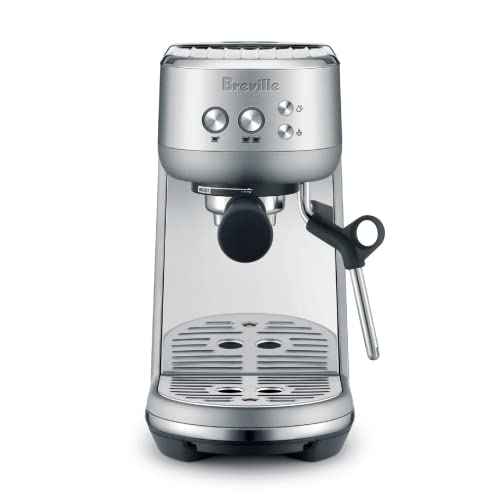
The Breville Bambino Espresso Machine BES450BSS stands out for home users who want barista-level espresso without spending years mastering technique. I get café-quality shots fast thanks to its 1560-watt Thermojet heater, which hits the right temperature in just 3 seconds. The 54mm portafilter holds 19 grams of coffee, and PID temperature control guarantees consistency. Low-pressure pre-infusion improves flavor balance. I especially like the automatic steam wand-it textures milk evenly, making latte art easier. It’s compact, weighs under 11 pounds, and fits small kitchens. While it’s semi-automatic, it’s intuitive and dishwasher-safe, but you’ll need to descale regularly. Built in 2022, it’s reliable, backed by a one-year warranty.
Best For: Home users seeking fast, barista-quality espresso with minimal effort in a compact design.
Pros:
- Rapid 3-second heat-up with Thermojet heating system for quick espresso extraction
- Automatic steam wand delivers consistent microfoam for easy latte art
- PID temperature control and low-pressure pre-infusion ensure balanced, flavorful shots
Cons:
- Requires regular descaling to maintain performance
- Semi-automatic operation may still demand some user learning for optimal results
- Limited to 1.0 unit count with no built-in grinder, increasing setup cost
CASABREWS 5418 PRO Espresso Machine Silver

Silver in finish and solid in function, the CASABREWS 5418 PRO suits home baristas who want semi-automatic control without sacrificing speed or build quality. I appreciate its 5-second heat-up time and 20-bar pump, which deliver café-style shots fast. The pressure gauge helps me fine-tune extractions, while the steam wand froths milk in seconds with PID-controlled heat. It only works with ground coffee, so I skip pods. The compact design fits my small kitchen, and cleaning’s easy thanks to the removable tank and included tools. Pre-warming the portafilter improves shot consistency. It’s not flashy, but it’s reliable, well-built, and ready when I am.
Best For: Home baristas who want a compact, durable semi-automatic espresso machine with fast heat-up and real-time pressure control for café-quality espresso.
Pros:
- Heats up in under 5 seconds with Flashheat technology and maintains precision brewing via a 20-bar pump and pressure gauge
- Powerful PID-controlled steam wand produces microfoam quickly, ideal for latte art and milk-based drinks
- Compact stainless steel design with removable water tank and included tools makes it space-efficient and easy to clean
Cons:
- Not compatible with espresso pods, limiting use to ground coffee only
- Lacks a built-in cup warmer, requiring manual pre-warming for optimal temperature stability
- Semi-automatic operation may be less convenient for beginners compared to fully automatic machines
Espresso Machine 20 BAR with Steam Frother

You’ll get the most from this 20 BAR espresso machine if you want café-quality espresso and milk drinks at home without a steep learning curve or bulky setup. I rely on its 20-bar pump and PID control for consistent shots with rich crema. The steam wand heats fast and froths cold milk well for lattes or cappuccinos. It preheats in about 60 seconds, and the auto shut-off and compact size make it ideal for small kitchens, offices, or dorms. Just don’t expect dishwasher-safe parts. Use the 51mm portafilter with the included tamper, flush the group head, and clean regularly with the provided needle.
Best For: Home, office, or dorm users seeking a compact, easy-to-use espresso machine that delivers consistent, café-quality espresso and milk-based drinks with minimal setup.
Pros:
- 20-bar pump pressure and PID temperature control ensure rich crema and balanced flavor extraction
- Fast 60-second preheat time, compact design, and auto shut-off make it convenient for small spaces
- Steam wand effectively froths cold milk for lattes and cappuccinos with a 360° adjustable wand for ease of use
Cons:
- Parts are not dishwasher safe, requiring hand cleaning and maintenance
- Limited portafilter size at 51mm may restrict compatibility with aftermarket baskets
- Steam function requires precise timing and knob operation, which may be tricky for beginners
Espresso Machine 20 Bar with Steam Frother
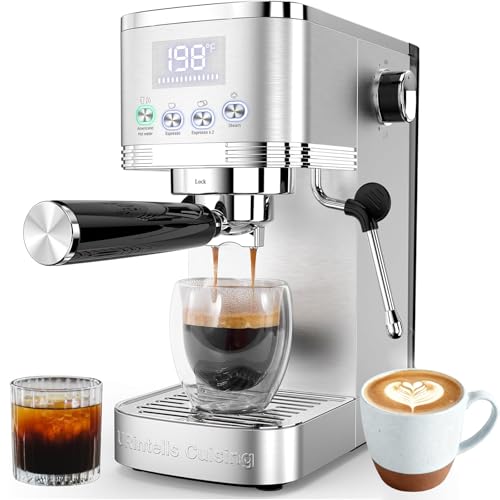
When crafting café-style espresso at home, a 20 bar high-pressure pump makes a noticeable difference in crema and flavor extraction, especially if you value barista-level results without commercial equipment. I rely on the 1350W heater for fast warm-ups and three temp settings-198℉ is ideal for true espresso. The pre-soak function improves flavor, and the LED display keeps brew time and temp visible. I use the powerful steam wand daily for lattes and cappuccinos, and the hot water spout works well for Americanos. It fits my countertop, holds a 44 oz tank, and works with grounds or ESE pods. I clean the drip tray and tank regularly-just not in the dishwasher.
Best For: Home and office coffee enthusiasts who want barista-quality espresso and milk-based drinks with the convenience of semi-automatic operation and compact design.
Pros:
- 20 bar pressure and pre-soak technology ensure rich crema and enhanced flavor extraction
- Powerful steam wand and independent hot water spout support lattes, cappuccinos, Americanos, and tea
- Compact stainless steel build with removable water tank and drip tray for easy cleaning and countertop fit
Cons:
- Not dishwasher safe, requiring manual cleaning of water tank and drip tray
- 51mm portafilter is smaller than the commercial standard, limiting portability with some accessories
- Limited to 120V, making it less suitable for international use without voltage conversion
De’Longhi Stilosa Espresso Machine 15 Bar
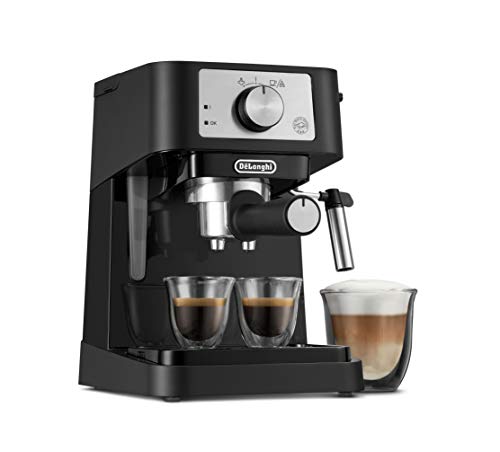
The De’Longhi Stilosa Manual Espresso Machine (EC260BK) stands out for first-time espresso makers who want reliable performance without complexity. I use its 15-bar pump to pull rich, even shots, and the manual steam wand gives me control over milk texture for lattes or cappuccinos. It’s compact, fitting neatly on my countertop, and the 33.8-oz water tank means fewer refills. I like the stainless steel boiler-it holds heat well-and the included tamper and scoop make getting started easy. Cleanup takes effort since parts aren’t dishwasher-safe, but maintenance is straightforward. It’s not flashy, but it’s built for real, daily use.
Best For: First-time espresso makers seeking a reliable, no-frills machine with manual control for authentic espresso and steamed milk drinks.
Pros:
- 15-bar pump pressure ensures rich, consistent espresso extraction
- Manual steam wand provides precise milk frothing control for lattes and cappuccinos
- Compact design with a durable stainless steel boiler and convenient cup warmer
Cons:
- Not dishwasher-safe, requiring hand cleaning for all components
- Lacks automatic features, which may challenge absolute beginners
- Smaller water tank requires more frequent refills during extended use
Factors to Consider When Choosing a Single Group Espresso Machine
You’ll want to check the brew pressure performance first-most machines hit 9 bars, but consistency matters more than the number. Look at the heating system efficiency too, since thermoblocks heat up fast but may struggle with back-to-back shots, while boilers offer better stability. Don’t overlook milk frothing capability, portafilter size (58mm is standard), build quality, and how the design fits your kitchen and workflow.
Brew Pressure Performance
Though higher pump pressure numbers look impressive on paper, what really matters for great espresso is steady, controlled pressure at the group head during extraction. You need 9–10 bars during the shot for ideal flavor and crema, not peak pump pressure alone. Machines rated at 15–20 bars compensate for resistance, ensuring consistent delivery. Look for pre-infusion-it starts at lower pressure, improves saturation, and boosts flavor clarity. Models like the Rocket R58 or Lelit Bianca offer this with precision. A built-in pressure gauge helps you monitor real-time extraction, so you can tweak grind, dose, or tamp to stay in the sweet spot. Without it, you’re guessing. Steady pressure beats high numbers every time. Focus on consistency, not specs. That’s how you pull balanced, café-quality shots at home-day after day.
Heating System Efficiency
When pulling shots in quick succession or switching between brewing and steaming, a machine’s heating system directly impacts how fast you work and how consistent your results are. You’ll want a system that hits 90–96°C in 30–60 seconds, so you’re not waiting around. Look for PIDs-they keep temps steady within ±1°C, which means better flavor and crema every time. Some machines use thermojet or powerful 1350W–1560W elements to heat up in under 5 seconds, great if you’re making back-to-back drinks. Pre-infusion heating helps water evenly soak the puck before full pressure kicks in, reducing channeling. Dual boilers let you brew and steam at the same time by using separate heating zones, but they cost more and are mostly in high-end models. For most home setups, a strong single boiler with PID control strikes the best balance of speed, consistency, and value.
Milk Frothing Capability
A well-designed steam wand makes all the difference in producing café-quality milk drinks at home. Look for a machine with a 1350W heating system-it delivers dry, focused steam in under 60 seconds, ideal for creating dense microfoam. You’ll want PID temperature control to keep steam pressure steady between 90–96°C, so your milk textures consistently. Use cold whole milk; its fat and protein balance heats evenly and froths silkier results. A 360° adjustable or detachable wand gives you better positioning and easier cleaning, reducing residue and improving hygiene. Always purge the wand for 2–3 seconds before and after use-this clears leftover milk and stabilizes steam output. These features work together to give you repeatable, professional-level frothing without guesswork. Skip machines with weak steam or fixed wands if you’re serious about lattes.
Build Quality And Design
Stainless steel construction is a smart choice for durability and consistent performance, since it resists corrosion and retains heat better than plastic or painted finishes. You’ll notice less temperature fluctuation during pulls, which helps extract balanced shots. Look for models with a weight between 7.5 and 11 pounds-heavier units usually mean sturdier internal parts and less vibration during brewing. Compact designs, typically under 13.7 inches deep and 6.7 inches wide, fit neatly on small countertops without sacrificing stability. Non-slip bases with silicone or rubber feet keep the machine from sliding, even under high pump pressure. A removable water tank, usually 30 to 45 ounces, lets you refill and clean easily while supporting several consecutive brews. That’s practical if you’re making multiple drinks. Choose a build that feels solid, stays put, and fits your space-because reliability starts with smart design.
Portafilter Size And Type
The portafilter size and type you choose directly impact shot consistency and your control over extraction. Most home machines use a 51mm portafilter, which works well with 14–18 grams of coffee for a double shot and fits standard grinders. If you’re stepping up your game, consider a 58mm portafilter-common on commercial units-because it supports larger coffee beds and finer flavor tuning. You’ll also need to match the group gasket size to your portafilter to prevent leaks. Portafilters come in two types: pressurized ones help beginners by forgiving small mistakes, while non-pressurized models demand precise grind, dose, and tamp but give you full control. Some baskets include ridges or fins that boost heat stability and strength during brewing. Pick based on your skill level and how much control you want.
Water Tank Capacity
After sorting out your portafilter size and type, it’s time to think about how much water your machine can hold between refills. Most single group machines have tanks ranging from 30 to 45 ounces. A 44-ounce tank lets you pull multiple shots and steam milk back-to-back without refilling-great if you’re making drinks for more than one person. Smaller tanks, around 28–34 ounces, mean more frequent stops to top off, which can slow you down during busy mornings. Look for a removable tank with clear water level markings so you can refill quickly and keep track while brewing. Removable tanks also make cleaning easier. While larger tanks add convenience, they can make the unit bulkier. Compact models often use smaller tanks to save space, so balance capacity with your workflow. If you make several drinks at once, go bigger. For light use, a smaller tank might be just fine.
Machine Dimensions And Footprint
Space matters-especially when you’re fitting an espresso machine into a crowded kitchen or compact living area. Most compact models are 11.4 to 13.7 inches deep, letting you keep counter space for prep work. Width ranges from 5.4 to 6.7 inches, so narrower machines fit easily in tight spots like office counters or studio kitchens. Height usually sits between 11.2 and 12.5 inches, clearing most cabinets if you’ve got at least 13 inches of vertical space. Look for a footprint under 70 square inches if you’re using it in a dorm, RV, or small apartment. Machines with silicone non-slip feet stay steady even on minimal surfaces as small as 14 by 10 inches. That grip keeps things safe during steaming or brewing. Choose a size that fits your counter and leaves room for a tamper, cup, and portafilter without crowding.
Frequently Asked Questions
Can I Use Non-Dairy Milk With These Machines?
Yes, you can use non-dairy milk with these machines, but results vary by milk type and machine capabilities. Oat and soy milks steam well in most cases, while almond and coconut can scorch or foam unevenly. Your machine’s steam wand power matters-stronger wands handle thicker milks better. Always clean the wand immediately after use, since non-dairy residues burn faster. Pre-chilling the jug and using barista blends improves consistency.
How Often Should I Descale My Espresso Machine?
You should descale your espresso machine every 1–3 months, depending on how often you use it and your water hardness. If you brew daily with hard water, scale builds faster, so stick to a 4–6 week routine. Use a brand-approved solution like Urnex Dezcal, run it through the group and steam wand, then flush thoroughly with fresh water. Skipping this reduces efficiency and can damage heating elements over time.
Are the Portafilters Compatible With Aftermarket Accessories?
Yes, most portafilters work with aftermarket accessories, but you’ve got to check the diameter and spout type first. Standard is 58mm with single or double spouts-many third-party parts fit that. Some machines use proprietary designs, like certain La Marzocco or Rocket models, so measure yours. Aftermarket baskets, such as those from IMS or VST, boost performance, but make sure they slide in smoothly and seal right. Always verify compatibility before buying.
Do These Machines Require a Dedicated Electrical Circuit?
You don’t always need a dedicated circuit, but high-powered machines like the Rocket R58 or Slayer Single Group draw so much power they usually require one. Smaller home units, such as the Gaggia Classic Pro or Rancilio Silvia, run fine on standard 120V outlets without overloading most kitchen circuits. If your machine’s wattage exceeds 1,500W or trips breakers, upgrade to a dedicated 20-amp circuit to avoid issues.
Is It Safe to Leave the Machine on All Day?
You shouldn’t leave the machine on all day-it’s not safe and wears out components faster. Even prosumer models like the Nuova Simonelli Appia or ECM Synchronika can overheat or stress the pump and boiler over time. If you’re brewing intermittently, leaving it on for a few hours is fine, but turn it off between long gaps. It saves energy, reduces risk, and extends the machine’s life. Always follow the manufacturer’s daily use guidelines.