How to Grind for Siphon Brewing With a Consistent Medium-Fine Texture
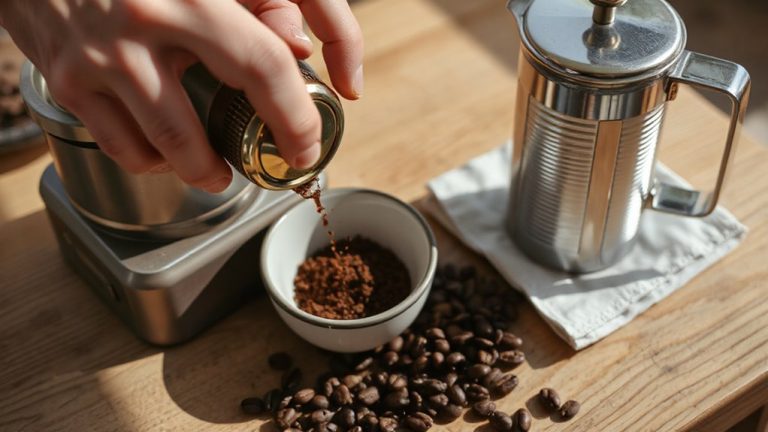
Use a burr grinder like the Baratza Encore or 1ZPresso Q2 to achieve a consistent medium-fine grind, similar to table salt. Aim for particles between 200–500 microns to avoid under-extraction or clogging. Adjust in small steps, targeting a 1:15 to 1:45 brew time. Check for boulders or fines under bright light, and clean your grinder weekly. You’ll soon see how small tweaks improve clarity and balance.
Notable Insights
- Use a burr grinder to achieve a uniform medium-fine grind, similar to table salt or fine sand.
- Set grind size between 200–500 microns to ensure balanced extraction and prevent clogging or sourness.
- Calibrate your grinder regularly, adjusting in small increments to maintain consistency across brews.
- Aim for a brew time of 1:15 to 1:45 minutes; adjust grind finer for faster runs, coarser for slower.
- Clean the grinder daily and inspect grounds for boulders or fines to ensure even particle distribution.
Why the Right Grind Makes or Breaks Siphon Coffee
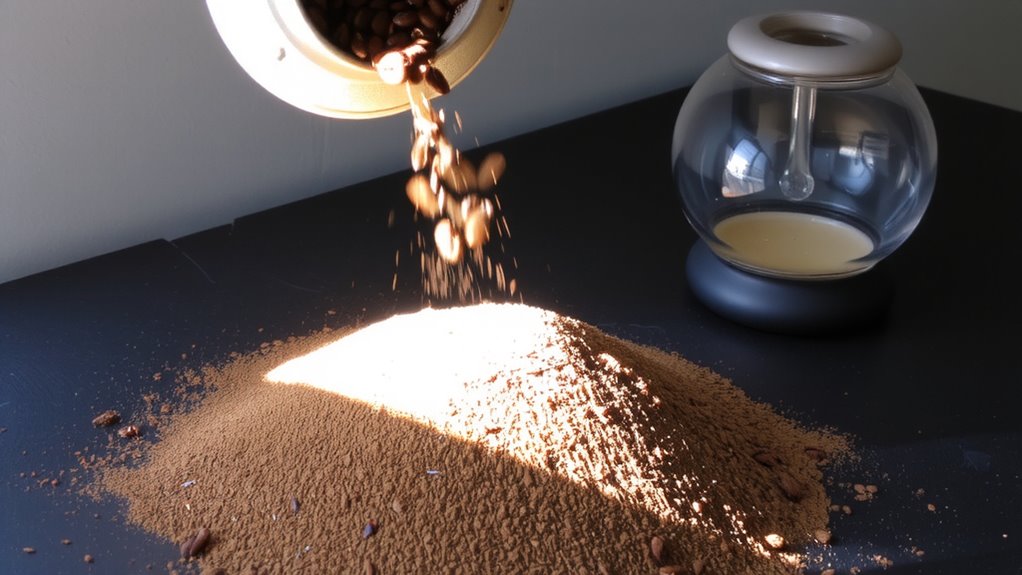
With siphon brewing, getting the grind right isn’t just important-it’s essential. Too fine, and your coffee clogs and over-extracts; too coarse, and it under-extracts, tasting weak. The siphon’s full immersion relies on precise timing, brew temperature, and water quality to extract cleanly. Since the vacuum method uses heat-driven pressure, even small grind inconsistencies skew results. Hard water amplifies bitterness, especially if the grind exposes too much surface area, while soft water may under-express flavors if the grind is too thick. Ideal brew temperature sits between 195°F and 205°F, but that only works if your grind allows even saturation. Tap water with balanced minerals works fine, but use filtered if your local supply is harsh. A burr grinder-like the Baratza Encore or 1ZPresso JX-Pro-gives the control you need. You’re not just brewing; you’re balancing variables. Get the grind wrong, and nothing else fixes it.
Use a Medium-Fine Grind for Siphon Coffee
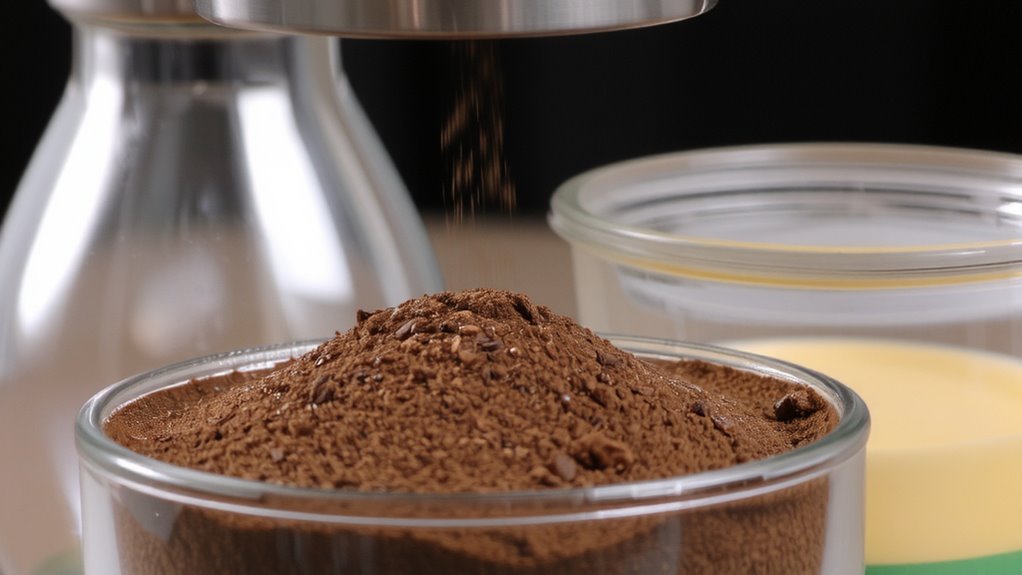
Though you might be tempted to experiment with different grind sizes, sticking to a medium-fine consistency gives you the best shot at balanced siphon coffee every time. This grind size allows ideal extraction under siphon brewing’s unique vacuum pressure and short contact time. Too coarse, and your coffee tastes weak or sour; too fine, and it becomes bitter or clogged. More than just the size, you need grind uniformity. A consistent particle distribution guarantees even extraction, since uneven grounds lead to some over-extracting while others under-extract. That hurts clarity and balance. You want most particles in the 200–500 micron range, resembling fine sand. This range supports steady flow during the brew cycle and lets flavors develop fully without slipping into harshness. While methods vary slightly by siphon model-like Hario or Yama-the medium-fine standard holds across most setups. For reliable results, choose one of the best siphon coffee makers that balances build quality and temperature control.
Choose a Burr Grinder for Better Siphon Coffee
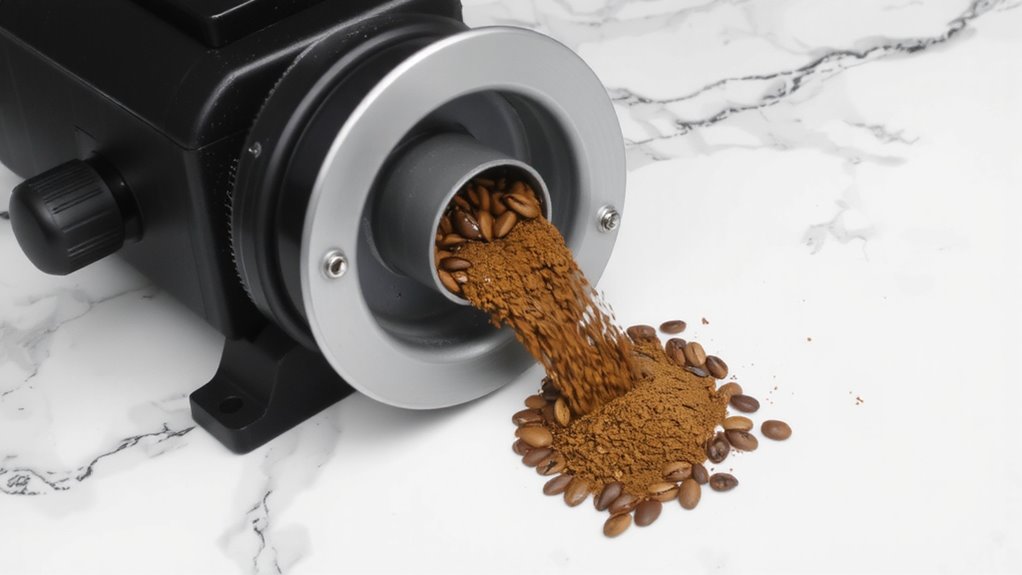
A good grinder makes all the difference when you’re brewing siphon coffee. Blade grinders chop inconsistently, leading to uneven extraction and flat flavors. A burr grinder, on the other hand, crushes beans between two rotating plates for uniform particle size-essential for siphon brewing’s precise demands. Look for models like the Baratza Encore or 1ZPresso Q2; they offer reliable burr alignment, which guarantees even grinding over time. Poor alignment causes inconsistent output and affects brew quality. Consistent grind size also makes grinder calibration easier, letting you fine-tune for the ideal medium-fine texture. Unlike blade grinders, burr models provide adjustable settings you can replicate, batch after batch. While burr grinders cost more upfront, the investment pays off in better control and clearer flavor. For siphon coffee, that precision is non-negotiable. Choose a burr grinder-you’ll taste the difference in every cup. For even greater accuracy, consider a grinder with built-in scale functionality to streamline your dosing process.
Dial In Your Grind for Siphon Brewing
You’ve picked a burr grinder-now it’s time to get that grind setting right for siphon brewing. Aim for a medium-fine consistency, similar to table salt, to guarantee balanced extraction. Proper grinder calibration is key-cheap or uncalibrated grinders can produce uneven particles, leading to harsh or weak coffee. Adjust the setting in small increments, especially if you switch beans or change your water temperature. Extraction timing matters too; for siphon brewing, aim for 1:15 to 1:45 minutes of brew time. If extraction runs too fast, the grind is likely too coarse; if too slow, it’s probably too fine. Use these clues to tweak your grinder. Consistent calibration and monitoring timing help you achieve repeatable, clean cups every time-no guesswork needed. For optimal results, consider using one of the best mill grinders known for precision and consistency.
How to Test Your Grind and Fix Under- or Over-Extraction
How do you know if your grind is off? Your brew’s taste tells you. If coffee tastes sour and weak, it’s likely under-extracted-your grind’s too coarse. If it’s bitter or astringent, over-extraction probably occurred due to too fine a grind. Check grind uniformity; inconsistent particle distribution leads to uneven extraction, with some particles over-extracting while others under-extract. A quality burr grinder improves this by creating a tighter particle distribution. Run a simple test: brew as usual, then adjust in small increments. Go finer if sour, coarser if bitter. Retaste after each change. Lighting matters-inspect grounds on a white plate under bright light to spot boulders or fines. Repeat until flavor balances sweetness, acidity, and body. Consistent grind uniformity means more control and better Siphon brews every time. Keep notes to track progress.
Avoid These Common Siphon Grinding Mistakes
While it might seem like just another step in prep, grinding for siphon brewing demands more precision than most realize, and skipping the details can ruin an otherwise solid routine. One common mistake is ignoring grind clumping, which happens when coffee particles stick together due to moisture or static issues, leading to uneven extraction. Static issues are especially common in dry climates or with burr grinders that generate heat, causing grounds to stick to the bin or shoot out unevenly. To reduce static, try adjusting your grind setting slightly coarser or using beans that have rested a day or two post-roast. Grind clumping can also be minimized by using a gentle agitation method or a fork to break up clumps before brewing. Always grind just before brewing to maintain freshness and consistency. Avoid pre-ground storage-it worsens both clumping and static.
Keep Your Grinder Clean for Consistent Siphon Brews
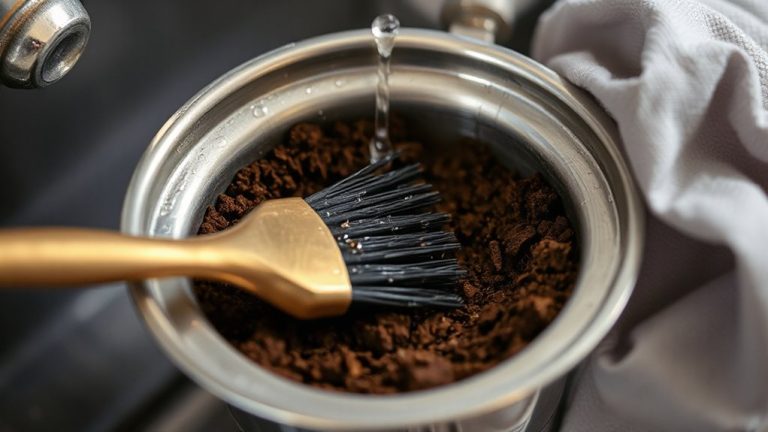
A clean grinder isn’t just good practice-it’s essential for repeatable siphon brews. Over time, oils and particles cause residue buildup, which alters grind consistency and taints flavor. This is especially critical for siphon brewing, where precision matters. Old coffee grounds can go rancid, adding off-notes to your cup. Regular grinder maintenance prevents this. Brush out beans and grounds daily, and do a deeper clean weekly-especially if you use oily or dark-roasted beans. For burr grinders like the Baratza Encore or Fellow Ode, use grinding tablets or a soft brush with isopropyl alcohol on stubborn spots. Avoid water, as it can damage blades or rust components. Keeping your grinder clean guarantees every batch starts fresh. You’ll notice more clarity, better extraction, and consistent medium-fine results. It’s a small habit with real payoff.
On a final note
You’ll get the best siphon coffee with a consistent medium-fine grind. Use a burr grinder-like a Baratza Encore or Fellow Ode-for even particles. Blade grinders create uneven chunks and dust, hurting flavor. If your coffee tastes bitter, it’s likely over-extracted; go coarser. Sour? Try a finer grind. Clean your grinder monthly to avoid stale buildup. Consistent prep means repeatable, clean, balanced coffee every time.