The Effect of Bean Age on Required Grind Size for Balanced Extraction
As your beans age, they lose CO₂ and moisture, making them more porous and easier for water to pass through. That’s why older beans need a finer grind to slow down flow and boost extraction. Fresh beans (0–7 days) resist water more, so use a coarser setting. Around day 8, start adjusting finer every few days-especially with dark roasts like Sumatran. Use a conical burr grinder for precision. You’ll fine-tune results as you track roast dates.
Notable Insights
- Older beans lose CO₂, reducing resistance to water flow and requiring a finer grind for balanced extraction.
- Fresh beans retain CO₂, increasing internal pressure and necessitating a coarser grind to avoid over-extraction.
- As beans age beyond 15 days, gradually adjust the grind finer to compensate for diminished flavor and porosity changes.
- Dark roasts degrade faster than light roasts, needing earlier and more frequent grind size adjustments as they age.
- Use a conical burr grinder to make precise, consistent adjustments weekly based on roast date for optimal extraction.
Why Older Beans Need a Finer Grind
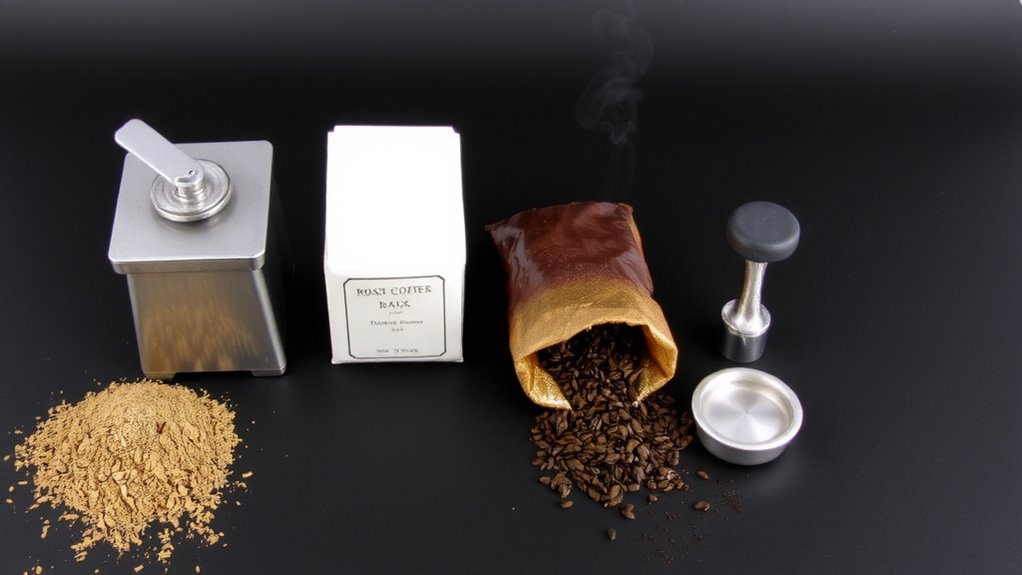
While fresh beans release CO₂ rapidly after roasting, older beans have already lost much of their trapped gas, which changes how water moves through the grounds during brewing. You’ll need a finer grind to slow water flow and boost extraction, since stale beans don’t resist as much. This is especially true if your bean storage exposes them to air, light, or moisture-common causes of flavor degradation. Without enough gas, the coffee can’t create the same internal pressure to slow water, so a finer setting on your grinder helps compensate. You don’t need lab-grade precision-just go 1–2 notches finer than you would for fresh beans. Grinders like the Baratza Encore or Timemore C2 adapt well. Just remember: finer isn’t always better. Over-extraction brings bitterness, so adjust in small steps and taste as you go. Proper storage slows degradation, but once it happens, tweak your grind.
Fresh vs. Stale Beans: How Age Changes Grind Needs
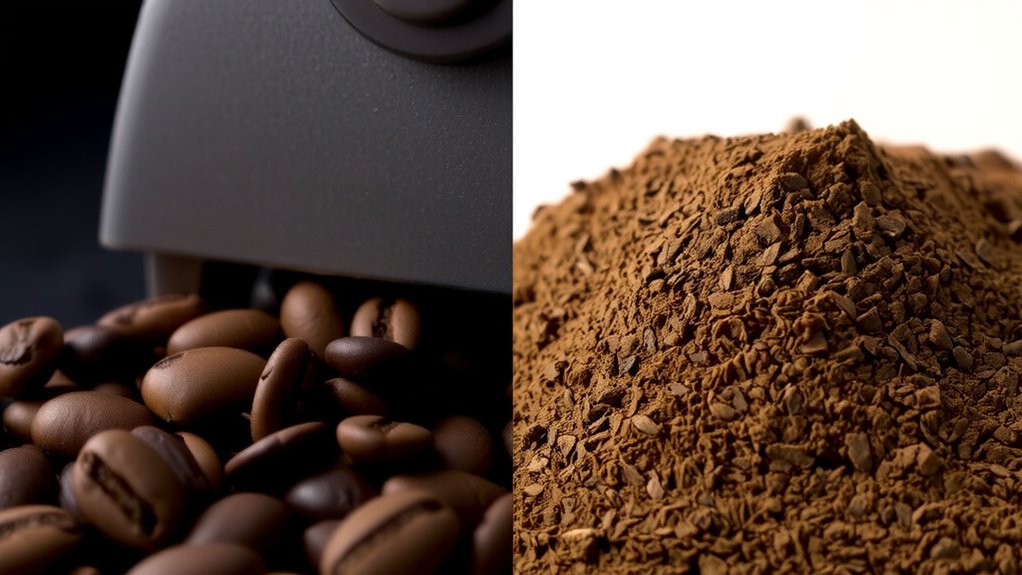
Fresh matters, and when it comes to grind size, the age of your beans makes a real difference. As beans age, they lose CO2 and moisture, leading to flavor degradation. Poor bean storage speeds this up-keep them airtight and dark. Fresh beans need a coarser grind to avoid over-extraction; stale ones require a finer grind to boost surface contact and balance flavor. Here’s how age impacts your grind needs:
| Bean Age | Grind Size | Flavor Risk |
|---|---|---|
| 0–7 days | Coarser | Bitter, over-extracted |
| 8–14 days | Medium | Balanced, ideal |
| 15–21 days | Slightly finer | Muted, less vibrant |
| 22+ days | Fine | Flat, flavor degradation high |
Adjust your grinder weekly for best results.
How CO2 and Moisture Affect Grind Size
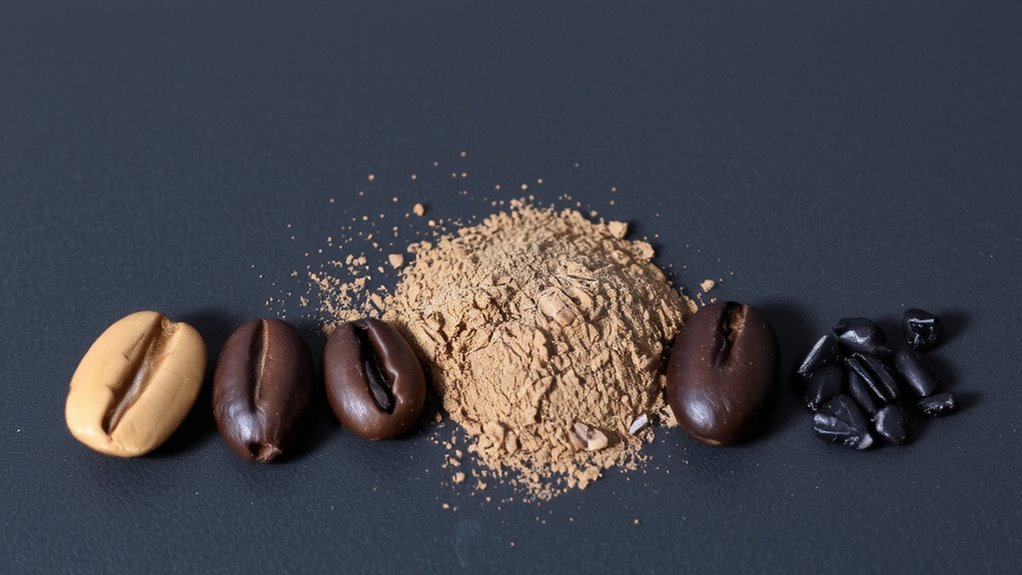
Since CO2 and moisture play key roles in how coffee extracts, you’ll want to adjust your grind based on these changing internal factors. Fresh beans trap more CO2, and that gas resists water during brewing, slowing extraction. High CO2 retention means you’ll likely need a finer grind to compensate, helping water penetrate and dissolve solids effectively. But as beans age, CO2 escapes and moisture loss occurs, making the cellular structure more porous. This means water moves through more easily, increasing extraction speed. If you don’t account for this, your coffee can over-extract even with a coarse setting. You’re not just grinding age-you’re grinding internal changes. These shifts alter flow rate and contact time, especially in espresso. While pour-over is more forgiving, precision still matters. Understanding CO2 and moisture loss helps you anticipate grind behavior, leading to more consistent, balanced results-no guesswork.
How to Adjust Grind Size for Older Beans
Why does your morning espresso suddenly taste sharper or more bitter, even when you haven’t changed your routine? Because older beans lose CO2 and moisture, making them easier to extract. You’ll need to adjust your grind finer over time to maintain balance. The right adjustment depends on bean origin and roast level. Lighter roasts, like Ethiopian beans, start denser and may need smaller tweaks even as they age. Darker roasts, such as Sumatran, are more porous and degrade faster-so they often require earlier, more noticeable grind changes. If you’re not adjusting, you’re likely under-extracting stale beans. For best results, tweak your grinder every few days after opening. A good burr grinder lets you make these micro-adjustments with precision. Consistency matters more than guessing. Track your changes-you’ll see patterns based on origin and roast level. For reliable performance over time, consider investing in one of the best coffee & espresso grinders recommended for their durability and grind quality.
Is Your Grind Too Coarse or Too Fine?
You’ve adjusted your grind finer over time to match aging beans, but that doesn’t guarantee you’ve hit the sweet spot-go too far, and you’ll run into new problems. Too fine a grind hurts flow rate and risks over-extraction, especially if your grinder lacks grind uniformity. Uneven particle distribution leads to some fines extracting excessively while larger chunks under-extract. This imbalance creates bitter, astringent coffee despite careful brewing. On the other hand, too coarse a grind lets water race through, yielding weak, sour results. Finding the right setting means balancing extraction without compromising clarity or body. A high-quality coffee grinder for espresso can maintain consistent grind size as beans age, preserving flavor balance.
| Issue | Result |
|---|---|
| Grind too fine | Bitter, clogged brew |
| Fines overload | Astringency, harshness |
| Poor uniformity | Inconsistent extraction |
| Coarse grind | Sour, thin-bodied cup |
| Wide distribution | Unbalanced flavor |
Step-by-Step: Match Grind to Roast Date
As your beans age past the roast date, they gradually lose trapped carbon dioxide, which changes how they respond to water during brewing-meaning your grind size needs to shift accordingly. If you’re using a light roast from a high-elevation bean origin like Ethiopia, start with a finer grind for pour-over methods 3–5 days after roasting. As the beans age to 10–14 days, coarsen the grind slightly to avoid under-extraction. For darker roasts or espresso brewing methods, begin finer and adjust coarser after day 7. Blade grinders won’t give the precision you need-opt for a burr grinder to maintain consistency. Your ideal setting depends on both bean origin and brewing method, so log each change. Water flows faster through stale beans, so without adjustment, your coffee’ll taste flat. Match your grind to the roast date, and you’ll keep extraction balanced-no guesswork. For optimal flavor in espresso, consider selecting one of the top-rated best espresso beans based on roast profile and freshness.
Pro Tips for Consistent Flavor Across Bean Ages
Even though your beans change over time, you can still pull consistent shots or pours with a few smart adjustments. Start by tracking roast dates and adjusting your grind finer as beans age past two weeks; older beans need finer particles to maintain extraction. Always use the same trusted bean sourcing to minimize variability-quality green beans age more predictably. Your brewing equipment matters: a conical burr grinder gives more control than blade models, especially as grind needs shift. For pour-over, tweak water temperature slightly upward (1–2°C) with older beans to compensate for lost volatility. On espresso, reduce dose or shot time if staling becomes evident. Pre-infusion settings on modern machines help balance uneven outgassing. Weigh each dose and record variables-small changes add up. Consistency isn’t about stopping change; it’s about managing it with care, the right tools, and repeatable habits.
On a final note
You’ll need a finer grind for older beans because they lose CO2 and moisture over time, leading to faster water penetration and under-extraction if left too coarse. Fresh beans, with more gas, require a coarser setting to slow flow. Aim for medium-fine for beans 7–14 days post-roast, fine for 3+ weeks. Use a burr grinder like the Baratza Encore for consistency. Adjust in small increments, then taste-sour means too coarse, bitter means too fine.