Exploring the Role of the National Coffee Board in Zambian Revival
You’re seeing higher-quality Zambian coffee because the National Coffee Board trains farmers in better planting, pruning, and harvest timing, which boosts yield and bean consistency. They enforce strict processing and moisture standards that meet EU and U.S. requirements, ensuring your beans are export-ready. Through trade incentives and AfCFTA access, they’re connecting smallholders to global buyers. Sustainable practices like shade growing and soil conservation are now standard. There’s more behind how this shapes your cup.
Notable Insights
- Upgraded wet mills and quality standards enhanced Arabica bean acidity and body for global market appeal.
- Farmer training in pruning, soil management, and harvest timing increased yields and coffee quality.
- Certification and export compliance programs ensured Zambian coffee meets EU and U.S. safety standards.
- Trade incentives and AfCFTA access expanded regional and international market opportunities for Zambian coffee.
- Sustainable practices like shade growing and water conservation aligned production with global eco-standards.
How the National Coffee Board Is Reviving Zambian Coffee
While Zambia’s coffee industry once struggled with inconsistent quality and limited market access, the National Coffee Board has taken practical steps to turn things around, and you’re now seeing real results in the cup. They’ve upgraded wet mills and set quality standards, so beans arrive cleaner and more uniformly processed. You’ll notice brighter acidity and better body, especially in Arabica from Eastern Province. The Board now promotes coffee tourism, guiding visitors through farms and processing sites-useful if you want to trace flavor back to soil and method. In cities like Lusaka, urban roasting is growing, with small-batch roasters using electric and gas machines to highlight origin characteristics. These roasters often source directly from Board-certified farms, ensuring freshness and traceability. You get more consistent profiles, whether brewing with a V60 or French press. The focus remains on quality control and market transparency, giving you better beans and clearer sourcing.
Empowering Smallholder Farmers With Training and Support
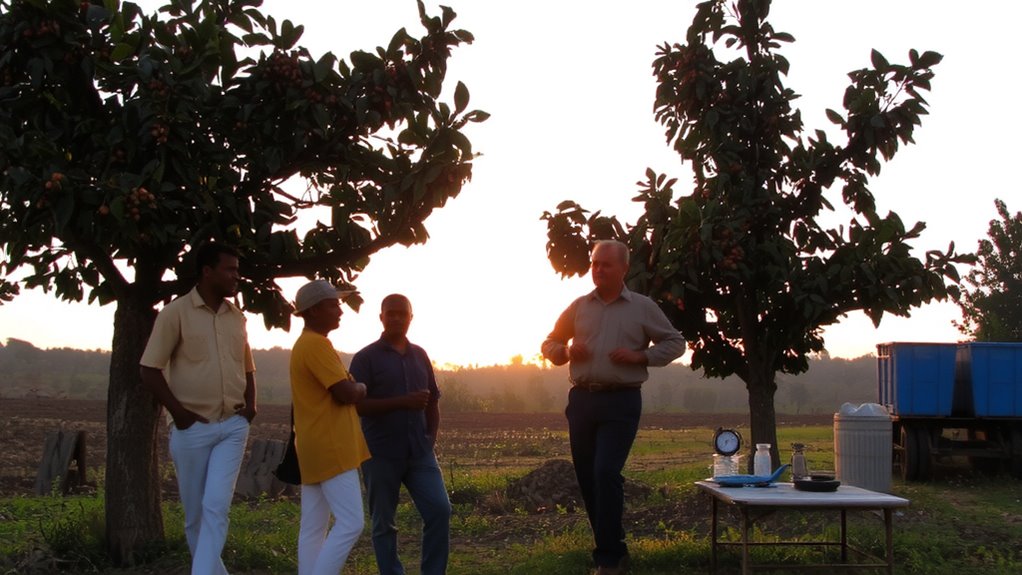
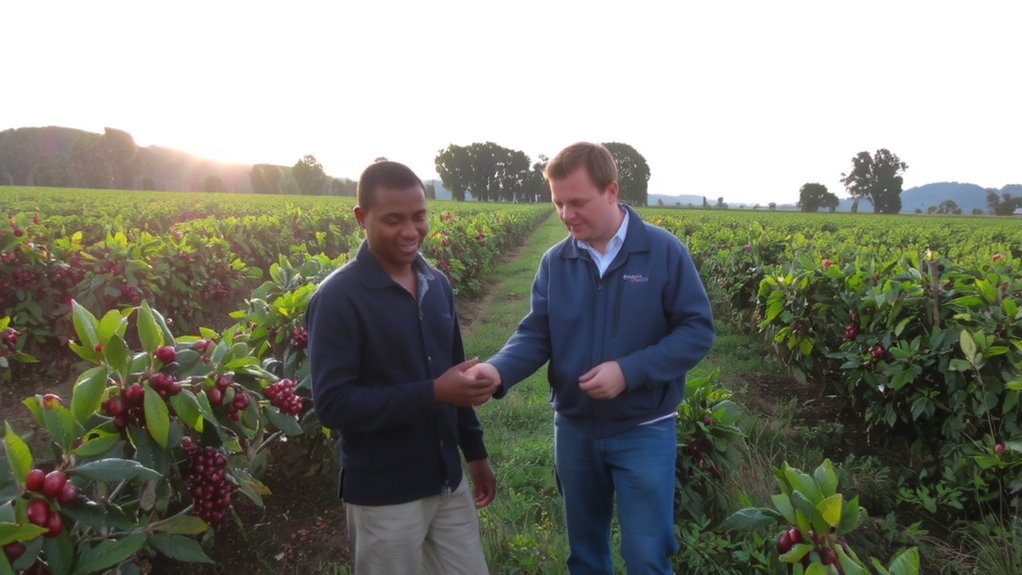
The National Coffee Board’s push to empower smallholder farmers centers on practical training and direct support that improve both yield and bean quality. You receive hands-on workshops covering planting, pest control, and harvest timing, all tailored to local climates. Financial literacy is emphasized, helping you manage income, track expenses, and plan for reinvestment. Crop diversification is encouraged to reduce risk-adding beans or maize guarantees food security and alternate income. Below are common practices adopted:
| Training Topic | Benefit to You |
|---|---|
| Pruning techniques | Increases yield per tree |
| Soil management | Boosts nutrient retention |
| Financial literacy | Improves household budgeting |
| Post-harvest handling | Preserves bean quality |
| Crop diversification | Lowers reliance on coffee alone |
These tools help you build resilience and consistency, critical for long-term success.
Enforcing Quality Standards for Global Markets
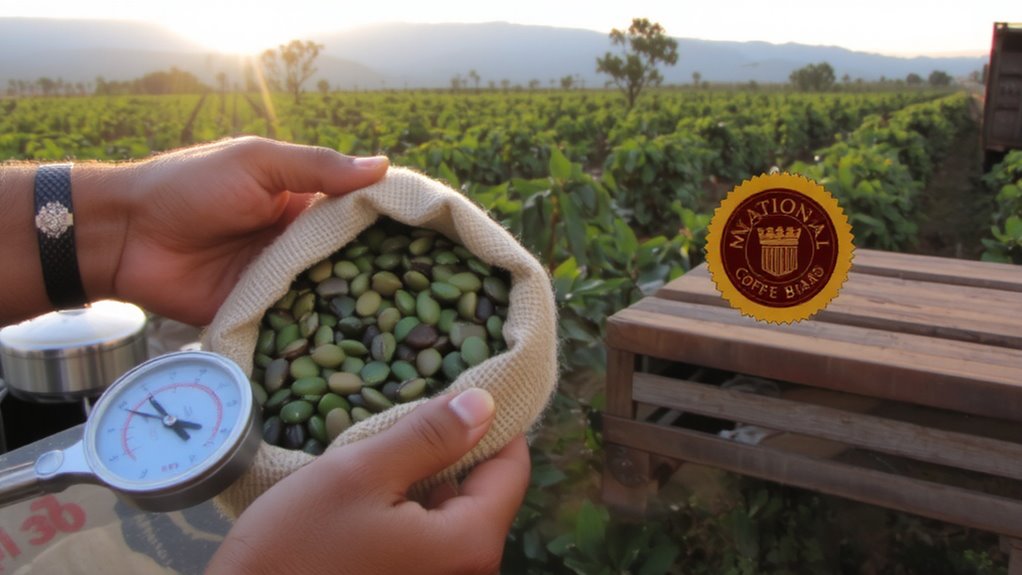
Since global buyers demand consistency, you’ll need to meet strict quality benchmarks to stay competitive. The National Coffee Board helps you achieve this by enforcing standardized processing methods and moisture content limits, ensuring your beans perform well in international roasting tests. Bean certification, like compliance with ISO or specialty grading, isn’t optional anymore-it’s required to prove quality and traceability. You’ll also face tighter export compliance rules covering pesticide use, packaging, and documentation. Failure means rejected shipments or lower prices. The Board conducts regular audits and lab tests so you stay aligned with EU and U.S. food safety standards. While upfront costs for compliance can be high, especially for small mills, the long-term payoff is stable demand and better pricing. Using calibrated equipment and keeping processing records isn’t just good practice-it’s essential for passing inspection and securing repeat orders.
Opening Market Access for Zambian Coffee
If you’re looking to get Zambian coffee into new markets, you’ll need more than just good beans-you’ve got to navigate trade agreements, meet import regulations, and build relationships with international buyers. The National Coffee Board helps by securing export incentives that lower shipping costs and improve pricing competitiveness. These incentives make Zambian coffee more attractive to European and Asian buyers who value consistency and fair pricing. Strong trade partnerships with regional blocs like the African Continental Free Trade Area (AfCFTA) open doors to large, underpenetrated markets. The Board also connects cooperatives with certified exporters who understand documentation, phytosanitary standards, and logistics. Without these structures, small producers would struggle to meet buyer expectations. You’re not just selling coffee-you’re meeting strict requirements efficiently. Reliable trade access means steady demand, better prices, and long-term market presence.
Promoting Sustainable Farming for Long-Term Growth
You’ve got your coffee reaching markets abroad, but keeping those buyers coming back means what happens on the farm matters just as much as what happens at the warehouse. The National Coffee Board pushes sustainable practices so your yields stay strong without degrading the land. Soil conservation techniques like terracing and cover cropping prevent erosion and boost fertility, especially on hilly plots where runoff is a problem. Water management is just as critical-mulching and rainwater harvesting help maintain moisture during dry spells, reducing crop stress. Farmers using shade trees see benefits too, with improved microclimates and natural nutrient cycling. These methods aren’t flashy, but they cut long-term costs and meet international sustainability standards. Buyers increasingly demand proof of eco-friendly farming, so adopting these practices isn’t optional. The Board offers training and tools to help you implement them efficiently, ensuring your farm supports both your family and the wider revival of Zambian coffee.
On a final note
You’re seeing real change as the National Coffee Board lifts Zambian coffee. They train small farmers, enforce quality, and open global markets. Sustainable practices take hold, improving yields and consistency. With better processing and clear standards, Zambian beans now compete with top African growers. If you’re buying, look for certified beans from regions like Luangwa or Mafinga-they offer bright acidity and balanced body, ideal for pour-over or espresso. It’s practical progress, not hype.