A Barista’s Guide to Identifying Defects During Coffee Tasting: Recognizing Off-Flavors and Faulty Characteristics for Quality Control Purposes
You’ll spot musty, moldy notes from moisture exposure-discard those beans. Sourness? Sharp and green means underdeveloped; dull and stale hints at spoilage. Burnt flavors come from dark roasts or overheating-use lower brew temps and thermal carafes. Cardboard or rubber tastes signal staleness or processing defects-check roast dates and store beans airtight. Fresh, properly stored beans with filtered water make the difference. There’s more to mastering each flaw than just recognition.
Notable Insights
- Musty or earthy aromas upon grinding suggest mold from moisture exposure; discard affected beans and check storage conditions.
- Sharp, green sourness indicates underdeveloped beans due to roast or fermentation issues, not spoilage.
- Dull, lingering sourness with wet cardboard odor signals spoilage; inspect for moisture or poor processing history.
- Cardboard taste points to stale beans; use within four to six weeks post-roast and store airtight with a valve.
- Burnt or ashy notes stem from over-roasting; adjust brew temperature down to 195–200°F to reduce harshness.
What Causes Off-Flavors in Coffee?
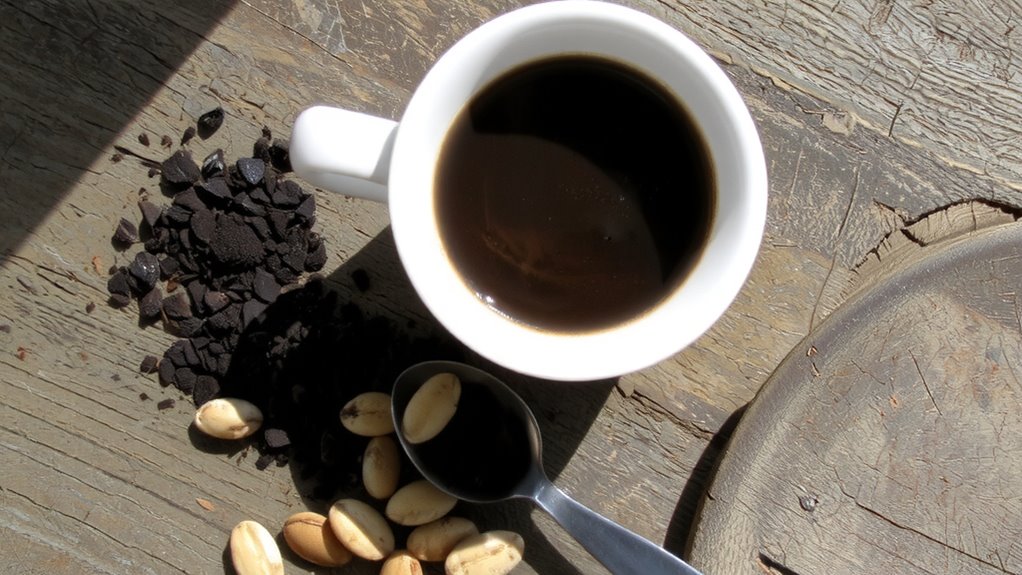
Ever wonder why some coffees taste sour, musty, or just plain wrong? The answer often lies in water quality and bean age. If your water’s too hard or full of chlorine, it’ll mess with extraction and create off-flavors-use a filter or go with bottled spring water for better results. Old beans are just as problematic; they lose sweetness and gain stale, papery notes after about four weeks post-roast. For the best taste, grind right before brewing and buy only what you’ll use in two weeks. Light roasts fade faster, so treat them like fresh produce. Even great gear can’t fix poor ingredients. Check roast dates and store beans in an airtight container away from light. You’ll notice cleaner, brighter cups just by paying attention to these two factors. It’s not magic-just good habits.
Detect Musty or Moldy Tastes Fast
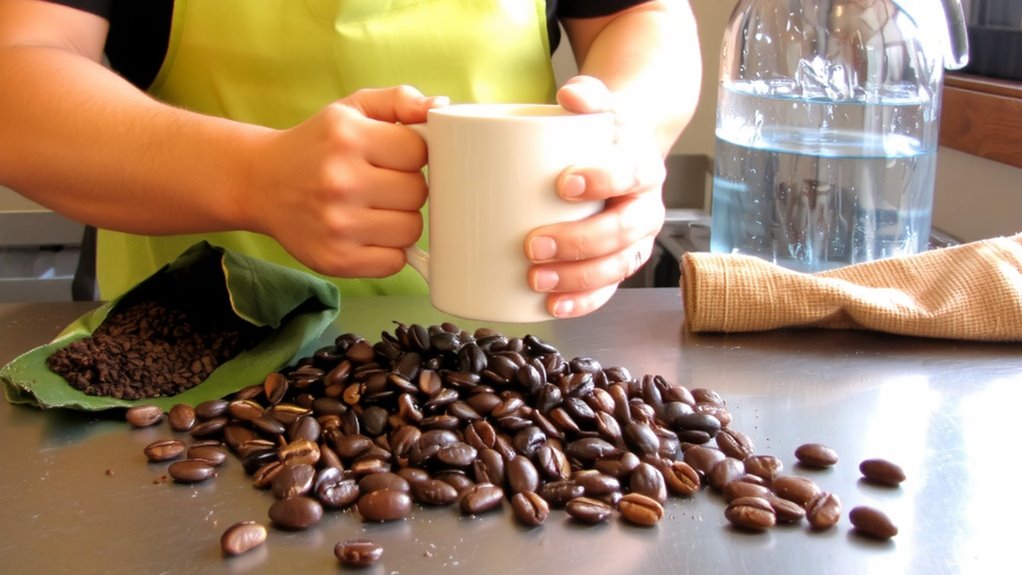
A musty or moldy taste in your coffee isn’t just unpleasant-it’s a sign something went wrong in processing, storage, or both. You’ll often notice the flaw right away: a damp, earthy musty aroma rises when you grind, and the sip tastes stale or slightly off, like cardboard or old books. This typically points to mold contamination, especially if beans were stored in humid conditions or exposed to moisture during drying. Even well-roasted batches can’t hide this defect. Check the packaging date and storage environment-if it’s been sitting in a damp cupboard or a non-airtight container, that could explain the flaw. If you’re serving customers, discard the batch; mold contamination isn’t worth the risk. Compare against a fresh, reputable brand stored in a cool, dry place to confirm. Prevention? Always buy from roasters who monitor humidity and use sealed, moisture-resistant bags with one-way valves.
Tell If Sourness Is Underdeveloped or Spoiled?
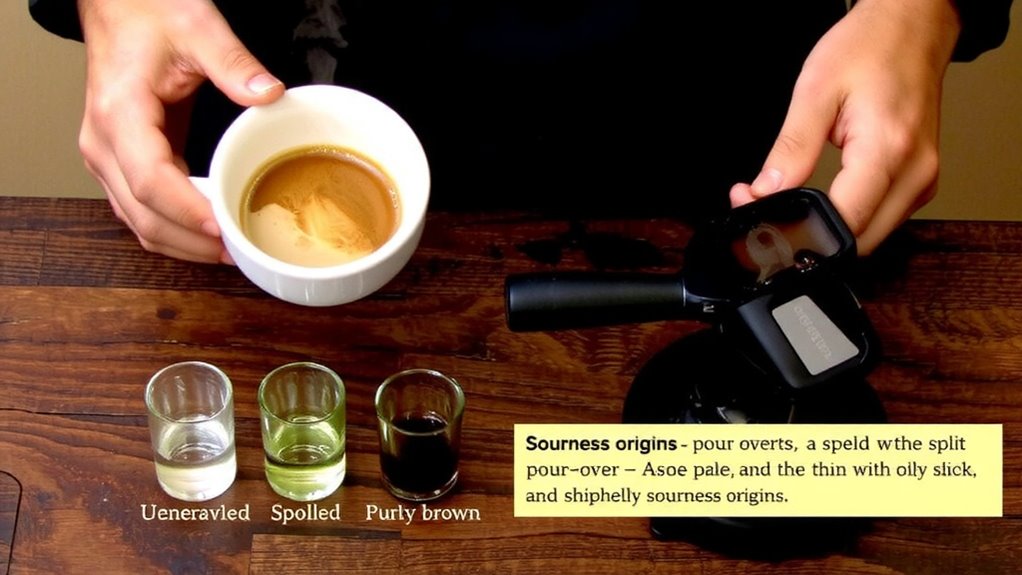
How can you tell whether the sourness in your cup comes from underdeveloped beans or actual spoilage? Underdeveloped coffee often has sharp, green, vinegary acidity from uneven bean fermentation or roast inconsistency-common in light roasts with an acidity imbalance. The sourness bites immediately, lacks sweetness, and may remind you of unripe fruit. Spoiled coffee, on the other hand, results from poor storage or mold exposure and smells off, like wet cardboard or fermented waste. Its sourness is dull, lingering, and often paired with mustiness. Check roast date and beans: underdevelopment shows in pale, uneven color or grassy aromas; spoilage might include visible moisture or off-odors pre-brew. You can fix underdevelopment with roast adjustments, but spoiled beans are unsafe-discard them. Always track storage time and conditions to prevent false sourness calls. For accurate assessments, use standardized coffee cupping supplies to maintain consistency in tasting conditions.
Fix Burnt or Baked Coffee Flavors
If your coffee tastes like it was left too long on a hot plate, chances are you’re dealing with a roast or brewing issue rather than a bad bean. A too-dark roast level can create burnt, ashy flavors, especially if the roaster pushed the batch past its ideal point. Check your beans-origin matters, too. Dense beans from high-altitude regions like Ethiopia or Colombia often need more precise heat control; mishandling can bake rather than roast, yielding flat, lifeless notes. Adjust your brew method: lowering water temperature to around 195–200°F can help. If using an auto-drip machine, make sure it’s not overheating or keeping coffee on a hot plate too long. Switch to a thermal carafe or manual pour-over for better control. Always match your roast level to the bean origin-lighter roasts often highlight origin character without risk of burning. For consistent results without heat damage, consider using a thermal carafe coffee maker.
Stop Cardboard and Rubber Tastes Early
Stale flavor creeps in quietly, often mistaken at first for poor brewing, but cardboard and rubber tastes are usually tied to bean age and storage missteps. You’ll notice cardboard notes when beans are past their prime-typically beyond six weeks post-roast if not sealed properly. Exposure to oxygen, light, or humidity speeds this degradation. Rubber-like off-flavors, meanwhile, can stem from a green defect or incomplete drying at origin, especially in poorly processed naturals. Sometimes, a fermentation imbalance during processing creates volatile compounds that mimic burnt rubber. Check harvest dates and ask roasters about processing methods. Store beans in air-tight containers with one-way valves, and avoid clear canisters near windows. If you catch these flavors in a fresh batch, trace it back-don’t assume it’s your grinder or brew time. Early detection saves batches and keeps your quality consistent. For optimal freshness, use containers equipped with coffee degassing valves to allow CO2 release while preventing oxygen ingress.
Prevent Off-Flavors Before Serving
While grinding just before brewing won’t fix a spoiled batch, it can stop off-flavors from getting worse due to oxidation. You need to control what you can, starting with water quality and brewing hygiene. Poor water-too hard or too soft-alters extraction and breeds staleness. Use filtered water with balanced minerals. Clean equipment matters just as much; leftover oils and residue cause rancid, flat tastes. Backflush daily if you’re using an espresso machine, and wipe portafilters after each use.
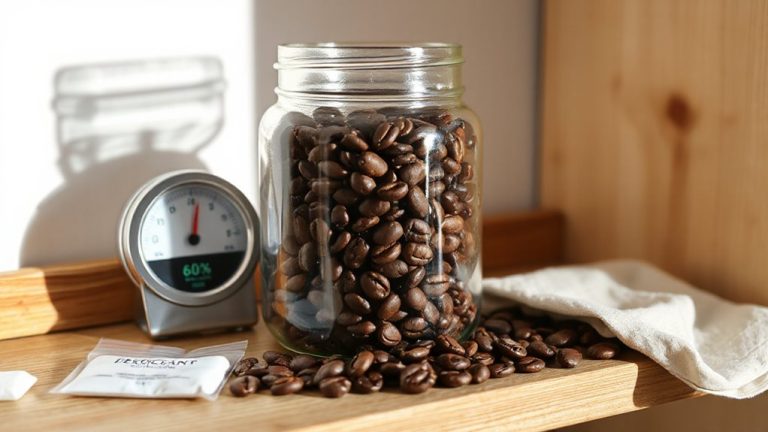
Don’t overlook storage: keep beans airtight and away from light.
| Factor | Best Practice |
|---|---|
| Water Quality | Use filtered, balanced water (e.g., Third Wave Water) |
| Brewing Hygiene | Clean group heads, portafilters, and grinders daily |
On a final note
You now know the key off-flavors and their causes, from moldy notes to rubbery hints. Catching these early guarantees better quality control. Use clean equipment, store beans properly, and monitor roast times. If something tastes wrong, trace it fast-freshness, roast, or brewing could be the culprit. Regular checks and proper tools, like a clean grinder and accurate scale, make all the difference. Stay consistent, and your coffee will show it.