How to Sanitize Your Coffee Scale to Prevent Residue Buildup
Unplug your coffee scale or remove the batteries first. Wipe it down weekly with a slightly damp microfiber cloth and 70% isopropyl alcohol to kill bacteria and dissolve sticky coffee oils. Avoid harsh chemicals that could damage the surface. Dry it completely with a lint-free towel to prevent moisture damage. This routine keeps residue from affecting performance-especially important for precision models like the Acaia Pearl. You’ll also learn how small habits make maintenance easier over time.
Notable Insights
- Unplug or remove batteries before cleaning to ensure safety and prevent damage.
- Use a slightly damp microfiber cloth with mild soap to wipe away coffee residue daily.
- Sanitize the surface with a 70% isopropyl alcohol wipe to eliminate oils and bacteria.
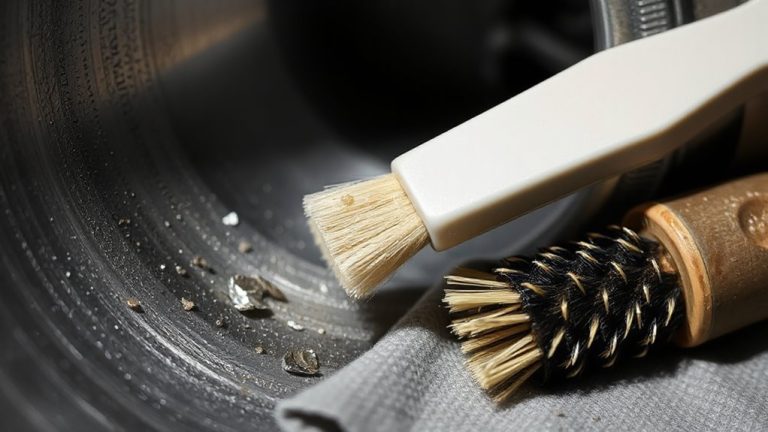
- Clean tight spots with cotton swabs or a soft-bristle brush to remove trapped debris.
- Dry thoroughly with a lint-free towel and store away from heat, steam, and splashes.
What Supplies Do You Need to Clean Your Coffee Scale?
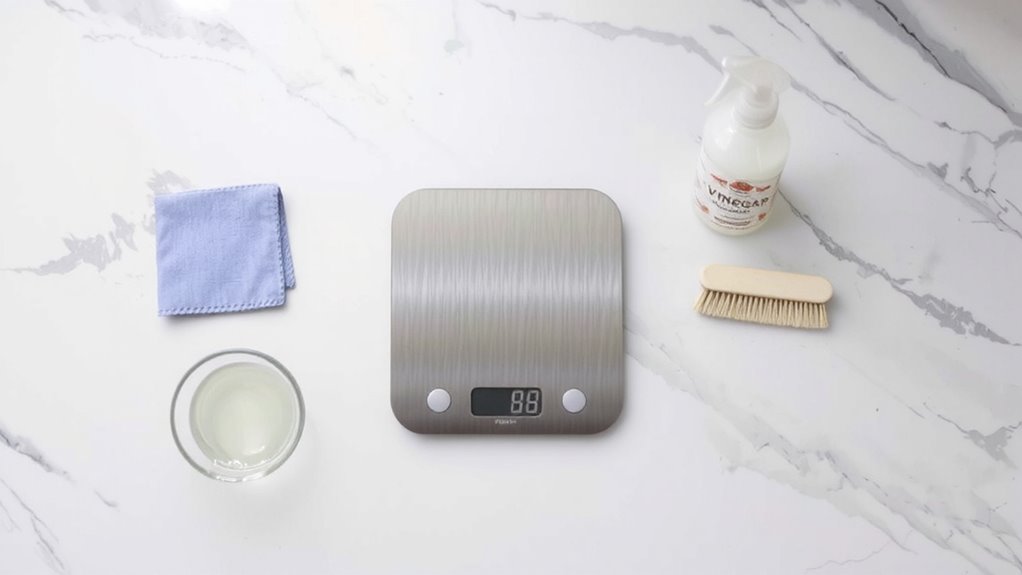
You’ll need just a few basic supplies to clean your coffee scale effectively. A soft microfiber cloth works best for wiping down the surface without scratching it. For tougher coffee spills, a slightly damp cloth with a drop of mild dish soap helps loosen residue. Avoid soaking the scale-most aren’t waterproof. Cotton swabs are handy for tight corners where dust accumulation builds up over time. If your scale has a metal surface, skip abrasive scrubbers; they can leave marks. Compressed air can remove dust accumulation under the display or around buttons, though it’s optional. Some users opt for 70% isopropyl alcohol on the cloth for sanitizing, but only if the manufacturer allows it. Always unplug digital scales before cleaning. These tools together handle daily messes and long-term grime, keeping your scale accurate and sanitary without overcomplication.
Clean Your Coffee Scale in 5 Simple Steps
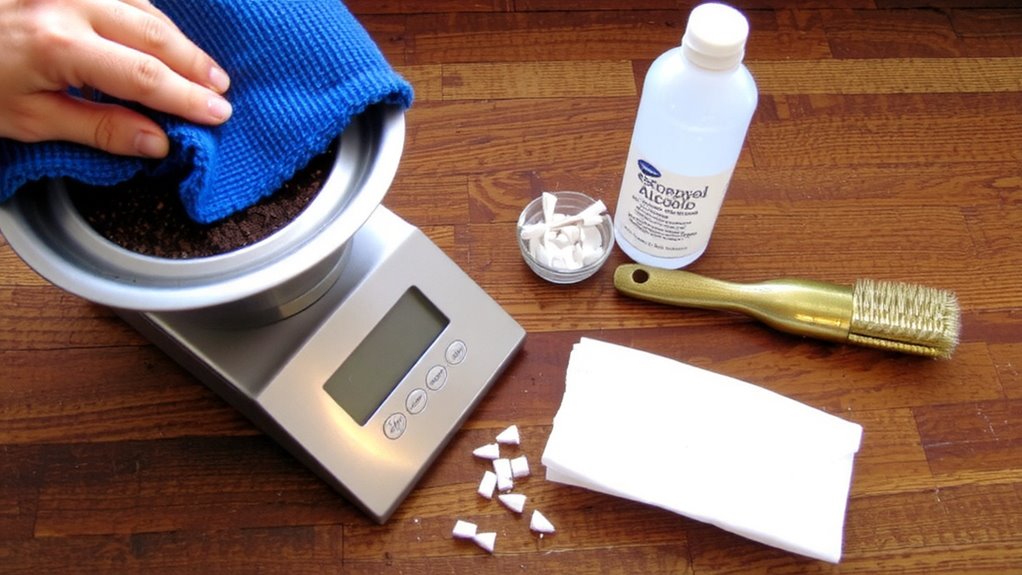
While keeping your coffee scale clean might seem minor, doing it regularly guarantees accurate readings and extends the device’s life. First, unplug or remove the batteries to avoid damage. Second, wipe the surface with a soft, damp cloth-this protects the scale design and prevents moisture from seeping into sensitive parts. Third, use a mild soapy solution to gently clean stains, steering clear of harsh chemicals that could affect future coffee aroma detection. Fourth, dry thoroughly with a lint-free towel to prevent corrosion. Finally, store it in a dry place away from heat sources. Always check the manufacturer’s guide, as some digital scales have specific needs. Regular cleaning supports precision and keeps your brewing setup reliable. Over time, this routine safeguards both function and the integrity of your scale’s design.
Remove Stubborn Coffee Residue Fast
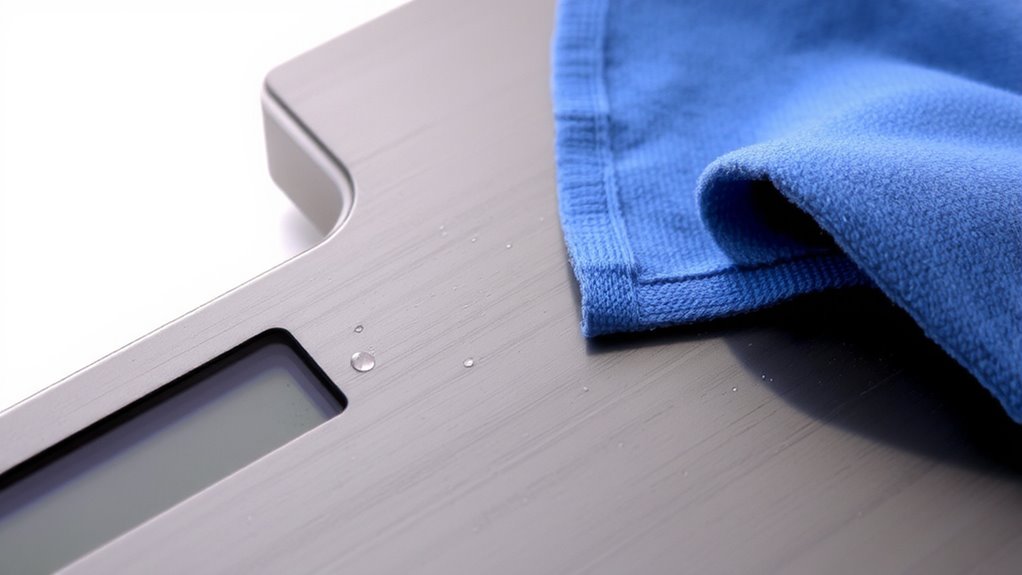
If standard wiping doesn’t clear dried coffee oils or stuck-on grounds, a bit more targeted effort is needed to restore your scale’s surface. For fast results, dampen a microfiber cloth with isopropyl alcohol (70% or higher) and gently rub the affected area-this promotes chemical breakdown of oils without harming the scale’s finish. Avoid harsh scrubbing that might scratch the display. For caked-on bits along edges, use a soft-bristle brush dipped in soapy water, then wipe dry immediately. Always unplug or remove batteries before deeper cleaning. Perform a quick residue inspection afterward: run your finger over the surface to check for stickiness or grit. If you still feel buildup, repeat the alcohol step. Some users prefer a vinegar-water mix, but it’s less effective for oil and could damage certain coatings. Stick with alcohol for reliable, quick residue removal.
Avoid Buildup With These Daily Habits
Regularly cleaning your coffee scale doesn’t have to be a chore if you build a few simple habits into your routine. Wipe the surface with a damp cloth each time after use-this keeps oils and fine grounds from sticking. Make it part of your daily routine: after brewing, take ten seconds to clean the scale. Avoid placing your portafilter or grounds container directly on the scale; use a separate tray instead to limit mess. Store the scale in a dry area, away from steam or splashes, which can damage electronics over time. Consistent maintenance prevents residue from hardening, making deep cleans less frequent. Using a protective silicone mat is an option, but be sure to wash it daily or residue just moves around. No need for harsh chemicals-soap and water work well. These small actions save time and protect your gear without slowing down your morning brew.
Why Accuracy Depends on a Clean Scale
Even a small amount of coffee residue can throw off your scale’s readings, so keeping it clean is key to consistent brewing. Surface contamination from oils and fine grounds builds up over time, especially around the edges and under the weighing platform. This grime adds unintended weight, leading to inaccurate measurements-even as little as 0.1 grams can alter your brew strength. That accumulation also contributes to calibration drift, where the scale no longer reads zero correctly, even when empty. Digital scales are sensitive, and models like the Hario V60 Drip Scale or Acaia Pearl rely on precision sensors easily disrupted by debris. Regular cleaning with a damp cloth and mild soap prevents long-term damage. You don’t need strong chemicals-just consistency. Wipe it after each use, recalibrate monthly, and you’ll avoid measurement errors that silently ruin your coffee. A clean scale isn’t just about hygiene-it’s about accuracy. Upgrading to one of the best-rated coffee makers on Amazon can further enhance your brewing precision when paired with proper scale maintenance.
On a final note
Keeping your coffee scale clean guarantees accurate readings and extends its life. Wipe it daily with a damp cloth, and use isopropyl alcohol weekly for deeper cleaning. Avoid submerging it-most models, like the Acaia or Hario, aren’t waterproof. Skip abrasive scrubbers to protect the surface. Consistent maintenance prevents sticky buildup and weight errors, especially important when dialing in espresso.