How French Guiana’s Rainforest Conditions Challenge Coffee Viability
You’ll struggle to grow coffee in French Guiana’s rain soup because constant rain leaches nutrients and silts soil, while high humidity spreads fungi like coffee leaf rust. The acidic, clay-heavy ground stays waterlogged, risking root rot, and steady temperatures limit sugar development in beans. Arabica thrives in well-drained, slightly acidic soils with dry periods-conditions this jungle doesn’t offer. Even shade tolerance won’t fix these core growing flaws without major intervention. There’s more to take into account if you’re serious about making it work.
Notable Insights
- High soil acidity and constant rainfall leach essential nutrients, weakening coffee plant growth and yield.
- Persistent humidity promotes fungal diseases like coffee rust, which thrive and spread rapidly in wet conditions.
- Heavy rains cause soil erosion and nutrient depletion, reducing fertility and increasing reliance on fertilizers.
- Stable rainforest temperatures lack diurnal variation, limiting the development of complex coffee bean flavors.
- Poor soil drainage leads to waterlogging, root rot, and oxygen deprivation, threatening coffee plant survival.
Why Coffee Can’t Grow in French Guiana’s Rainforest
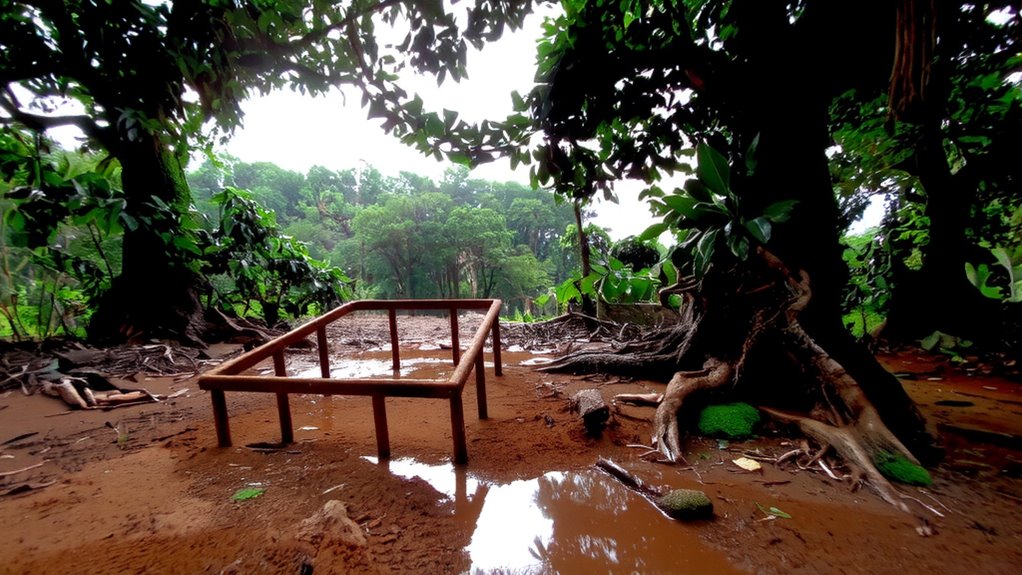
Rain doesn’t play favorites when you’re trying to grow coffee, and in French Guiana’s rainforest, that’s a big problem. You’d struggle with soil acidity-it’s too high here, leaching nutrients coffee plants need. Arabica thrives in slightly acidic to neutral soils, but this rainforest’s constant rain boosts acidity, weakening root uptake. Even if you amend the soil, heavy downpours wash away additives fast. Then there’s the wild pollinators issue: while they help some crops, coffee’s self-pollinating-so their presence doesn’t offset other issues. In fact, relying on them here gives no real yield advantage. Conditions suppress flowering and bean development regardless. You’re better off sourcing beans from regions with balanced soils and stable climates, like Colombia or Ethiopia. If you’re serious about quality, focus on brewing gear that handles dense, well-processed beans-think burr grinders and gooseneck kettles-rather than chasing impossible growing zones.
How High Humidity Spreads Coffee-Killing Fungi
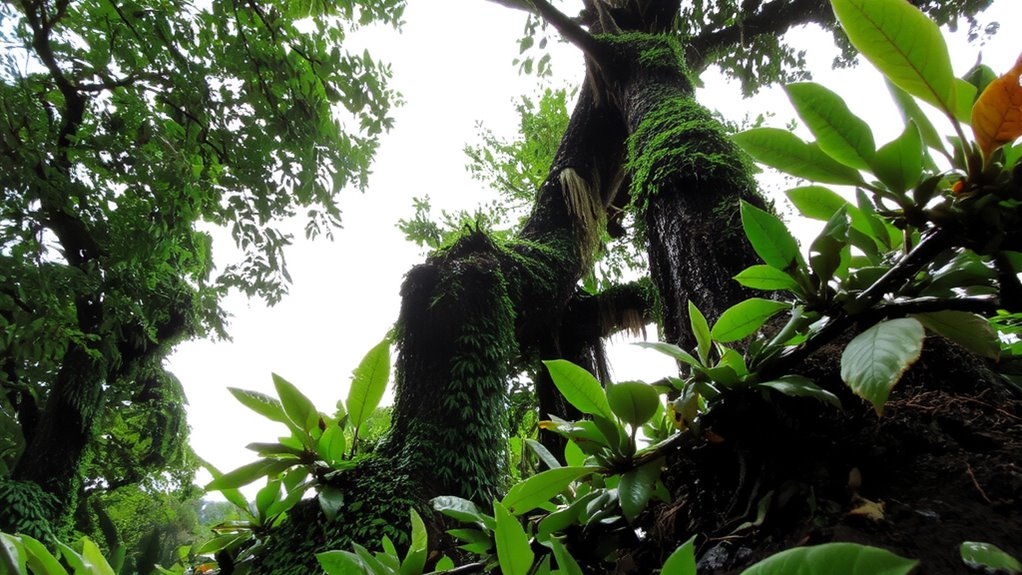
Why do some coffee farms battle mold and ruined crops year after year? You’re up against relentless humidity, and it’s not just uncomfortable-it’s deadly for coffee plants. In French Guiana’s rainforest, moisture hangs thick, creating perfect conditions for fungi like *Hemileia vastatrix* and *Colletotrichum coffeanum* to thrive. High humidity accelerates spore dispersal, letting fungal cells hitch rides on wind, water, or tools to infect new plants fast. Once established, these fungi challenge fungal resistance in even the hardiest cultivars. You can’t rely on natural resilience alone-resistant strains help, but they’re not foolproof. Without proper spacing, airflow, and sanitation, spores spread quickly. Managing humidity-sensitive diseases means scouting early, removing infected tissue, and choosing wisely when planting. Fungicides may be necessary, but overuse risks weakening long-term fungal resistance. Smart, constant monitoring is your best defense.
Why Constant Rain Ruins Coffee Farming
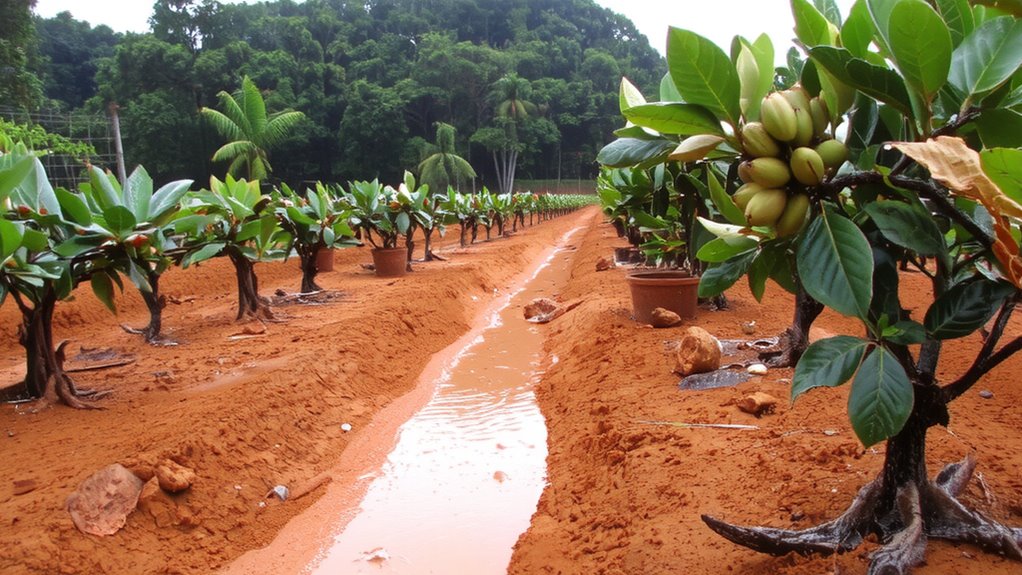
Even though coffee thrives in tropical climates, too much rain-especially when it comes nonstop-can sabotage your crop before it even matures. You might think steady moisture helps, but constant downpours lead to soil erosion, washing away the topsoil that anchors coffee plants and holds essential nutrients. When heavy rains persist, nutrient leaching occurs-minerals like nitrogen and potassium dissolve and drain deeper into the ground, beyond root reach. This weakens plants, stunts growth, and reduces yield. Unlike regions with seasonal rainfall, where soil gets a chance to recover, French Guiana’s unbroken wet cycles prevent that balance. Without proper drainage or terracing, your farm faces declining fertility and increased dependency on fertilizers. Managing runoff with cover crops or contour planting can help, but these add labor and cost. In such conditions, sustaining healthy coffee becomes far harder, no matter your effort or expertise.
Why Stable Temperatures Limit Flavor Development
You’ve got the rain cycle under control, but there’s another factor quietly undermining your coffee’s potential-temperature stability. In French Guiana’s rainforest, thermal consistency keeps daily highs and lows within a narrow range. While that stability suits some crops, coffee thrives on mild fluctuations. Diurnal shifts-cooler nights followed by warm days-help beans develop complex sugars and acids linked to bright, nuanced flavors. Without these variations, you’re left with flavor stagnation. The beans mature too evenly, failing to build layered profiles. Compare that to high-altitude farms in Ethiopia or Colombia, where temperature swings encourage chemical complexity. There, the beans express winey, fruity, or floral notes. In French Guiana, even well-processed beans often taste flat or one-dimensional. Thermal consistency might reduce plant stress, but it sacrifices cup quality. If you’re aiming for specialty-grade coffee, that trade-off isn’t worth it. You need variation-not uniformity-to access true flavor depth.
Poor Drainage: Why Jungle Soil Fails Coffee Plants
While French Guiana’s rainforest soil looks rich and fertile, it’s often a poor match for coffee plants because it doesn’t drain well. You’ll run into trouble fast when the soil composition holds too much water, mainly due to fine clay particles and decomposed organic matter that block airflow. This leads to root saturation, which coffee plants can’t tolerate-they need oxygen at the roots to survive. Without proper drainage, roots suffocate, rot sets in, and plant health declines quickly. Even heavy rains worsen the problem, leaving water pooled around roots for hours. Unlike high-altitude coffee regions with volcanic, loose soils, this environment works against you. If you’re attempting to grow here, consider raised beds or containers to improve drainage. Monitoring soil moisture and amending soil with sand or perlite might help slightly. But let’s be clear: natural conditions make success unlikely without major intervention.
How French Guiana Differs From Top Coffee Regions
Though French Guiana shares the tropical climate that many top coffee regions rely on, it lacks the high-altitude terrain and well-drained volcanic soils found in places like Colombia, Ethiopia, or Costa Rica. You won’t find the ideal 1,000–2,000-meter elevation here, which slows bean development and enhances flavor-something lower, flat jungle land can’t support. Without these conditions, beans develop too quickly, leading to less complexity and lower quality. Unlike major producers, French Guiana also misses established coffee tourism networks that help sustain small farms. You can’t rely on visitor-driven income like in Costa Rica or Colombia, where cultural traditions and farm tours draw travelers. There’s little local infrastructure for processing or marketing specialty beans, either. If you’re evaluating coffee-growing potential, these structural gaps matter. Success elsewhere doesn’t translate here-different land, different outcomes.
Can Shade-Grown Coffee Work in This Jungle?
Shade-grown coffee might seem like a smart fit for French Guiana’s dense jungle, especially since the region already has natural tree cover and high humidity-conditions that mimic shade farms in places like Ethiopia or southern Mexico. But you’ll face real challenges here. The canopy density is often too thick, blocking nearly all sunlight and stunting coffee growth, which needs at least some filtered light. Unlike controlled shade systems using Inga or banana trees, this rainforest lacks managed spacing, increasing root competition. Coffee roots struggle to absorb water and nutrients when surrounded by aggressive tropical hardwoods. You’d need to selectively thin trees and monitor soil regularly. Even then, fungal risks stay high due to constant moisture. While shade growing works elsewhere, here it demands major intervention. Simply relying on natural forest cover won’t cut it. Active management is key-if you’re willing to invest the effort.
On a final note
You can’t grow coffee in French Guiana’s rainforest because constant rain and high humidity promote deadly fungi like coffee leaf rust. Poor soil drainage drowns roots, while stable temperatures limit flavor development. Unlike Colombia or Ethiopia, this jungle lacks ideal elevation and dry seasons. Shade-grown methods won’t fix these core issues. For reliable beans, stick to proven regions. If experimenting, use raised beds and disease-resistant varietals-but expect low yields and high risk.