The Effect of Dose Volume on Grind Consistency in Large-Batch Grinders
Your dose size直接影响 grind consistency, especially in large-batch grinders like the EK43 or Mazzer Major. Too little-below 20g-and beans tumble unevenly, increasing fines and clumping. Too much, and heat builds up, dulling flavors and wearing burrs faster. For best results, run batches at 60–80% capacity: 120–160g for the EK43, 150–180g for the Mazzer Major RS. Stick to steady doses, adjust grind settings in small steps, and you’ll keep extraction even. There’s more to fine-tuning than just weight.
Notable Insights
- Large doses increase friction and heat, degrading grind consistency and altering coffee flavor.
- Grind uniformity peaks when doses are 60–80% of a grinder’s max capacity.
- Overheating from large batches accelerates burr wear, producing more fines and boulders.
- Consistent batch sizes improve repeatability and reduce the need for frequent recalibration.
- Machines like the EK43 and Mazzer Major perform best within specific large-dose ranges.
Why Dose Volume Changes Grind Consistency
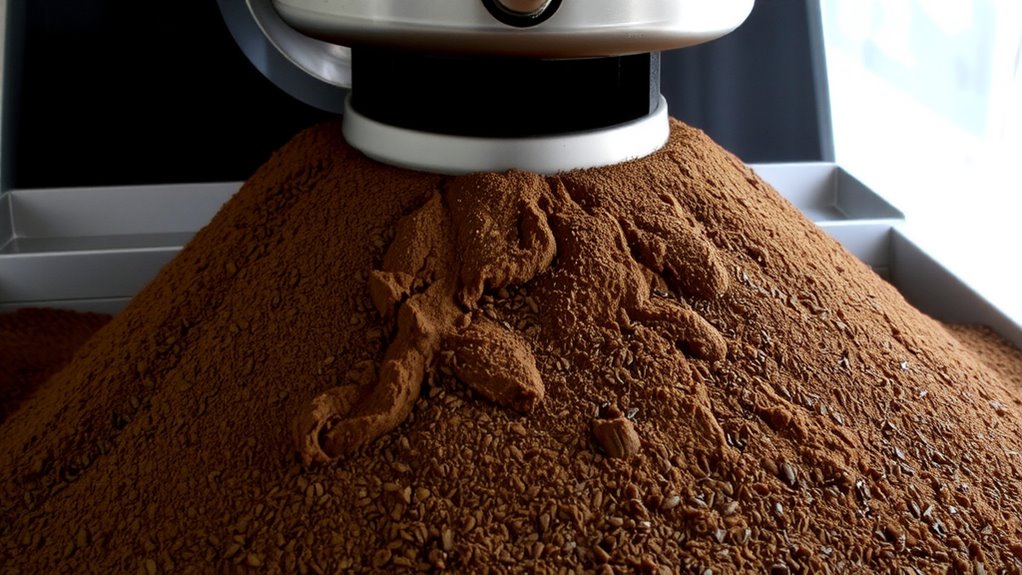
Why does changing your dose volume actually affect grind consistency? When you alter the amount of coffee in the hopper, you change how beans interact before grinding. With larger volumes, beans press down more, increasing static friction against the hopper walls and each other. This slows and evens their flow, promoting a steady feed into the burrs. But with smaller doses, less pressure means beans tumble irregularly, boosting particle segregation-where fines settle below, and larger chunks rise. This leads to uneven grinding. Grinders like the Niche Zero handle low doses better due to adjustable collars that reduce airspace, minimizing disruption. High-volume grinders, like the EK43, rely on consistent bean columns to maintain flow. If your dose drops too low, expect inconsistencies. For repeatable results, keep your hopper above half full, or use a timed dose grinder to bypass the issue entirely. It’s not magic-just physics. Choosing the right best coffee grinder can significantly improve dose stability and grind uniformity across different brew methods.
How Small Batches Create Fines and Clumping
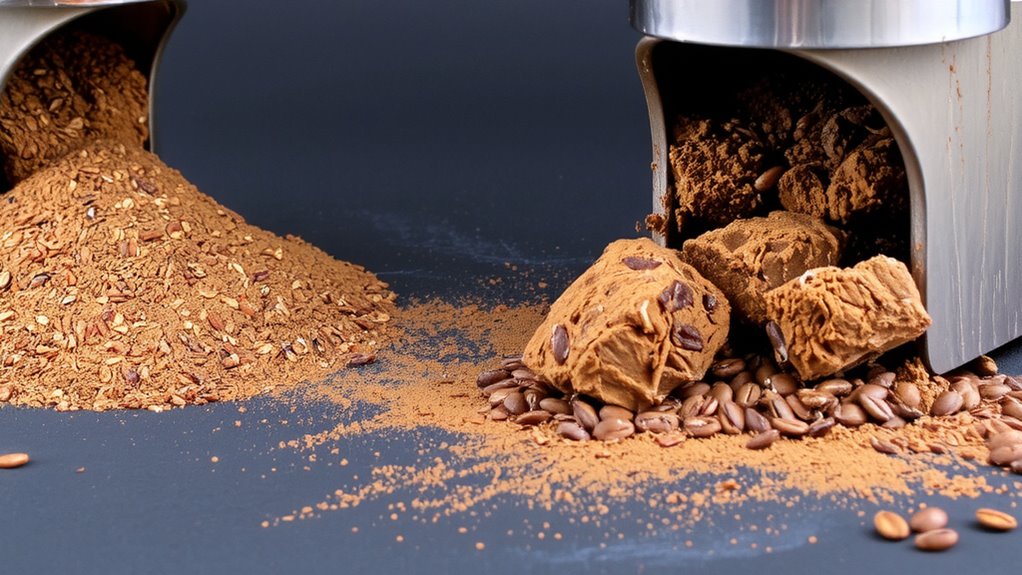
Even a small batch-say, less than 20 grams-can quickly lead to trouble in your grinder. When there’s not enough coffee to move smoothly through the burrs, beans bounce and fragment unevenly, creating excess fines. These tiny particles disrupt your fines distribution, leading to inconsistent extraction. You’ll notice more clump formation, especially with oily or dark-roasted beans, since static builds up easily in low-volume grinding. That clumping means some grinds clump together and pass through unbroken, clogging your filter or portafilter. For small batches, grinder design matters-flat burrs often handle low volumes slightly better than conicals, but most grinders aren’t optimized for below 20 grams. If you must grind small amounts, consider adjusting your grind size slightly coarser to reduce fines, but know that precision drops. For better consistency, dose larger batches or use a smaller-capacity grinder designed for single servings. Selecting the right best coffee and espresso grinders can significantly improve performance when working with variable batch sizes.
How Large Batches Overheat Grinders and Worn Burrs
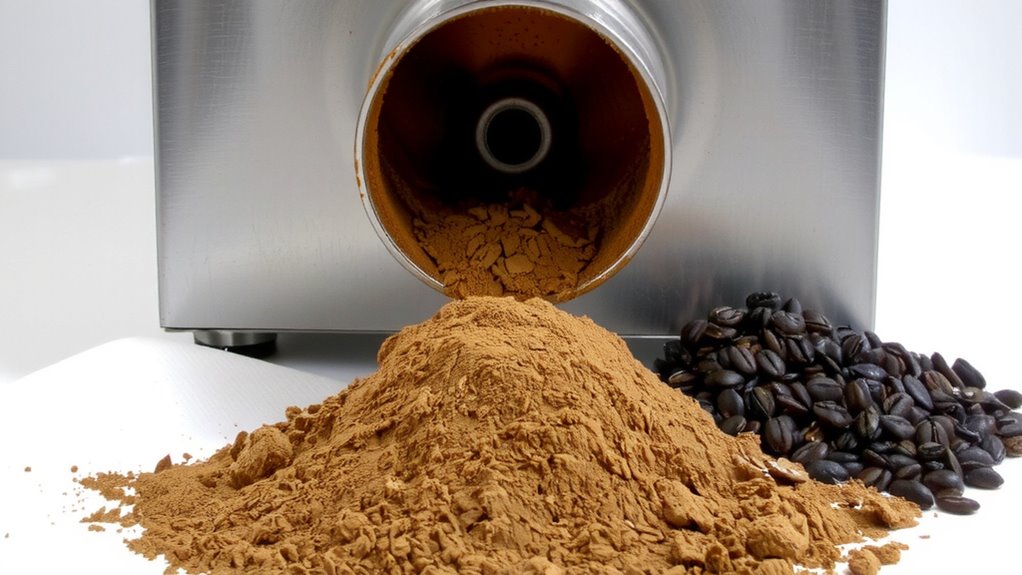
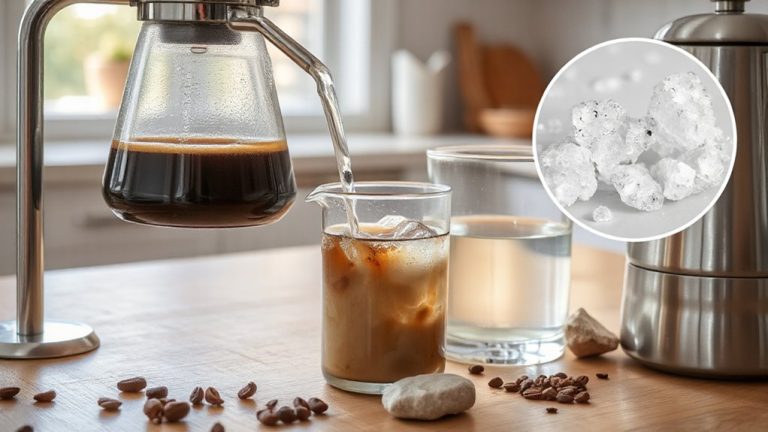
While you might think grinding more coffee at once saves time, pushing large batches through your grinder can cause more harm than good. Large volumes increase friction, leading to heat buildup that alters your beans’ chemistry and dulls flavor. You’re not just risking uneven extraction-your grinder’s suffering too. Prolonged strain accelerates burr degradation, especially in flat or conical steel sets that weren’t built for marathon grinds. As burrs wear, grind consistency drops, creating fines and boulders even if you didn’t change the setting. Machines like the EK43 or Mazzer Major handle volume better, but even they overheat if pushed too hard. You’ll notice the coffee warming the hopper or smelling scorched-clear signs of stress. To protect flavor and equipment, avoid maxing out capacity. Let the grinder rest between batches if needed. This isn’t just about convenience-it’s about preserving performance. Consistent grinds need cool, sharp burrs. A proper coffee pour-over stand can help maintain an efficient brewing setup that complements consistent grinding practices.
Find Your Grinder’s Ideal Batch Size
How much coffee should you grind at once for the best results? Your grinder’s sweet spot isn’t just about dose-it’s about consistency. Grinding too little can cause uneven flow through the burrs, while overloading increases heat and strain. Most large-batch grinders perform best when run at 60–80% of max capacity. Test your typical dose against this range to find the ideal batch size. This helps maintain grind uniformity and reduces wear. Keeping a steady batch size also simplifies grinder calibration, making your shots more repeatable. Stick to regular maintenance schedules-cleaning burrs and checking for wear-since inconsistent batches accelerate deterioration. For example, the Mazzer Major RS works well with 150–180g doses, while the EK43 shines at 120–160g. Match your use case to these practical limits for lasting performance and better espresso.
Tune Settings for Any Dose
Why do your shots change when you adjust the dose? Because altering the dose affects grind uniformity and particle distribution, especially in large-batch grinders. When you change how much coffee you’re grinding, the beans’ flow through the burrs shifts, impacting consistency. To tune settings for any dose, start by adjusting grind size in small increments-try 0.5 clicks on a grinder like the Compak K3-then pull test shots. Look for balanced extraction and avoid sour or bitter flavors. Lower doses often mean finer particles clump, hurting uniformity; higher doses can overheat burrs, increasing fines. Check the particle distribution with a sieve or magnifier if possible. Always recalibrate after dose changes. Consistent dosing isn’t just about weight-it’s about stabilizing grind performance. Tune every time, and you’ll maintain quality no matter the dose.
On a final note
You’ll get the most consistent grinds by matching your dose volume to your grinder’s sweet spot. Too small, and fines clump; too large, and heat or burr wear throws things off. Machines like the DF64 or EK43 handle big batches well, but smaller ones like the Q20 need careful tuning. Test different doses, watch for bitterness or uneven extraction, then adjust. It’s not about max capacity-it’s about stability. Find that balance, and your brews stay even, shot after shot.