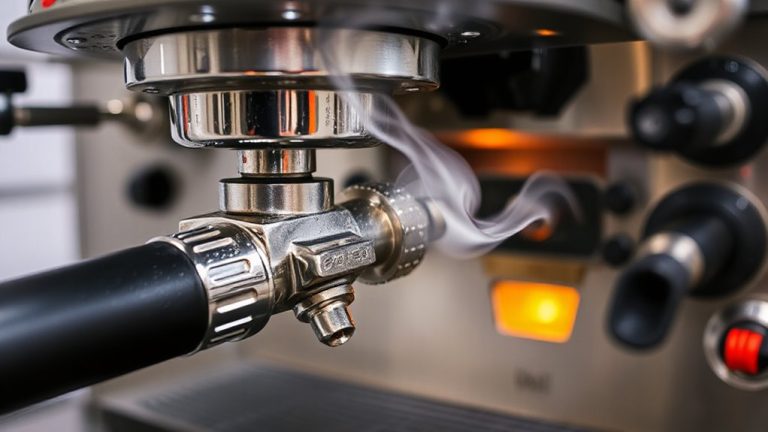
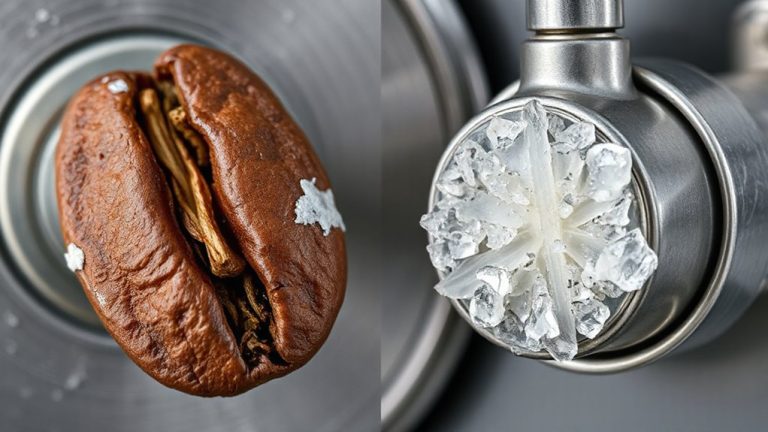
Remove Hardened Coffee Residue From a Portafilter (Easy Steps)
Let your portafilter cool, then tap out loose grounds and remove the basket by pushing from the back with a dowel or unscrewing it. Soak it in warm water with coffee cleaner for 15–30 minutes. For stubborn gunk, scrub with a baking soda paste using a soft brush-safe and effective without scratching. Rinse thoroughly, dry, and reassemble. Do this weekly, or whenever you notice buildup, to keep flavors clean and extraction consistent. There’s a better way to maintain it between deep cleans.
Notable Insights
- Let the portafilter cool, then remove the basket by tapping out grounds and using a dowel or twisting it off.
- Soak the basket in warm water with coffee cleaner or mild soap for 15–30 minutes to loosen residue.
- Apply a baking soda paste to stubborn buildup and gently scrub with a soft brush using circular motions.
- Rinse thoroughly with warm water to remove all cleaning residue and prevent damage to plastic parts.
- Reassemble the portafilter only after ensuring all parts are clean, dry, and correctly aligned.
How Coffee Gunk Builds Up (And Why It Matters)
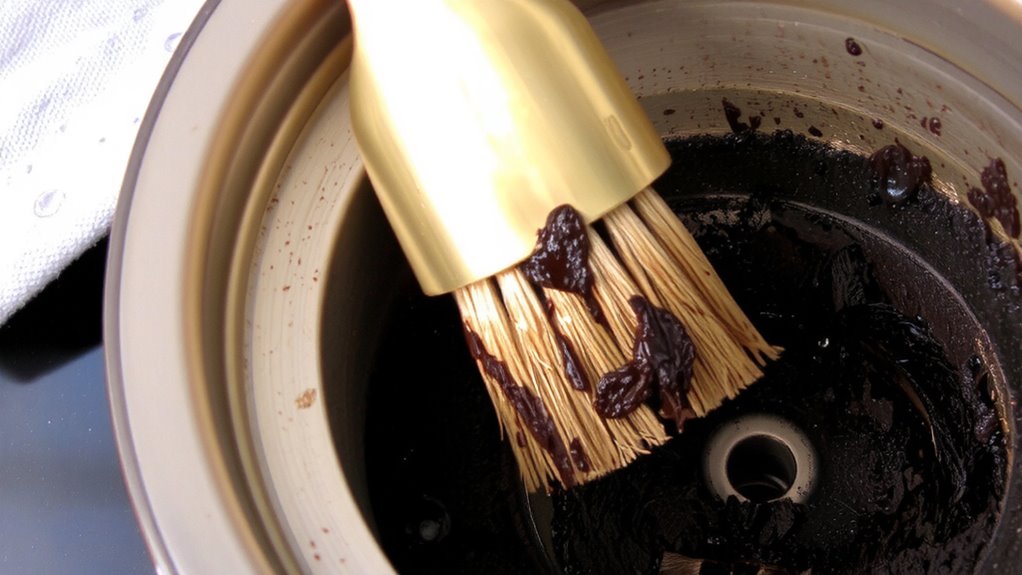
While you’re pulling shot after shot, coffee oils, fine grounds, and mineral deposits slowly accumulate in your portafilter, especially around the basket and group head contact points. These residues aren’t just mess-they result from ongoing chemical reactions between oils and oxygen, which degrade flavor over time. As coffee heats during extraction, it accelerates these reactions, leaving behind rancid oils and sticky solubles. Hard water worsens this by leaving mineral deposits that build up with each use, potentially interfering with water flow and pressure. This gunk affects taste, causes uneven extraction, and can even damage equipment long-term. Even if your machine uses soft water, coffee oils still oxidize and polymerize, forming that stubborn, dark crust. Left unchecked, buildup leads to bitter shots and inconsistent performance. Regular maintenance isn’t optional-it’s essential for quality and machine longevity. You need to act before residue hardens into a problem you can’t rinse away. Using the right tools, like a dedicated coffee grinder cleaning brush, makes a significant difference in preventing cross-contamination and maintaining cleanliness across all your espresso equipment.
How to Remove and Soak the Portafilter Basket
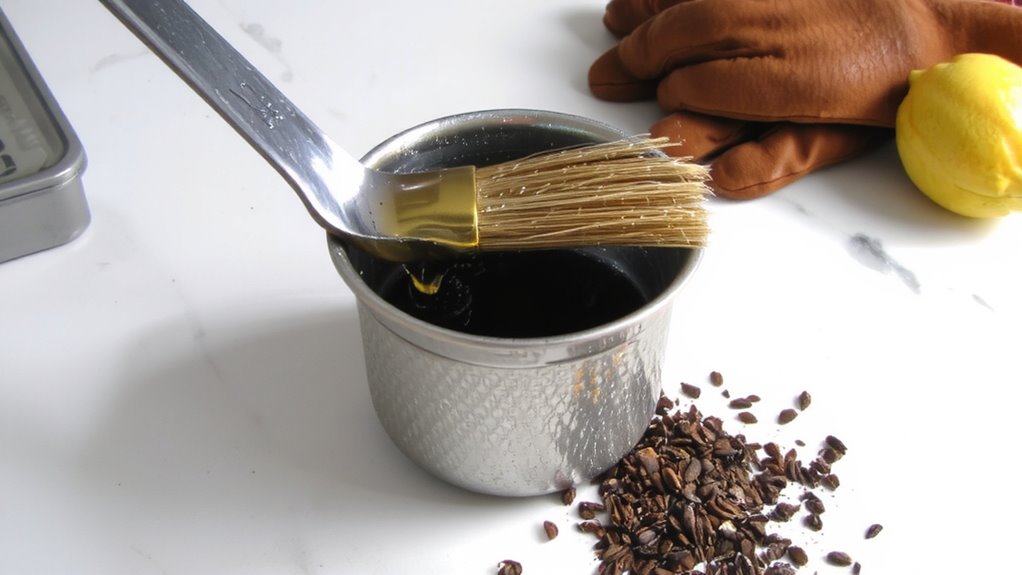
Once your portafilter has cooled down, start by tapping the basket firmly on a towel to dislodge loose grounds. Then, use a small tool or your fingers to remove any stuck coffee. Most baskets are press-fit, so push gently from the back with a dowel or tap it out carefully-don’t force it, as that can hurt basket durability. If it’s screw-in type, twist counterclockwise to remove. Once out, rinse the basket and portafilter body under warm water. For deeper portafilter maintenance, submerge the basket in a bowl of warm water with a dedicated coffee equipment cleaner or mild dish soap. Let it soak for 15–30 minutes to loosen hardened residue. Avoid boiling water, which can warp metal over time. Soaking helps preserve basket durability while prepping it for cleaning in the next step. Using a Breville-approved descaler can also help prevent mineral buildup that contributes to residue accumulation.
Scrub Stubborn Residue With Baking Soda
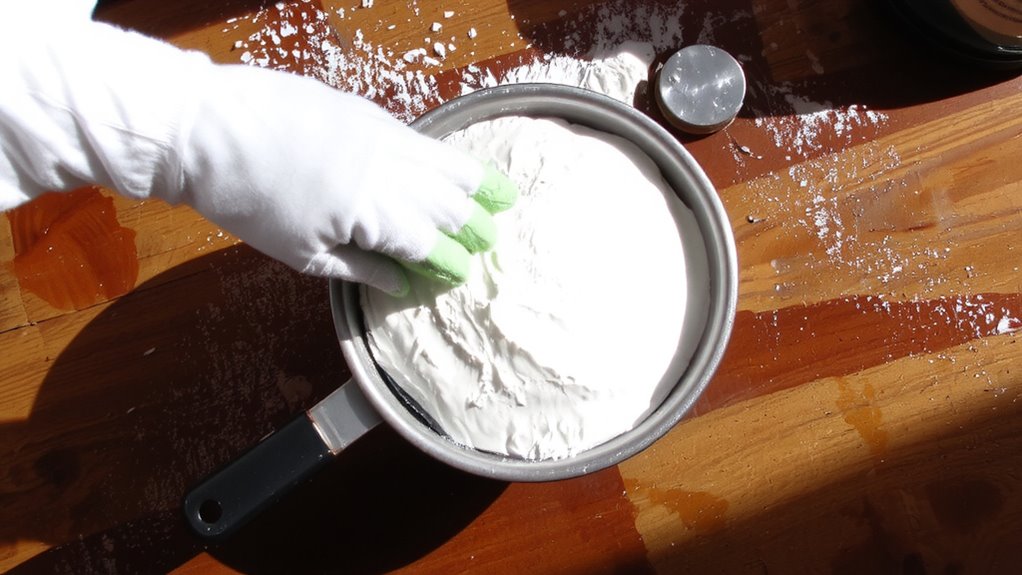
After soaking the portafilter basket, you’re ready to tackle the leftover gunk that didn’t wash away. A baking soda paste works great for this, offering a safe, effective clean without damaging the metal. Mix two parts baking soda to one part water, then apply it directly to the stubborn spots. Use a soft brush and the gentle abrasion method-small circular motions-until the residue lifts. This method is non-toxic and won’t scratch like steel wool might. Here’s a quick comparison:
| Method | Abrasiveness | Safety for Portafilter |
|---|---|---|
| Baking soda paste | Low | High |
| Steel wool | High | Low (risk of scratches) |
Stick with baking soda paste for reliable, damage-free cleaning. It’s cheap, accessible, and perfect for regular maintenance.
Rinse and Reassemble Without Damage
With the residue lifted, it’s time to rinse the portafilter thoroughly under warm running water to remove any remaining baking soda paste. Keep the water temperature warm, not boiling-excessive heat can warp plastic parts or loosen the handle grip over time. Use your fingers to feel inside the basket and around the spout, ensuring no paste is trapped in crevices. Avoid high-pressure sprayers, as they might force water into areas that can’t dry easily. Once clean, shake off excess water and dry with a lint-free cloth. When reassembling, align the basket correctly and press it firmly into place-don’t overtighten. A secure handle grip is essential; loose parts can lead to poor extraction or breakage during use. Reassembly mistakes often cause unnecessary wear, so double-check each component. Handle the portafilter gently but confidently-it’s built tough, but routine care keeps it lasting longer. For optimal espresso quality, ensure your machine is paired with one of the best coffee and espresso grinders top blade grinders to maintain consistent particle size.
Clean Your Portafilter After Every Shot
You’ve reassembled your portafilter with care, making sure every part is clean and properly seated-now, that daily routine needs to start fresh with each shot. After pulling espresso, knock out the puck immediately and rinse the basket under warm water. This simple step prevents coffee stains from setting in and keeps old oils from spoiling your next brew. Wipe the portafilter handle and rim too, since residue builds up fast. If you skip this, dried grounds bake onto metal, leading to stubborn coffee stains and possible clogs. Over time, leftover moisture can leave mineral deposits, especially if you use hard water. These deposits affect heat transfer and crema quality. A quick rinse takes seconds but makes deep cleaning less frequent and more effective. Running the portafilter under water after every shot isn’t excessive-it’s essential upkeep that protects flavor and machine performance day after day.
Stop Coffee Buildup Before It Starts
Usually, preventing coffee buildup comes down to consistent habits and the right tools. Good portafilter maintenance isn’t just about deep cleaning-it starts the second you pull a shot. Immediate rinsing, drying, and regular backflushing keep oils and fines from hardening. Over time, this routine supports long-term espresso hygiene and machine performance. You don’t need fancy gear, but using the right brush, detergent, and technique makes a real difference. Stay ahead of residue with these simple daily actions.
| Task | Tool Needed | Frequency |
|---|---|---|
| Rinse portafilter | Warm water | After every shot |
| Brush group head | Stiff nylon brush | Daily |
| Backflush machine | Blind basket + detergent | Weekly |
| Dry portafilter | Clean towel | After rinsing |
| Inspect for oils | Visual check | Weekly |
Stick to this, and portafilter maintenance stays manageable.
On a final note
You’ve cleared the buildup, but maintenance keeps your portafilter running right. Rinse it after each shot and deep clean weekly with baking soda or a dedicated espresso detergent. Avoid harsh tools like steel wool-they scratch the surface and make future gunk harder to remove. For best results, backflush your machine regularly if it’s a rotary pump model. Consistent care means better-tasting shots and a longer lifespan for your gear.