Coffee Varietals for Home Growers: Which Beans Thrive in Container Gardens
Choose dwarf coffee varietals like ‘Nana’ or ‘Dwarf Ethiopian Arabica’ for container growing-they stay under 4 feet and handle small spaces well. ‘Pacamara Dwarf’ and ‘Seminole’ offer better disease resistance, especially in humid conditions. These compact plants grow slower but are easier to manage and harvest. Use a 12–14 inch pot with good drainage and bright, indirect light. Keep temperatures between 60°F and 75°F. You’ll get the best results with proper care and timing. There’s more to get right if you want those beans to thrive.
Notable Insights
- Dwarf coffee varieties like ‘Nana’ and ‘Dwarf Ethiopian Arabica’ thrive in containers due to their compact size.
- Choose disease-resistant types such as ‘Pacamara Dwarf’ and ‘Seminole’ to prevent issues in humid indoor environments.
- Use a 12- to 14-inch pot with drainage to avoid root rot and support healthy growth.
- Provide 6–8 hours of bright, indirect light daily, using grow lights in winter if needed.
- Harvest cherries by hand when red and glossy, then dry them promptly in well-ventilated conditions.
Pick Coffee Varietals That Thrive in Containers
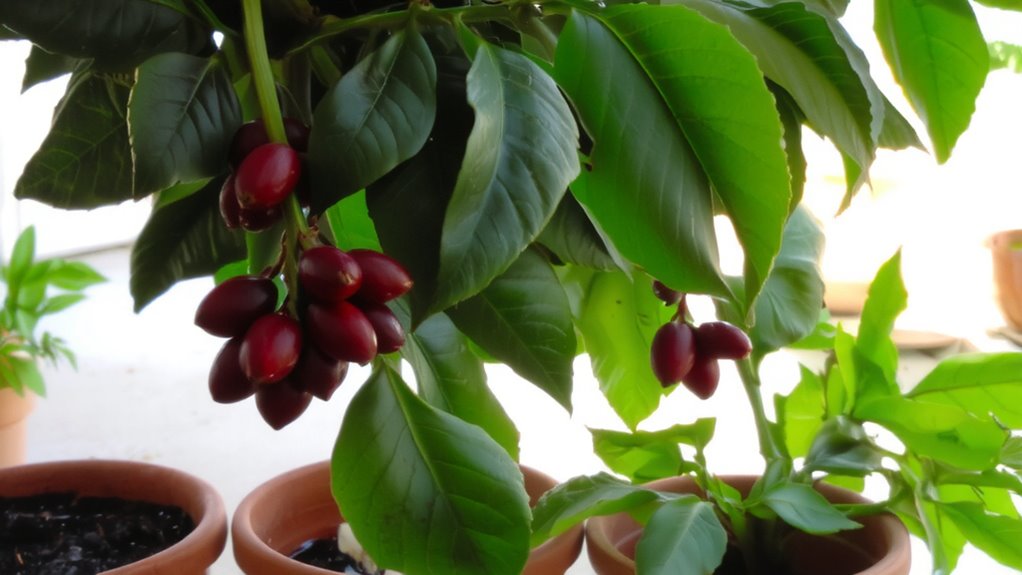
Space is usually the biggest constraint when growing coffee at home, which makes choosing the right varietal critical. You’ll want to focus on dwarf varieties-they stay compact, typically under 4 feet, making them ideal for containers indoors or on small patios. Look for options like Coffea arabica ‘Nana’ or ‘Dwarf Ethiopian Arabica,’ both bred to thrive in tight spaces without sacrificing bean quality. These dwarf types often mature slower, but they’re easier to manage and harvest. Disease resistance is another key factor; certain cultivars resist common fungal issues like coffee leaf rust, which can spread fast in humid home environments. Varieties such as ‘Pacamara Dwarf’ or ‘Seminole’ offer stronger resilience, reducing your need for chemical treatments. While no plant is foolproof, selecting for disease resistance improves long-term survival. Prioritize these traits over yield or bean flavor at first-space and health come first.
Choose the Right Pot and Soil for Container Coffee
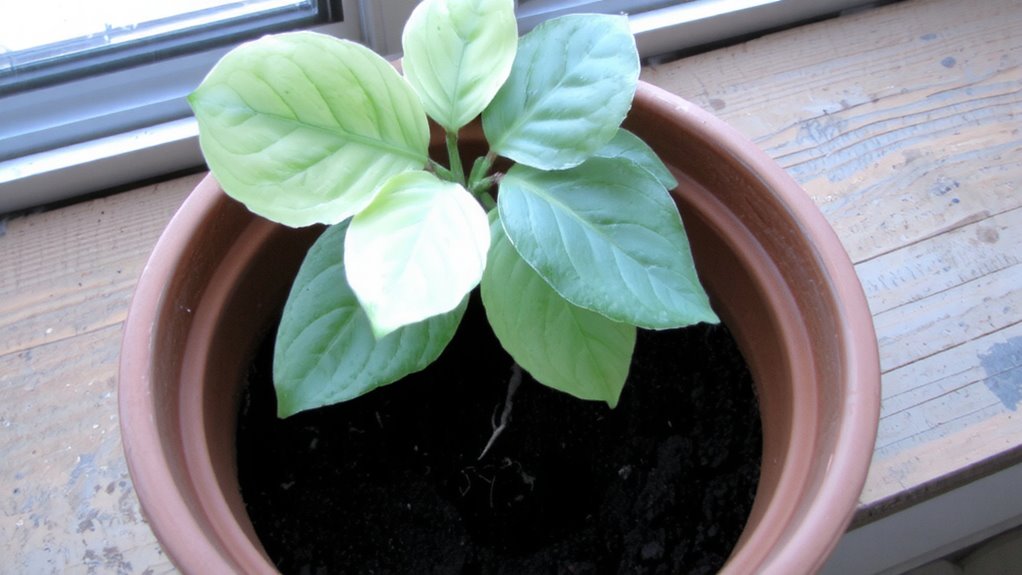
You’ve picked a compact, resilient varietal that fits your space and growing conditions-now it’s time to get the container and soil right. Start with pot size: a 12- to 14-inch container gives enough room for root growth without holding excess moisture. Choose a pot with drainage holes-clay or fabric pots work well since they allow airflow and reduce soggy roots. Avoid oversized pots; they trap water and can lead to root rot. For soil, use a well-draining mix-try combining regular potting soil with perlite and coarse sand (about 60/20/20). This boosts soil drainage and prevents compaction. Coffee plants hate “wet feet,” so proper drainage is critical. Terracotta pots help wick away moisture, while plastic retains more water-pick based on your watering habits. Repot every 2–3 years to refresh soil and check root health.
Give Your Coffee Plant Ideal Light and Temperature
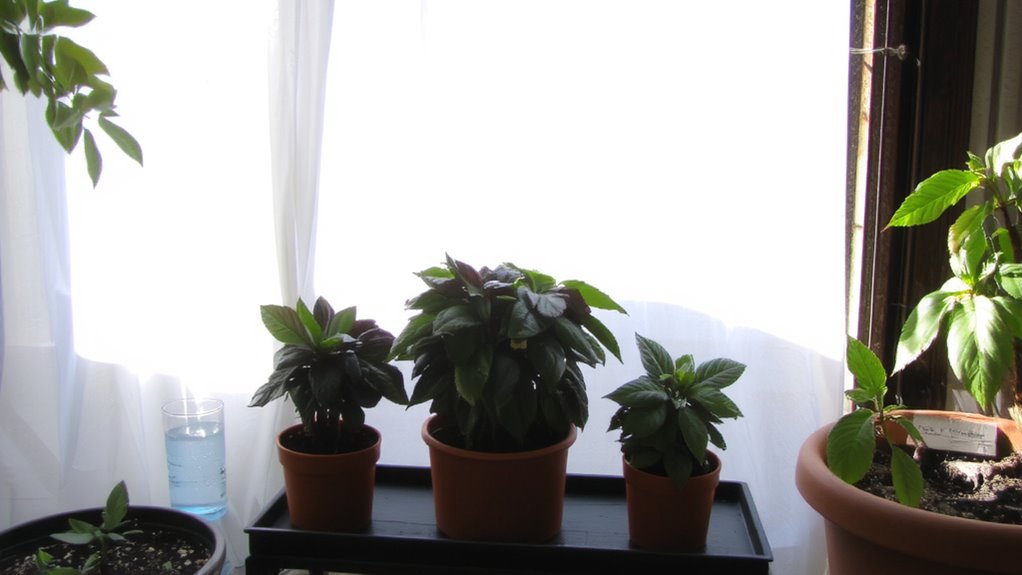
A coffee plant thrives best when it gets bright, indirect light for around 6 to 8 hours a day-direct midday sun can scorch the leaves, while too little light slows growth and reduces flowering. You’ll want to aim for consistent light intensity, so placing your plant near an east- or south-facing window is ideal. If natural light is weak, especially in winter, consider a grow light to maintain ideal conditions. Coffee plants prefer temperatures between 60°F and 75°F-anything outside that range stresses the plant. Avoid spots with frequent temperature fluctuations, like near drafty doors, heaters, or AC units. These sudden shifts can cause leaf drop and stunt development. Steady, moderate warmth mimics the plant’s native tropical climate and supports healthy photosynthesis. You don’t need perfect conditions, but avoiding extremes makes a noticeable difference in long-term growth and eventual flowering.
Keep Your Container Coffee Healthy All Year
How do you keep your potted coffee plant thriving through every season? Consistent care tailored to seasonal changes makes all the difference. Use proper pruning techniques to shape the plant and encourage new growth-trim leggy branches in early spring. Follow set fertilizer schedules: feed monthly during active growth (spring to early fall) with a balanced 10-10-10 NPK formula; pause in winter. Keep an eye on soil moisture, ensuring containers drain well to avoid root rot.
| Season | Care Focus |
|---|---|
| Spring | Pruning, resume fertilizing |
| Summer | Water regularly, monitor light |
| Winter | Reduce watering, no fertilizer |
Rotate the pot occasionally for even growth and inspect leaves for pests. With these habits, your coffee stays healthy and productive year-round.
Harvest Your Homegrown Coffee Cherries
Once your coffee plant has settled into its rhythm and you’ve kept up with seasonal pruning and feeding, you’ll start to notice small, fragrant white blossoms appearing in spring-these flowers eventually give way to green berries that ripen over several months. You’ll know it’s time to harvest when the cherries turn a deep, glossy red; this signals peak coffee ripeness. Pick them by hand, checking each cherry individually, since they don’t all ripen at once. After harvesting, remove the pulp promptly to avoid fermentation issues. For best results, spread the cherries in a thin layer on a drying rack for natural cherry drying-stir them daily and keep them in a dry, airy spot. Sun drying works well if you live in a low-humidity climate; otherwise, use a food dehydrator set to 95°F (35°C) for consistent results.
On a final note
You can grow coffee at home in containers if you pick compact varietals like Arabica ‘Dwarf Nicaragua’ or ‘Gardenias’. Use a 10–15 gallon pot with drainage and well-aerated soil. Place it in bright, indirect light and keep temperatures steady-above 60°F. Water when the top inch of soil dries out. With consistent care, your plant can thrive and eventually produce harvestable cherries.