Troubleshooting a French Press That’s Hard to Press Down
If your French press is hard to press, start by checking your grind-too fine causes clogs, so use a coarse, even grind like breadcrumbs. Avoid overfilling; stick to 8 tablespoons of coffee for a 32-ounce press and a 1:15 ratio. Clean the plunger regularly, as oil and mineral buildup create resistance. Make sure the filter is aligned and undamaged. A warped screen or worn seal can also slow the descent. Fix or replace parts as needed-smooth pressing starts with the right setup and care.
Notable Insights
- Use a coarse grind size similar to breadcrumbs to prevent clogging and reduce resistance when pressing.
- Ensure the plunger is aligned straight to avoid scraping and excess friction against the carafe walls.
- Check for warping or damage in the filter screen and replace it if bent or compromised.
- Clean the plunger assembly monthly to remove coffee oils and mineral buildup that cause stiffness.
- Avoid overfilling the French press and stick to a 1:15 coffee-to-water ratio for smooth operation.
Stop Forcing It: Why Your French Press Is Hard to Press Down
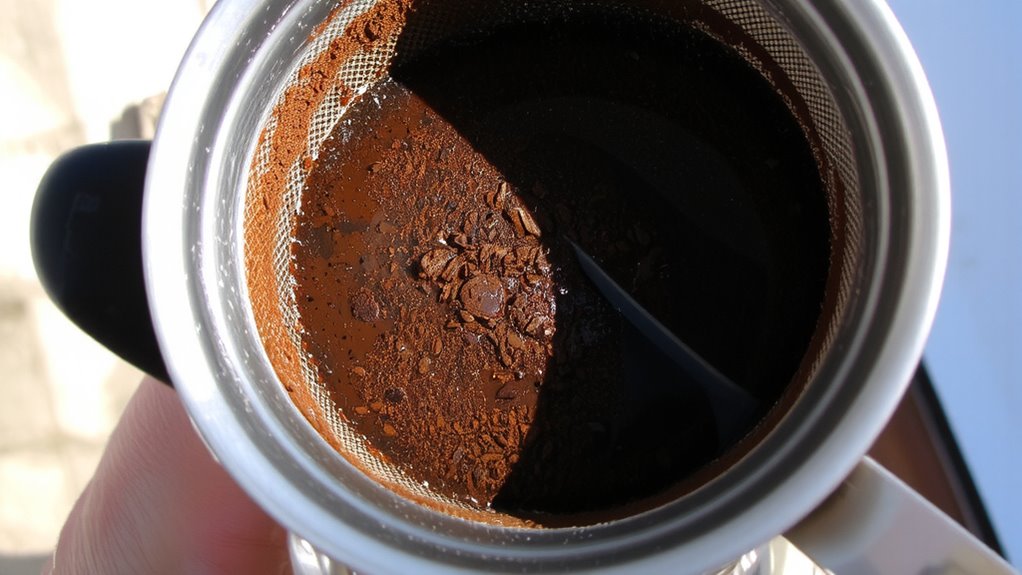
Grinding too fine is likely the culprit when your French press feels like it’s fighting back. Those tiny particles slip through the filter, clogging the mechanism and making the plunger hard to press. You don’t need espresso-fine grounds-aim for something coarser to prevent resistance. Check the plunger alignment; if it’s tilted or uneven, it won’t move smoothly through the carafe. A misaligned plunger scrapes the sides, increasing friction and risking damage. Also, inspect the seal integrity. Over time, the rubber or silicone seal can warp or crack, letting grounds bypass the filter and build pressure. A compromised seal reduces efficiency and strains your press. Replace worn parts promptly. Brands like Bodum offer replacement plungers and seals. Clean all components after use to maintain function. Proper care extends lifespan and guarantees consistent brews. Don’t force it-adjust your grind and maintain your gear. For reliable performance, consider choosing one of the Best French Press Picks for 2024.
Grind Coarse for a French Press
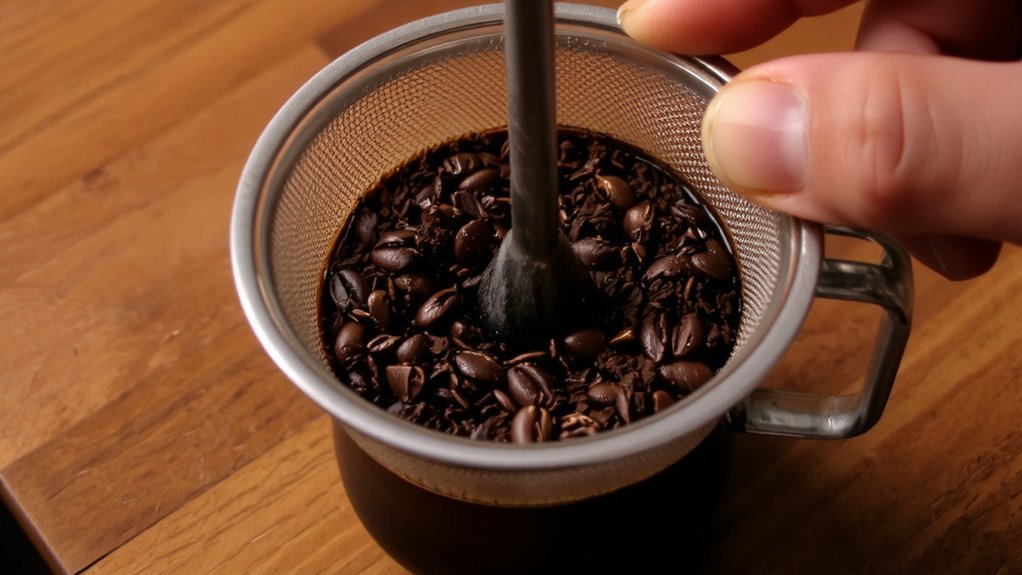
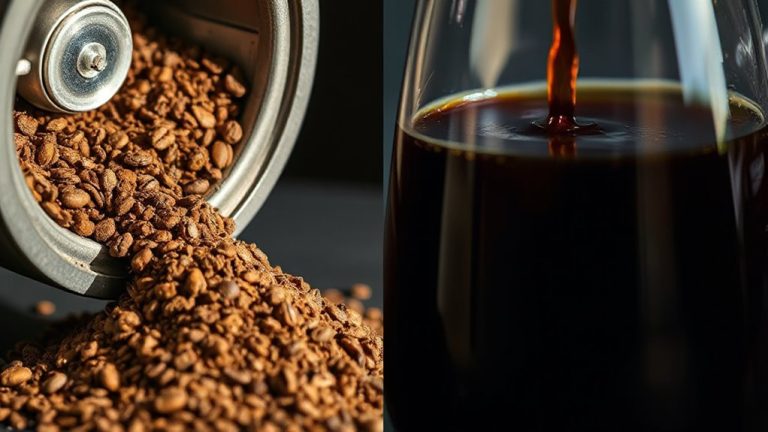
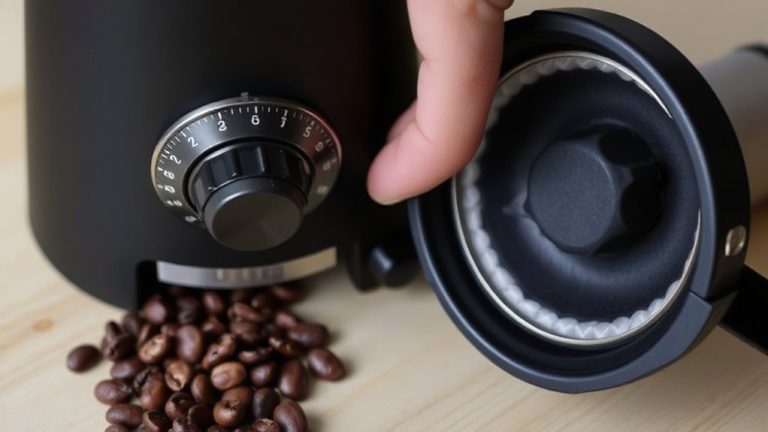
You’ve probably noticed how a stiff press can ruin your morning routine, and if you’re still wrestling with that press device, the fix starts with your grinder. For a French press, you need a coarse grind-think breadcrumbs, not sand. The right particle size prevents sludge and clogging, letting water flow freely during pressing. If your grind’s too fine, it packs down and jams the filter. Even worse, fines can slip through, making grit in your cup. Grind uniformity matters just as much: inconsistent chunks and powder create uneven extraction and blockages. Blade grinders often fail here, producing a mix of dust and boulders. A burr grinder, like the Baratza Encore, gives better consistency. Adjust it to a coarse setting. Remember, your French press isn’t espresso-it needs larger, even particles to work right. Achieving the perfect French press coffee grind ensures optimal extraction and a smooth, grit-free cup.
Use the Right Coffee Amount in a French Press
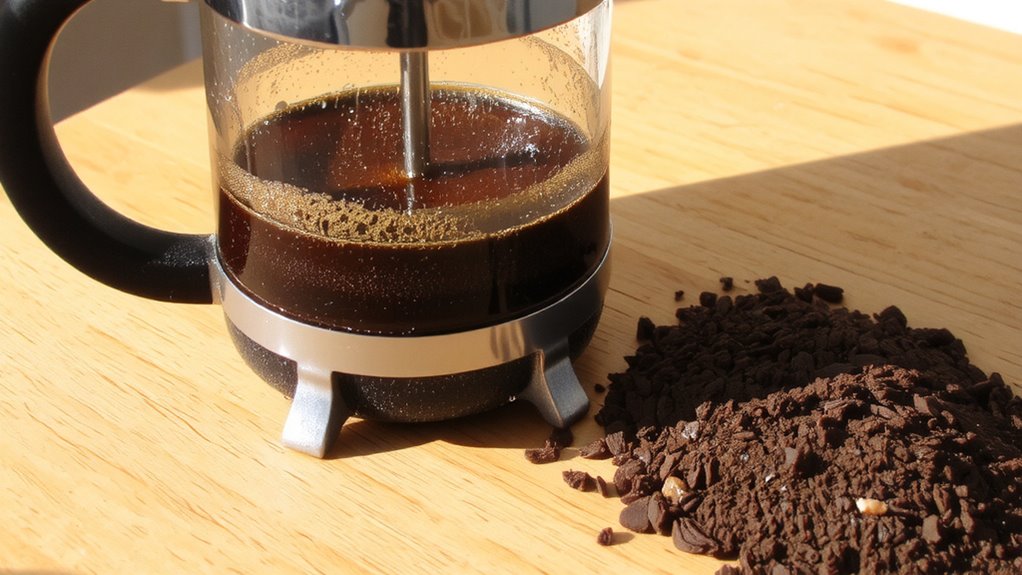
A standard 32-ounce French press typically works best with about 56 grams of coffee, or roughly 8 tablespoons, giving you a clean brew without over-extraction or waste. Getting your coffee ratios right guarantees a balanced cup-too much coffee makes the brew bitter and harder to press, while too little leads to weak coffee. You should aim for a 1:15 coffee-to-water ratio, meaning 1 gram of coffee for every 15 grams of water. Stick to recommended water levels in your press; overfilling strains the plunger and disrupts extraction. Always measure your coffee instead of guessing-it’s the easiest way to maintain consistency. Most French presses have marked lines, but those don’t account for displacement from grounds. Use a scale for accuracy, especially when adjusting coffee ratios or scaling batches. Proper amounts prevent clogging and guarantee even saturation. For those concerned about plastic components, consider opting for a plastic-free French press to avoid potential flavor contamination and environmental harm.
Clean Your French Press Plunger of Buildup
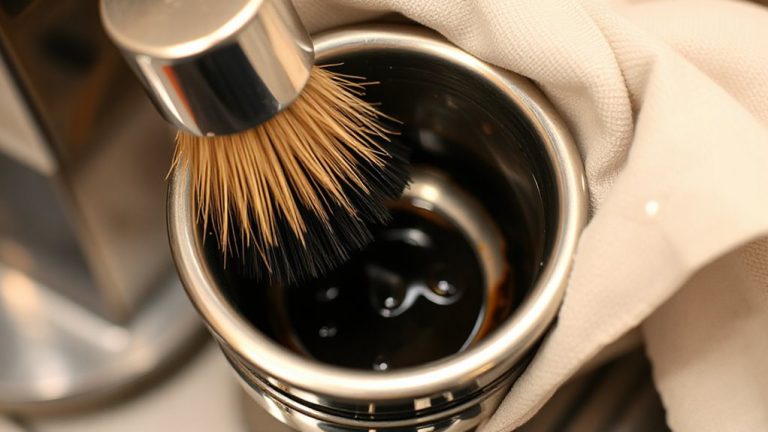
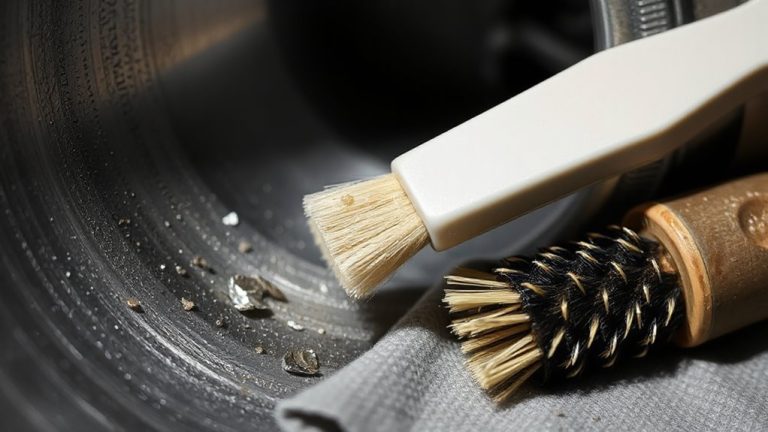
Oil residue and fine coffee particles are the usual suspects behind a stiff or slow press. Over time, coffee oils build up on the press’s mesh and rod, making it harder to push. Mineral deposits from hard water can also accumulate, especially on metal parts, adding to the resistance. To fix this, disassemble your press completely-most models allow this with a simple twist. Soak all metal parts in warm water mixed with white vinegar or a dedicated coffee cleaner for at least 30 minutes. This breaks down both coffee oils and mineral deposits. Use a soft brush to scrub the mesh and rod, then rinse thoroughly. Do this monthly, or more often with daily use. A clean press moves smoothly and improves brew quality. Let parts dry fully before reassembling. Avoid abrasive pads-they can damage the mesh and worsen performance over time.
Fix a Warped French Press Filter Screen
That bent metal ring in your French press isn’t just annoying-it’s compromising your brew. A warped filter screen disrupts proper screen alignment, causing resistance when depressing and letting grounds slip through. First, inspect the metal mesh and frame: if the screen is dented or twisted, realignment might help temporarily. Gently press the ring flat using pliers, but don’t overstress the metal. If it’s severely warped, effective filter replacement is your best fix. Many manufacturers, like Bodum or Espro, sell affordable, exact-fit replacements. Swapping it out guarantees tight screen alignment and consistent brewing. Avoid using duct tape or makeshift fixes-they’re unsafe and won’t last. A new filter restores full function and prevents grit in your cup. Always deconstruct the plunger carefully and match the replacement to your press size. It’s a small investment for smoother operation and better coffee.
3 Tips for a Smooth French Press Plunge
While a stiff or uneven press can ruin your French press experience, using the right technique and a well-maintained press makes a noticeable difference. Make sure your grind is coarse-fine grounds clog the filter and make pressing hard. Start with water just off the boil, around 200°F; too hot and it over-extracts, too cool and you’ll under-extract. Pour evenly, stir gently, and keep the brew time to about 4 minutes. Longer steeping increases sediment and resistance. Use even, steady pressure when pressing-don’t force it. Check your press assembly: all parts should be clean, aligned, and undamaged. A warped screen or bent rod increases friction. Stainless steel presses often last longer than plastic. If it still sticks, disassemble and descale monthly. Good maintenance and proper water temperature plus brew time mean a smoother press every time.
On a final note
Stop forcing the plunger-most issues come from grind size, ratio, or maintenance. Use a coarse grind, like sea salt, to prevent clogging. Stick to about 1 gram of coffee per 15 ml of water. Clean the mesh screen and rod regularly to remove oil buildup. If the filter’s bent, carefully bend it back or replace it. A well-maintained press should plunge smoothly with light pressure.