Mechanical Tumbler Dryers as Alternatives to Full Sun-Drying for Natural Coffee
You’re using sun-drying for natural coffee, but rain and humidity can cause mold and inconsistent fermentation. Mechanical tumbler dryers offer a reliable alternative, using slow, indirect heat below 45°C and rotating drums to guarantee even drying. They work well in wet climates or high altitudes, protect beans in the first 48 hours, and support batch consistency. Models like Loring or small barrel tumblers give better control for specialty lots. You’ll see how different setups match your farm’s needs and climate challenges.
Notable Insights
- Mechanical tumbler dryers provide consistent drying for natural coffee, eliminating reliance on unpredictable sun-drying conditions.
- They prevent mold and over-fermentation by controlling temperature, humidity, and airflow, especially critical in the first 48 hours.
- Drum rotation ensures even drying and prevents clumping, preserving bean integrity and reducing quality defects.
- Operating at low temperatures (40–50°C), they protect delicate flavor compounds and maintain terroir-specific characteristics.
- Ideal for high altitudes and humid climates, tumbler dryers offer precision and batch consistency where sun-drying is unreliable.
How Do Tumbler Dryers Work for Natural Coffee?
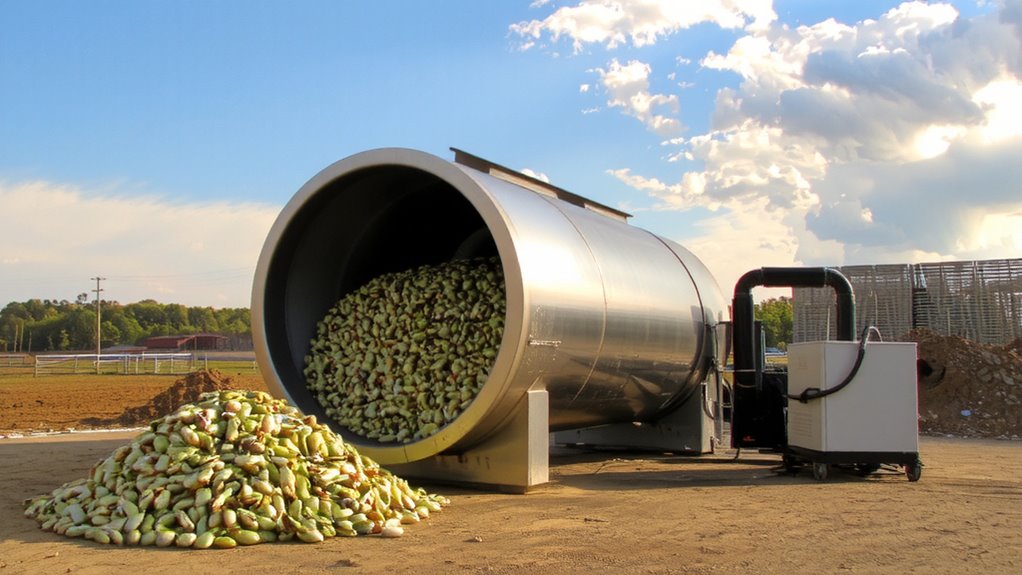
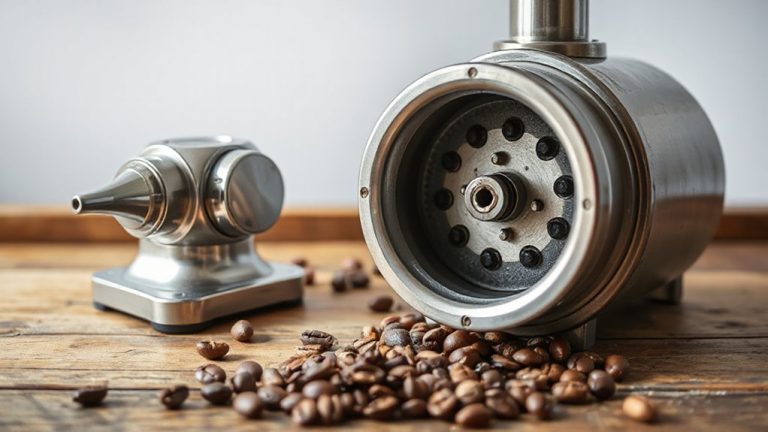
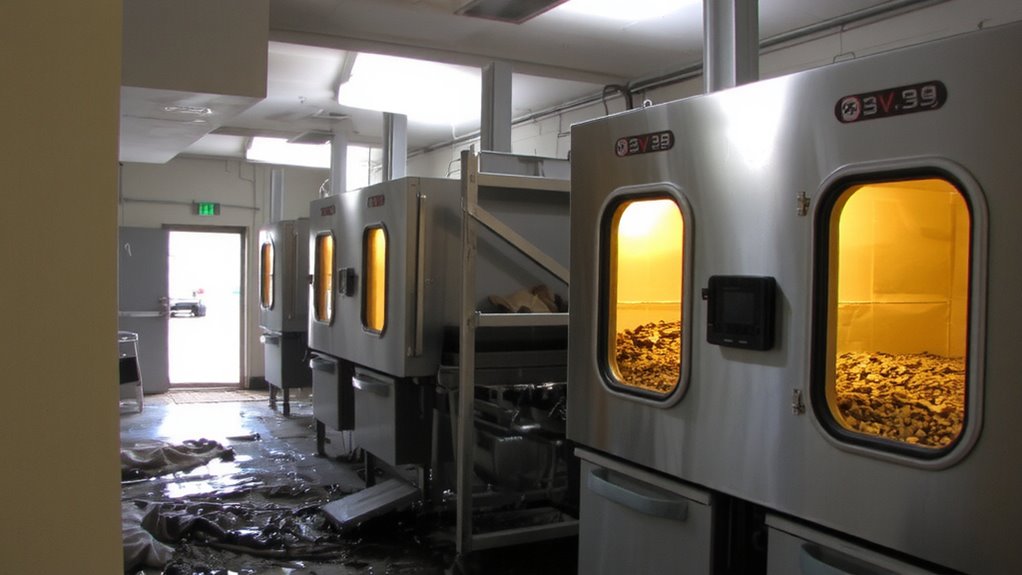
While natural coffee requires careful drying to preserve its fruity, full-bodied profile, tumbler dryers offer a consistent mechanical option when weather or space limits sun drying. You load parchment coffee into a rotating drum, where steady drum rotation guarantees even exposure and prevents clumping or over-drying on one side. Heat control lets you set and maintain low temperatures-usually between 40–50°C-protecting delicate sugars and acids. Machines like the GG Macuna or El Balsamo Dryer use indirect heat and variable speed settings, giving you precision. Airflow removes moisture, reducing risk of mold. You’ll need to monitor moisture levels, aiming to reach 10–12% over 48–72 hours. Though more energy-intensive than patios, tumbler dryers give reliable results, especially during rainy seasons. They suit mid-scale farms needing consistency without large land use. Just remember: too much heat or too fast drying ruins flavor.
Why Sun-Drying Is No Longer Reliable
Because weather patterns have grown less predictable, relying solely on sun-drying for natural coffee comes with real risks. You can’t ignore how climate change has increased unexpected rains and prolonged humidity, raising the chance of mold and fermentation defects. Plus, urban encroachment is reducing available land for large drying patios, especially near high-demand growing regions. These factors make consistent, high-quality drying harder than ever. Even with careful planning, you’re at the mercy of conditions beyond your control.
| Factor | Sun-Drying Risk | Impact on Coffee Quality |
|---|---|---|
| Rainfall | High spoilage chance | Mold, uneven drying |
| Humidity | Slow moisture loss | Over-fermentation |
| Land availability | Limited by urban encroachment | Reduced batch capacity |
| Climate change | Unpredictable seasons | Inconsistent flavor profiles |
You need reliable methods to protect your beans and your yield.
When Tumbler Drying Outperforms Sun-Drying
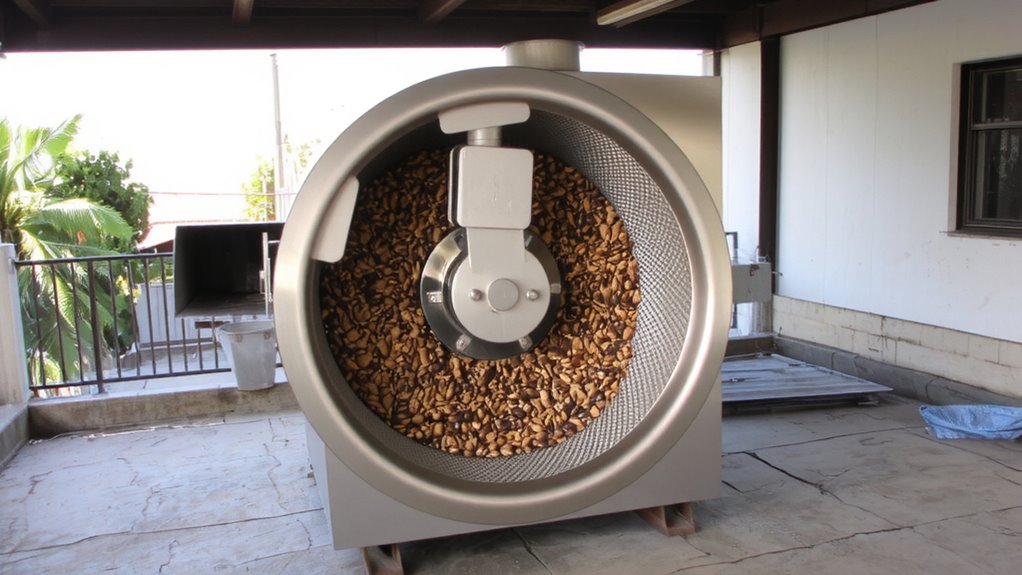
When the weather turns unpredictable or your drying space is limited, a mechanical tumbler dryer can keep your natural coffee on track without sacrificing quality. You get consistent results even during rainy seasons or in humid climates where sun-drying fails. Tumbler dryers offer superior moisture control, letting you set exact drying rates and monitor bean conditions closely-critical for natural coffees prone to uneven drying. Unlike patios or raised beds, you’re not at the mercy of daily weather shifts. These machines also improve energy efficiency compared to traditional forced-air dryers, especially models with heat recovery systems. While they require an initial investment, their precision reduces crop loss. They work best when you need batch consistency, tight timelines, or operate at higher altitudes with cool nights. You maintain control from start to finish, ensuring each batch reaches the target moisture content without guesswork.
Saving Quality: Avoiding Mold and Over-Fermentation
If you’re drying natural coffees, keeping fermentation in check is just as important as removing moisture-let it go too long, and you’ll risk sour or overly funky flavors from over-fermentation. Mechanical tumbler dryers help you manage both moisture loss and fermentation timing with precision. By regulating temperature and airflow, these machines offer consistent humidity control, reducing the chance of mold during the critical first 48 hours. Unlike patios, where wet beans sit in unpredictable conditions, tumblers keep them moving, exposing all sides evenly. This movement slows unwanted microbial growth and supports even drying, which stabilizes fermentation timing across batches. You’re not eliminating fermentation-just controlling it. For farms in humid climates or with limited space, this level of control can be a game-changer. Proper settings matter: aim for steady humidity control between 50–60% in early stages, then gradually reduce to finish.
Downsides: Can Machines Capture Sun-Dried Complexity?
How much complexity are you losing when you swap sun-dried methods for mechanical tumbler drying? While tumbler dryers protect beans from rain and over-fermentation, they often fall short in flavor replication compared to traditional sun-drying. The slow, natural heat of the sun helps develop layered notes-fruity, floral, winey-that machines struggle to mimic. Tumblers apply faster, uniform heat, which can limit sugar development and dull subtle profiles. Aromatic preservation is another concern; volatile compounds that contribute to bright, nuanced scents may degrade under constant airflow and elevated temperatures. You’re trading some sensory depth for consistency and control. If peak complexity is your goal-like the stone fruit and jasmine notes in top-tier Ethiopians-sun-drying still holds an edge. But if you value stability over nuance, tumblers are a solid, practical choice.
Matching Dryer Type to Farm Size and Climate
You’re making a trade-off between flavor nuance and operational reliability when moving from sun-drying to mechanical tumblers, but the right choice also depends on your farm’s scale and local weather. If you run a small farm in a humid region, a compact propane-powered tumbler like the GrainPro EcoHuller+Drier offers good energy efficiency and handles wet seasons reliably. Larger farms might prefer diesel or electric batch dryers-like the Bharat or AgriGreen models-which dry more volume but require higher upfront costs and consistent maintenance frequency checks. In dry, high-sun areas, you might only need tumblers as backups, saving fuel and labor. Energy efficiency drops with oversized units, so match capacity to your average cherry output. High maintenance frequency units can disrupt workflow, especially off-grid, so prioritize durability and local parts availability. Choose based on real harvest cycles, not peak loads, to avoid waste and downtime.
Keep Terroir When Using Tumbler Dryers
A coffee producer’s terroir-those subtle flavors shaped by soil, altitude, and microclimate-can still shine through when using tumbler dryers, but only if you manage the drying profile carefully. You need slow, even heat-ideally under 45°C-to avoid baking the beans and losing complexity. Rapid or uneven drying kills terroir preservation, locking in flat or roasted notes. Set your tumbler to low airflow and monitor moisture regularly to maintain flavor consistency. Some models, like the Loring dryer or smaller barrel tumblers, offer better control for specialty lots. Avoid high humidity drying zones or you risk fermentation flaws. If you mimic the slow pace of sun-drying with regulated heat, your coffee keeps its origin character. Tumbler dryers aren’t flavor killers by default-but they demand attention. When done right, you get clean, consistent beans that still taste like where they’re from.
On a final note
You can use mechanical tumbler dryers to reduce mold and over-fermentation risks when sun-drying fails. They offer control in wet climates or large-scale operations, though they may lack the nuanced flavors of well-executed sun-drying. Smaller farms might prefer solar dryers or raised beds, while larger ones could benefit from diesel or gas-powered tumblers. Match the dryer to your climate, volume, and quality goals-consistency matters, but terroir still counts.