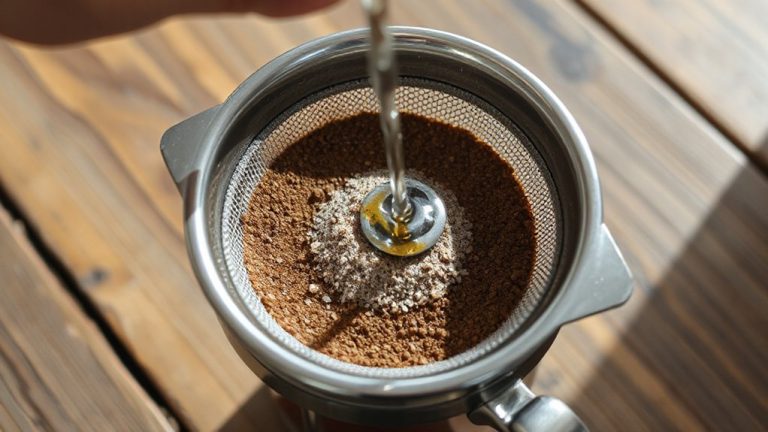
Why Your Espresso Machine Isn’t Reaching Proper Brewing Temperature
Your espresso machine might not be reaching proper brewing temperature because it hasn’t fully preheated-20–30 minutes is often needed, even after the ready light comes on. Scale buildup from hard water can insulate the heating element, reducing efficiency. A faulty thermostat or corroded boiler may also block heat transfer. Try descaling with Durgol, test the thermostat with a multimeter, and check the heating element. Machines like the Profitec Go stabilize faster than single boilers. More details on fixing each issue follow.
Notable Insights
- Insufficient preheating time prevents the group head and boiler from reaching thermal equilibrium.
- Mineral scale buildup on heating elements reduces heat transfer efficiency and brew temperature.
- A faulty or uncalibrated thermostat may fail to regulate correct brewing temperatures.
- Damaged or corroded heating elements and boiler issues can impair heating performance.
- Poor brew temperature stability may result from machine design limitations, especially in single-boiler models.
Is Your Machine Fully Preheated Before Brewing?
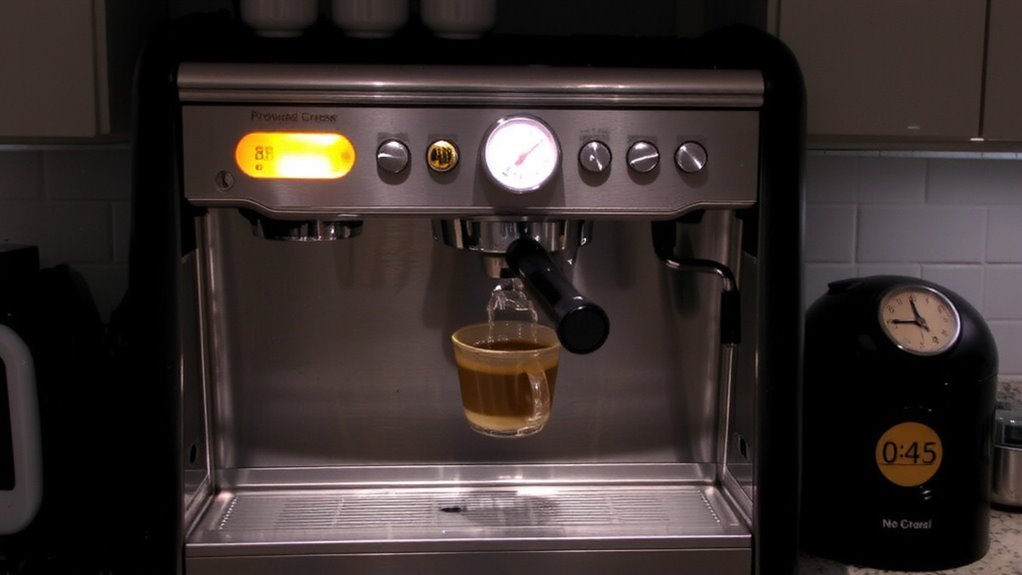
How long are you waiting before that first shot starts pulling? If it’s less than 20–30 minutes, your machine likely hasn’t completed its preheat duration. Many home machines, like the Gaggia Classic or Rancilio Silvia, need a solid warm up routine to stabilize internally. Even if the ready light turns on, that doesn’t mean group heads and boilers are fully heated. Thermal mass takes time. Skipping proper preheat duration leads to low brew temps and sour, under-extracted espresso. For best results, power on the machine, let it sit with portafilter locked in-this helps heat the group. Rinse after 20 minutes. With multi-boiler machines like the Profitec Go, warm up routine is faster, but single boilers still need patience. Don’t rush. Wait out the full cycle. Consistent temperature starts with giving the machine time to reach thermal equilibrium-no shortcuts.
Descale to Improve Heat Transfer and Stabilize Brew Temperature
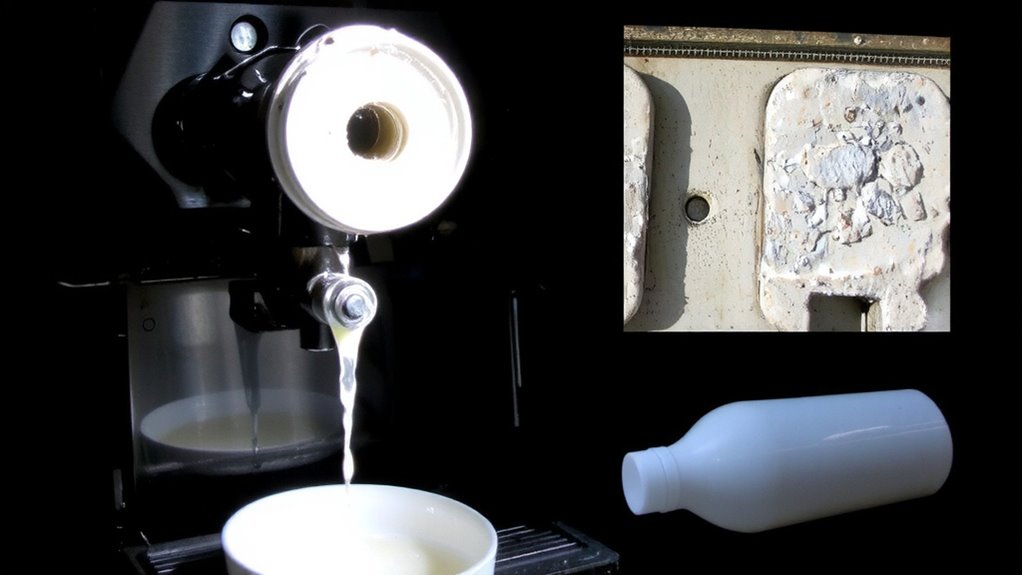
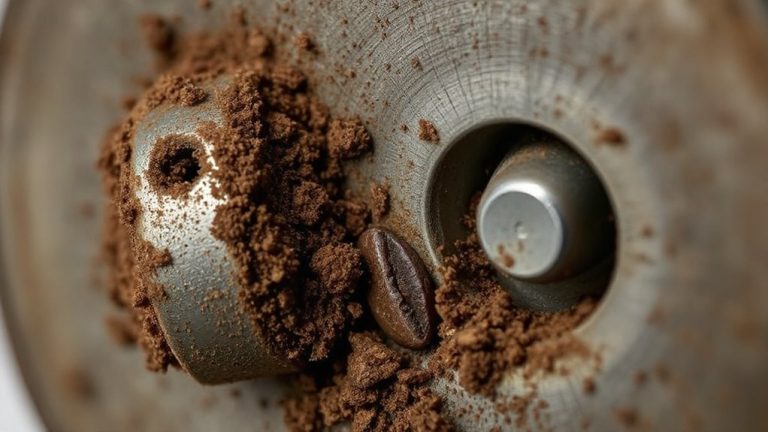
Over time, mineral buildup from hard water acts like a blanket inside your machine’s boiler and heating elements, slowing down heat transfer and causing temperature swings during brewing. That’s due to water hardness-common in many areas-which leads to scale buildup over time. This layer insulates the heating elements, making them work harder and less efficiently. As a result, your espresso machine struggles to maintain a stable brew temperature. Regular descaling removes this residue and restores proper heat transfer. Most manufacturers recommend descaling every 1–3 months, depending on usage and water hardness. Use a commercial descaler like Durgol or Dezcal, following your machine’s instructions. Avoid vinegar-it’s less effective and can damage seals. With consistent descaling, you’ll stabilize temps, improve efficiency, and extend your machine’s life. It’s one of the most effective maintenance steps you can take. For Breville machines, using a recommended descaler ensures optimal performance and compatibility.
Test the Thermostat for Low Brew Temperature
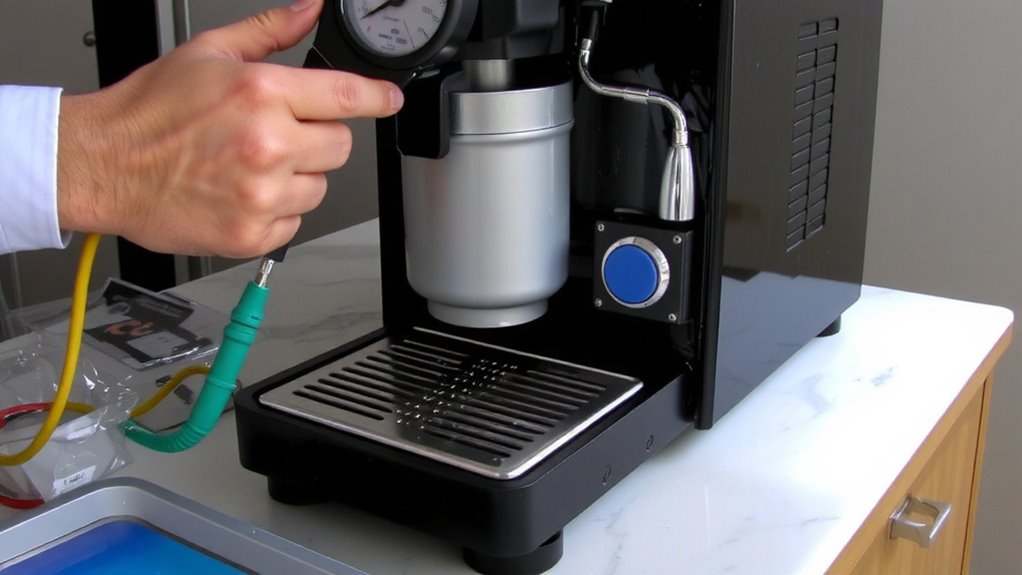
A faulty thermostat could be the reason your espresso shots are coming out too cool. If the machine heats but never reaches proper brewing temperature, the thermostat may be misreading internal temps. Start by checking thermostat calibration-many machines use bi-metallic or digital thermostats that drift over time, especially after repeated heating cycles. Improper calibration means water temps stay too low for ideal extraction, leading to sour, weak shots. Use a multimeter to test for electrical continuity when the machine is cold and again when hot. No change in continuity suggests the thermostat isn’t responding to temperature shifts. Replace thermostats showing inconsistent readings or failure to switch. While PID systems offer better control, simple thermostats in entry-level machines need regular checks. Testing electrical continuity and confirming calibration helps rule out one key cause before moving to the boiler or heating element.
Check the Boiler and Heating Element
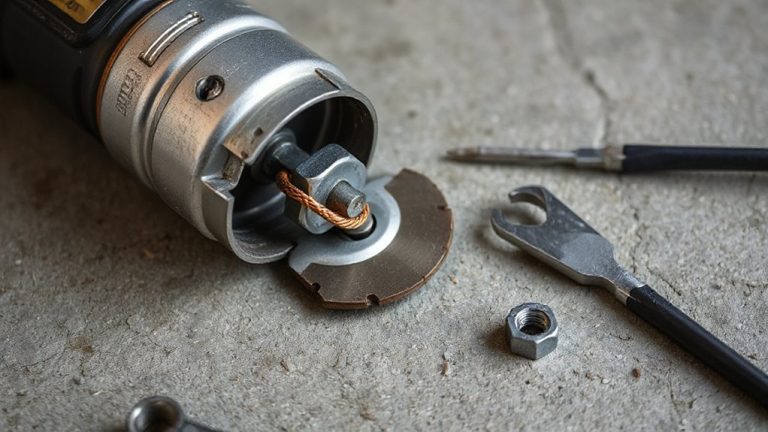
If the thermostat checks out but your machine still isn’t reaching proper brewing temperature, the issue might lie with the boiler or heating element. Over time, mineral buildup can cause boiler corrosion, reducing efficiency or leading to heating failure. You’ll want to inspect both components, especially if your machine struggles to heat water or cuts out mid-brew. Using a non-toxic espresso machine can help minimize exposure to harmful materials often found in lower-quality models.
| Component | Common Issue | What to Check |
|---|---|---|
| Boiler | Corrosion or scale | Visible pitting, leaks |
| Heating Element | Burned out or weak | Continuity with multimeter |
| Power Supply | Inconsistent voltage | Wiring connections |
| Machine Age | Wear-related failure | Machines over 5 years old |
| Water Quality | Scale from hard water | Use filtered water regularly |
Heating failure often stems from a damaged element or severe boiler corrosion. Replace faulty parts promptly and consider water filtration to prevent recurrence.
Run a Brew Temperature Stability Test
How do you know if your espresso machine maintains a stable brewing temperature once it’s heated up? Run a brew temperature stability test. Start by letting your machine fully warm up-usually 20 to 30 minutes. Then, pull consecutive shots every minute for 10 rounds. Note how each shot tastes and check for consistency in extraction. If the first shot pulls well but later ones turn sour or weak, your machine struggles with heat stability. Pay attention to brew duration and water pressure; both should stay consistent. Machines like dual-boiler models often handle this better than single-boiler ones. Avoid relying solely on group head feel or pressure gauges-they don’t tell the full story. Use roast variance or flow meters if available. This test reveals real-world performance, helping you identify instability before diving into fixes.
Fix Common Causes of Low Espresso Brew Temperature
Now that you’ve identified temperature instability through a brew test, it’s time to tackle the usual suspects behind low espresso brewing temps. Water hardness and ambient humidity can influence scale buildup and thermal performance. Check these common issues:
| Issue | Cause | Fix |
|---|---|---|
| Scale buildup | High water hardness | Descale with citric acid every 3 months |
| Poor thermosyphon flow | Clogged grouphead | Backflush with water and clean screen |
| Steam boiler pressure too low | Incorrect pressure stat setting | Adjust or replace pressurestat |
| PID malfunction | Sensor error or wrong calibration | Recalibrate or replace PID |
| Thermal lag | Low ambient humidity affecting boiler recovery | Preheat grouphead for 15 minutes before brewing |
Regular maintenance prevents most problems. Use filtered water to reduce scale, and monitor climate conditions where your machine sits.
On a final note
Make sure your machine heats up fully-wait 20–30 minutes for stability. Scale buildup blocks heat, so descale every 1–3 months with a solution like Urnex. A faulty thermostat or weak heating element can cause low temps; test with a thermocouple. Run blank shots to check temperature consistency. If issues persist, consider a machine with PID control, like the Breville Dual Boiler, for better stability. Simple maintenance often fixes most problems.