Fine-Tuning French Press Extraction Times for Optimal Taste Profiles of Dark Roasts
Use a 4-minute steep for dark roast French press to avoid bitterness. Dark roasts extract faster due to their brittle, less dense structure and higher solubility. Keep water at 200°F and use a coarse grind to prevent over-extraction. Shorter steeps risk underdeveloped chocolate notes, while longer ones bring out harsh, smoky char. Adjust time slightly if beans are older than three weeks or unevenly roasted-you’ll find how small tweaks shape the final cup.
Notable Insights
- Use a 4-minute steep time for dark roasts to balance chocolate and smoky flavor notes without over-extraction.
- Start with a 30-second bloom to release CO₂ and promote even extraction in French press brewing.
- Opt for a coarse grind to prevent sludge and manage the faster extraction rate of low-density dark roast beans.
- Keep water temperature between 195–205°F to avoid scorching grounds and extracting harsh, bitter compounds.
- Avoid steeping beyond 7 minutes to prevent excessive bitterness from over-extracted, char-like soluble compounds.
Best Steep Time for French Press Dark Roast
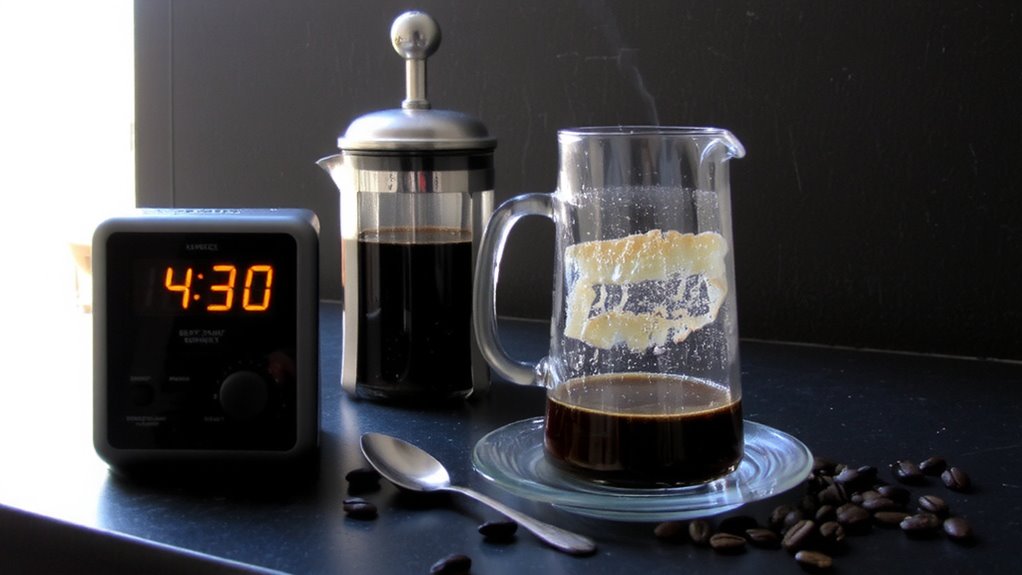
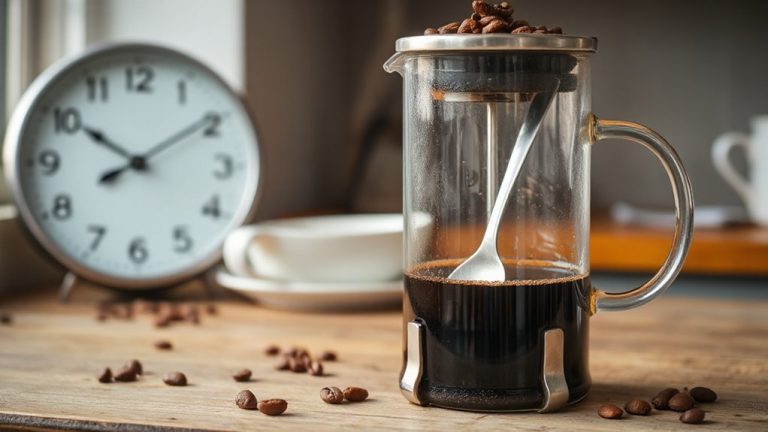
While you might be tempted to let your dark roast steep longer for a stronger cup, doing so can actually lead to over-extraction and excessive bitterness. For best results, stick to a 4-minute steep. Dark roasts break down faster, so extending time doesn’t add strength-it just increases harshness. Use water just off the boil, around 200°F, to balance extraction without scorching the grounds. Start with a 30-second bloom duration to release trapped CO₂, which helps water penetrate evenly. After blooming, add the rest of the water, stir gently, and place the lid with the press up. Let it steep undisturbed. Using a coarser grind also prevents sludge and over-extraction. A French Press like the Espro P7 or Bodum Brazil works well thanks to fine mesh filters. Timing matters-use a simple kitchen timer. This method gives you a clean, rich cup without the burn. For those looking to optimize their brew, choosing the best coffee for French press can significantly enhance flavor and body.
Why Dark Roasts Extract Faster in French Press
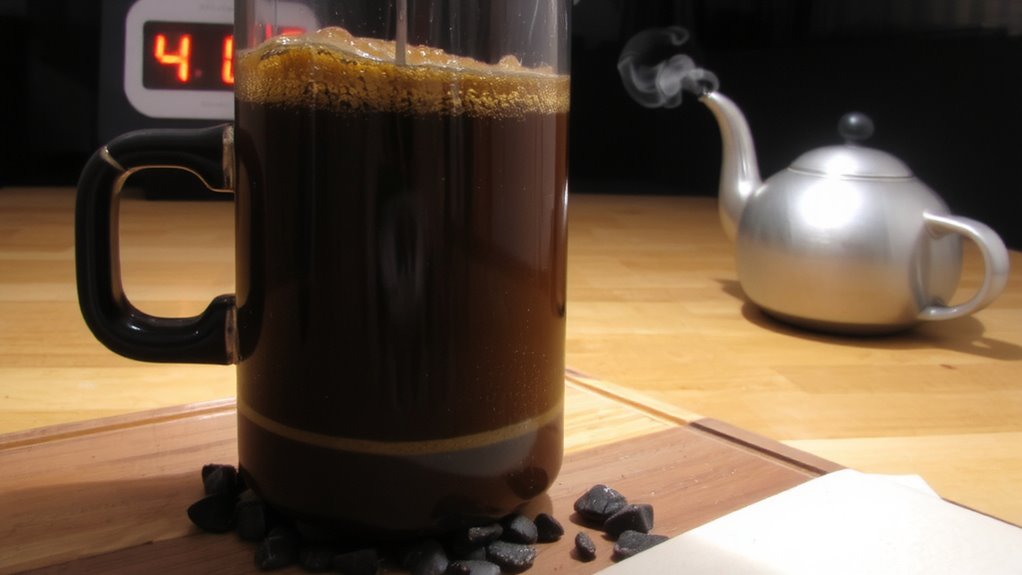
Dark roasts extract faster in a French press because the beans’ structure breaks down more during roasting. You’ll notice this when you grind them-they’re more brittle and less dense than light roasts. That lower bean density means hot water pulls flavor more quickly. Roast development plays a big role here: the longer and hotter the roast, the more internal compounds degrade, making them easier to extract. So even though dark roasts have less overall acidity and some sugars are caramelized or burned off, the accessible solubles come out fast. This is why you don’t need to steep as long. If you use the same time as a light roast, you’ll over-extract and risk bitterness. For best results, start with a 3.5 to 4-minute steep and adjust from there. Your grind size matters too-go a little coarser than you might think. Choosing the right French press coffee maker can also influence extraction consistency and temperature retention during brewing.
Why Your Dark Roast French Press Tastes Bitter (And How to Fix It)
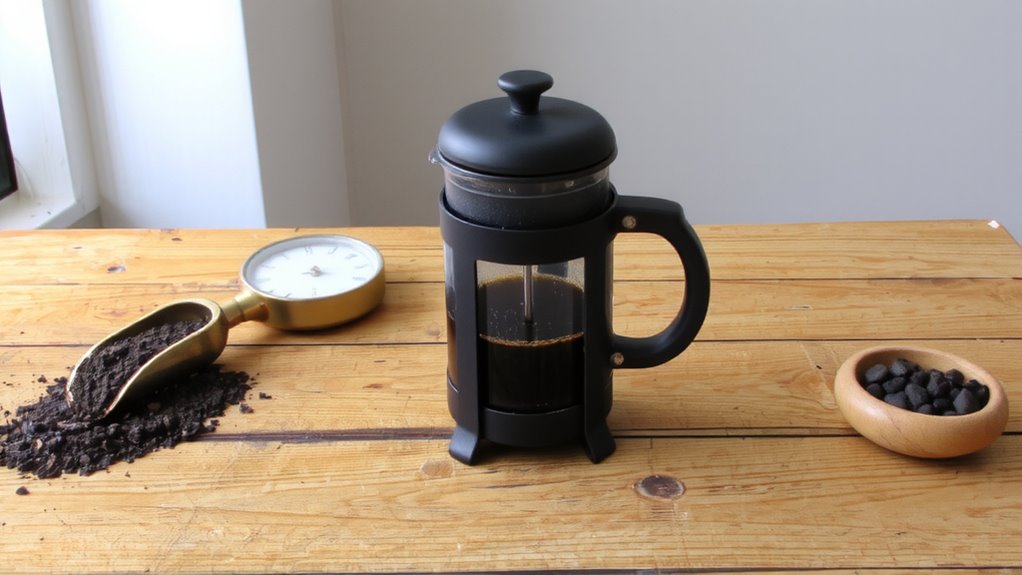
You’ve probably pulled a French press of dark roast only to find it harsh or overly bitter, even if it smelled great when you brewed it. That bitterness often comes from over-extraction, which dark roasts are especially prone to. Water temperature plays a key role-using boiling water (212°F) can scorch the grounds, pulling out too many bitter compounds. Try lowering the heat to around 195–205°F for a smoother result. Bean freshness matters just as much: stale beans lose volatile flavors and can taste flat or sharp. Use beans roasted within the past two to three weeks and grind just before brewing. If your coffee still tastes off, check your brew time-you might be steeping too long. Adjusting these factors helps you avoid bitterness without sacrificing depth or richness in your cup. For better results, consider using one of the best French press picks based on performance and design.
Match Grind Size to Steep Time for Dark Roast
A coarse, even grind is your best bet for a balanced dark roast French press brew, especially with a standard 4-minute steep. You need consistent particle size to avoid over-extracting bitter compounds while still pulling out rich flavors. Poor grind consistency leads to uneven extraction, no matter your steep time. Pair this with good water quality-filtered is ideal-to let the coffee’s true profile shine. Here’s a quick guide:
| Grind Size | Steep Time | Resulting Body & Clarity |
|---|---|---|
| Extra Coarse | 4:30 | Light body, low clarity |
| Coarse | 4:00 | Balanced, clean |
| Medium-Coarse | 3:30 | Slightly muddy, bold |
| Fine | 3:00 | Harsh, over-extracted |
| Uneven | Any | Bitter & hollow spots |
Stick to coarse for dark roasts-clarity wins.
How Steep Time Affects Chocolate and Smoky Notes
Pulling the best from your dark roast means understanding how time shapes flavor. Steep too short-under four minutes-and you’ll underdevelop the chocolate notes many dark roasts are prized for, especially from Central American bean origins known for cocoa-like depth. But go too long, past eight minutes, and smoky tones from roast consistency can turn harsh, overpowering the cup with bitter char. Most dark roasts need 4–7 minutes to balance these notes. Within that window, finer grinds extract faster, so adjust time accordingly. Always keep grind size steady to isolate steep time’s effect. If your roast is uneven-some beans darker than others-stick closer to five minutes to avoid over-extracting the darker particles. This is common with lower-quality batches where roast consistency suffers. Better batches, like those from reputable roasters using single-origin beans, allow more flexibility in timing without losing clarity. Track your times to refine.
Tailor Your Brew Time for Dark Roast Flavor Balance
Since dark roasts vary in origin, roast level, and bean density, a one-size-fits-all brew time won’t get the best out of every batch. You need to adjust steep times based on your specific beans and setup. Water mineral content affects extraction speed-soft water may require a longer brew, while hard water can accelerate it. Also, brew vessel material matters: a double-walled stainless steel press retains heat better than glass, extending extraction slightly. Below is a guide to tailor your brew:
| Brew Time (min) | Flavor Result |
|---|---|
| 3 | Light body, bright edges |
| 4 | Balanced, mild bitterness |
| 5 | Full body, deeper roast notes |
| 6 | Strong, possibly harsh |
| 7 | Over-extracted, flat |
Start at 4 minutes, then tweak based on taste and your gear.
On a final note
You’ll get the best dark roast flavor in a French Press with a 3:30 to 4-minute steep. Going longer often brings out bitter, ashy notes, especially with fine grinds or high heat. Use a coarse, even grind-like that from a Baratza Encore-and stick to water just off boil (200°F). Shorter steeps highlight chocolate and sweetness; longer ones boost body but risk smokiness turning harsh. Adjust in 15-second blocks to balance flavor.